Why does the United States want Greenland?
America has tried to buy Greenland since 1867. The reason has little to do with the minerals under the ice and everything to do with where the island sits.
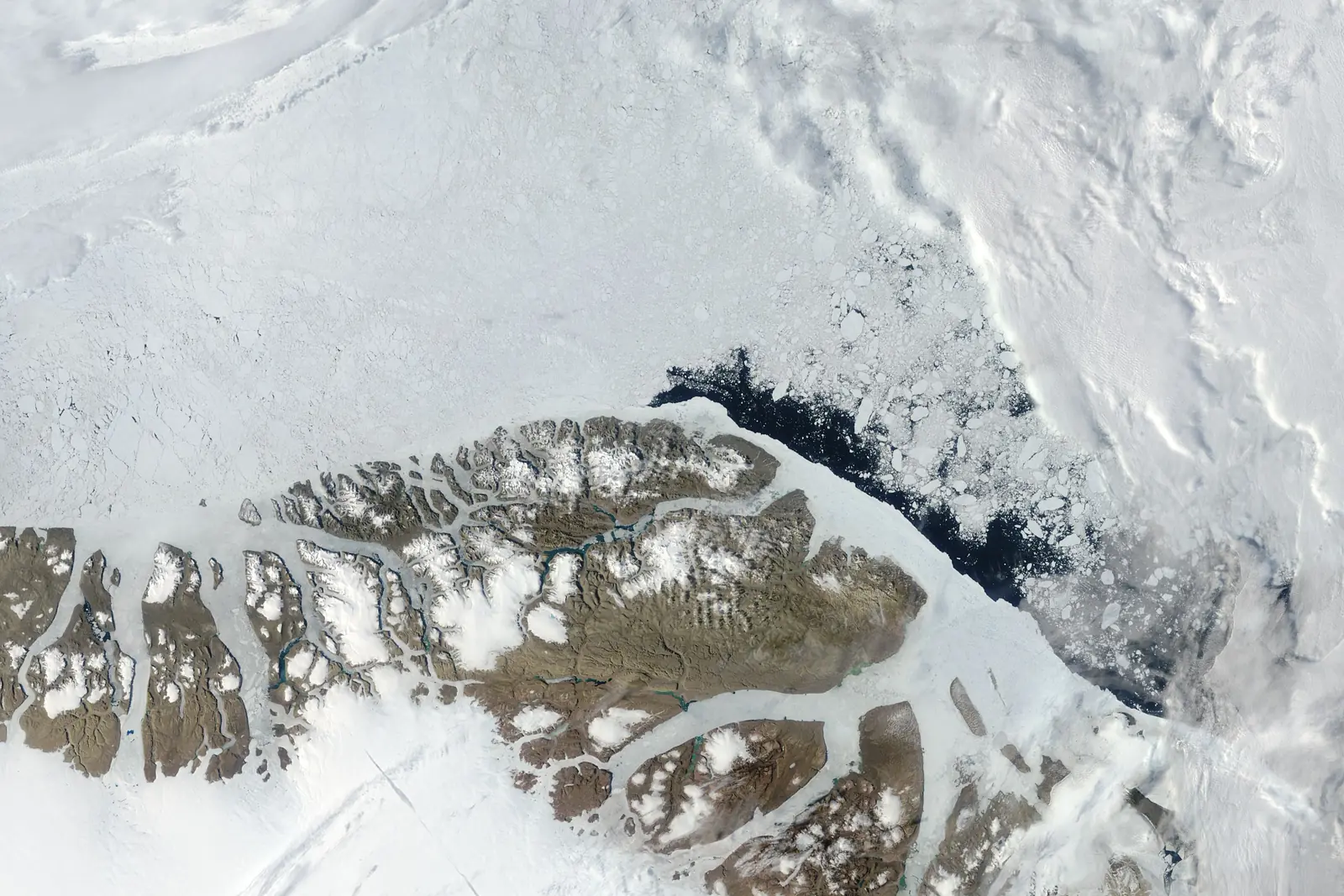
In December 1946, the American secretary of state made Denmark a quiet offer: $100 million in gold, paid for a single island. The island was Greenland, and Denmark said no. The offer stayed secret for forty-five years, until a Danish newspaper pulled it out of declassified files. By then the price had changed but the logic had not. The United States has been trying to get Greenland, one way or another, since 1867, and the reason has almost nothing to do with the island itself. It has to do with where the island sits.
The island on the shortest line
Open a standard world map and Greenland is a distant white blob, easy to ignore. Spin a globe and look straight down at the North Pole instead, and the island snaps into focus. Greenland sits almost exactly between North America and Russia. The shortest path for a missile fired from Russia at the United States, or the other way, does not cross the Atlantic. It goes over the North Pole, passing close to Greenland.
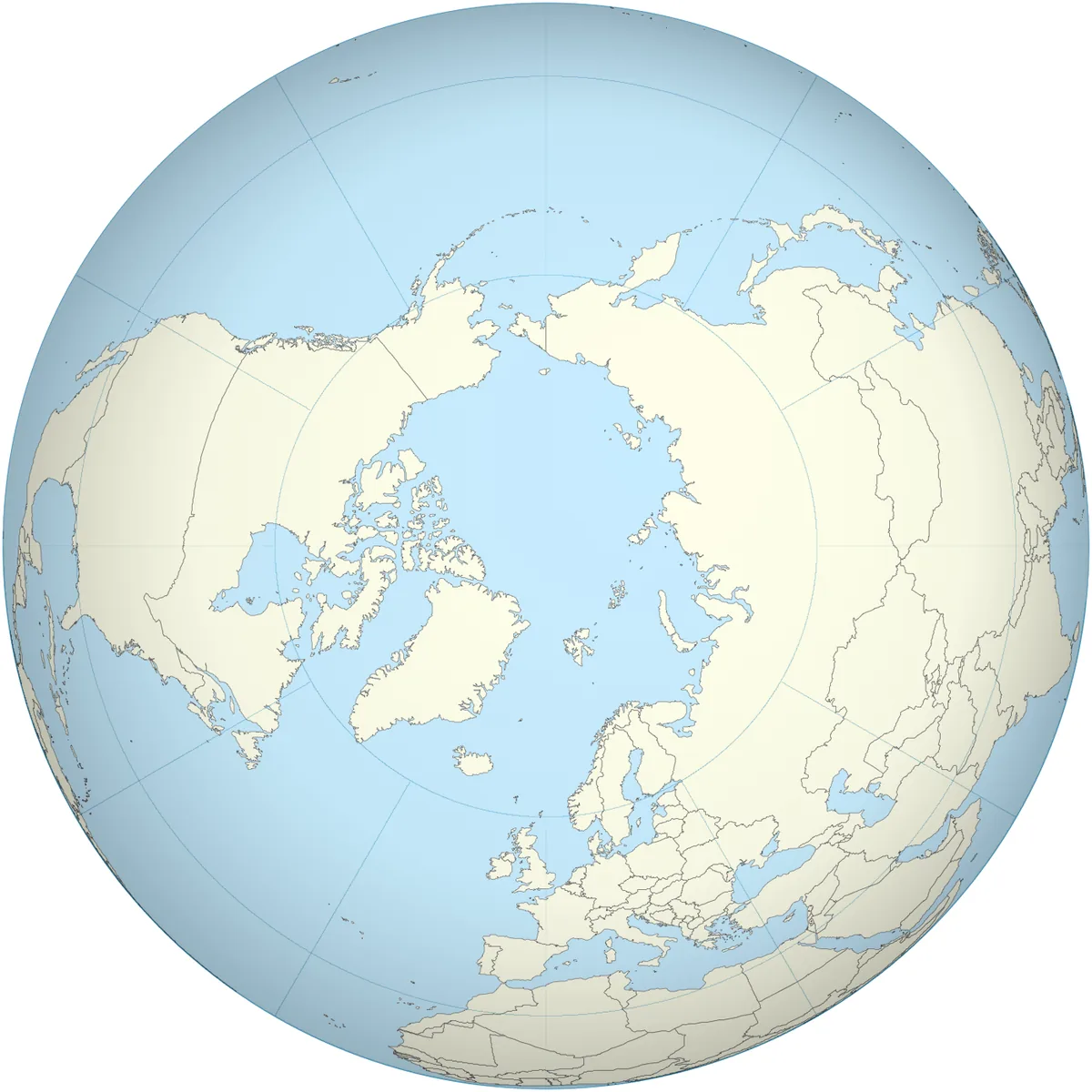
That single fact has driven American strategy for eighty years. When Germany occupied Denmark in 1940, Washington moved in to keep Greenland out of Nazi hands, and it never really left. A 1951 defense treaty gave the US the right to build and run military bases there. The largest is Pituffik Space Base, in the frozen northwest and known for decades as Thule, which runs a Ballistic Missile Early Warning radar aimed north. If an intercontinental missile ever comes over the pole toward an American city, Greenland is where the alarm goes off first. The island is also the northern edge of the GIUK gap, the stretch of water between Greenland, Iceland, and the United Kingdom that Russian submarines must cross to reach the open Atlantic.
The routes opening in the ice
The military logic is old. What is new is the ice. The Arctic is warming three to four times faster than the rest of the planet, and the summer sea ice that sealed off the top of the world is retreating. That is turning empty white space into navigable ocean, and Greenland sits right next to the new routes.
Two of the emerging Arctic shipping routes run within reach of its coast. The Northwest Passage runs up the Davis Strait between Canada and Greenland; the Transpolar route, still mostly frozen, would one day cross the open ocean near the Pole. When these lanes open in summer, they can cut the distance between the Atlantic and the Pacific by as much as 40 percent compared with the trip through Suez or Panama. A country that controls Greenland gains a position next to waterways that barely existed a generation ago, along with the harbors where future traffic could stop and refuel. Control the coastline, and you have a say over the ships that pass.
What is buried under the ice
Then there is what lies beneath. Greenland holds an estimated 36 million tonnes of rare earth elements, the metals inside phones, wind turbines, and precision weapons. The European Union counts 25 of the 34 raw materials it labels critical, from lithium and graphite to copper and uranium, somewhere on the island. Geologists estimate close to 28 billion barrels of oil equivalent offshore. On paper, it is one of the last great untapped resource frontiers on Earth.
But there is a catch, and it is a big one. Almost none of it is coming out. An ice sheet up to two miles thick covers about 80 percent of Greenland, there are almost no roads or deep-water ports, and the cost of mining in the high Arctic is brutal. There is still no commercial oil production at all. The mineral wealth is real, but it is a prospect, not a working industry. Strip it away and the strategic case barely weakens, which tells you the ice and the gas were never really the point. The point was always geography.
America has tried this before
None of this is new thinking in Washington. In 1867, the same year he bought Alaska from Russia, Secretary of State William Seward explored buying Greenland and Iceland too, for around $5.5 million in gold. He had just bought Alaska on Canada's western side, and he saw Greenland as a way to box in British-controlled Canada from the east. A hostile Congress killed the idea before it became a formal offer. Then came Truman's $100 million in 1946, driven this time by the Soviet threat rather than the British one.
Each time, Denmark declined, and each time it barely mattered, because the US kept getting the thing it actually needed. Owning Greenland was always the maximum version of a goal Washington mostly achieved by other means: a defense treaty, basing rights, and an unspoken understanding that no rival power would ever be allowed to set up shop on the island. You do not need to own a house if you already hold the keys to its most important room.
Why Greenland belongs to Denmark at all
Which raises the genuinely strange question underneath the whole story. Why does a European country of six million people govern the world's largest island, two thousand miles across the ocean?
The answer is a chain of accidents. Norse settlers led by Erik the Red reached southern Greenland around the year 985, and that colony eventually died out, but the claim outlived the colonists. When the crowns of Denmark and Norway merged in 1380, Greenland came with the Norwegian crown. The decisive moment arrived in 1814. Denmark had backed Napoleon, Napoleon lost, and the Treaty of Kiel forced Denmark to hand Norway to Sweden. But the old Norwegian possessions out in the Atlantic, Greenland, Iceland, and the Faroe Islands, stayed with Copenhagen. Denmark kept these distant territories almost by administrative habit, and so a Nordic kingdom ended up owning the largest island in North America.
Greenland was a Danish colony until 1953, then formally part of Denmark, and since 2009 it has governed itself under a self-rule law that hands it control of its own natural resources and, crucially, a legal path to full independence by referendum. Denmark still runs foreign policy and defense and sends an annual grant of roughly 500 million euros.
What the Greenlanders want
Lost in the argument between Washington and Copenhagen is the island's own population, about 56,000 people, nearly 90 percent of them Inuit, who regard themselves as a distinct nation. They have made their preferences fairly clear. In a January 2025 poll, 56 percent said they would vote for independence from Denmark and only 28 percent against. But asked whether Greenland should become part of the United States, 85 percent said no and just 6 percent yes.
That is the twist both great powers keep talking past. The people with the legal right to decide Greenland's future want to belong to neither of the countries competing for them. It was their own government, elected on exactly that sentiment, that banned uranium mining in 2021 and stalled the island's largest rare earth project, a mine backed partly by Chinese money. Greenland is not a property waiting to be handed over. It is a country in the making, and it gets a vote.
Why Greenland keeps making headlines
That old, quiet arrangement burst into public view in early 2026, when the United States pressed openly to acquire Greenland and declined to rule out using economic or even military pressure to get it. The reaction was swift. Denmark's prime minister and the leaders of France, Germany, Poland, and others restated that Greenland's borders were not up for negotiation, and Poland's Donald Tusk warned that threatening a fellow NATO member drained the alliance of meaning. Washington stepped back from the harshest talk within weeks. Stripped of the noise, it was the most dramatic version of a very old American ambition, the one Manifest Destiny named in the 1840s.
What changed was not the island's location but the contest for it. China spent a decade courting Greenland's mines and offering to build its airports before being turned away, and Russia has rebuilt military bases along its own Arctic coast. The old American fear, that a rival could gain a foothold this close to home, stopped being hypothetical. And as the ice keeps retreating, Greenland's position only grows more valuable. Its worth was never what lies beneath it. It is where it lies.
Test what you learned
6 questions on this article. About two minutes, no signup.
Orbis teaches the history behind the news
Orbis covers this in "The Scramble for the Arctic," a lesson on how a warming ocean is being carved up in real time.