Why is everything made in China?
China makes about 30 percent of everything the world manufactures. The answer is not cheap labor. It is scale, speed, and a supply chain no other country can match.
Pick up almost anything in your house, a phone charger, a lamp, a pair of shoes, and flip it over. There is a good chance it says "Made in China." China produces roughly 30 percent of the world's manufactured goods, more than the United States, Germany, and Japan combined. In 2025 it exported $3.77 trillion worth of products, running a trade surplus of $1.19 trillion, the largest any country has ever recorded. The question most people ask is simple: why China?
The usual answer is cheap labor. That was true in the 1990s. It is not the main reason anymore. Chinese manufacturing wages have risen roughly fivefold since 2000, and countries like Vietnam, Bangladesh, and Ethiopia offer workers at a fraction of the cost. Factories keep operating in China because of something harder to copy: a cluster of suppliers, infrastructure, skilled workers, and government coordination so dense that moving production somewhere else costs more than staying.
How it started
In 1980, Deng Xiaoping designated Shenzhen, a fishing town of about 30,000 people across the border from Hong Kong, as one of China's first special economic zones. Foreign companies could set up factories there with tax breaks, cheap land, and access to labor. Hong Kong manufacturers moved first, bringing capital and knowledge of Western markets. Shenzhen's population today is roughly 18 million.
The model spread. By the late 1980s, the Pearl River Delta in Guangdong province, the cluster of cities fanning out from Hong Kong, had become a single manufacturing zone. Shenzhen, Dongguan, Foshan, Guangzhou: each specialized. One city made shoes, another made circuit boards, another made zippers. The pattern was the same everywhere. Foreign companies brought the designs and the orders. Chinese factories provided the workers, the buildings, and local officials willing to cut any deal to attract investment.
The turning point was December 2001, when China joined the World Trade Organization after fifteen years of negotiations. WTO membership locked in low tariffs on Chinese exports and gave foreign investors legal predictability. Over the next seven years, China's exports increased fivefold, from $266 billion to over $1.2 trillion. By the 2010s, China was making more than half the world's steel, nearly half its cement, about 60 percent of its aluminum, and the majority of its consumer electronics.
The supplier cluster
The real advantage is not any single factory. It is what surrounds it.
If you want to build a consumer electronics product, the components you need, the circuit boards, connectors, batteries, screens, plastic casings, screws, and packaging, are almost all made within a few hours' drive of your assembly plant. In Shenzhen, engineers joke that you can design a prototype in the morning and have the parts on your desk by the afternoon. Try that in Mexico City or Ho Chi Minh City and you are waiting weeks for components shipped from, most likely, China.
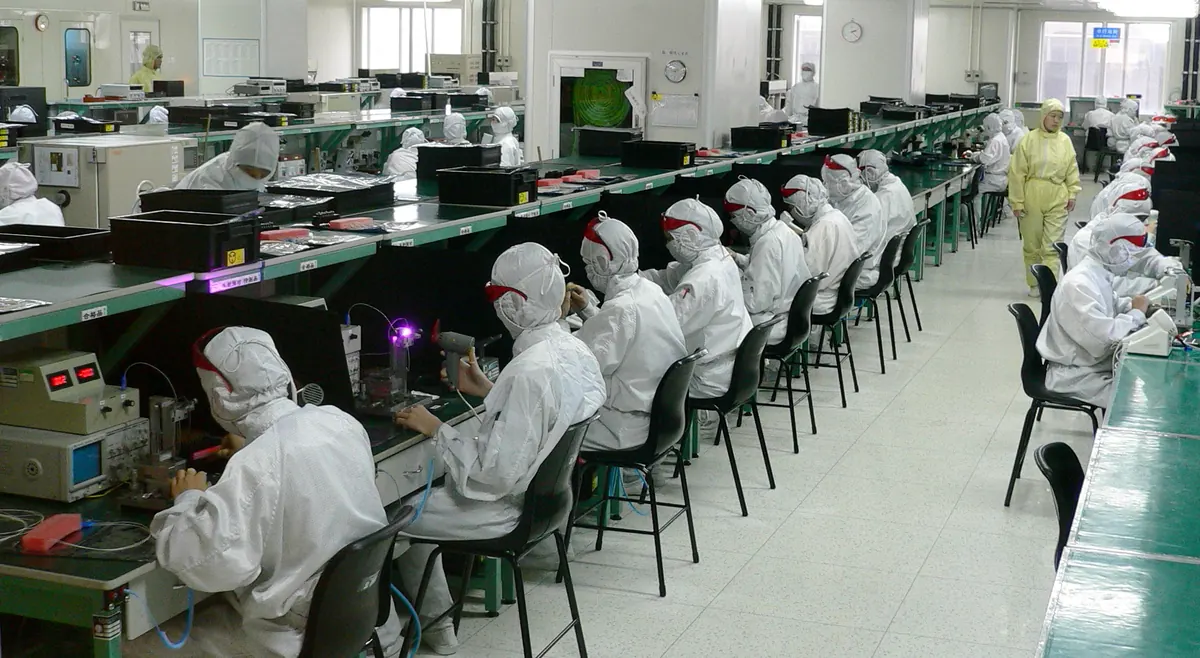
Economists call this a cluster effect. When thousands of suppliers for the same industry are packed into a small area, every company benefits from shorter lead times, lower shipping costs, and a shared pool of workers who already know the trade. The cluster feeds itself: a new battery supplier opens because the phone assemblers are nearby, and another phone assembler opens because the battery suppliers are nearby. After four decades this feedback loop has built something no government policy can replicate from scratch.
The infrastructure
The Chinese government spent decades building the physical systems that move goods from a factory floor to a container ship in days.
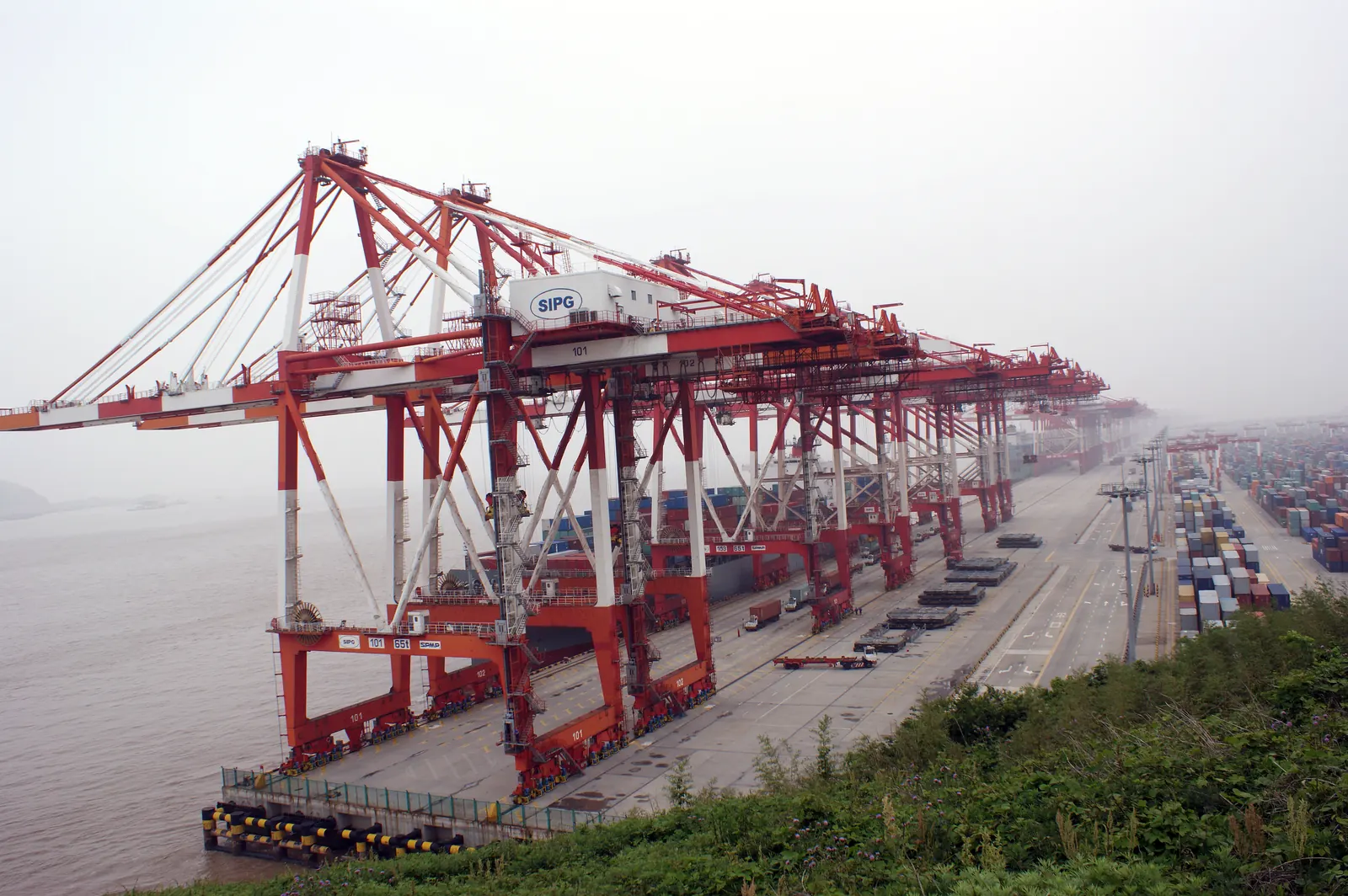
China has more than 50,000 kilometers of high-speed rail, more than the rest of the world combined. Its highway network is the longest on earth. Shanghai's Yangshan port, built on islands thirty kilometers out to sea, handles over 55 million container units a year and has been the world's busiest port for sixteen consecutive years. Ningbo, Shenzhen, and Guangzhou are all in the global top ten. Seven of the world's ten busiest container ports are Chinese.
This infrastructure was not built by the market. The central government planned it, funded it, and in many cases ordered it built ahead of demand. Yangshan opened in 2005 when Shanghai's existing ports were already full. The high-speed rail network connected factory regions to ports years before the traffic justified the investment. The logic was straightforward: build the roads and the factories will follow. For thirty years, they did.
The workforce
China graduates roughly ten times as many engineers as the United States each year, about 1.3 million compared to around 130,000. The workforce is not just large; it is experienced. A generation of workers who started on assembly lines in the 1990s and 2000s now run factories, manage supply chains, and train new hires. That institutional knowledge matters. When Apple's supplier Foxconn ramps up iPhone production before a launch, it hires hundreds of thousands of workers in Zhengzhou and expects them to be productive within days. That speed depends on a local population that already knows factory work.
Why nobody has replaced it
Every few years, a headline declares that manufacturing is leaving China. And some of it has. Nike and Samsung moved shoe and phone production to Vietnam. Apple now assembles about a quarter of its iPhones in India. Tariffs imposed by the United States since 2018 have pushed some production to Southeast Asia and Mexico.
But the numbers tell a different story. China's share of global manufacturing has not fallen. It has grown, from about 25 percent a decade ago to roughly 30 percent today. What has changed is the mix: China makes fewer T-shirts and more electric vehicles, more robots, more solar panels, and more batteries. The low-end assembly moves out. The high-value manufacturing moves in.
Vietnam has about 100 million people. Bangladesh has 170 million. Neither has the port capacity, the supplier density, or the engineering workforce to absorb more than a fraction of what China produces. India has the population but not the infrastructure, the land acquisition laws, or the manufacturing culture, at least not yet. Moving a factory is easy. Moving the ten thousand suppliers that feed it is a different problem entirely.
What could change it
Two forces are working against China's dominance: politics and demographics.
The political pressure is real. The United States has imposed tariffs on hundreds of Chinese products, restricted exports of advanced semiconductor technology, and offered subsidies to bring manufacturing home. The European Union is adding its own tariffs on Chinese electric vehicles. For the first time since China joined the WTO, the major economies are actively trying to reduce their dependence on Chinese manufacturing.
Demographics may matter more. China's population has declined for three consecutive years. The working-age population peaked at roughly one billion and is projected to fall by hundreds of millions over the coming decades. Wages are rising. The generation entering the workforce today is better educated and less willing to work factory floors for low pay. China's answer, so far, is automation: it installed 59 percent of all industrial robots sold worldwide in 2025.
Whether tariffs, reshoring, and demographic decline will break China's manufacturing dominance is the central economic question of the next twenty years. So far, the evidence points one way. Companies that try to leave discover that the cluster, the suppliers, the ports, the workforce, and the speed, took forty years to build. Rebuilding it somewhere else will not take forty years. But it will take more than a tariff.
Test what you learned
5 questions on this article. About two minutes, no signup.
Orbis has a full course on this
China: The Return of the Middle Kingdom. 30 lessons, each ending with a quiz like this one.