
Why the Mongols never conquered Europe
In 1241, Mongol armies destroyed Poland and Hungary in the same week. They had already conquered from China to Russia. Then they turned around and left.
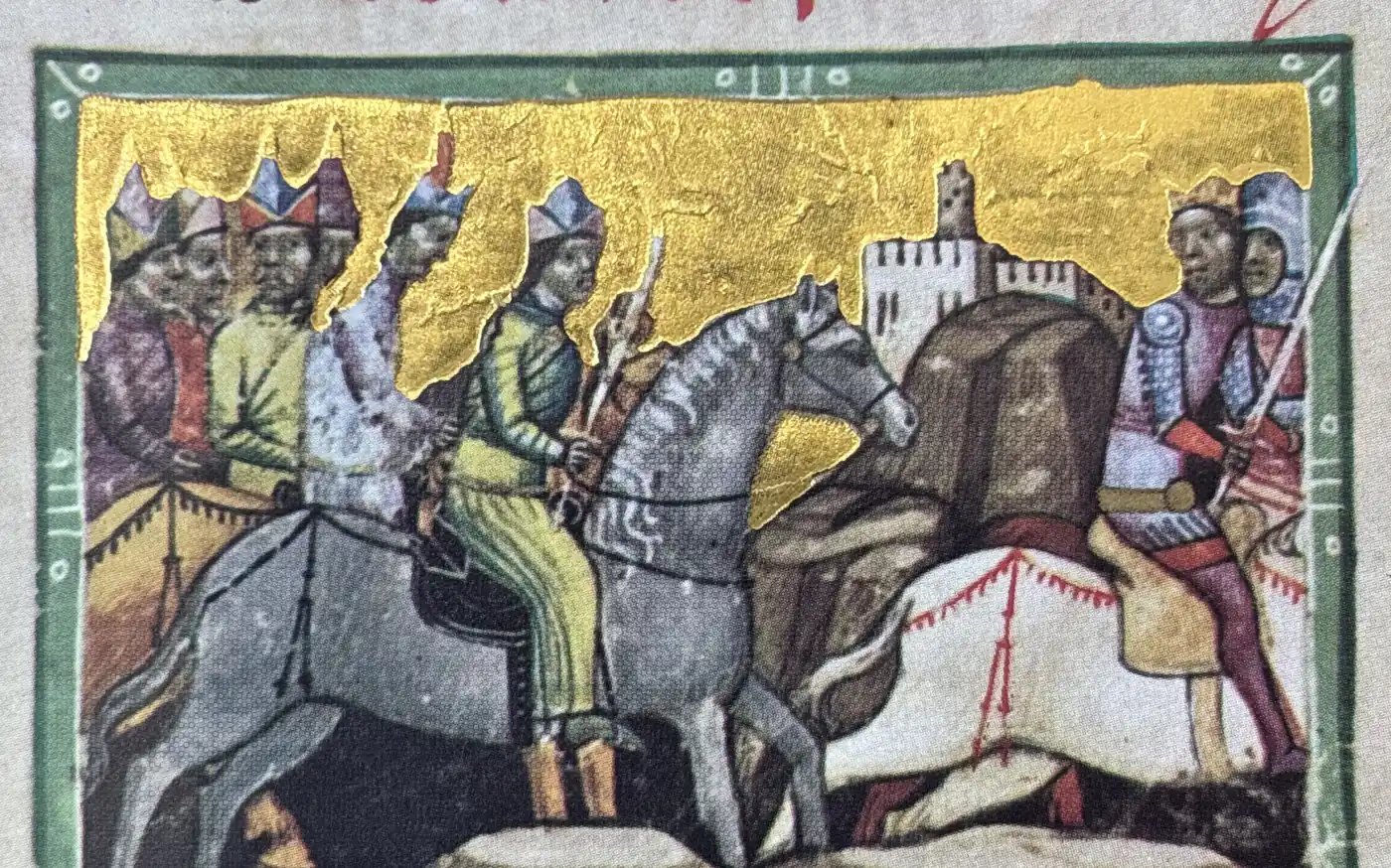
In April 1241, a sixty-five-year-old general named Subutai did something no commander had done before. He split a Mongol army into two columns, separated by 300 miles, and destroyed two European armies within two days of each other. Subutai was the son of a blacksmith from a forest tribe in what is now Siberia. He had spent decades commanding Mongol armies without losing a battle.
By this point the Mongols had already conquered northern China, Central Asia, and most of what is now Russia. Genghis Khan had destroyed the Khwarezmian Empire two decades earlier. His grandsons were pushing the frontier in every direction. Europe looked like the next target. Then the Mongol army turned east, and it never came back in force. The explanation most people learn, that the Great Khan died and everyone had to go home, is only part of the story.
Two battles, two days, 300 miles apart
The northern column, led by Batu Khan's cousins Kadan and Baidar, was a diversion. Its job was to keep Poland's armies busy while Subutai and Batu dealt with Hungary to the south. At the Battle of Legnica on April 9, 1241, a combined force of Polish knights, German soldiers, and Teutonic Knights charged the Mongol line and was cut apart. Duke Henry II the Pious of Silesia was killed. The Mongols cut off his head and paraded it on a lance. They cut the right ear off every corpse on the field and filled nine sacks.
Two days later and 300 miles to the southeast, Subutai and Batu Khan destroyed the main Hungarian army at the Battle of Mohi on the Sajó River. Subutai crossed the river south of the Hungarian camp during the night while another Mongol force attacked the bridge head-on as a diversion. At dawn the Hungarians found themselves surrounded. King Béla IV escaped the battlefield but lost most of his army. He fled west to Austria, then south through Croatia, and ended up on the island of Trogir in the Adriatic Sea, as far from the Mongols as he could get without leaving Europe. The Mongols spent the rest of 1241 burning their way across Hungary. By some estimates, 50 to 80 percent of the settlements on the Hungarian plain were destroyed.
No European army had stopped them. None had come close.
Why Ögedei's death is not enough of an answer
The standard explanation goes like this: in December 1241, the Great Khan Ögedei died in Mongolia, and Mongol tradition required all the princes to return for the kurultai, the assembly that would choose his successor. Batu had to abandon the campaign and ride home.
Ögedei died on December 11, after returning from a hunting trip and drinking through the night at a feast. He was notorious for it. A court official had been assigned to count the number of wine goblets Ögedei emptied each day. Ögedei got around the system by switching to larger cups.
The problem with the standard explanation is that Batu never went home. He withdrew from Hungary in the spring of 1242 but did not ride to Mongolia. He settled on the lower Volga River and spent the next decade building his own domain, which became the Golden Horde. The kurultai did not meet until 1246, and Batu refused to attend. He and the new Great Khan, Güyük, hated each other. At a victory feast years earlier, Güyük had called Batu "a woman with a beard" for claiming the right to drink first. Güyük later marched west with an army that many believe was aimed at Batu himself, but Güyük died on the way in 1248.
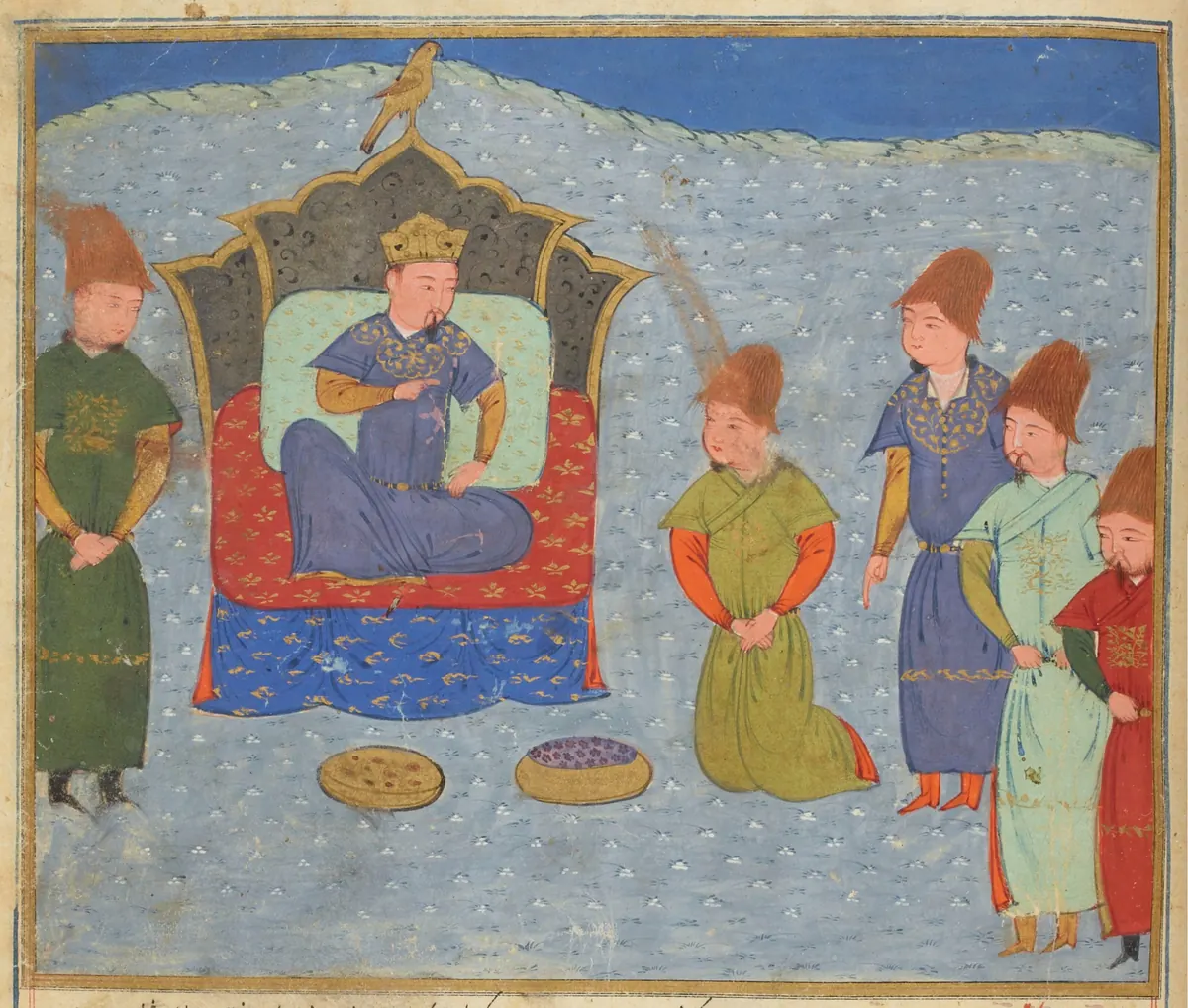
If Batu had wanted to conquer Europe, Ögedei's death freed him to do it on his own terms. He had an army, no orders to follow, and nobody in Mongolia willing to stop him. He chose to stay on the Volga instead. Ögedei's death explains why the Mongols left Hungary when they did. It does not explain why they never came back.
Not enough grass for the horses
Every Mongol soldier rode with three to five spare horses. A force of 30,000 to 50,000 troops, the range most modern historians accept for the European campaign, brought somewhere between 100,000 and 250,000 horses along with it. Those horses needed open grassland, and they needed it in quantities that Europe could not provide.
The Hungarian plain, the Puszta, is the westernmost extension of the Eurasian Steppe. On a map it looks like exactly the kind of terrain the Mongols thrived on. But it is much smaller than the Asian steppe, and in early 1242 it turned against them. A 2016 study by the climate historians Ulf Büntgen and Nicola Di Cosmo, published in Scientific Reports, used tree-ring data to reconstruct the weather. They found that warm, dry conditions in the preceding years gave way to an unusually cold and wet early 1242. The Hungarian plain flooded, pastureland turned to marsh, and the Mongol horses lost the one thing the army could not function without: food.
West of Hungary, the situation was worse. France, Germany, and Italy were forested, farmed, and fenced. The Mongol army depended on open grassland to feed its horses. In western Europe, there was almost none.
Europe was the wrong kind of target
The deeper reason is that Europe was not worth the cost.
When the Mongols conquered China, they defeated a centralized empire, replaced the emperor, and inherited a tax system that collected revenue from over 100 million farmers. When they sacked Baghdad in 1258, they took control of Silk Road trade routes connecting China to the Mediterranean. These were rich, organized states. Defeat the government and you took over the economy.
Europe in the 1240s was the opposite. It was a patchwork of hundreds of small kingdoms, duchies, and city-states. None were particularly wealthy by Asian standards, and many sat behind stone walls. The castle density in western Europe was unlike anything the Mongols had faced in Asia. Taking a castle required a siege, and sieges required time, supplies, and soldiers that could not feed themselves from empty countryside.
King Béla IV proved the point in the decades after 1241. He rebuilt Hungary around stone fortifications, launching the most ambitious castle-building program in the kingdom's history. When a second Mongol force invaded in 1285, led by Nogai Khan and Talabuga, the castles stopped them. The Mongols could not break through the new defenses, ran short of supplies, and were defeated by local forces using the castles as bases. They retreated with heavy losses. The defenses that did not exist in 1241 worked exactly as intended in 1285.
Why the withdrawal still shapes the map
The Mongol withdrawal from Europe in 1242 drew a line that lasted for centuries. East of it, Russia spent roughly 240 years under Mongol taxation and political control, a period Russians call the Tatar yoke. Moscow rose to power partly by serving as the Golden Horde's tax collector. West of the line, Europe developed its universities, banking networks, and eventually its colonial empires without Mongol interference.
Europeans at the time treated the withdrawal as a miracle. An English monk named Matthew Paris wrote that Christendom had been saved by divine intervention. The reality was less flattering. Europe was not saved by God or by its own armies. It was passed over because it was poor, fragmented, hard to hold, and far from the trade routes and farmland the Mongols actually wanted.
The pattern is visible across the full history of the steppe. Nomadic empires from the Xiongnu to the Manchus repeatedly conquered China because it was worth conquering: wealthy, centralized, and accessible from the grasslands. Europe, separated from the steppe by forests, mountains, and distance, was not. The Mongols did not fail to conquer Europe. They decided it was not worth the trouble.
Test what you learned
5 questions on this article. About two minutes, no signup.