
Civil war · West Africa
Nigeria's conflicts
Multiple conflicts since 2009Updated November 1, 2026
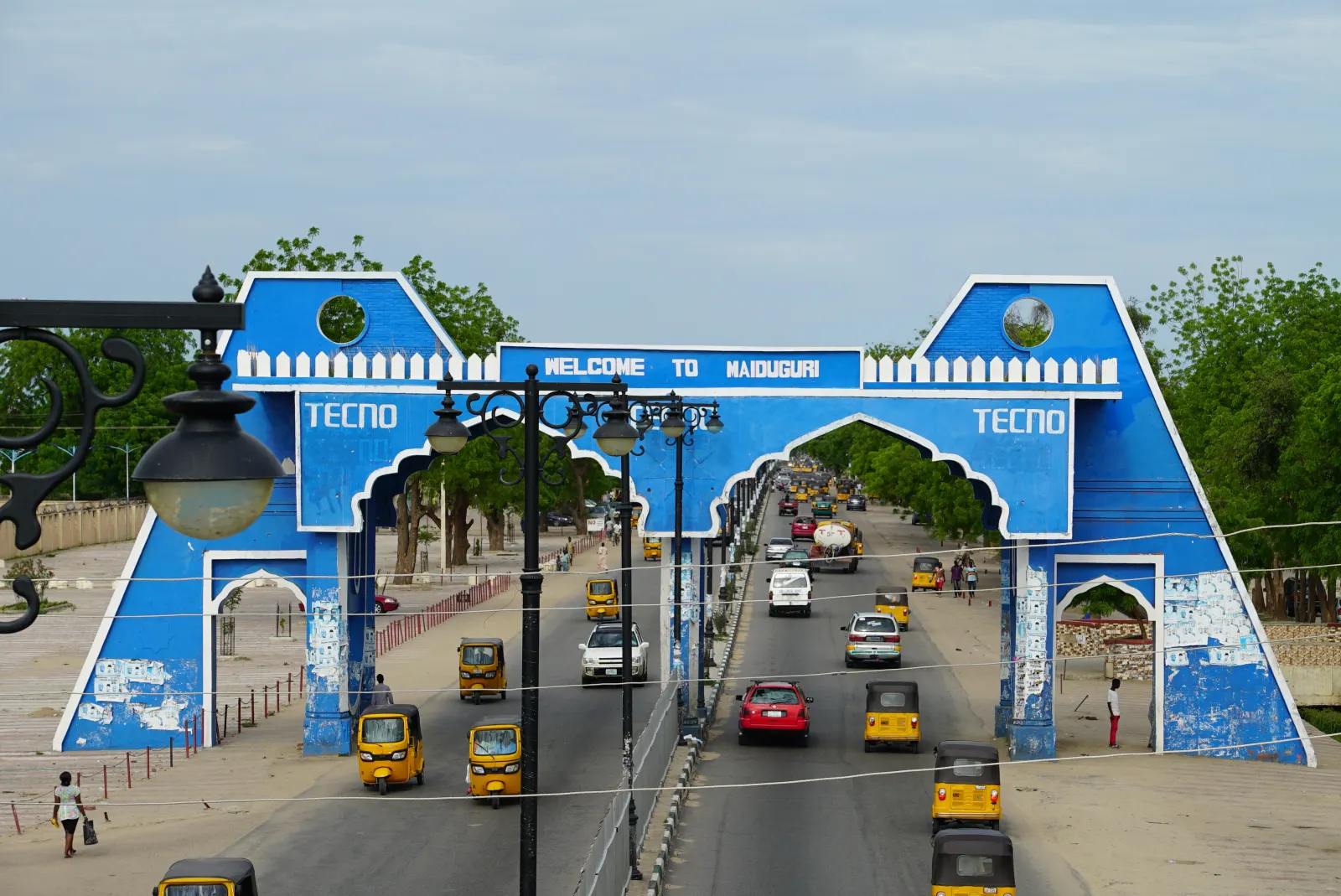
Nigeria has fought a jihadist insurgency in its northeast since 2009, when Boko Haram took up arms. Its offshoot, the Islamic State's West Africa Province (ISWAP), holds islands in Lake Chad. In the northwest, armed gangs called bandits kidnap people for ransom, and a jihadist group called Lakurawa has spread. Farmers and herders clash in the Middle Belt. ACLED counted 11,968 conflict deaths in Nigeria in 2025, more than in Syria, Yemen and Iraq combined.
- Deaths, 2025
- 11,968
- ACLED, all political violence
- Displaced
- 3.7 million
- inside Nigeria (IOM and NEMA, July 2026)
- Insurgency
- Since 2009
- Boko Haram's armed campaign
- Kidnapped
- 7,825
- July 2025 to June 2026 (SBM Intelligence)
- Election
- Jan 16, 2027
- presidential vote
Who backs whom in Nigeria?
Nigeria's government and its partners against the jihadist groups. The bandit gangs and the armed groups in the farmer-herder conflict have no state backers.
 United StatesStruck Islamic State camps in Sokoto in December 2025. A joint operation killed IS leader Abu-Bilal al-Minuki in May 2026.
 United KingdomSecurity and defence partnership since 2018; training and intelligence
 TurkeyMilitary cooperation protocol in January 2026; agreed in April to train 200 Nigerian special forces
 ChinaSold Wing Loong II armed drones and VT-4 tanks; Nigeria's largest source of imports
 ChadFights Boko Haram on Lake Chad in the MNJTF task force; Niger left the force in March 2025
 CameroonPartner in the MNJTF Lake Chad task force
Government
 Nigerian Armed Forces
Led by President Bola Tinubu. The army, navy, air force and police fight in all three regions. The military has 143,000 active troops (IISS) and flies Super Tucano attack planes and Chinese-made armed drones.
Jihadist groups
ISWAP and Boko Haram
ISWAP, the Islamic State's West Africa Province, holds islands in Lake Chad and attacks army bases in Borno and Yobe. Boko Haram (JAS) operates from Sambisa Forest and the Mandara Mountains. The United States and the UN list both as terrorist groups. Lakurawa, a jihadist group in Sokoto and Kebbi, has grown since 2024.
Where is the fighting in Nigeria?
The jihadist insurgency in the northeast, bandits and Lakurawa in the northwest, attacks spreading south into Niger and Kwara states, and farmer-herder violence in the Middle Belt.
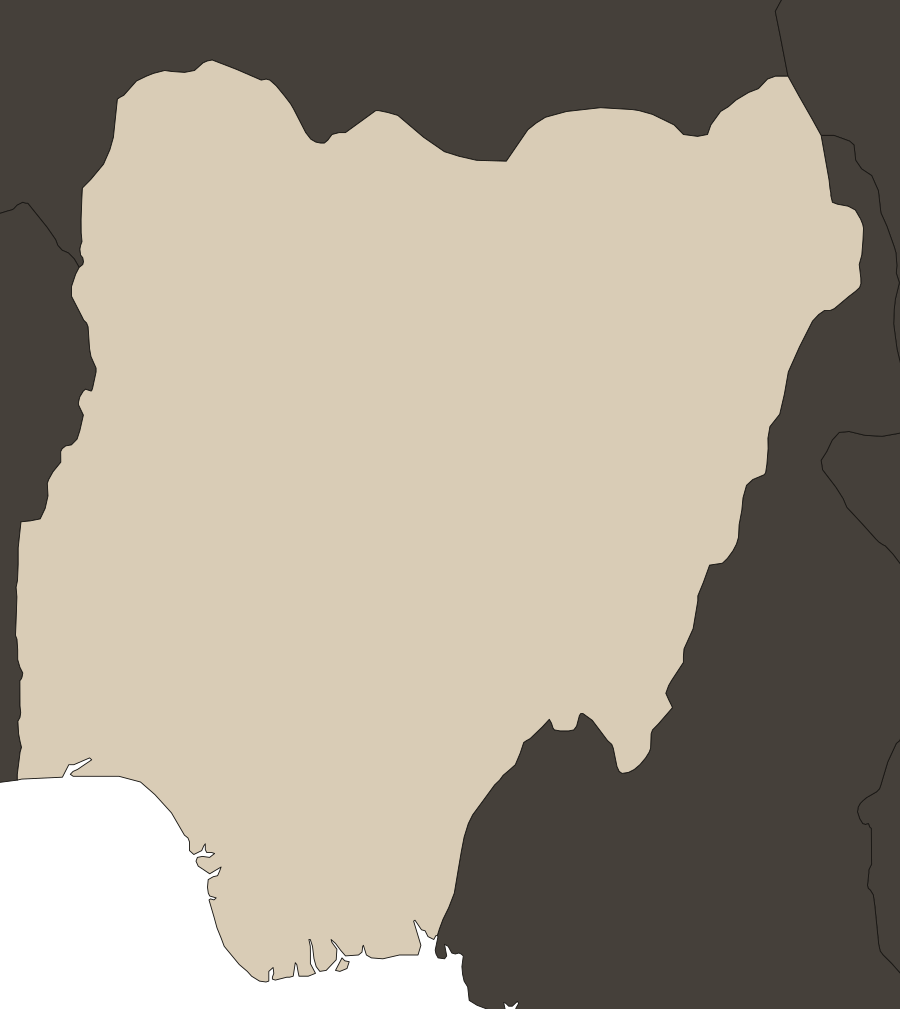
- MaiduguriNigeria's armyCapital of Borno State, where Boko Haram was founded around 2002. The army holds the city and runs its northeast campaign from here.
- Sambisa ForestISWAP/Boko HaramBoko Haram's main base. The army has raided it many times, but the group's fighters still operate there. Some of the schoolgirls kidnapped from Chibok in 2014 were held here.
- Lake Chad islandsISWAP/Boko HaramISWAP holds islands in the Nigerian part of the lake and taxes fishing communities. In May 2026 a joint US-Nigerian operation in the Lake Chad basin killed Islamic State leader Abu-Bilal al-Minuki.
- ZamfaraContestedCenter of the bandit crisis. Armed gangs based in its forests raid villages, steal cattle and kidnap people for ransom.
- Tangaza, SokotoISWAP/Boko HaramLakurawa operates in Sokoto and Kebbi states. On December 25, 2025, the US struck two Islamic State camps in the Bauni forest in Tangaza.
- PapiriGunmen seized 303 pupils and 12 teachers from St. Mary's Catholic School on November 21, 2025. The government said all of them were free by December 21.
- Woro, KwaraGunmen killed at least 162 people in Woro and Nuku on February 3-4, 2026, a local lawmaker and the Red Cross said. President Tinubu blamed Boko Haram.
- Yelwata, BenueGunmen, blamed by local officials on armed herders, attacked Yelwata on the night of June 13, 2025. Many of the dead were displaced families. Benue's governor said 59 people died. Amnesty International said at least 100.
- Bokkos, PlateauFarmers and herders have clashed in Bokkos and nearby areas for years. Police said gunmen killed 20 people in Kawel on June 21, 2026.
How did Boko Haram's war begin?
Mohammed Yusuf founded Boko Haram in Maiduguri around 2002. The group rejected Western-style education and wanted Islamic law across northern Nigeria. In July 2009 its members fought police and soldiers in several northern states, and about 800 people were killed, most of them members of the group. Yusuf was captured and then shot dead in police custody. Police said he was trying to escape. Human Rights Watch called it an extrajudicial killing. His deputy, Abubakar Shekau, took over and led the group into an armed insurgency.
Boko Haram attacked churches, mosques, markets, schools and army bases across the north. In April 2014 it kidnapped 276 schoolgirls from Chibok in Borno. In August 2014 Shekau declared a caliphate, and by early 2015 the group held an area about the size of Belgium. In March 2015 Shekau pledged loyalty to the Islamic State, and the group became its West Africa Province (ISWAP). That year Nigeria's army and the Multinational Joint Task Force (MNJTF), with troops from Chad, Niger and Cameroon, drove it out of most towns. In 2016 the Islamic State named Abu Musab al-Barnawi as the province's leader. Shekau's followers split off and went back to the name Jama'atu Ahlis Sunna Lidda'awati wal-Jihad (JAS), still widely called Boko Haram. In May 2021 ISWAP fighters overran Shekau's camp in Sambisa Forest, and Shekau reportedly blew himself up to avoid capture.
ISWAP now holds islands in Lake Chad and taxes fishing and farming communities. Boko Haram fighters operate from Sambisa Forest, the Mandara Mountains and other islands in the lake. ACLED counted 4,518 people killed in jihadist violence in Nigeria in 2025, the most since 2015. On February 3-4, 2026, gunmen killed at least 162 people in Woro and Nuku in Kwara State, far southwest of Borno. President Tinubu blamed Boko Haram. Reuters reported in late October 2026 that attacks on army bases in the northeast had surged. The army said it killed 48 fighters after attacks on two bases in Borno and Yobe on October 29-30, 2026.
How the insurgency unfolded
- 2002Mohammed Yusuf founds Boko Haram in Maiduguri.
- 2009About 800 people die in clashes with police and soldiers. Police kill Yusuf in custody, and Shekau takes over.
- 2014Boko Haram kidnaps 276 schoolgirls from Chibok and declares a caliphate.
- 2015Shekau pledges loyalty to the Islamic State. Nigeria and its neighbors retake most towns.
- 2016The group splits into ISWAP and Shekau's JAS, still called Boko Haram.
- 2021ISWAP overruns Shekau's camp. Shekau reportedly kills himself.
- Feb 2026Gunmen kill at least 162 people in Woro and Nuku, Kwara State.
- Oct 2026The army says it killed 48 fighters after attacks on bases in Borno and Yobe.
Who are the bandits, and why do they kidnap?
Since the early 2010s, armed gangs in northwest Nigeria have raided villages, stolen cattle and kidnapped people for ransom. Nigerians call them bandits. The gangs are loosely organized and based in forests in Zamfara, Katsina, Kaduna, Sokoto and Niger states. Many of their fighters are young Fulani men. Crisis Group traces the violence to competition for land and water between mostly Fulani herders and mostly Hausa farmers. Researchers also point to the spread of small arms and the thin presence of the police in rural areas. Herders say they lose cattle to rustlers, and that village vigilante groups have killed Fulani herders.
SBM Intelligence, a Lagos research firm, counted 7,825 people kidnapped in Nigeria between July 2025 and June 2026, 66% more than a year earlier. At least 1,142 people were killed in kidnapping incidents. Confirmed ransom payments reached 7.78 billion naira ($5.8 million). SBM estimated that Boko Haram received about 7 billion naira of it, mostly from two mass abductions. One was of 416 people in Ngoshe in Borno. The other was at St. Mary's Catholic School in Papiri, Niger State, where gunmen seized 303 pupils and 12 teachers on November 21, 2025. About 50 pupils escaped. The government said the rest were freed by December 21, and it denies paying ransoms. Four days before Papiri, gunmen took 25 schoolgirls from a school in Maga, Kebbi State. One escaped, and the other 24 were freed on November 25.
Lakurawa is a jihadist armed group in Sokoto and Kebbi states that drew wide attention in late 2024. Analysts disagree on whether it is tied to the Islamic State's Sahel Province or to al-Qaeda-linked groups. It taxes villagers and attacks soldiers and police. Police in Kebbi said Lakurawa fighters killed a police inspector and 11 residents between October 26 and 29, 2026.
Kidnapped
7,825
People kidnapped in one year
SBM Intelligence counted 7,825 kidnapping victims in 1,411 incidents between July 2025 and June 2026. Confirmed ransom payments were 7.78 billion naira.
How many people have died in Nigeria's conflicts?
No single agency counts all of Nigeria's dead. ACLED, which tracks reported violent events, counted 11,968 conflict deaths in Nigeria in 2025. That was more than its totals for Syria, Yemen and Iraq combined. Ladd Serwat, an ACLED analyst, told the Washington Post in April 2026 that attacks in Nigeria grew 25% in the first three months of 2026.
The northeast insurgency has killed far more people over the years. A study for the UN Development Programme estimated nearly 350,000 deaths by the end of 2020. Most of them died of hunger and disease caused by the war.
Nigeria's own forces have also killed civilians. In 2015 Amnesty International reported that more than 7,000 men and boys had died in military detention in the northeast since 2011. The military rejected the report. On December 3, 2023, an army drone strike hit villagers marking a Muslim festival in Tudun Biri, Kaduna State. The army admitted the mistake and said 85 people died. Amnesty International put the toll at about 120.
Violence between farmers and herders in the Middle Belt kills hundreds of people every year. Most farmers in Benue and Plateau are Christians, and most herders are Muslim Fulani. Wilfred Anagbe, the Catholic bishop of Makurdi in Benue, told US congressional hearings in 2025 that the attacks are a genocide of Christians. The Miyetti Allah Cattle Breeders Association, a herders' group, says herders' cattle are stolen and herders are killed too, and it rejects the blaming of all Fulani. Nextier, a Nigerian research firm, counted more than 2,000 people killed in farmer-herder clashes in Benue and Plateau states since 2021. On the night of June 13, 2025, gunmen attacked Yelwata in Benue's Guma area. Local officials blamed armed herders. Many of the dead were displaced families sheltering in the town. Benue's governor put the toll at 59, and police later said 47. Amnesty International said at least 100 people were killed. On June 21, 2026, gunmen killed 20 people in Kawel, in Plateau's Bokkos area, police said.
Conflict deaths in 2025 (ACLED)
- Nigeria11,968
 Syria7,918
 Yemen2,902
 Afghanistan927
 Iraq574
What did the US do in Nigeria?
On October 31, 2025, President Trump designated Nigeria a Country of Particular Concern for religious freedom. Nigeria had been on that list in 2020 and was taken off in 2021. The next day Trump said Christians were being killed and threatened military action and a cut in aid. On December 25, 2025, the US struck two Islamic State camps in the Bauni forest in Tangaza, Sokoto State. A US official told the New York Times that a Navy destroyer in the Gulf of Guinea fired more than a dozen Tomahawk missiles. Nigeria's government said it approved the strikes and supplied the intelligence. It named the targets as Islamic State fighters, Lakurawa and bandits.
About 200 US troops arrived in February 2026 to train and advise Nigeria's forces. On May 15-16, 2026, a joint US-Nigerian operation in the Lake Chad basin killed Abu-Bilal al-Minuki, whom US officials called the Islamic State's second-in-command. In July, AFRICOM's commander, General Dagvin Anderson, said most of the forces sent for that operation had left. On September 1, Nigeria confirmed that the 200 troops were leaving. The two governments still share intelligence.
Trump and US Christian advocacy groups say Christians in Nigeria face a targeted killing campaign. Some Nigerian church leaders agree. Rev. John Hayab, who heads the Christian Association of Nigeria in the northern states, said in November 2025 that the attackers have always come in the name of Islam. Open Doors, a Christian charity, counted 3,490 Christians killed for their faith in Nigeria in the year to September 2025, 72% of its world total. ACLED does not record the religion of most victims. It counted 20,409 civilians killed in Nigeria from January 2020 to September 2025. Of those, 317 died in attacks where the victims' Christian identity was a reported factor, and 417 in attacks targeting Muslims, AP reported. ACLED analysts said these attacks are part of a wider rise in violence against civilians of all faiths. Ladd Serwat of ACLED said Muslims and Christians had been targeted at similar rates over the past five years. Open Doors counts Christians it judges were killed for their faith, so the two counts measure different things.
Nigeria's government rejects the claim of a targeted campaign. On November 1, 2025, President Tinubu said that "the characterisation of Nigeria as religiously intolerant does not reflect our national reality." His government says the violence hits Christians and Muslims alike, and that most victims of the armed groups in the Muslim-majority north are Muslims.
The US intervention
- Oct 31, 2025Trump designates Nigeria a Country of Particular Concern.
- Nov 1, 2025Trump threatens military action over killings of Christians.
- Dec 25, 2025US missiles strike Islamic State camps in Sokoto State.
- Feb 2026About 200 US troops arrive to train and advise.
- May 2026A joint operation kills Islamic State leader Abu-Bilal al-Minuki.
- Sep 2026Nigeria confirms the 200 US troops are leaving.
How could Nigeria's conflicts end?
Nigeria holds a presidential election on January 16, 2027. President Tinubu faces Atiku Abubakar and Peter Obi. The army has fought in the northeast for 17 years without defeating the jihadist groups. It says 152,864 fighters and their family members surrendered there between 2021 and May 2026. Several state governors in the northwest have offered bandit leaders cash and resettlement in exchange for disarmament. Several of these deals collapsed within months.
The MNJTF has weakened. Niger left it in March 2025. Boko Haram killed 23 Chadian soldiers on Barka Tolorom island in Lake Chad on May 4, 2026, Chad's army said. With most US troops gone, Nigeria relies on its own forces and on other partners. Turkey signed a military cooperation protocol with Nigeria in January 2026 and agreed in April to train 200 Nigerian special forces. Twenty-four Italian M-346 jets are due from December 2026, and 12 US AH-1Z helicopters by early 2029.
Nigeria's government and many researchers link the violence to poverty and the lack of schooling in the north. Nigeria's median age is 18.1 years, and life expectancy is 54.8. UNICEF counts 18.3 million children out of school, the most of any country. Armed groups recruit young men who have no jobs and no schooling.
Questions about Nigeria's conflicts
Who is Boko Haram?
Boko Haram is a jihadist armed group founded in Maiduguri around 2002. Its name is usually translated as 'Western education is forbidden'. It launched an armed insurgency in 2009 and kidnapped 276 schoolgirls from Chibok in 2014. It split in 2016, and its rival, ISWAP, is now the larger faction.
What is ISWAP?
The Islamic State's West Africa Province. Boko Haram took that name when Abubakar Shekau pledged loyalty to the Islamic State in 2015. In 2016 the Islamic State named Abu Musab al-Barnawi as leader, and Shekau's followers split off. ISWAP holds islands in Lake Chad and taxes fishing communities.
Are Christians being targeted in Nigeria?
President Trump and Christian advocacy groups say they are. Open Doors counted 3,490 Christians killed for their faith in Nigeria in the year to September 2025. ACLED counted 20,409 civilians killed from 2020 to September 2025, including 317 in attacks tied to the victims' Christian identity and 417 in attacks targeting Muslims. Nigeria's government rejects the claim and says the violence hits both faiths.
How many people have been displaced in Nigeria?
About 3.7 million Nigerians were displaced inside the country in July 2026, according to IOM and Nigeria's emergency agency, NEMA. Most fled the northeast insurgency. UNHCR counts nearly 800,000 displaced in the northwest, where bandit violence has grown.
Did the US bomb Nigeria?
Yes. On December 25, 2025, the US struck two Islamic State camps in Sokoto State. Nigeria's government said it approved the strikes and supplied the intelligence. In May 2026 a joint US-Nigerian operation killed Islamic State leader Abu-Bilal al-Minuki in the Lake Chad basin.
What are bandits in Nigeria?
Armed gangs in northwest Nigeria that kidnap people for ransom, steal cattle and attack villages. They operate mainly in Zamfara, Katsina, Kaduna, Sokoto and Niger states. SBM Intelligence counted 7,825 kidnapping victims across Nigeria in the year to June 2026.
More on Nigeria's conflicts
 Country profileNigeria: allies, enemies and economy
 Country profileNiger: allies, enemies and economy
 Country profileChad: allies, enemies and economy
 Country profileCameroon: allies, enemies and economy
 Civil warThe war in the Sahel
 ArticleWhat happened to ISIS after the caliphate fell?
 ArticleWhy is the Sahel full of military coups?