
Civil war · West Africa
The war in the Sahel
Fighting since 2012Updated November 1, 2026
Three military governments in Mali, Burkina Faso and Niger are fighting jihadist groups across the Sahel, the dry belt south of the Sahara. The strongest group is JNIM, al-Qaeda's branch in the region. Islamic State's Sahel Province fights both the armies and JNIM. The three juntas formed the Alliance of Sahel States, expelled French troops and brought in Russian fighters. JNIM has attacked fuel convoys to Bamako, Mali's capital, since September 2025. ACLED counted more than 10,000 deaths from political violence in the three countries in 2025.
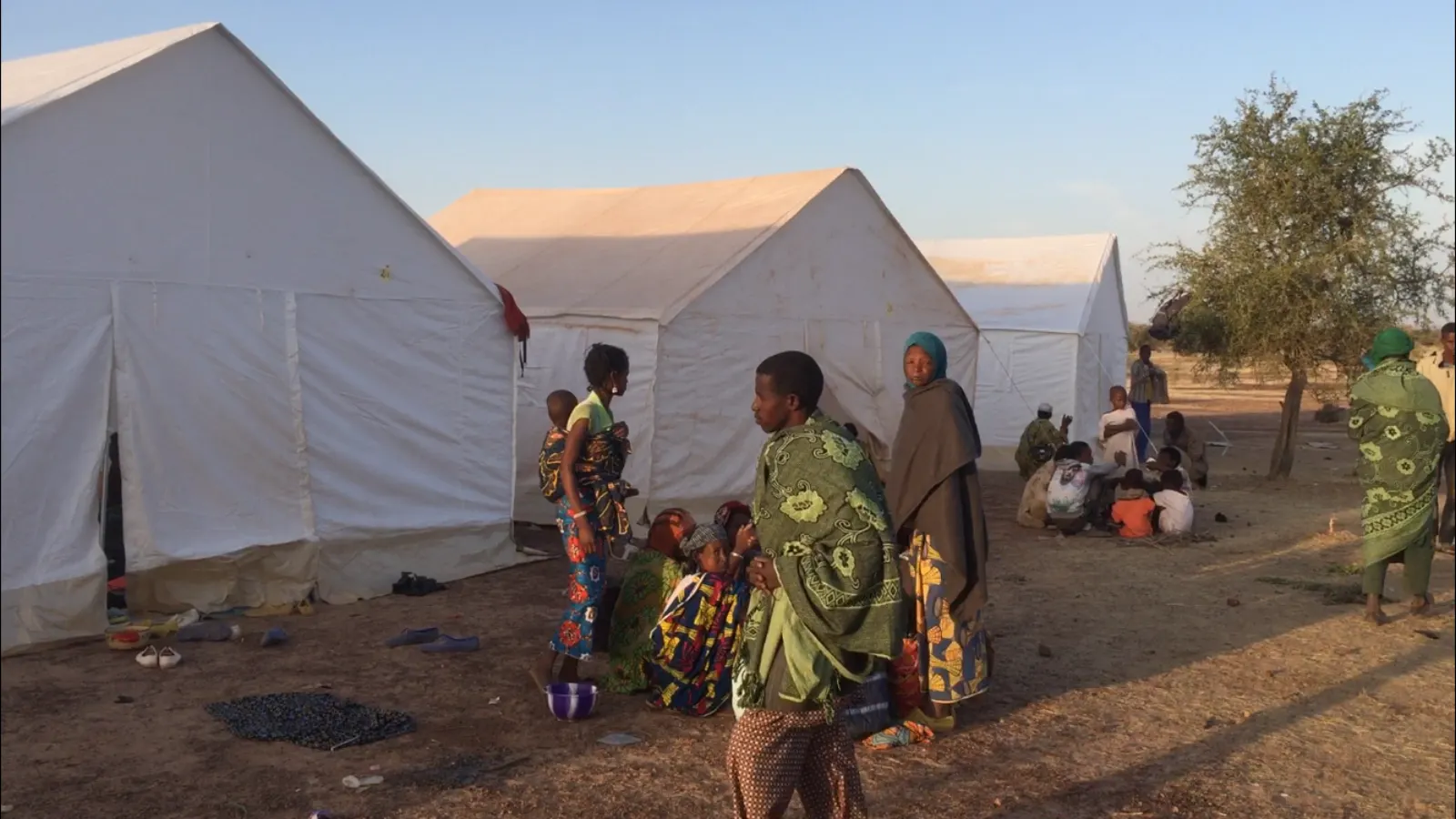
- Deaths in 2025
- Over 10,000
- across the three countries (ACLED)
- Displaced
- Nearly 4 million
- from Burkina Faso, Mali and Niger (UNHCR, October 2026)
- Territory
- About 40%
- of Burkina Faso under government control (independent estimates)
- Alliance formed
- Sept 2023
- Mali, Burkina Faso, Niger
Who backs whom in the Sahel?
The three juntas and their backers on one side, JNIM on the other. Islamic State's Sahel branch fights both.
 RussiaAfrica Corps fighters under Russia's Defense Ministry: estimates of 1,700 to 2,000 across the three countries, most in Mali (AP)
 TurkeySells armed drones to all three: Bayraktar TB2s, and the larger Akinci to Mali and Burkina Faso
Governments
Alliance of Sahel States
The armies of Mali (led by General Assimi Goïta), Burkina Faso (Captain Ibrahim Traoré) and Niger (General Abdourahamane Tiani). They share a joint force of about 5,000 troops. Burkina Faso also arms a civilian militia, the Volunteers for the Defense of the Homeland.
Jihadists
JNIM (al-Qaeda's Sahel branch)
Led by Iyad Ag Ghaly, a Tuareg from Kidal. JNIM is the strongest armed group and operates across all three countries. Islamic State's Sahel Province is a separate group that fights both the armies and JNIM, mainly around Ménaka and Tillabéri. In northern Mali, the Tuareg separatists of the Azawad Liberation Front (FLA) fight the army, at times alongside JNIM.
 UkraineMali and Niger accused Ukraine of helping the rebels and JNIM at Tinzaouaten in 2024 and cut ties. Ukraine denies it.
ECOWAS · Named Lansana Kouyaté mediator with the AES in March 2026. The first ministerial meeting with the AES, in Dakar on October 17, 2026, set up working groups on a framework agreement.
ConfirmedReported, denied
Where is the fighting in the Sahel?
The war spans three countries. JNIM holds large rural areas and besieges towns. Islamic State is strongest in the east of Mali and the west of Niger.
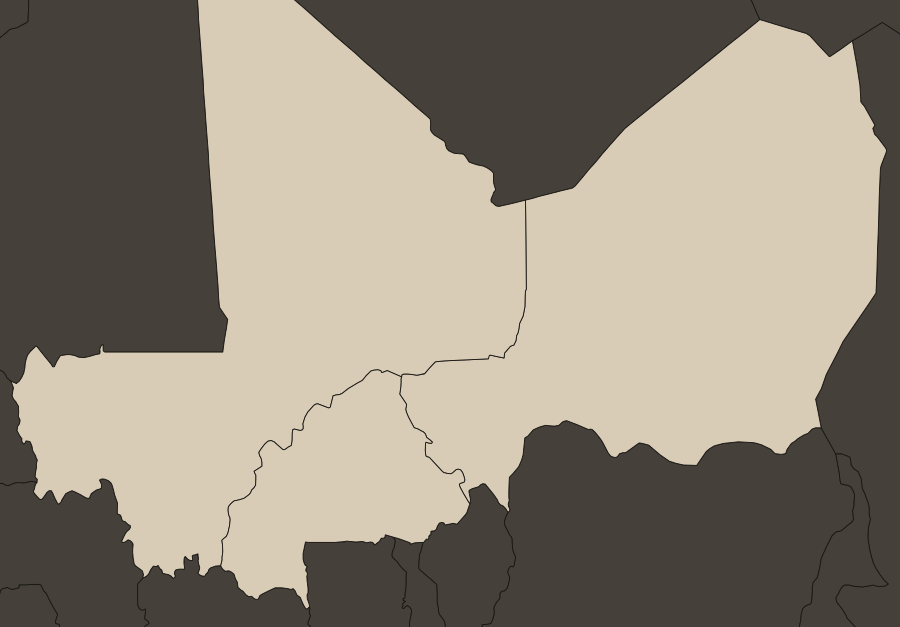
- BamakoAESMali's capital. JNIM declared a blockade on fuel imports in September 2025 and a full blockade of Bamako on April 28, 2026. Fuel arrives in army-escorted convoys.
- KidalAESThe FLA's Tuareg separatists took it in April 2026, during joint attacks with JNIM. Mali's army and Russian Africa Corps fighters re-entered on October 6, 2026, after the FLA withdrew.
- TinzaouatenContestedOn the Algerian border. In July 2024 Tuareg separatists and JNIM fighters ambushed a Malian army and Wagner column here, the heaviest known loss for Russian fighters in Africa.
- DjiboContestedUnder JNIM blockade since 2022. On May 11, 2025 JNIM held the town for several hours and killed more than 100 soldiers, militiamen and civilians (Crisis Group).
- MénakaContestedThe army holds the town. Islamic State's Sahel Province is strongest in the countryside around it, and its fighters killed at least 48 people in the region in October 2026 (Reuters).
- TillabériContestedNiger's deadliest region. ACLED recorded nearly 1,300 of Niger's 1,939 conflict deaths in 2025 here. IS Sahel and JNIM both operate in the area.
- OuagadougouAESBurkina Faso's capital. Captain Ibrahim Traoré took power here in September 2022, in the country's second coup that year.
- BarsaloghoContestedOn August 24, 2024, JNIM attacked residents digging defensive trenches on the army's orders. Human Rights Watch counted at least 133 killed. Other estimates reach 600.
Why is there a war in the Sahel?
The war began in northern Mali in 2012, when Tuareg separatists and jihadist groups took over cities including Timbuktu and Gao. France sent troops in January 2013 and pushed the jihadists back, but the violence spread south and into Burkina Faso and Niger.
Two jihadist networks now dominate. JNIM formed in 2017 as an umbrella for al-Qaeda-linked groups under Iyad Ag Ghaly, a Tuareg from Kidal. It collects taxes in villages it controls and enforces its own rules. Islamic State's Sahel Province began in 2015, when a commander of a local al-Qaeda-linked group pledged allegiance to Islamic State. It fights mainly in the east of Mali and the west of Niger, around Ménaka and Tillabéri.
The elected governments could not stop the spread. Soldiers overthrew them one by one: Mali in 2020 and 2021, Burkina Faso twice in 2022, Niger in 2023. The juntas said France had failed to defeat the jihadists in nine years and that they would defend their sovereignty with new partners. They expelled French forces, brought in Russian fighters and formed the Alliance of Sahel States. The violence has kept growing under military rule. In Niger, ACLED counted 5,836 deaths in the three years after the July 2023 coup, against 3,199 in the three years before.
How the war spread
- 2012Tuareg and jihadist groups seize northern Mali.
- Jan 2013France sends troops to push them back.
- 2015Jihadist violence spreads into Burkina Faso.
- 2017JNIM forms as al-Qaeda's Sahel branch.
- Aug 2020Mali's first coup. A second follows in May 2021.
- 2022Burkina Faso has two coups in eight months. France leaves Mali.
- Jul 2023Niger's presidential guard overthrows the elected president.
- Sep 2023The three juntas form the Alliance of Sahel States.
- Jan 2025The AES leaves the West African bloc ECOWAS.
- Apr 2026JNIM and Tuareg separatists attack cities across Mali and kill the defense minister. The separatists take Kidal.
- Oct 2026Mali's army and Russian fighters re-enter Kidal.
How many people have died in the Sahel war?
ACLED counted more than 10,000 deaths from political violence in Mali, Burkina Faso and Niger in 2025. Burkina Faso was the worst hit. UCDP counted 4,441 deaths there in 2025, the fourth-highest toll in Africa. UCDP counted 2,157 deaths in Mali and 1,117 in Niger.
The armies and their allies have also killed many civilians. ACLED attributes 523 civilian deaths in Burkina Faso in 2025 to the army and the Volunteers for the Defense of the Homeland militia, and 339 to JNIM and Islamic State. In Mali, ACLED attributes 918 civilian deaths in 2025 to the army and Russian fighters, and 232 to the jihadists. Human Rights Watch documented at least 1,837 civilians killed in Burkina Faso between January 2023 and August 2025, more than 1,200 of them by government forces and their allies. It called attacks on Fulani communities "ethnic cleansing". Both governments deny targeting civilians and say their forces fight terrorists.
Both sides have carried out massacres. In March 2022 at Moura, in central Mali, Malian troops and foreign soldiers killed at least 500 people, according to the UN human rights office. Mali's army said it killed 203 militants there. In March 2025 near Solenzo, in western Burkina Faso, militias led by the army killed more than 130 Fulani civilians, according to Human Rights Watch. The government said its forces had repelled a terrorist attack. On August 24, 2024, JNIM fighters attacked residents of Barsalogho, Burkina Faso, who were digging defensive trenches on the army's orders. Human Rights Watch counted at least 133 killed. A French security assessment cited by CNN put the toll at up to 600.
Deaths in conflict in the Sahel, 2025 (UCDP)
 Burkina Faso4,441
 Mali2,157
 Niger1,117
Who controls what in the Sahel?
Independent estimates by ACAPS and the Africa Center for Strategic Studies say only about 40% of Burkina Faso is under government control. The government said in June 2026 that it controlled 74.5%. In Mali, JNIM operates from the borders of Senegal and Guinea in the west to the center of the country. The army holds the main cities but struggles to keep supply routes open.
JNIM declared a blockade on fuel imports to Mali in September 2025 and attacked tanker convoys on the roads from Senegal and Côte d'Ivoire. More than 300 tankers have been destroyed. Bamako ran short of fuel, and schools closed for two weeks in late 2025. The blockade eased in early 2026. After the April 25 attacks, JNIM declared a full blockade of Bamako on April 28, 2026. Fuel now reaches the capital in convoys escorted by the army.
In Niger, the southwestern Tillabéri region is the deadliest zone. ACLED said Tillabéri was the deadliest part of the central Sahel for civilians in 2025. Nearly 1,300 of the 1,939 deaths ACLED recorded in Niger that year happened there. The violence has also spread to the coastal states. In Benin, JNIM killed 54 soldiers in April 2025 and 15 more in March 2026, according to Benin's army. Attacks have also reached northern Togo, and JNIM claimed its first attack in Nigeria in October 2025.
Burkina Faso
About 40%
Under government control
Independent estimates say only about 40% of Burkina Faso is under the government's control. The government says it controls 74.5%.
What role does Russia play in the Sahel?
Russia replaced France as the juntas' main security partner. The Wagner group arrived in Mali in late 2021. After Wagner's founder Yevgeny Prigozhin died in a plane crash in August 2023, Russia's Defense Ministry built the Africa Corps under its own command. Wagner said in June 2025 that it was leaving Mali, and the Africa Corps took over.
AP cites estimates of 1,700 to 2,000 Russian fighters across the three countries, most of them in Mali. They helped Mali's army take Kidal from Tuareg separatists in November 2023 and again on October 6, 2026. They also helped Niger's presidential guard put down a mutiny in Niamey in August 2026. But they have suffered serious losses. At Tinzaouaten, near the Algerian border, in July 2024, Tuareg separatists and JNIM fighters ambushed a Malian and Wagner column. The separatists said they killed 84 Wagner fighters and 47 Malian soldiers. JNIM claimed 50 Russians killed. It was the heaviest known loss for Russian fighters in Africa. Mali and Niger accused Ukraine of helping the attackers and cut ties with Kyiv. Ukraine denies it.
On September 10, 2026, JNIM overran the army camp at Dioura in central Mali. AFP's security sources first counted at least 50 soldiers and five Russian fighters killed, then more than 100 soldiers killed and more than 80 taken prisoner. JNIM claimed it killed 150. Goïta attended the third Russia-Africa summit in Moscow on October 28-29, 2026.
Russia in the Sahel
- Late 2021Wagner fighters arrive in Mali.
- Aug 2022The last French troops leave Mali.
- Jan 2024Russian Africa Corps troops arrive in Burkina Faso.
- Apr 2024Russian military instructors arrive in Niger.
- Jul 2024Wagner fighters suffer heavy losses at Tinzaouaten.
- Jun 2025Wagner leaves Mali. The Africa Corps takes over.
- Aug 2026Russian troops help put down a mutiny in Niamey.
- Oct 2026Russian fighters re-enter Kidal with Mali's army.
How could the Sahel war end?
Neither side is close to winning. The juntas control the capitals and the main cities. The jihadists control large stretches of countryside and can besiege towns. Russian fighters and the Turkish drones the juntas have bought have not turned the war in the juntas' favor.
The three juntas have dissolved all political parties. Mali's transition council gave Goïta a five-year term in July 2025, renewable without elections. Burkina Faso's appointed assembly replaced the transition charter with a "Charter of the Revolution" in March 2026, and Traoré said democracy is "not for us". Niger's Tiani was sworn in in March 2025 for a five-year transition that can be extended.
The three countries left ECOWAS in January 2025. ECOWAS named the former Guinean prime minister Lansana Kouyaté as its mediator with them in March 2026. The first formal ministerial meeting between ECOWAS and the AES took place in Dakar on October 17, 2026. The two sides agreed to set up joint working groups to draft a framework for cooperation. ECOWAS leaders are expected to review the results at their summit in December 2026. Neither side spoke of the AES rejoining ECOWAS.
Talks with JNIM are the other open question. Some villages and towns have made local truces with the group. In 2024 Mali's national dialogue recommended opening talks with jihadist groups, but none of the three juntas has announced formal negotiations.
Questions about the Sahel war
Who is fighting in the Sahel?
The armies of Mali, Burkina Faso and Niger, backed by Russian Africa Corps fighters and Turkish drones, against JNIM (al-Qaeda's Sahel branch) and Islamic State's Sahel Province. Tuareg separatists in northern Mali are a third force. JNIM and Islamic State also fight each other.
How many people have been displaced by the Sahel war?
UNHCR said in October 2026 that nearly 4 million people from Burkina Faso, Mali and Niger have been forced from their homes, twice as many as in 2020. About 3 million of them are displaced inside the three countries, more than two-thirds in Burkina Faso.
What is the Alliance of Sahel States?
A bloc formed in September 2023 by the military governments of Mali, Burkina Faso and Niger. They left ECOWAS in January 2025, launched a joint military force and share a passport. Captain Ibrahim Traoré of Burkina Faso chairs the alliance in 2026.
Is al-Qaeda active in the Sahel?
Yes. JNIM, which stands for Jama'at Nusrat al-Islam wal-Muslimin, is al-Qaeda's branch in the Sahel. It formed in 2017 and is the strongest armed group in the region. It operates across Mali, Burkina Faso and Niger and has attacked Benin, Togo and Nigeria.
Why did France leave the Sahel?
France sent troops to Mali in 2013 to push back jihadists. The mission lasted nearly a decade, but the violence kept spreading. After the coups, the juntas said France had failed and expelled its forces: Mali by August 2022, Burkina Faso by early 2023, Niger by the end of 2023. The juntas turned to Russia instead.
Who is winning the Sahel war?
Neither side. The armies hold the main cities. JNIM and Islamic State hold large rural areas and can besiege towns. ACLED counted more than 10,000 deaths from political violence in the three countries in 2025. Independent estimates say about 40% of Burkina Faso is under government control.
More on the Sahel war
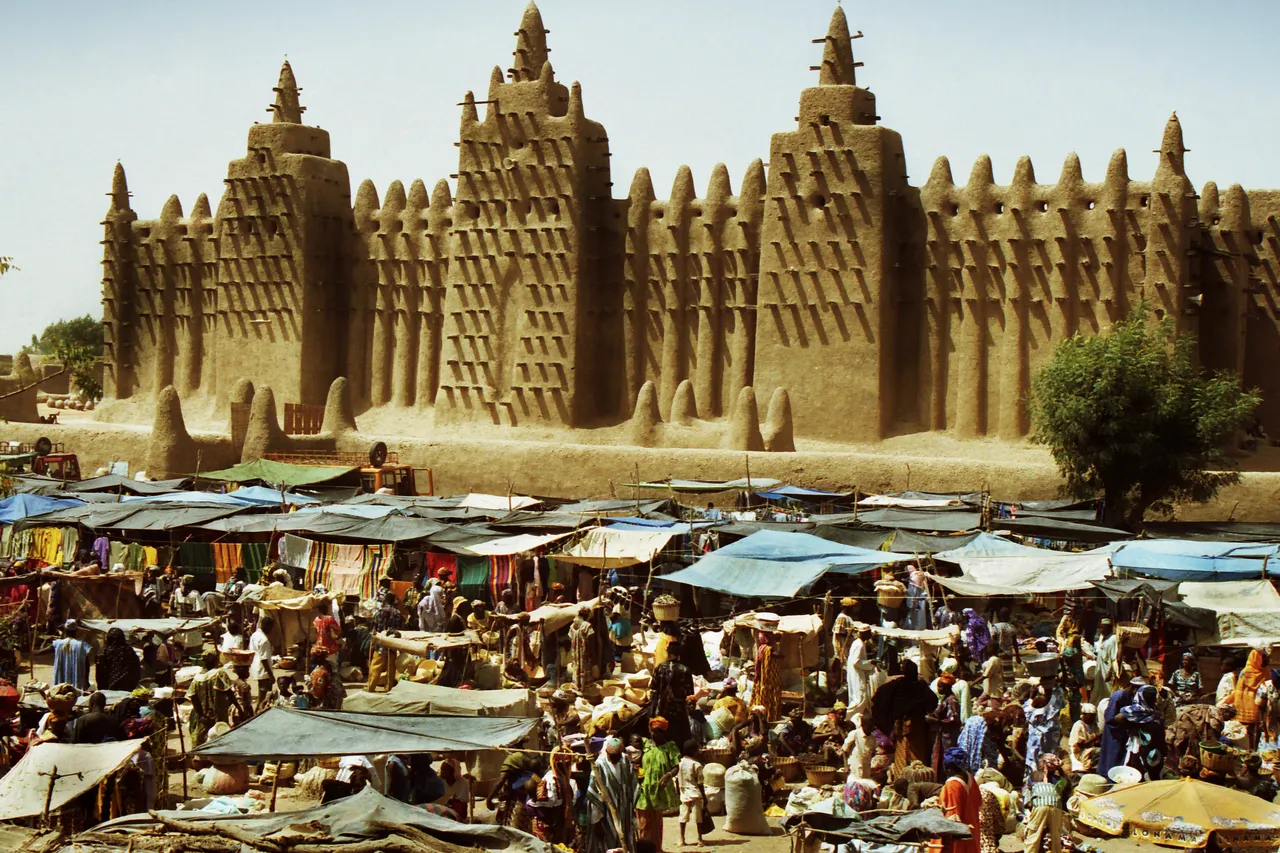 Country profileMali: allies, enemies and economy
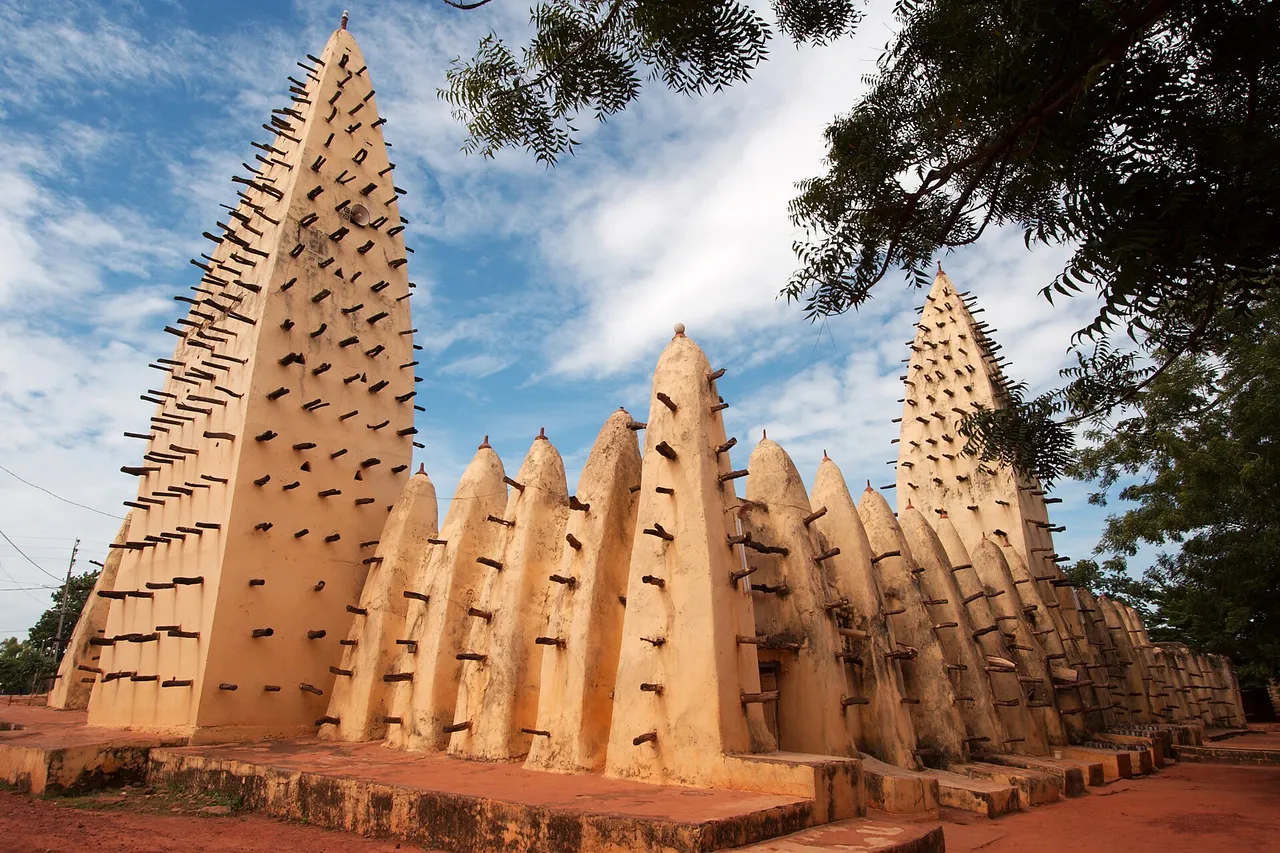 Country profileBurkina Faso: allies, enemies and economy
 Country profileNiger: allies, enemies and economy
 Civil warNigeria's conflicts
 ArticleWhy is the Sahel full of military coups?
 ArticleWhat happened to ISIS after the caliphate fell?
 QuizAfrican History