Armed group and party · Lebanon · Iran's network
Hezbollah
Truce with Israel, strikes go onUpdated November 19, 2026
Hezbollah is a Lebanese Shia armed group and political party founded in 1982 with Iranian help. It calls itself a resistance movement against Israel. The United States designated it a terrorist organization in 1997. Iran is its main funder. The US Treasury said Iran sent more than $1 billion to Hezbollah in 2025. Hezbollah dominates south Lebanon, the Bekaa valley and south Beirut, but Israel has held a strip along the border since April 2026. Before 2024 Israeli intelligence estimated its arsenal at about 150,000 rockets and missiles. By March 2026 Israel said about 85% had been destroyed.
- Leader
- Naim Qassem
- since October 2024
- Fighters
- 40,000 to 50,000
- in 2024 (report to the US Congress)
- Main backer
 Iran
- $1B+ sent in 2025 (US Treasury)
- Arsenal
- ~150,000
- rockets and missiles before 2024 (Israeli estimate)
- Founded
- 1982
- armed wing since the start
Who funds Hezbollah?
Where the money and the weapons come from.
- From abroad
- IranThe main funder. The US Treasury said in November 2025 that Iran's IRGC-Quds Force had sent more than $1 billion to Hezbollah since January 2025, mostly through money exchange companies.
- Iranian arms and trainingIran supplies rockets, missiles, drones and trainers. Five IRGC-Quds Force commanders were killed in Beirut on March 8, 2026. Iran says it backs Hezbollah politically but denies specific arms shipments.
- Cash couriersIn August 2026 the US Treasury exposed a courier network carrying cash on commercial flights between Lebanon, Turkey, the UAE and Iran. The Treasury said it moved "up to hundreds of millions of dollars."
- At home
- Al-Qard al-HassanA Hezbollah-run lender that made 212,000 loans worth $553 million in 2020-2021, by its own figures. The United States designated it in 2007. Israel struck about 30 of its branches in March 2026.
- Diaspora and illicit financeThe US Treasury exposed the Alaa Hamieh network in March 2026. The Treasury said it had diverted more than $100 million since 2020 through Lebanon, Syria, Poland, Slovenia, Qatar and Canada.
- Captagon (alleged)The United States and Syria accuse Hezbollah of involvement in captagon production. Factories have been found in the Baalbek-Hermel area. Hezbollah denies any role.
Hezbollah
Hizb Allah
The money pays for fighters, rockets, social services, reconstruction and a media network including Al-Manar TV. In October 2026 Hezbollah announced housing payments of $12,000 to $14,000 per displaced family.
The US government estimated Iran's funding at $700 million a year in 2018. In November 2025 the US Treasury said Iran had sent more than $1 billion in that year alone. No independent current budget figure exists.
ConfirmedReported, denied
What territory does Hezbollah control?
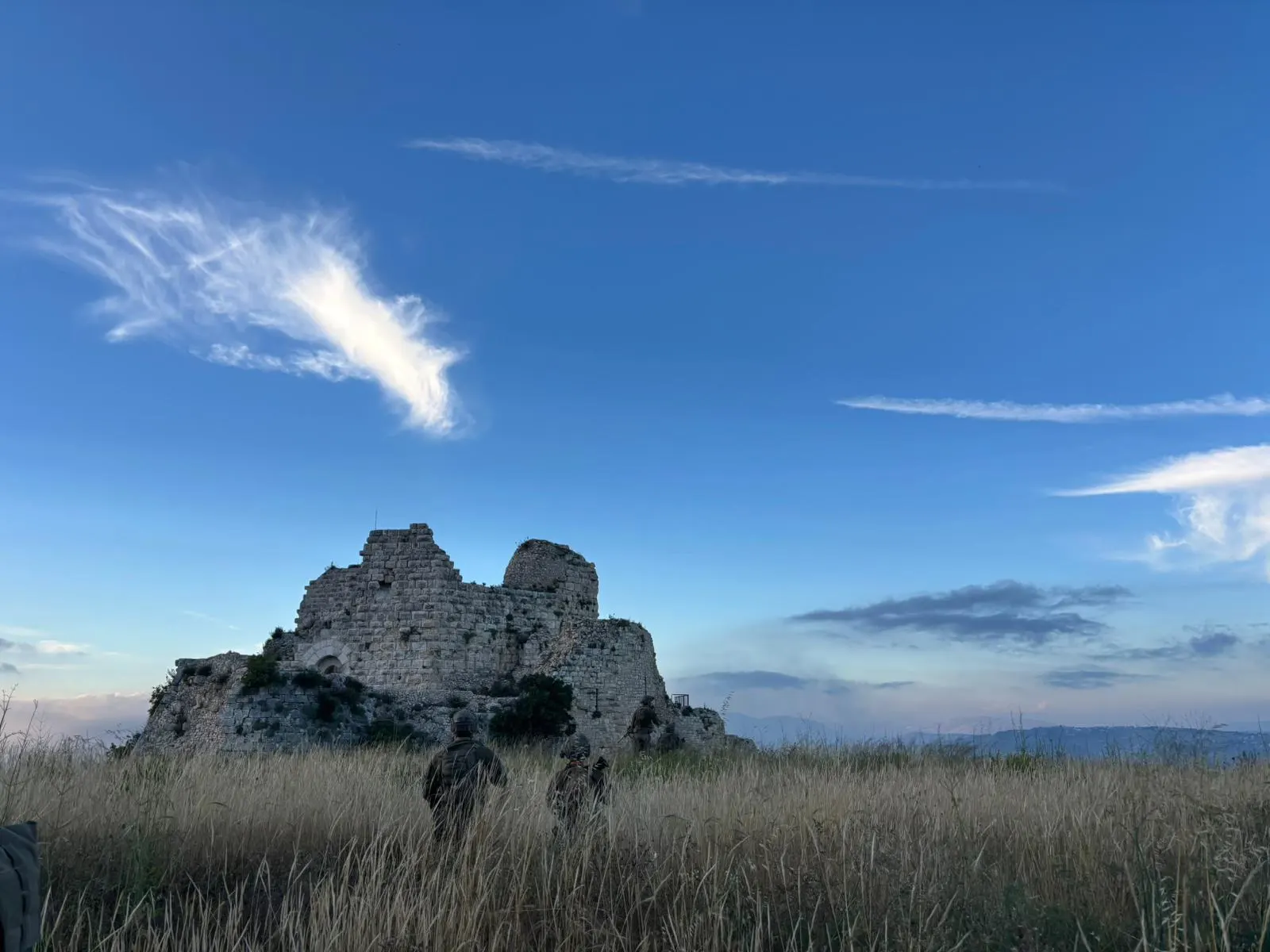
Hezbollah dominates three parts of Lebanon but holds no formal territory. Israel has held a strip along the southern border since April 2026. Israel says the strip protects towns in northern Israel from Hezbollah attacks.
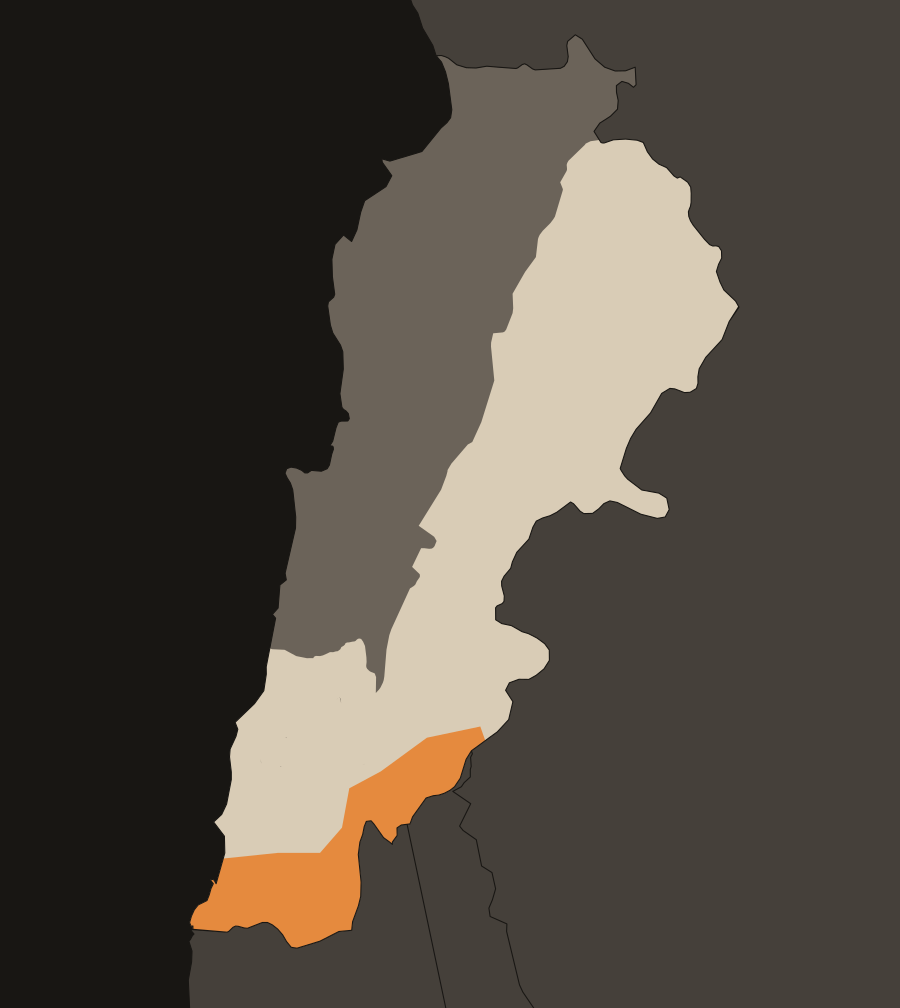
Hezbollah heartlandsHeld by Israel since 2026Rest of LebanonHezbollah holds no formal territory; Lebanon’s government is sovereign everywhere. Whole governorates are shaded; the Israeli line is approximate.
- DahiyehHeartlandBeirut's southern suburbs, home to Hezbollah's security quarter in Haret Hreik. Israel killed Hassan Nasrallah here on September 27, 2024. The Radwan Force commander Ahmed Ali Balout was killed here on May 6, 2026.
- BaalbekHeartlandThe city in the northern Bekaa valley where Iranian Revolutionary Guards trained Hezbollah's first fighters in 1982. Israel has repeatedly struck targets here that it says are weapons depots.
- HermelHeartlandA town near the Syrian border. The route through nearby al-Qusayr was Hezbollah's main smuggling corridor to Syria until Assad's fall in December 2024. Syria's new government says it has since seized shipments there, including 200 Grad rockets.
- NabatiehHeartlandThe main town north of the Litani river in south Lebanon. Israel struck it heavily in the 2024 and 2026 wars.
- TyreHeartlandA southern port city where Hezbollah has a strong presence. It has been hit by Israeli strikes in 2026.
- Bint JbeilIsraelA town inside Israel's zone. Hassan Nasrallah gave his "spider web" speech here in 2000 after Israel withdrew from south Lebanon. Heavy fighting took place here in the 2026 war.
- KhiamIsraelA town near the eastern end of Israel's line. Israeli strikes and demolitions have largely destroyed the town. Israel's Defense Minister Israel Katz said the zone extends up to 10 km into Lebanon.
- NaqouraIsraelThe headquarters of the UN peacekeeping force UNIFIL, at the western end of Israel's zone. UNIFIL's mandate ends on December 31, 2026.
What weapons does Hezbollah have?
An arsenal of rockets, missiles, drones and anti-tank weapons, most of them supplied by Iran.
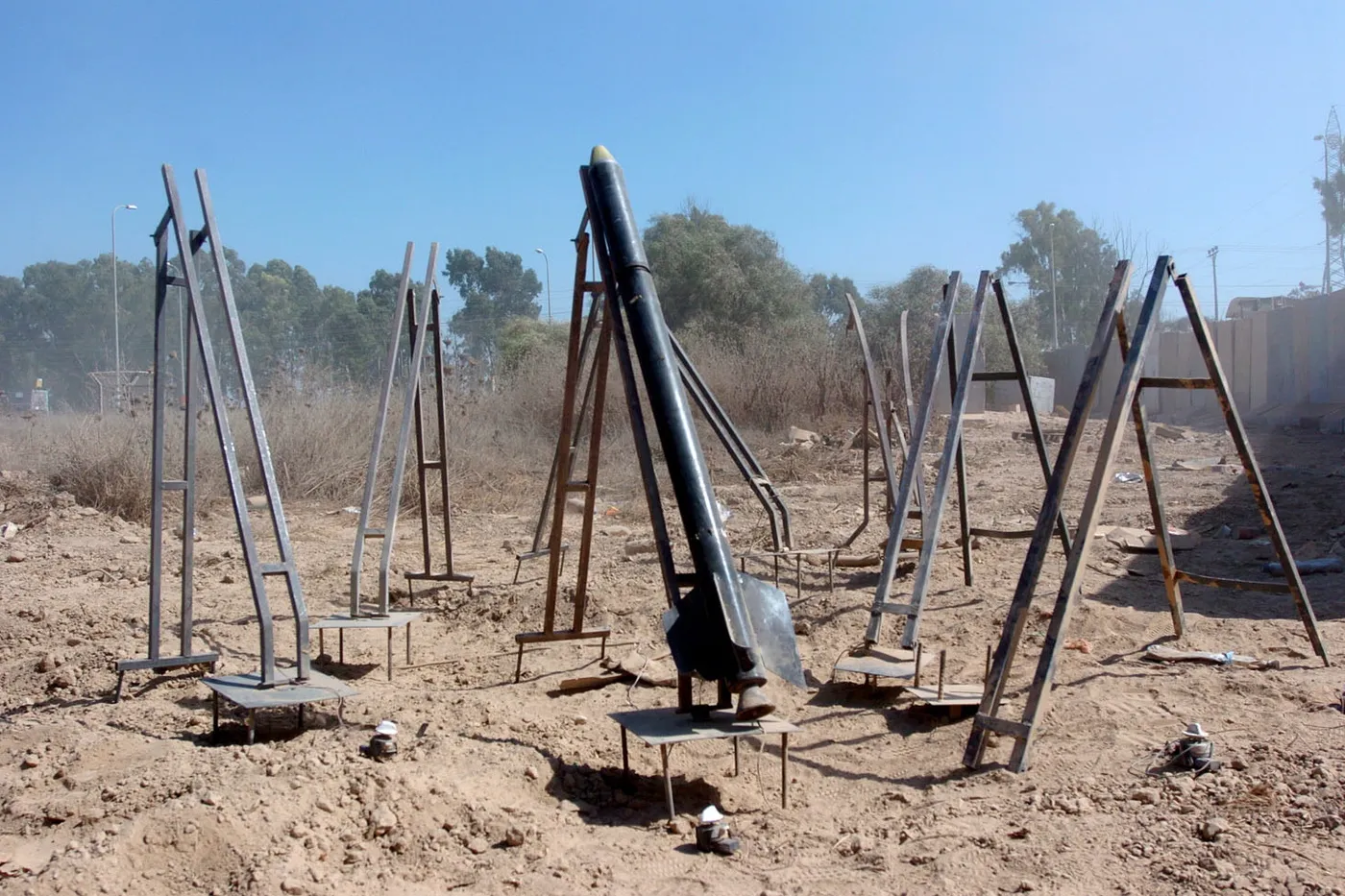
Short-range rockets that make up the bulk of the arsenal. The Israeli Alma Center said in January 2026 that most of the weapons left after 2024 were short-range rockets.
Medium-range rockets. The Fajr-5 has a range of about 75 km. The Khaibar-1 reaches about 100 km.
The Fateh-110 and M-600 reach 250 to 300 km. Hezbollah claims the Qader-1 has a range of 190 km and a 500 kg warhead. It fired a Qader-1 at the Tel Aviv area on September 25, 2024. Israel intercepted it.
The Kornet is a laser-guided missile with a range of about 5 km. Hezbollah has hundreds, according to SIPRI.
A US estimate from January 2016 said Hezbollah had up to 12 Yakhont missiles, which have a range of about 300 km.
Distances from South Lebanon. Ranges are the longest reported for each kind of weapon.
Drones
Ababil, Mirsad-1, fiber-optic FPV drones · Iran and local production
Hezbollah began using fiber-optic FPV drones in the 2026 war. They resist electronic jamming. The first Israeli soldier killed by one died on April 26, 2026. At least 10 to 12 Israeli soldiers were killed by them by June 2026.
Small arms and air defense
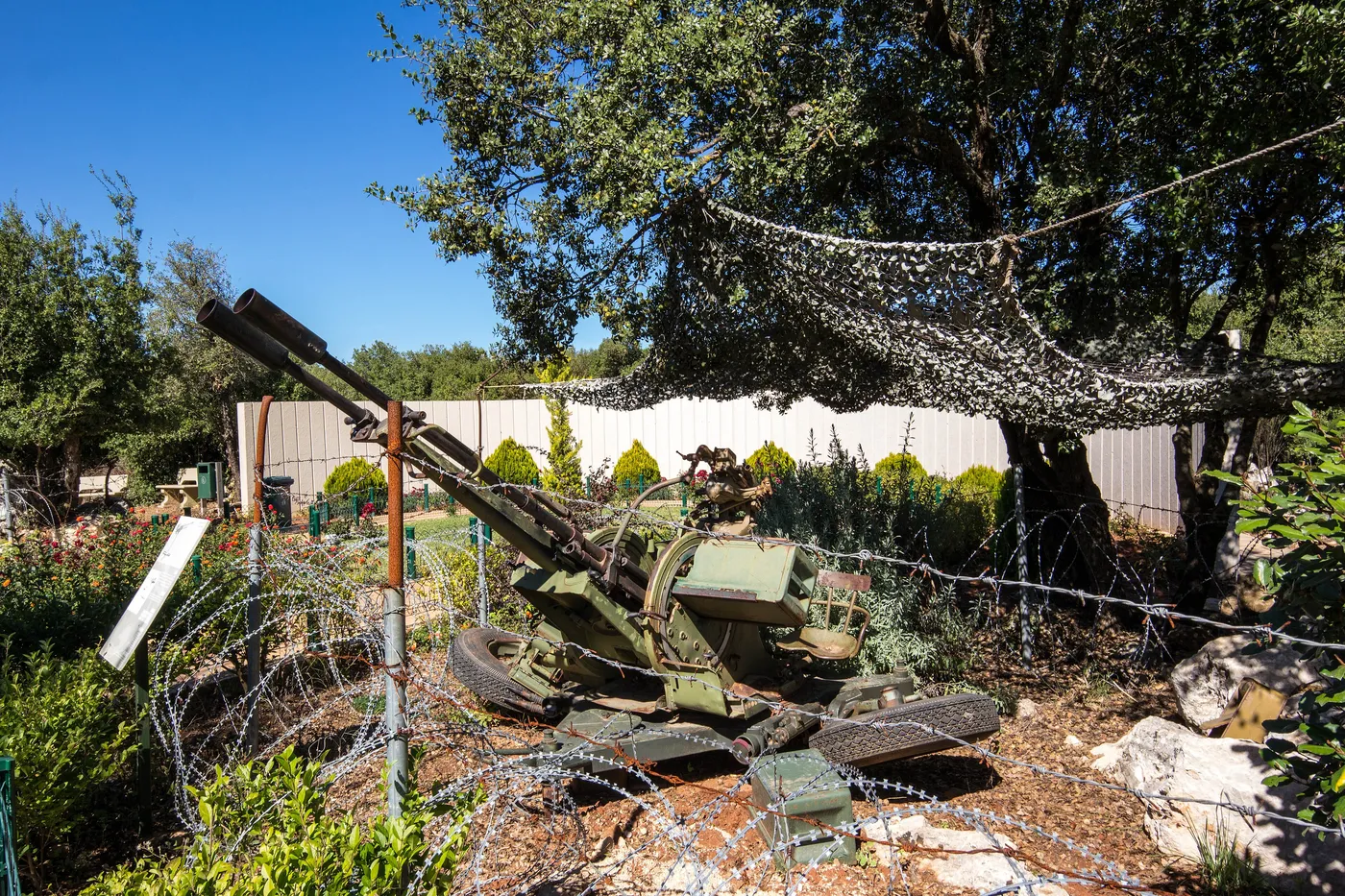
AK-pattern rifles, ZU-23-2 anti-aircraft guns, shoulder-fired missiles · Various
Hezbollah has SA-7, SA-14 and SA-16/18 shoulder-fired missiles, as well as Iranian Misagh models. Israel said it seized more than 85,000 weapons items in the 2024 ground operation.
- Arsenal before 2024
- ~150,000
- rockets and missiles (Israeli intelligence estimate)
- Left by March 2026
- 11,000-13,000
- about 85% destroyed, Israel says
- Fired in the 2026 war
- 7,000+
- rockets, missiles and drones (Israeli claim, March to June)
Is Hezbollah a terrorist group?
The United States, the United Kingdom and the Gulf Cooperation Council list the whole group. The European Union lists only its military wing. The United Nations does not list it, and Russia has called it a legitimate political force.
 United StatesForeign Terrorist Organization since 1997
 United KingdomProscribed, all wings, since March 2019
 CanadaListed the whole group in 2002
 AustraliaListed the whole group on November 24, 2021
 IsraelListed as a terrorist organization
 GermanyBanned all Hezbollah activity on April 30, 2020
 European UnionOnly its military wing, since 2013
- UN Security CouncilNot listed
 RussiaNot listed
 ChinaNot listed
Who leads Hezbollah?
Naim Qassem has been secretary-general since October 29, 2024. He took over after Israel killed Hassan Nasrallah in a strike on the Dahiyeh suburb of Beirut on September 27, 2024. Qassem had served as deputy secretary-general for about three decades. He is about 73 years old and speaks from undisclosed locations on Hezbollah's Al-Manar TV. On November 11, 2026, he rejected any disarmament while Israel occupies Lebanese land.
Israel has killed most of Hezbollah's senior commanders since 2024. Ali Karaki, the southern front commander, died in the same strike that killed Nasrallah. Hashem Safieddine, who was expected to succeed Nasrallah, was killed in October 2024. The military chief Haytham Ali Tabatabai was killed in Beirut on November 23, 2025. The Radwan Force commander Ahmed Ali Balout was killed in Dahiyeh on May 6, 2026.
No military chief has been publicly confirmed since Tabatabai's death. The US Treasury named Mohammad Fneish as head of the Executive Council in May 2026 and sanctioned him. Mohammad Raad leads Hezbollah's parliamentary bloc, Loyalty to the Resistance.
The leadership
- Secretary-GeneralNaim Qassem. Since October 2024; was deputy for about 30 years; about 73 years old
- Parliamentary bloc leaderMohammad Raad. Heads the Loyalty to the Resistance bloc in parliament
- Executive Council headMohammad Fneish. Named by the US Treasury; first elected an MP in 1992; sanctioned in May 2026
- Military chiefVacant or undisclosed. Since Haytham Ali Tabatabai was killed by Israel on November 23, 2025
Is Hezbollah part of Lebanon's government?
Yes. Hezbollah holds seats in parliament and has a minister in the cabinet. Its parliamentary bloc, Loyalty to the Resistance, has 15 of 128 seats. In the 2022 election, Hezbollah and its allies lost their majority, dropping from about 71 seats to about 61. Hezbollah and the Amal movement kept all 27 Shia seats.
In Prime Minister Nawaf Salam's 24-member cabinet, formed on February 8, 2025, Hezbollah and Amal named 4 of the 5 Shia ministers. Rakan Nasreddine, the health minister, is Hezbollah's. Hezbollah does not hold a blocking third, which would let it veto cabinet decisions. When the cabinet voted in August 2025 to order the army to plan a state monopoly on weapons, the Shia ministers, including Hezbollah's, walked out.
The parliamentary election scheduled for May 2026 did not take place. On March 9, 2026, parliament voted 76 to 41 to extend its own term by two years, to May 31, 2028. Hezbollah opposed the postponement.
Parliament
15 of 128
seats held by Hezbollah's bloc
The Loyalty to the Resistance bloc has 15 seats. In the 2022 election, Hezbollah and its allies, including the Amal movement, won about 61 seats, down from 71 in 2018.
Will Hezbollah disarm?
Lebanon's government says yes. Hezbollah says not while Israel occupies Lebanese land. On August 5 and 7, 2025, the cabinet ordered the army to draft a plan for a state monopoly on weapons. The Shia ministers, including Hezbollah's, walked out. On September 5, 2025, the cabinet welcomed the army's plan and asked for monthly progress reports.
The army said on January 8, 2026, that it had completed phase 1 south of the Litani river. On February 16, 2026, it presented a plan for the area north of the Litani. On March 2, 2026, the same day the 2026 war began, the cabinet banned Hezbollah military activity.
On June 26, 2026, the United States, Israel and Lebanon signed a framework in Washington. It makes a full Israeli withdrawal conditional on Hezbollah's disarmament, with a third party to verify it. Pilot zones were set up at Zawtar al-Gharbiyeh, Froun and Srifa. The Lebanese army entered Zawtar on July 21, 2026. But Hezbollah's Naim Qassem called the framework "null and void." On November 11, 2026, he said: "There will be no state monopoly on the resistance's weapons, no regulation, no prohibition, and no disarmament under Israeli occupation."
The disarmament standoff
- Nov 2024Israel and Lebanon agree to a ceasefire. Hezbollah is to leave the area south of the Litani, and Israel is to withdraw within 60 days. Israel keeps five hilltops after February 2025.
- Aug 2025Lebanon's cabinet orders the army to plan a state monopoly on weapons. Shia ministers walk out.
- Jan 2026The army says phase 1 south of the Litani is complete.
- Mar 2026The 2026 war begins. The cabinet bans Hezbollah military activity. Israel invades on March 16.
- Apr 2026A ceasefire begins on April 16. Israel publishes its Yellow Line map on April 19, claiming a strip up to 10 km deep.
- Jun 2026A US-brokered framework is signed on June 26. Hezbollah rejects it as "null and void."
- Jul 2026The Lebanese army enters the first pilot zone, Zawtar al-Gharbiyeh, on July 21.
- Oct 2026The army seizes 780 kg of Hezbollah explosives. Thirteen people are charged.
- Nov 2026Qassem rejects disarmament. Implementation has stalled.
What happened in the pager attack?
On September 17, 2024, pagers carried by Hezbollah members exploded across Lebanon. Lebanon's health minister said 12 people were killed and 2,323 were injured. The dead included two children, he said. The next day, on September 18, walkie-talkies exploded. That attack killed 25 people and injured 608, according to the health minister.
The devices had been rigged with small amounts of explosive. Israeli Prime Minister Benjamin Netanyahu confirmed on November 10, 2024, that he had approved the operation. The attacks disrupted Hezbollah's communications. Ten days later, on September 27, 2024, Israel killed Hassan Nasrallah in a strike on Dahiyeh.
The pager and radio attacks marked the start of an Israeli campaign that killed most of Hezbollah's senior commanders within weeks. Nasrallah's expected successor, Hashem Safieddine, was killed in October 2024. By November 27, 2024, when a ceasefire took effect, at least 4,047 people had been killed in Lebanon since October 8, 2023, according to the health ministry. On the Israeli side, 47 civilians and more than 80 soldiers had been killed, AP reported.
Pager and radio attacks
2,968
people injured or killed in two days
On September 17, 2024, exploding pagers killed 12 and injured 2,323. On September 18, exploding radios killed 25 and injured 608. The attacks targeted Hezbollah members across Lebanon. The dead included two children, the health minister said.
How did Hezbollah start?
Hezbollah was formed in 1982, after Israel invaded Lebanon. Iranian Revolutionary Guards came to the Bekaa valley and trained the first fighters in Baalbek. The group drew on local Shia communities that had long felt underserved by the Lebanese state.
It published its founding document, the "Open Letter," on February 16, 1985. The letter called for an Islamic state in Lebanon and for driving Israel out. Its early leaders were Subhi al-Tufayli, Abbas al-Musawi and Hassan Nasrallah, who became secretary-general after Israel killed al-Musawi in 1992. In 2003 a US federal court ruled that Hezbollah, with Iranian support, carried out the 1983 bombing of the US Marine barracks in Beirut, which killed 241 US service members. In April 2024 Argentina's highest criminal court ruled that Iran organized the 1994 bombing of the AMIA Jewish center in Buenos Aires, which killed 85 people, and that Hezbollah carried it out. The United States and Israel also blame Hezbollah. In September 2026 an Argentine judge charged a Hezbollah operative, Salman Raouf Salman, and seven Iranian officials over the bombing. Hezbollah and Iran deny involvement.
Israel withdrew from south Lebanon on May 25, 2000. Hezbollah claimed the withdrawal as a victory, and many Lebanese agreed. In 2006 it fought a 34-day war with Israel that ended with UN Security Council Resolution 1701. From 2012 it sent fighters to Syria to support President Bashar al-Assad. That intervention turned it into a regional force but cost it support in the Gulf Arab states, which designated it in 2016. Hamas attacked Israel on October 7, 2023. The next day, Hezbollah opened a "support front" on the Lebanese border. This led to the 2024 and 2026 wars. By October 2026, Lebanon's health ministry said Israeli attacks had killed 4,387 people in Lebanon since March 2, 2026. At least 41 Israeli soldiers and 3 Israeli civilians were killed in the 2026 war.
How Hezbollah rose
- 1982Formed after Israel invades Lebanon. Iranian Revolutionary Guards train the first fighters in the Bekaa valley.
- Feb 1985Hezbollah publishes its "Open Letter," calling for an Islamic state and resistance to Israel.
- May 2000Israel withdraws from south Lebanon. Hezbollah claims it as a victory.
- Jul 2006A 34-day war with Israel begins on July 12. It ends on August 14 with UN Security Council Resolution 1701.
- 2012Hezbollah sends fighters to Syria to support President Assad.
- Mar 2016The Gulf Cooperation Council designates Hezbollah a terrorist organization.
- Oct 2023Hezbollah opens a front against Israel from south Lebanon after the Hamas attack.
- Sep 2024Pagers and radios carried by Hezbollah members explode. Israel kills Nasrallah on September 27.
- Nov 2024A ceasefire with Israel takes effect. At least 4,047 people have been killed in Lebanon since October 2023.
- Mar 2026Hezbollah attacks Israel after the US-Israeli strikes on Iran. The 2026 war begins.
Questions about Hezbollah
Is Hezbollah part of the Lebanese government?
Yes. Hezbollah's parliamentary bloc holds 15 of 128 seats, and its health minister, Rakan Nasreddine, sits in the cabinet formed in February 2025. It does not hold a blocking third, which would let it veto cabinet decisions.
How many rockets does Hezbollah have?
Israeli intelligence estimated in March 2026 that Hezbollah had about 11,000 to 13,000 rockets and missiles left. Israel said about 85% of the arsenal had been destroyed. Before 2024, Israeli intelligence estimated about 150,000. All post-2024 estimates come from Israel. There is no independent count.
Did Israel kill Hezbollah's leader?
Yes. Israel killed Hassan Nasrallah on September 27, 2024, in a strike on the Dahiyeh suburb of Beirut. Nasrallah had led Hezbollah since 1992. Naim Qassem replaced him on October 29, 2024. Israel reportedly claimed to have killed Qassem in April 2026, but he has given speeches since, most recently on November 11, 2026.
What is the Yellow Line in Lebanon?
It is a strip of south Lebanon, up to 10 km deep according to Israel's Defense Minister Israel Katz, that Israel has held since April 2026. Israel published a map of it on April 19, 2026. Lebanese and other estimates put its area at about 500 to 650 square km, or roughly 5 to 6% of Lebanon. Israel is present in about 55 to 60 villages. About 50 of those villages are largely destroyed. Israel has demolished homes there, including during the ceasefire. Israel says the zone protects towns in northern Israel from Hezbollah attacks.
Does Iran arm Hezbollah?
Yes. The US Treasury said in November 2025 that Iran's IRGC-Quds Force had sent more than $1 billion to Hezbollah that year. Nasrallah said in June 2016 that Hezbollah's budget, weapons and rockets come from Iran. Iran says it backs Hezbollah politically but has denied specific arms shipments. The fall of Bashar al-Assad's government in December 2024 cut the main supply route through Syria.
When does UNIFIL leave Lebanon?
UNIFIL's mandate ends on December 31, 2026, under UN Security Council Resolution 2790. The force must withdraw within one year after that. Plans for what replaces it are unresolved.