Jihadist group · Pakistan and Afghanistan
Pakistani Taliban (TTP)
Insurgency in northwest PakistanUpdated November 13, 2026
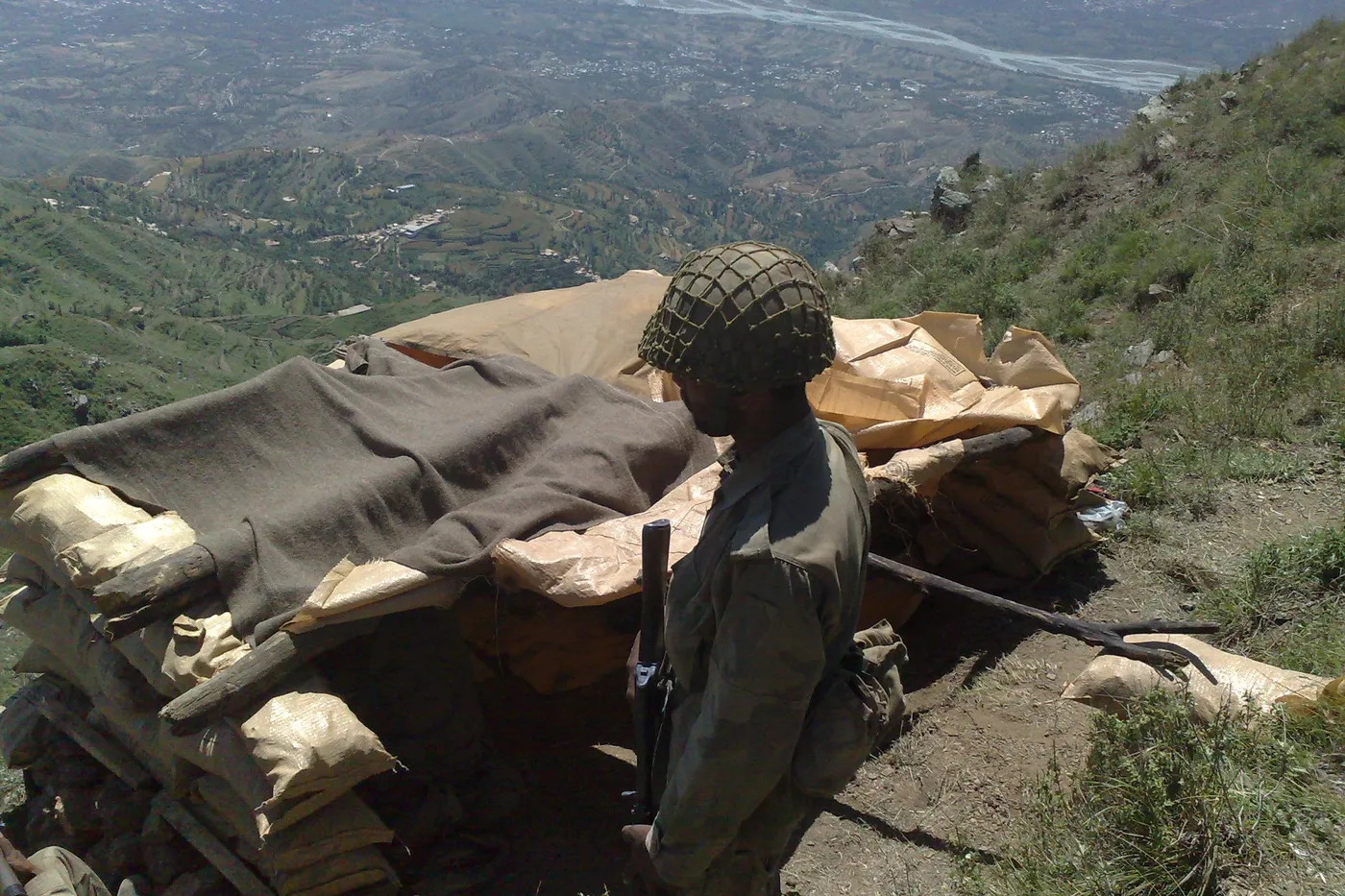
The TTP, formally called Tehrik-i-Taliban Pakistan, is a Sunni jihadist group that has fought Pakistan's government since 2007. It fights mainly in Khyber Pakhtunkhwa province. UN monitoring teams say it has bases in eastern Afghanistan, where Afghanistan's Taliban shelter it. They say the Taliban pay about $43,000 a month to the family of its leader, Noor Wali Mehsud. The Taliban deny this. The TTP holds no fixed territory but fights across Pakistan's tribal and southern districts. Its fighters use small arms, quadcopter drones and suicide car bombs. The UN estimates it has about 6,000 fighters.
- Leader
- Noor Wali Mehsud
- emir since 2018
- Fighters
- About 6,000
- UN estimate, 2025-2026
- Holds
- No territory
- UN says its bases are in Afghanistan
- Main backer
 Afghanistan's Taliban
- reported by the UN; the Taliban deny it
- Founded
- 2007
- in Pakistan's tribal areas
Who funds the TTP?
Where the money comes from and who the UN says is paying.
- From abroad
- Afghanistan's TalibanUN monitoring teams say the Taliban pay about $43,000 a month to the family of TTP leader Noor Wali Mehsud. The UN says the Taliban also provide movement passes, weapons permits and guesthouses in Kabul.
- Al-QaedaThe UN says al-Qaeda gives the TTP ideological guidance, training and support. In April 2026 al-Qaeda publicly endorsed the TTP against Pakistan for the first time.
- At home
- ExtortionThe TTP demands payments from contractors, traders and politicians in Khyber Pakhtunkhwa. The province's counter-terrorism department registered 422 extortion cases from 2021 to February 2025. Yearly cases rose by about 200% over that period. The data does not name the groups involved.
- Kidnapping for ransomThe Pakistan Institute for Conflict and Security Studies counted 215 abductions in Pakistan in 2025, the highest since 2012. These figures cover all militant groups.
TTP
Tehrik-i-Taliban Pakistan
The money pays for fighters, weapons and operations across Khyber Pakhtunkhwa. The UN also names hawala transfers and cryptocurrency as financing methods for Afghanistan-based groups in general.
No credible estimate of the TTP's total budget is publicly available. UN reports of monthly payments to Noor Wali Mehsud's family, about $43,000 since 2025 and $50,500 in a 2023 report, are the only figures from an official body.
ConfirmedReported, denied
Where does the TTP operate?
The TTP holds no towns or territory. It fights across Khyber Pakhtunkhwa. UN monitoring teams say its bases are inside Afghanistan.
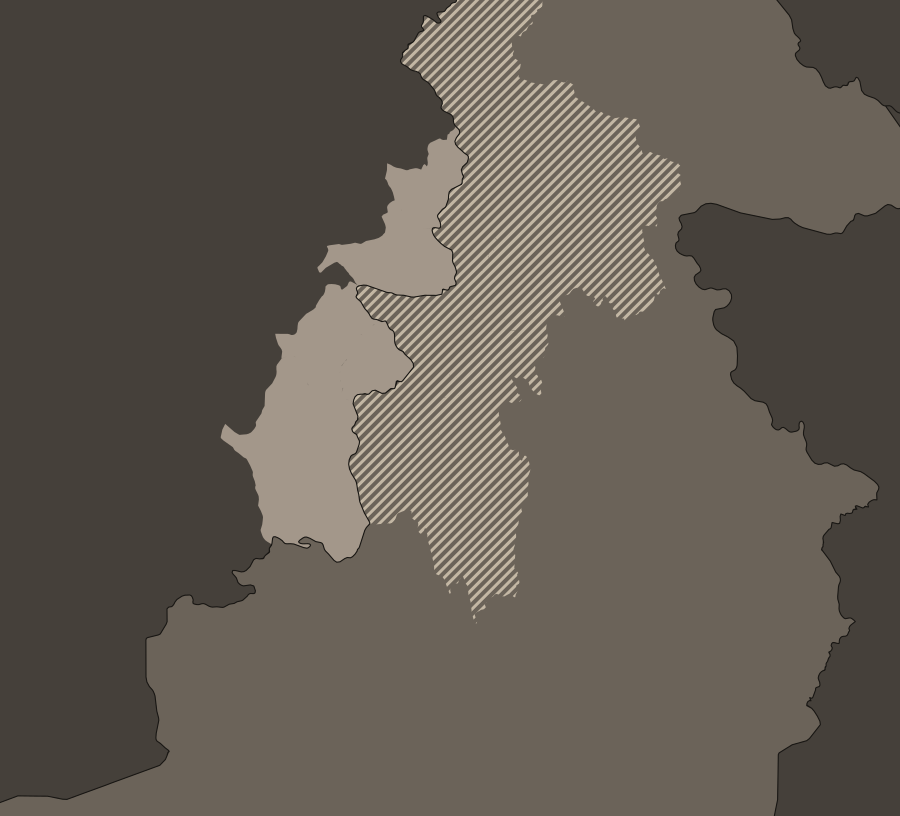
Khyber Pakhtunkhwa, its main battlefieldBases in Afghanistan (UN)Rest of PakistanWhole provinces are shaded. The TTP holds no towns; Pakistan’s army and police hold district centers and main roads. Natural Earth still draws the former tribal areas, merged into Khyber Pakhtunkhwa in 2018, separately.
- MiranshahNorth WaziristanThe capital of North Waziristan and the TTP's heartland. The army launched Operation Zarb-e-Azb here in 2014. On March 5, 2026, a missile fired from an unidentified direction hit the town's cantonment and killed two civilians, according to Dawn.
- WanaSouth WaziristanThe main town of South Waziristan, in the Ahmadzai Wazir tribal area. On November 10, 2025, attackers struck Cadet College Wana.
- BannuDrone attacksOne of the most-attacked districts in southern Khyber Pakhtunkhwa. The TTP has used commercial quadcopter drones here to drop small munitions.
- KohatPolice attackedOn September 18, 2026, attackers besieged a police compound here, killing 31 people in a roughly 20-hour siege. Ittehad-ul-Mujahideen Pakistan, a TTP-linked alliance, claimed it. On November 11, 2026, an ambush killed 10 police officers. The TTP claimed that attack.
- KharBajaurThe main town of Bajaur district. The army ran Operation Sarbakaf here in 2025. On February 16, 2026, a car bomb killed 11 soldiers and one child.
- PeshawarKP capitalThe capital of Khyber Pakhtunkhwa. In December 2014 TTP gunmen attacked the Army Public School here, killing 132 children. In January 2023 a bombing at a police-lines mosque killed 84 people. The TTP distanced itself from that attack.
- KhostAfghanistanUN monitoring teams say the TTP has camps and family settlements in Khost province. Pakistan struck targets here on February 21 and September 24, 2026.
- KabulStruckThe UN says TTP leaders stay in guesthouses in Kabul. Blasts hit the city on October 9, 2025, reportedly a Pakistani strike aimed at Noor Wali Mehsud. Pakistan struck Kabul in February and March 2026.
What weapons does the TTP have?
Small arms, drones and car bombs, but no confirmed missiles or heavy weapons.
Small arms
AK-pattern rifles, US-origin M4 and M16 rifles · Various, including US weapons left in Afghanistan in 2021
In April 2025 the Washington Post reported that Pentagon officials confirmed 63 weapons seized from militants in Pakistan were US-supplied to Afghan forces.
Quadcopter drones
Commercial quadcopters · Commercial
The TTP announced a self-styled "air force" drone unit in December 2025. A UN monitoring team report mentions the unit. KP police say they thwarted 341 drone attacks in the first half of 2026.
Suicide car bombs
Vehicle-borne explosives followed by assaults on foot · Locally built
On February 16, 2026, a car bomb in Bajaur killed 11 soldiers and one child. On September 26, 2026, a car bomb at a checkpoint in D.I. Khan killed 12 people.
Complex assaults
Armed teams attacking fortified positions · Small arms and explosives
On September 18, 2026, attackers besieged a police compound in Kohat for roughly 20 hours, killing 31 people and wounding more than 100. Ittehad-ul-Mujahideen Pakistan, a TTP-linked alliance, claimed the attack.
- Security forces killed
- 667
- by all militant groups in Pakistan in 2025 (PICSS), the highest since 2011
- Attacks attributed to TTP
- 3,500+
- in 2025, per a UN monitoring team report
- US weapons traced
- 63
- seized from militants in Pakistan (Washington Post, April 2025)
Which governments list the TTP as terrorist?
The UN Security Council listed the TTP in 2011. That listing binds every UN member state.
 United StatesForeign Terrorist Organization since September 2010
 European UnionUnder the EU’s ISIL and al-Qaeda sanctions
 United KingdomProscribed since January 2011
- UN Security CouncilOn the ISIL and al-Qaeda sanctions list since 2011
 RussiaEnforces the UN terrorist listing
 ChinaEnforces the UN terrorist listing
 PakistanBanned since August 25, 2008. Officially renamed "Fitna al-Khawarij" in July 2024.
 CanadaListed terrorist entity since July 5, 2011
Is the TTP the same as the Afghan Taliban?
No. The TTP is a separate organization from Afghanistan's Taliban, though they share the same Deobandi Sunni ideology and a common Pashtun base. The Afghan Taliban said in December 2021 that the TTP is "not a branch" of their Islamic Emirate.
The TTP has pledged loyalty to the Afghan Taliban's supreme leader, Hibatullah Akhundzada. UN monitoring teams report that the Taliban shelter the TTP, pay about $43,000 a month to the family of its leader, and provide guesthouses in Kabul. The Taliban deny all of this. Their spokesman Zabihullah Mujahid said in February 2026 that no group may use Afghan soil and that the TTP is "Pakistan's internal problem."
On April 28, 2026, al-Qaeda publicly endorsed the TTP against Pakistan for the first time. The UN says al-Qaeda gives the TTP ideological guidance, training and support. One UN member state reported that al-Qaeda trainers work with both the TTP and the Balochistan Liberation Army.
Why are Pakistan and Afghanistan fighting?
Pakistan says the TTP's bases in Afghanistan are the problem. It wants the Taliban to designate the TTP and shut down its camps. The Taliban say the TTP is Pakistan's internal affair.
On October 9, 2025, blasts hit Kabul. Pakistan did not confirm the strike, but the Taliban accused it of violating Afghan sovereignty. Border fighting followed. Qatar and Turkey brokered a ceasefire in Doha on October 19. Talks continued in Istanbul but collapsed in early November 2025, when Pakistan's defense minister said "talks are over."
On February 21, 2026, Pakistan struck targets in Nangarhar, Paktika and Khost. On February 26 the Taliban launched a retaliatory operation. Pakistan struck Kabul, Kandahar and other cities under Operation Ghazab lil-Haq, and Defense Minister Khawaja Asif declared "open war." Strikes hit Kabul and Kandahar through mid-March. China hosted talks in Urumqi on April 2 and 8 to 9, but they ended without a deal.
In September Pakistan struck Kunar, Paktika, Kandahar, Paktia and Khost after the Kohat police siege. Border clashes continued into November 2026 at Angoor Adda, Torkham and Shalozan. On October 11 Pakistan imposed emergency and governor's rule across Khyber Pakhtunkhwa, deploying the army under Article 245. A UN spokesperson said more than 1,100 civilian casualties had been documented by October 2026. As of November 2026 there is no ceasefire or active negotiation.
Pakistan and Afghanistan at war
- Oct 9, 2025Blasts hit Kabul in what is reportedly a Pakistani strike aimed at TTP leader Noor Wali Mehsud.
- Oct 19, 2025A ceasefire is signed in Doha, mediated by Qatar and Turkey.
- Nov 2025Istanbul talks collapse. Pakistan's defense minister says "talks are over."
- Feb 21, 2026Pakistan strikes what it says are TTP and Islamic State camps in Nangarhar, Paktika and Khost.
- Feb 26, 2026The Taliban launch a retaliatory operation. Pakistan strikes Kabul and Kandahar under Operation Ghazab lil-Haq. Defense Minister Khawaja Asif declares "open war."
- Mar 19, 2026An Eid al-Fitr pause begins at the request of Saudi Arabia, Qatar and Turkey.
- Apr 2026China-mediated talks in Urumqi on April 2 and April 8 to 9 end without a deal.
- Sep 2026Pakistan strikes targets in five Afghan provinces after the Kohat police siege.
- Oct 11, 2026Pakistan imposes emergency and governor's rule across Khyber Pakhtunkhwa.
- Nov 2026Border clashes continue at Angoor Adda, Torkham and Shalozan. No ceasefire is in place.
How deadly is the TTP's insurgency?
Militant violence in Pakistan is at its highest level in about a decade. It has risen every year since the TTP ended a ceasefire in November 2022. The Pakistan Institute for Conflict and Security Studies counted 1,063 militant attacks in Pakistan in 2025, the most since 2014. Those attacks killed 667 security personnel, the highest toll since 2011, along with 580 civilians. The Centre for Research and Security Studies recorded 3,417 fatalities in 2025, the highest since 2015.
In the first 10 months of 2026 the institute counted 1,376 attacks, a 53% rise over the same period in 2025. The institute counted 3,902 deaths in that period. They included 645 security personnel, 595 civilians, 65 peace-committee members and 2,597 militants.
These figures cover all militant groups in Pakistan, not only the TTP. Other groups include Jamaat-ul-Ahrar, which split from the TTP in July 2026, and the Islamic State's Khorasan Province. The Kohat police siege of September 18, 2026, for example, was claimed by the TTP-linked Ittehad-ul-Mujahideen Pakistan. At the UN on October 29, 2026, Pakistan said 4,700 Pakistanis had been killed in Afghanistan-linked attacks over three years.
Militant attacks in Pakistan by year (PICSS, all groups)
Who leads the TTP?
Noor Wali Mehsud has led the TTP since June 2018. He was born on June 26, 1978, in South Waziristan. He is a madrasa-trained cleric who formerly ran the TTP's Karachi chapter. In 2017 he wrote a 690-page book called Inquilab-e-Mehsud, in which he claimed TTP involvement in the assassination of Benazir Bhutto. The United States designated him a specially designated global terrorist in September 2019, and the UN added him to its sanctions list in July 2020.
On October 9, 2025, blasts hit Kabul in what was reportedly a strike aimed at Mehsud. He released a proof-of-life video on October 17, 2025, and another on August 4, 2026, in which he walked through what he said was Kurram. In that video he said a fighter's choice is "victory or martyrdom."
His deputy, Qari Amjad, was killed on October 29 to 30, 2025, in Bajaur, according to Pakistan's army. The TTP confirmed the death but disputed Pakistan's account. Three previous leaders were killed: founder Baitullah Mehsud by a CIA drone in August 2009, Hakimullah Mehsud by a US drone in November 2013, and Mullah Fazlullah by a US drone in Afghanistan in June 2018.
The leadership
- EmirNoor Wali Mehsud. Since June 2018. A madrasa-trained cleric who wrote a 690-page book claiming TTP involvement in Benazir Bhutto's assassination.
- Deputy (killed)Qari Amjad. US-designated in December 2022. Killed in Bajaur in October 2025, according to Pakistan's army.
- SpokesmanMuhammad Khurasani. The TTP's public voice through its Umar Media wing.
- Founder (killed)Baitullah Mehsud. Founded the TTP in December 2007. Killed by a CIA drone on August 5, 2009.
- Former emir (killed)Hakimullah Mehsud. Led the TTP from 2009 to 2013. Killed by a US drone on November 1, 2013.
- Former emir (killed)Mullah Fazlullah. Known as "Mullah Radio" for his broadcasts in Swat. Led the TTP from 2013 to 2018. Killed by a US drone in Afghanistan in June 2018.
What happened at the Army Public School in Peshawar?
On December 16, 2014, six TTP gunmen entered the Army Public School in Peshawar and opened fire on students and staff. They killed 132 children. The total death toll was at least 141. The TTP said it carried out the attack in retaliation for army operations in the tribal areas.
The attack united Pakistani opinion against the TTP. The government adopted a National Action Plan to fight militancy, lifted a moratorium on executions and set up military courts. The army had already launched Operation Zarb-e-Azb in North Waziristan in June 2014. After the school attack the campaign intensified, and the TTP lost the territory it had held.
Two years earlier, on October 9, 2012, TTP gunmen shot Malala Yousafzai, then 15, on a school bus in Swat. The TTP claimed the attack. She survived and went on to win the Nobel Peace Prize in 2014.
Army Public School, Peshawar
132
Children killed on December 16, 2014
Six TTP gunmen attacked the school. The total death toll was at least 141. The attack led Pakistan to adopt a National Action Plan against militancy and to lift a moratorium on executions.
How did the TTP start?
The TTP formed in December 2007 as an alliance of militant groups in Pakistan's tribal areas, under the leadership of Baitullah Mehsud. The alliance brought together commanders who wanted to fight the Pakistani state rather than just support the Afghan insurgency.
Pakistan banned the group in August 2008. By 2009 the TTP controlled much of the Swat valley under Mullah Fazlullah, who enforced strict rules and broadcast sermons on the radio. The army retook Swat in mid-2009. Baitullah Mehsud was killed by a CIA drone in August 2009. Under Hakimullah Mehsud and then Fazlullah, the TTP carried out bombings across Pakistan. In June 2014 the army launched Operation Zarb-e-Azb in North Waziristan, and the December 2014 school massacre brought a broader crackdown.
The TTP was pushed out of its territory and into Afghanistan. After the Taliban took Kabul in August 2021, the TTP gained a safe rear base. A ceasefire with Pakistan collapsed in November 2022, when the TTP ordered nationwide attacks. Violence has risen every year since. Under Noor Wali Mehsud, the group reunited splinter factions and restructured itself into shadow provinces. In February 2026 Pakistan's strikes on what it calls TTP camps in Afghanistan grew into open war with the Taliban.
How the TTP rose
- Dec 2007The TTP forms under Baitullah Mehsud in Pakistan's tribal areas.
- 2009The army retakes the Swat valley. Baitullah Mehsud is killed by a CIA drone.
- Sep 2010The United States designates the TTP a Foreign Terrorist Organization.
- Jul 2011The UN Security Council adds the TTP to its sanctions list.
- Oct 2012TTP gunmen shoot Malala Yousafzai on a school bus in Swat.
- Jun 2014The army launches Operation Zarb-e-Azb in North Waziristan.
- Dec 2014TTP gunmen attack the Army Public School in Peshawar, killing 132 children.
- Aug 2021The Taliban take Kabul, giving the TTP a safe rear base in Afghanistan.
- Nov 2022A ceasefire between the TTP and Pakistan collapses. The TTP orders nationwide attacks.
- Jan 2023A bombing at a police-lines mosque in Peshawar kills 84 people. The TTP distances itself from the attack.
- Feb 2026Pakistan strikes what it says are TTP camps in Afghanistan. Defense Minister Khawaja Asif declares "open war."
Questions about the TTP
Is the TTP part of al-Qaeda?
The TTP is not part of al-Qaeda, but the two groups are linked. The UN lists the TTP as an al-Qaeda-associated entity. UN monitoring teams say al-Qaeda provides ideological guidance, training and support. In April 2026 al-Qaeda publicly endorsed the TTP for the first time.
How many fighters does the TTP have?
About 6,000, according to UN monitoring team reports from 2025 and 2026. An earlier February 2025 report gave a range of 6,000 to 6,500. The Pakistani government has given higher estimates in the past.
What does Fitna al-Khawarij mean?
It has been Pakistan's official name for the TTP since July 2024. The Khawarij were an early Islamic sect considered heretical. The name brands the TTP as rebels against Islam. A government notification says the group's attackers must be called "Khariji."
Has the TTP attacked outside Pakistan?
The TTP has mostly fought inside Pakistan, but it has claimed involvement in attacks in Afghanistan and the United States. In December 2009 a suicide bomber killed seven CIA employees at Camp Chapman in Afghanistan. The TTP claimed a role in that attack. In May 2010 the TTP claimed the failed Times Square car-bomb attempt in New York.
What is Operation Zarb-e-Azb?
It was a Pakistani military operation launched in North Waziristan in June 2014. The army aimed to clear TTP and al-Qaeda fighters from the tribal areas. The operation displaced more than a million people and pushed the TTP's leadership into Afghanistan.
Is Pakistan at war with Afghanistan?
Yes. Pakistan and the Taliban government have been fighting since October 2025, when blasts in Kabul, reportedly a Pakistani strike, led to border clashes. In February 2026 Pakistan launched Operation Ghazab lil-Haq. Pakistan says it is striking TTP camps and Afghan Taliban military posts. The Taliban say Pakistan is violating their sovereignty. As of November 2026 there is no ceasefire.