Jihadist network · Afghanistan, Africa and Yemen
Al-Qaeda
Weak core, strong African branchesUpdated November 13, 2026
Al-Qaeda is a Sunni jihadist network founded in 1988 by Osama bin Laden. It carried out the September 11, 2001 attacks, which killed 2,977 people. Its core in Afghanistan has 100 or fewer members, a UN official said in 2026. Its branches are far stronger. JNIM has 7,000 to 8,000 fighters in West Africa. Al-Shabaab has 7,000 to 12,000 in Somalia. AQAP has about 2,000 in Yemen. The branches fund themselves through taxation, extortion and kidnapping, according to the UN. The core holds no territory, but its African branches control rural land in Mali, Burkina Faso and Somalia.
- De facto leader
- Sayf al-Adl
- per the UN; never publicly named
- Core fighters
- 100 or fewer
- in Afghanistan (UN, 2026)
- Branches
- 5 active
- JNIM, al-Shabaab, AQAP, AQIM, AQIS
- Biggest attack
- September 11, 2001
- 2,977 killed
- Founded
- 1988
- in Peshawar, Pakistan
Who funds al-Qaeda?
Its branches raise their own money. The core depends on what they send up.
- From abroad
- Kidnapping ransomsAl-Qaeda affiliates received about $125 million in ransoms from 2008 to 2014, mostly from European governments, the New York Times reported. France, Switzerland, Austria, Italy and Germany denied paying.
- The $50 million ransomIn 2025 JNIM received about $50 million for the release of a hostage, the UN reported. The UN does not name the payer. The money funded JNIM's 2026 offensive in Mali. Part went through AQIM to the core and AQAP.
 IranThe UN and the United States say Sayf al-Adl is based in Iran. Iran denies hosting any al-Qaeda members. The reports concern hosting leaders and do not describe payments.
- At home
- Al-Shabaab taxationAl-Shabaab collects taxes at checkpoints and extorts businesses in Mogadishu. The UN estimated its 2023 income at more than $150 million.
- JNIM taxation and miningJNIM taxes roads, rural areas and gold-mining zones in Mali and Burkina Faso, according to reports. The UN says the ransom of about $50 million was shared among its units.
- AQAP businessesAQAP runs fronts in real estate and car sales in Yemen. The UN says it is no longer under financial pressure.
Al-Qaeda
Qa'idat al-Jihad
Each branch raises and spends its own money. The UN says affiliates rely primarily on locally generated revenue. AQIM channeled part of the 2025 ransom to the core and to AQAP, the UN says.
No official estimate of total network income exists. Al-Shabaab alone earned more than $150 million in 2023, according to the UN.
ConfirmedReported, denied
Where does al-Qaeda operate?
The core is in Afghanistan but holds no land. Its branches hold rural territory in Mali, Burkina Faso and Somalia. AQAP operates in parts of Yemen.
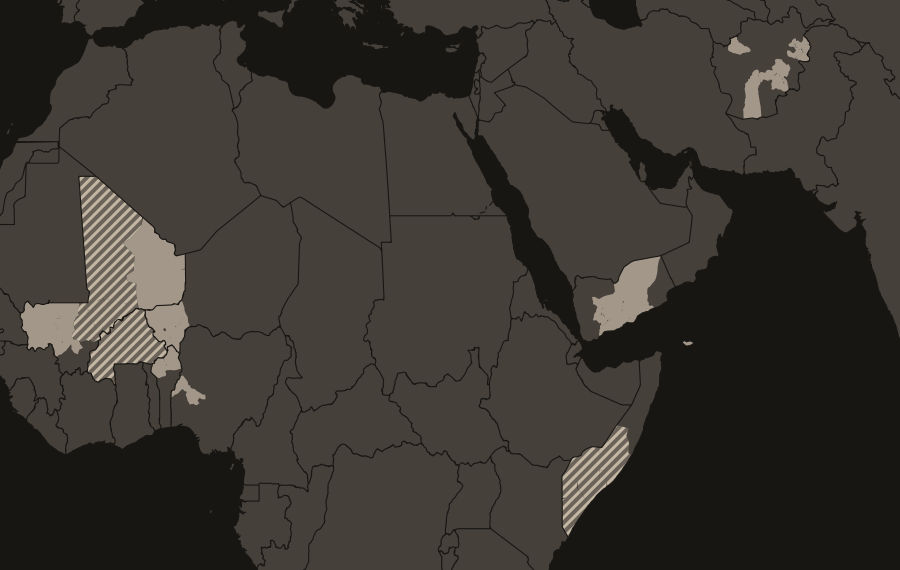
Branches fight for rural landMembers, camps or attacks reportedWhole provinces are shaded. The core holds no land; JNIM and al-Shabaab control parts of the countryside in Mali, Burkina Faso and Somalia.
- KabulZawahiri killedA CIA drone strike killed al-Qaeda's leader Ayman al-Zawahiri on a balcony in the Sherpur neighborhood on July 31, 2022. The house was reportedly owned by an aide to Sirajuddin Haqqani.
- Barg-e MatalTraining campThe UN reported a newly established al-Qaeda training camp here in Nuristan province in 2026. UN reports in 2024 placed camps in 12 of Afghanistan's 34 provinces.
- AbbottabadBin Laden killedUS Navy SEALs killed Osama bin Laden in a raid on his compound here on May 2, 2011.
- BamakoBlockadedJNIM imposed a fuel blockade on Mali's capital in September 2025. The blockade eased in early 2026. JNIM announced a new blockade on April 28, 2026. A car bomb in nearby Kati killed Mali's defense minister, Sadio Camara, on April 25, 2026.
- JilibAl-ShabaabAl-Shabaab's de facto capital in Middle Juba, according to the UN Panel of Experts on Somalia.
- MudiyaAQAPAn AQAP stronghold in Abyan province. AQAP has small cells across Abyan, Shabwa, al-Bayda, Ma'rib and Wadi Hadramawt.
- AdenUSS ColeAl-Qaeda operatives detonated a boat bomb alongside the USS Cole in Aden's harbor on October 12, 2000, killing 17 American sailors.
What weapons does al-Qaeda have?
The network has no air force, navy or heavy armor. Its branches use captured arms, improvised bombs and drones. The core used hijacked airliners on September 11, 2001.
Hijacked airliners
Four commercial jets on September 11, 2001 · Hijacked inside the United States
The 19 hijackers flew them into the World Trade Center, the Pentagon and a field in Pennsylvania. 2,977 people were killed.
Truck and boat bombs
Vehicle-borne explosives · Locally built
Al-Qaeda bombed the US embassies in Nairobi and Dar es Salaam on August 7, 1998, killing 224. A boat bomb hit the USS Cole on October 12, 2000, killing 17 sailors.
Drones
Modified DJI Mavic 3 · Commercial, modified by JNIM
JNIM drops 60 mm mortar shells and grenades from them. The UN calls JNIM's drone capability the most advanced of any al-Qaeda or Islamic State affiliate in the Sahel.
Satellite terminals
Commercial satellite communicators · Purchased commercially
JNIM uses dozens of commercial satellite terminals for command and control, according to the UN.
Captured arms and smuggled weapons
Rifles, anti-aircraft cannons, heavy machine guns · Battlefield captures and black market
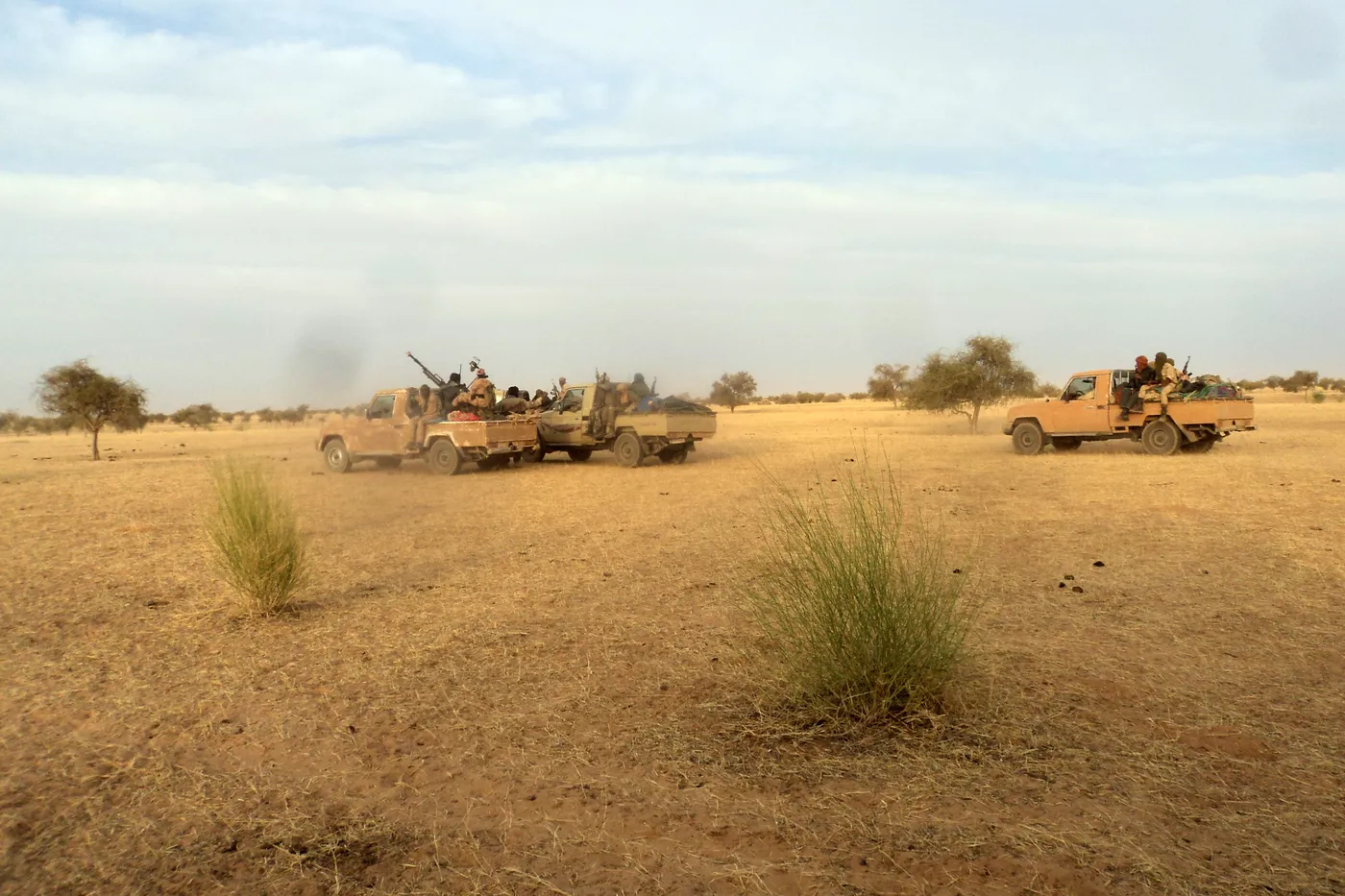
Al-Shabaab captured a technical mounted with a ZU-23 anti-aircraft cannon in March 2025. Weapons are also smuggled by dhow from Yemen.
IEDs
Improvised explosive devices · Locally made
About 600 IED incidents in Somalia from January to September 2025, causing 1,400 to 1,500 casualties, according to UN Mine Action data.
Seized missiles and air-defense systems
Infrared-guided missiles, air-defense platforms · Seized from government stocks in Yemen
AQAP seized advanced weapons after the Southern Transitional Council was dissolved in January 2026, the UN reported.
- Killed on 9/11
- 2,977
- excluding the 19 hijackers
- Cost of the 9/11 attacks
- $400,000-$500,000
- 9/11 Commission estimate
- Ransom income
- About $50 million
- from a single kidnapping in 2025 (UN)
Which governments list al-Qaeda as terrorist?
Almost every major government and the UN Security Council list al-Qaeda as a terrorist organization.
 United StatesForeign Terrorist Organization since 1999
 European UnionUnder the EU’s ISIL and al-Qaeda sanctions
 United KingdomProscribed since March 2001
- UN Security CouncilOn the ISIL and al-Qaeda sanctions list since 2001
 RussiaListed by Russia since 2003
 ChinaEnforces the UN terrorist listing
 CanadaListed since July 23, 2002
 AustraliaListed since October 21, 2002
What are al-Qaeda's branches?
Al-Qaeda has five active branches. They are stronger than the core. The UN says the branches rely primarily on locally generated revenue. They largely run themselves.
JNIM is the strongest. It has 7,000 to 8,000 fighters across Mali, Burkina Faso, Niger and Benin. Al-Shabaab has 7,000 to 12,000 fighters and controls large parts of south-central Somalia. AQAP has about 2,000 fighters in Yemen and has grown its arsenal since January 2026. AQIM has 200 to 300 fighters in northern Mali, northern Burkina Faso and remote parts of Algeria. The UN calls it the ideological backbone and logistical enabler for JNIM. AQIS leaders are based in Kabul, the UN says. The UN says the November 2025 car bombing near the Red Fort in Delhi was officially attributed to AQIS. It calls AQIS the backbone of a Pakistani group that killed 21 people in Bannu in May 2026.
Hurras al-Din in Syria announced its dissolution on January 28, 2025. The UN says up to 1,000 fighters persist in a decentralized structure across Idlib, Aleppo, Homs and outside Damascus.
Al-Qaeda's branches
- JNIMSahel. 7,000-8,000 fighters. Led by Iyad Ag Ghaly. Formed 2017.
 Al-ShabaabSomalia. 7,000-12,000 fighters. Led by Ahmed Diriye. Based in Jilib.
 AQAPYemen. About 2,000 fighters. Led by Saad al-Awlaki since March 2024.
- AQIMSahel and Algeria. 200-300 fighters. Led by Abu Ubaydah Yusuf al-Anabi.
 AQISAfghanistan and South Asia. Led by Osama Mehmood, based in Kabul.
 Hurras al-Din (dissolved)Syria. Dissolved January 2025. Up to 1,000 fighters persist, per the UN.
Who leads al-Qaeda?
Al-Qaeda has not publicly named a leader since the United States killed Ayman al-Zawahiri in a drone strike in Kabul on July 31, 2022. The UN calls Sayf al-Adl the de facto leader. He is an Egyptian former army officer indicted over the 1998 embassy bombings. The United States has a $10 million reward for him.
The UN and the US State Department say Sayf al-Adl is based in Iran. Iran denies hosting any al-Qaeda members. The UN noted in August 2026 that the US-Israeli war on Iran, which began on February 28, 2026, may have put his security at risk. He may move to Afghanistan, the UN said.
The branch leaders run their own wars. Iyad Ag Ghaly leads JNIM. He is a Tuareg from Mali's Kidal region and a former rebel leader. Ahmed Diriye leads al-Shabaab from southern Somalia. Saad al-Awlaki leads AQAP. In a video in June 2025 he threatened President Trump, Elon Musk and other US officials over Gaza.
The leadership
- De facto leaderSayf al-Adl. Egyptian former army officer. The UN says he is based in Iran. Al-Qaeda has never announced him as leader. $10 million US reward.
- JNIM leaderIyad Ag Ghaly. Tuareg from Kidal, Mali. Former rebel leader turned jihadist. Has called for dialogue among all Malians.
- Al-Shabaab leaderAhmed Diriye. Also known as Abu Ubaidah. Has led the group since 2014 and is believed to be in southern Somalia.
- AQAP leaderSaad al-Awlaki. Took over in March 2024. Uses tribal marriage alliances. Senior leaders travel with children to deter drone strikes, the UN says.
- Founder (killed)Osama bin Laden. Killed by US Navy SEALs in Abbottabad, Pakistan, on May 2, 2011.
- Second leader (killed)Ayman al-Zawahiri. Killed by a CIA drone strike in Kabul on July 31, 2022. President Biden said justice had been delivered.
What happened on September 11, 2001?
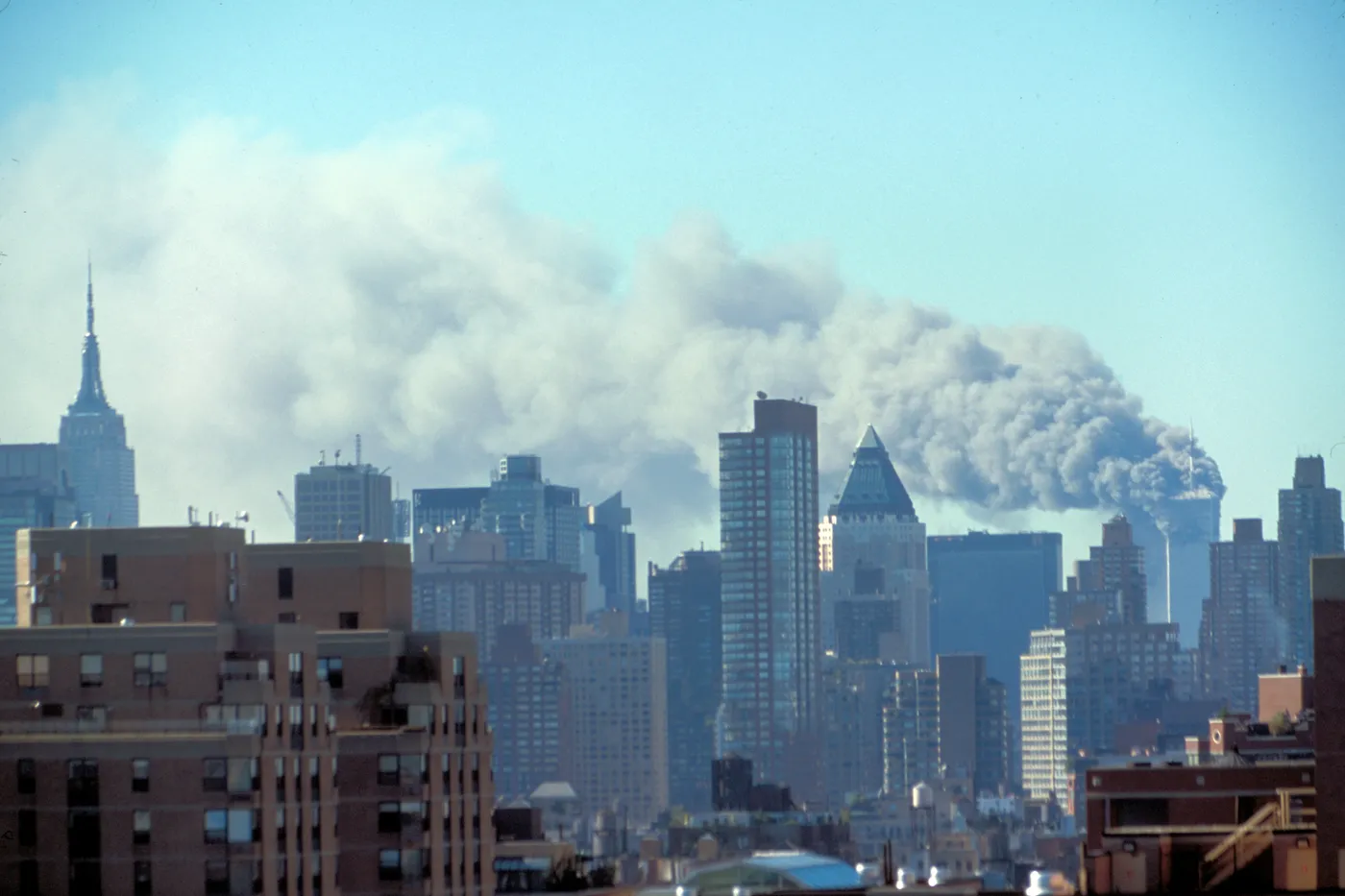
On the morning of September 11, 2001, 19 al-Qaeda hijackers took control of four commercial airliners inside the United States. Two were flown into the twin towers of the World Trade Center in New York. One hit the Pentagon in Virginia. The fourth crashed into a field in Pennsylvania after passengers fought the hijackers. 2,977 people were killed, not counting the hijackers.
The 9/11 Commission found that the attacks cost between $400,000 and $500,000 to plan and carry out. Al-Qaeda raised its money almost entirely through donations, the Commission found. Contrary to popular belief, Osama bin Laden did not fund al-Qaeda from a personal fortune. The Commission found that he received about $1 million a year from about 1970 to 1994. It found that the often-cited $300 million inheritance was a myth.
The United States invaded Afghanistan in October 2001. The Taliban government refused to hand over bin Laden. He escaped from the Tora Bora mountains into Pakistan in December 2001. The US-led war lasted 20 years. The Taliban retook Kabul on August 15, 2021.
September 11, 2001
2,977
people killed in the deadliest terrorist attack in history
Two planes hit the World Trade Center in New York. One hit the Pentagon. One crashed in Pennsylvania. The 9/11 Commission found the attacks cost $400,000 to $500,000.
Is al-Qaeda back in Afghanistan?
Yes, according to the UN. It says al-Qaeda continued to benefit from the patronage of the Taliban government. The Taliban publicly deny harboring any terrorist groups.
The Taliban committed in the February 29, 2020, Doha Agreement not to allow al-Qaeda to use Afghan soil to threaten the United States and its allies. But UN reports in 2024 placed training camps in 12 of Afghanistan's 34 provinces. A newly established camp in Barg-e Matal, Nuristan, was reported in 2026. The Washington Post found at least eight training sites set up in the past three years. Training covers weapons, explosives, encryption, artificial intelligence and drones.
The core has probably 100 or fewer members in Afghanistan, the UN's monitoring team coordinator told the Washington Post in September 2026. The UN says the AQIS leadership has been issued Afghan national identity cards. The UN says al-Qaeda now acts as a consulting service for groups such as the Pakistani Taliban.
Core members in Afghanistan
100
or fewer, the UN monitoring team coordinator said in 2026
UN reports in 2024 placed training camps in 12 of Afghanistan's 34 provinces. A new camp in Nuristan was reported in 2026. The group's status and strength remained unchanged in 2026, the UN said.
What is the difference between al-Qaeda and the Islamic State?
Al-Qaeda and the Islamic State share a Sunni jihadist ideology but split in 2014. The Islamic State's predecessor in Iraq, then called ISIS, defied orders from al-Qaeda's leader Zawahiri. In February 2014 al-Qaeda's general command said it had no organizational relationship with ISIS. In June 2014 ISIS declared a caliphate and renamed itself the Islamic State. The two networks have competed for fighters and affiliates since then.
The rivalry is fiercest in the Sahel. The UN calls the fighting between JNIM and IS-Sahel the most intense direct confrontation globally between an al-Qaeda branch and an Islamic State affiliate. IS-Sahel claimed to have killed nearly 100 JNIM members between February and April 2026.
During the 2026 war on Iran, the Islamic State accused al-Qaeda of selling out to Iran. Al-Qaeda's branches have had contacts with Iran-backed groups. AQAP fighters were present alongside the Houthis in Yemen, and al-Shabaab fighters received training from the Houthis, according to the UN.
How did al-Qaeda start?
Al-Qaeda was founded in August 1988 in Peshawar, Pakistan, by Osama bin Laden and Arab veterans of the war against the Soviet Union in Afghanistan. The name means the Base.
Bin Laden moved to Sudan in 1991 and stayed until 1996. He then returned to Taliban-ruled Afghanistan. Al-Qaeda bombed the US embassies in Nairobi and Dar es Salaam in August 1998, killing 224 people. The USS Cole attack in Aden followed in October 2000. On September 11, 2001, the attacks on New York and Washington killed 2,977 people.
The US invasion scattered the leadership. Al-Qaeda rebuilt as a franchise. It formed AQAP in Yemen, absorbed al-Shabaab in Somalia and launched AQIS for South Asia. In 2017 four Sahel groups merged into JNIM, now its strongest branch. Bin Laden was killed in 2011. Zawahiri was killed in 2022. The UN says the core is marginalized, but its African branches are growing.
How al-Qaeda grew and fractured
- Aug 1988Osama bin Laden and Arab Afghan war veterans found al-Qaeda in Peshawar, Pakistan.
- Aug 1998Al-Qaeda bombs the US embassies in Nairobi and Dar es Salaam, killing 224 people.
- Sep 2001The September 11 attacks kill 2,977 people. The United States invades Afghanistan.
- May 2011US Navy SEALs kill bin Laden in Abbottabad, Pakistan.
- Feb 2014Al-Qaeda cuts ties with ISIS. The Islamic State declares a caliphate in June.
- Mar 2017Four Sahel groups merge into JNIM under Iyad Ag Ghaly.
- Jul 2022A CIA drone strike kills Zawahiri in Kabul. Al-Qaeda has not named a successor.
- Jan 2025Hurras al-Din dissolves in Syria after Assad's fall.
- Apr 2026JNIM and the FLA launch an offensive across Mali. Mali's defense minister is killed in a car bomb in Kati.
Questions about al-Qaeda
How many fighters does al-Qaeda have?
Probably 100 or fewer core members remain in Afghanistan, according to the UN monitoring team coordinator in 2026. Its branches are much larger. JNIM has 7,000 to 8,000 fighters in the Sahel. Al-Shabaab has 7,000 to 12,000 in Somalia. AQAP has about 2,000 in Yemen. AQIM has 200 to 300. About two-thirds of all al-Qaeda and Islamic State fighters are in Africa.
Is Osama bin Laden dead?
Yes. US Navy SEALs killed him in a raid on his compound in Abbottabad, Pakistan, on May 2, 2011. President Obama announced the operation that night.
Who leads al-Qaeda now?
Al-Qaeda has not publicly named a leader since the United States killed Ayman al-Zawahiri in July 2022. The UN calls Sayf al-Adl, an Egyptian former army officer, the de facto leader. The UN and the US State Department say he is based in Iran. Iran denies it.
Is al-Qaeda still a threat?
Yes, through its branches, according to the UN. The UN says the core leadership is marginalized, but the branches are active. JNIM launched a major offensive in Mali in April 2026. Al-Shabaab controls large parts of south-central Somalia. AQAP has expanded its arsenal in Yemen. The UN says AQAP has the greatest intent for attacks outside its region.
Does al-Qaeda hold territory?
The core holds no territory. Its branches do. Al-Shabaab controls large parts of south-central Somalia, with its de facto capital in Jilib. JNIM and its allies fight for rural land in Mali, Burkina Faso, Niger and Benin. AQAP operates in parts of Yemen but does not publicly hold towns.
What is the difference between al-Qaeda and ISIS?
They split in 2014 after ISIS defied al-Qaeda's leader. Both are Sunni jihadist groups, but they compete for territory and recruits. In the Sahel, JNIM and IS-Sahel fight each other. The Islamic State accused al-Qaeda of selling out to Iran during the 2026 war.