
Country profile · Caribbean
 Haiti
Haiti
Haiti has about 12 million people and is the poorest country in the Americas. It has had no president since July 2021 and no elected parliament since January 2023. Prime Minister Alix Didier Fils-Aimé governs alone. Gangs control up to 90% of the capital, Port-au-Prince, and nearly 1.5 million Haitians have been driven from their homes.
Where Haiti ranks
All rankings →Who runs Haiti?
Prime Minister Alix Didier Fils-Aimé runs Haiti alone. He was born in 1971, studied at Boston University, ran an internet provider and led Haiti's Chamber of Commerce from 2011 to 2016. Haiti has had no president since Jovenel Moïse was assassinated at home on July 7, 2021. In April 2024 a nine-member Transitional Presidential Council took over, and in November 2024 it named Fils-Aimé prime minister. In January 2026 five council members voted to fire him, but the council's coordinator refused to publish the decision, and the United States backed Fils-Aimé. The council's mandate ended on February 7, 2026, and power passed to his cabinet. A national pact signed by 350 parties and groups recognizes him as sole head of the executive, with no end date. The last elected senators left office in January 2023, and the last elections were in 2016. A first round was set for December 13, 2026, but on October 5 the electoral council postponed the campaign with no new date.
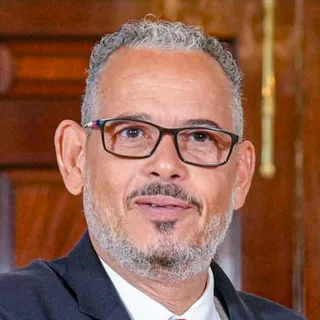
Photo (April 2026): Freddie Everett, US Department of State, Wikimedia Commons, public domain (cropped)
Who are Haiti's allies and rivals?
The United States is Haiti's biggest market and most powerful partner. In May 2025 it named the gang alliances Viv Ansanm and Gran Grif terrorist organizations. It has also barred entry from Haiti since June 2025, and after a Supreme Court ruling in June 2026 it ended the temporary protected status of more than 300,000 Haitians. Weekly deportation flights now land in Cap-Haïtien. The Dominican Republic, which shares the island, deported 276,215 Haitians in 2024 and about 370,000 in 2025, and is building a wall along part of the border. A Kenyan-led police mission fought the gangs from June 2024 until a larger UN-authorized Gang Suppression Force replaced it. The last Kenyans left in April 2026. By October 12 the new force had 1,563 of its planned 5,550 personnel, from Chad, Guatemala, Jamaica, Mongolia, Sri Lanka and El Salvador, and Bangladeshi troops are on the way. Haiti is one of 12 countries that recognize Taiwan instead of China.
Allies and partners
 United StatesLargest market; leads support for the anti-gang force
 CanadaA top funder of the anti-gang force; sanctions Haitian elites
 KenyaLed the police mission from June 2024 to April 2026
 TaiwanDiplomatic ties since 1956; one of Taiwan's 12 allies
Rivals and tensions
- Viv AnsanmGang alliance in Port-au-Prince; US terrorist list since 2025
- Gran GrifGang in the Artibonite valley; US terrorist list since 2025
 Dominican RepublicDeported about 370,000 Haitians in 2025; building a wall
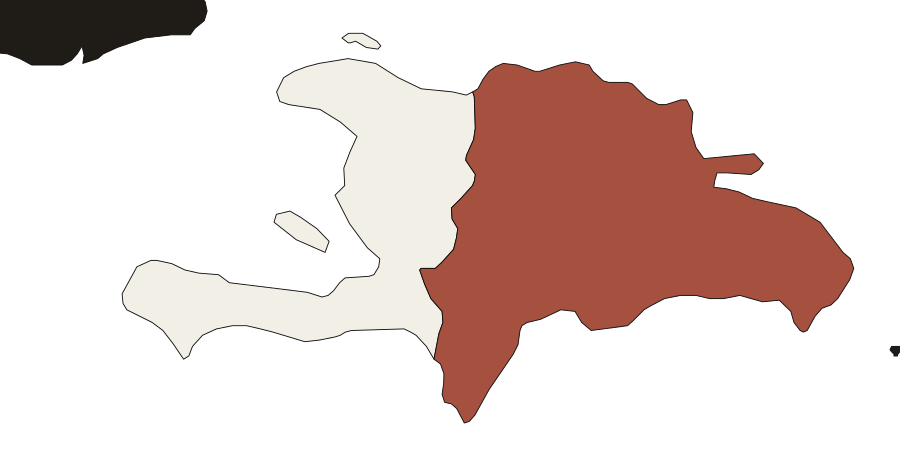
- Port-au-Prince The capital. Gangs control up to 90% of it (UN, June 2026).
- Mirebalais Gangs took the town and freed more than 500 prisoners in March 2025.
- Pont-Sondé Gran Grif gunmen killed at least 70 people here in October 2024 (UN).
- Cap-Haïtien US deportation flights land here. US airlines may not fly to Port-au-Prince.
- Navassa Island Uninhabited island held by the United States and claimed by Haiti.
- Haiti
- Tensions
Who does Haiti trade with?
Haiti sells little abroad. Its trading partners recorded about $0.8 billion of goods from Haiti in 2025 and sold it about $4.1 billion (UN Comtrade). The United States buys about three-quarters of its exports (chart), mostly T-shirts and sweaters sewn in Haitian factories. A US law signed on September 2, 2026 keeps them duty-free until the end of 2028, but garment jobs have fallen from about 60,000 in 2021 to between 20,000 and 30,000. The Dominican Republic sold Haiti about $1.2 billion of goods in 2025 and bought about $6 million. Money sent home by Haitians abroad matters more than exports: a record $4.1 billion in 2024, about 15% of the economy (World Bank). Haiti's economy has shrunk every year since 2019, eight years in a row. Government revenue is only about 5% of GDP. About 5.8 million people, 52%, face acute hunger (IPC, April 2026).


Buys from
Share of Haiti's imports
- United States32.0%
- Dominican Republic28.5%
 China17.8%
 India2.8%
 Indonesia2.7%
Goods, 2025, as recorded by Haiti's trading partners; Haiti publishes no figures. UN Comtrade.
Who controls Port-au-Prince?
At least 26 gangs share control of up to 90% of the capital (UN, June 2026). The largest alliance, Viv Ansanm, is led by Jimmy "Barbecue" Chérizier, a former police officer indicted in the United States. He is still free, though UN experts say the alliance split in 2026. In March 2024 gangs freed more than 4,700 prisoners from two jails, and in 2025 they spread north to Mirebalais. In August 2026 gangs killed at least 47 people in Kenscoff, near the capital. The UN counted 5,601 people killed in 2024, more than 5,915 in 2025 and about 3,050 in the first half of 2026. Security forces cause many of the deaths. Since March 2025 a government task force, with drones run by Erik Prince's company Vectus Global, has killed at least 1,243 people, including 17 children (Human Rights Watch). Most guns traced in Haiti were sold in Florida. The Uppsala Conflict Data Program ranks Haiti second in the Americas for conflict deaths, after Mexico (chart).
Deaths in conflict, 2025
Full ranking →


 Guatemala
Uppsala Conflict Data Program (UCDP), Georeferenced Event Dataset, version 26.1
Why did Haiti pay France for its independence?
Haiti was the French colony of Saint-Domingue, the world's richest, where nearly half a million enslaved Africans grew sugar and coffee in 1789. They rose up in August 1791, later led by Toussaint Louverture. On January 1, 1804 Jean-Jacques Dessalines declared independence, and Haiti became the first country founded by people who had freed themselves from slavery. France did not accept it. On April 17, 1825 King Charles X recognized Haiti in exchange for 150 million gold francs, under threat of force. The sum was cut to 90 million in 1838. Haiti borrowed from French banks to pay, so it owed twice. A 2022 New York Times investigation found that the payments ran until 1947, came to about $560 million in today's money, and cost Haiti between $21 billion and $115 billion in lost growth. On April 17, 2025 President Macron called the payment unjust and set up a commission of French and Haitian historians, but did not promise reparations.