
Country profile · Oceania
 Papua New Guinea
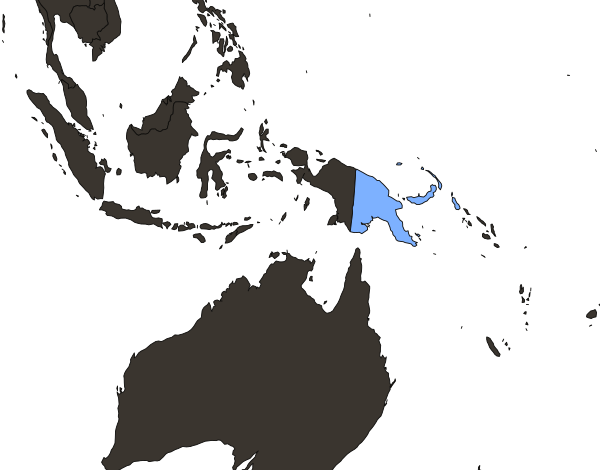
 covers the eastern half of the island of New Guinea and about 600 smaller islands north of Australia. Its 2024 census counted about 10.2 million people. Prime Minister James Marape has led the country since 2019. A defense treaty with Australia came into force in July 2026. Liquefied natural gas and gold earn most of its export income.
Where Papua New Guinea ranks
All rankings →Which alliances is Papua New Guinea in?
All alliances →Who runs Papua New Guinea?
Prime Minister James Marape was born on April 24, 1971 in Tari, in today's Hela Province. He is from the Huli people of the Highlands, and his father was a Seventh-day Adventist pastor. Marape studied at the University of Papua New Guinea and served as finance minister under Peter O'Neill from 2012. He resigned in April 2019 and became prime minister on May 30, 2019. His Pangu Pati won the most seats in the 2022 election. Marape survived votes of no confidence in September 2024 and April 2025. Since about August 2026, a successful no-confidence vote would force an early election, so Marape is very likely to lead the country into the election of June and July 2027. In March 2025 parliament changed the constitution to call Papua New Guinea a Christian country. Riots in Port Moresby and Lae killed 22 people in January 2024. Clan fighting near the Porgera gold mine killed at least eight people on September 23, 2026.
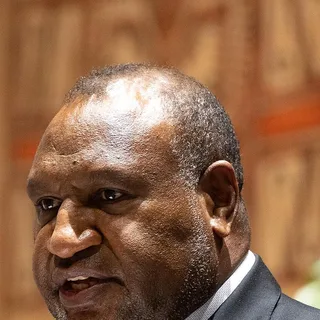
Photo (May 2023): US Department of State, Wikimedia Commons, public domain (cropped)
Who are Papua New Guinea's allies and rivals?
Australia ruled Papua New Guinea until independence on September 16, 1975. Australia is still its largest aid donor, with about A$688 million in 2024-25. The Pukpuk Treaty, signed on October 6, 2025 and in force since July 8, 2026, is a mutual defense treaty. It is Papua New Guinea's first alliance with any country. Each side agrees not to make deals with other countries that would weaken the treaty. From November 16, 2026, Papua New Guineans can apply to join the Australian army. Australia is also paying about A$600 million for a Papua New Guinea team in Australia's rugby league from 2028. A 2023 agreement lets US forces use Lombrum naval base on Manus Island and five other ports and airports for 15 years. China buys about a fifth of exports. In July 2026 Papua New Guinea said it would no longer recognize Taiwan's trade office. Papua New Guinea shares an 820 km border with Indonesia, which governs the western half of New Guinea.
Allies and partners
 AustraliaFormer ruler; defense treaty since July 2026
 United StatesAccess to Lombrum and five other sites
 JapanLargest buyer of exports; buys gas
 ChinaThird-largest buyer; Belt and Road member
 IndonesiaShares New Guinea; defense pact ratified 2024
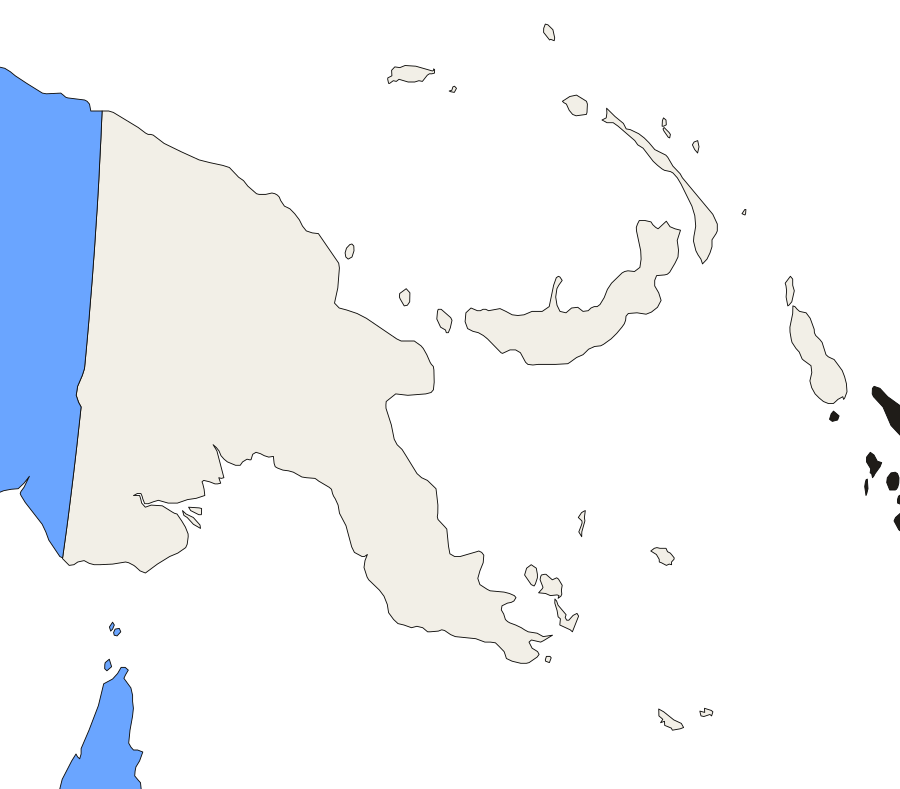
- Lombrum Naval base on Manus Island. US forces may use it under a 2023 agreement. The United States and Australia are upgrading it.
- Port Moresby The capital. Riots here and in Lae killed 22 people in January 2024.
- Porgera Gold mine, reopened in December 2023. At least eight people were killed nearby in September 2026.
- Panguna Copper mine closed since 1989. Anger over it started Bougainville's civil war.
- Papua New Guinea
- Partner
Who does Papua New Guinea trade with?
Papua New Guinea exported $13.8 billion of goods in 2024 and imported $6.6 billion (UN Comtrade). Liquefied natural gas earned about 39% of exports, and gold came second. Japan bought 22.1% of exports (chart), Australia 20% and China 18.5%. Australia supplied a third of imports. The PNG LNG project, led by ExxonMobil, started in 2014. It produces about 8.7 million tonnes a year and has long-term buyers in China, Japan and Taiwan. A second project, Papua LNG, is still waiting for a final investment decision, now planned for December 15, 2026. The Porgera, Lihir and Ok Tedi mines produce gold and copper, and the Chinese-run Ramu mine produces nickel and cobalt. About 97% of the land belongs to clans, so mines and gas projects must deal with many landowners. An IMF loan program ends in December 2026. The IMF expects growth of 3.1% in 2026, down from 6.2% in 2025, partly because of an El Niño drought.

 Singapore

Will Bougainville become independent?
Bougainville is a group of islands in the east of Papua New Guinea with its own autonomous government. In 1988, anger over the Panguna copper mine started a civil war. The mine closed in May 1989, and the war lasted until 1998. Estimates of the dead range from about 15,000 to 20,000. A peace agreement signed on August 30, 2001 promised a referendum. In the 2019 vote, 97.7% chose independence, with a turnout of 87.4%. The result is not binding. Papua New Guinea's parliament must ratify it. Parliament received the result on August 27, 2026 and set aside October 20 to 22, 2026 to debate it. The government says ratification needs 89 of 118 MPs, a three-quarters majority. Bougainville's government disputes that threshold. Bougainville's president, Ishmael Toroama, a former rebel commander, won a second term in September 2025. His government aims for self-government in 2027 and independence in 2030. It wants to reopen the Panguna mine, but mine machinery there was burned in September 2026.
Why does Papua New Guinea have so many languages?
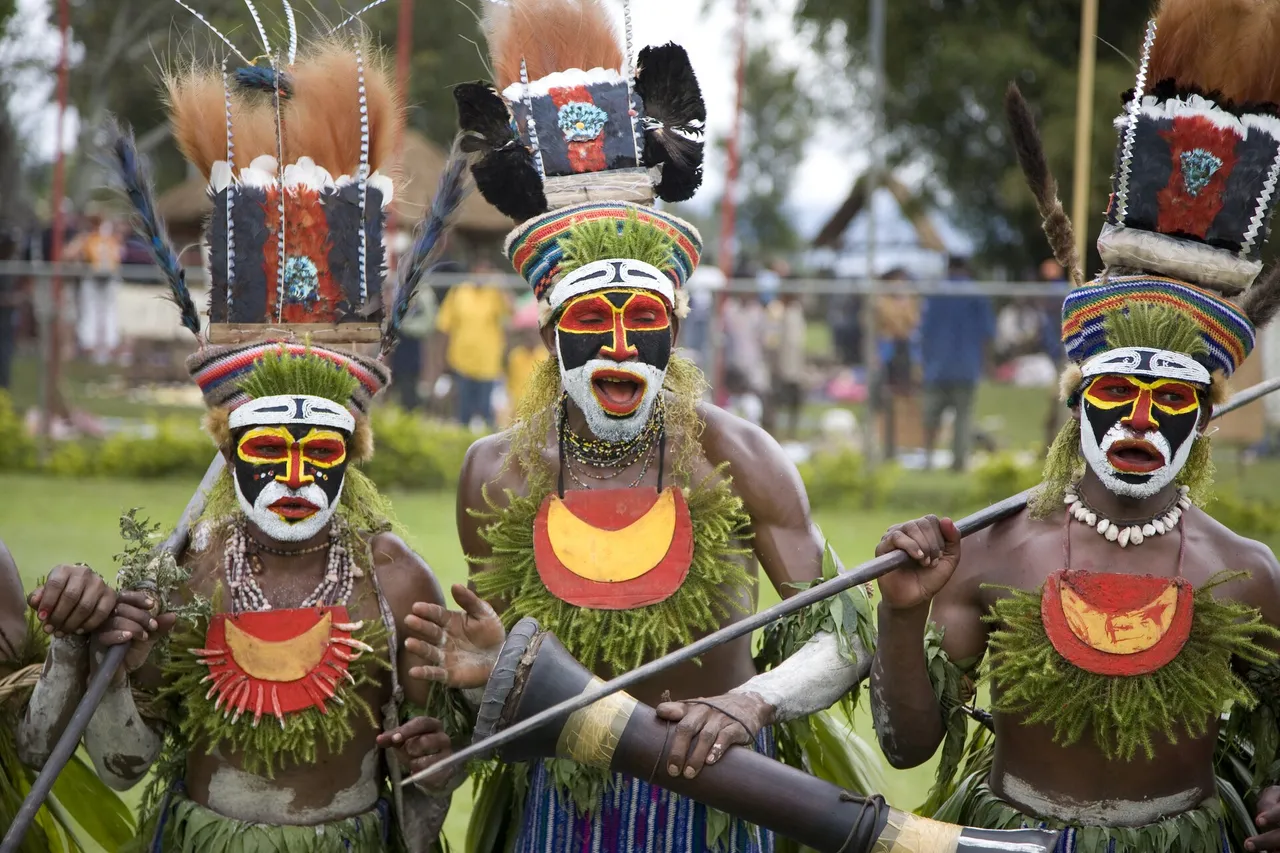
Papua New Guinea has about 840 living languages, more than any other country. Indonesia comes second with about 710. People have lived on New Guinea for about 50,000 years, and Austronesian-speaking settlers arrived about 3,500 years ago. Steep mountains and valleys kept small groups apart, and no early state imposed one language. Tok Pisin, a creole based on English, is the most widely spoken language. English, Hiri Motu and Papua New Guinea Sign Language also have official status. Farming began independently at Kuk Swamp in the Highlands at least 7,000 years ago, one of few places in the world where this happened. In the 1930s Australian gold prospectors, including the brothers Mick and Dan Leahy, found that the Highlands, thought to be empty, were home to about a million people with no known contact with the outside world. In World War II, Australian and Japanese troops fought along the Kokoda Track in 1942. The country is also home to the hooded pitohui, the first poisonous bird known to science.