
Country profile · North Africa
 Tunisia
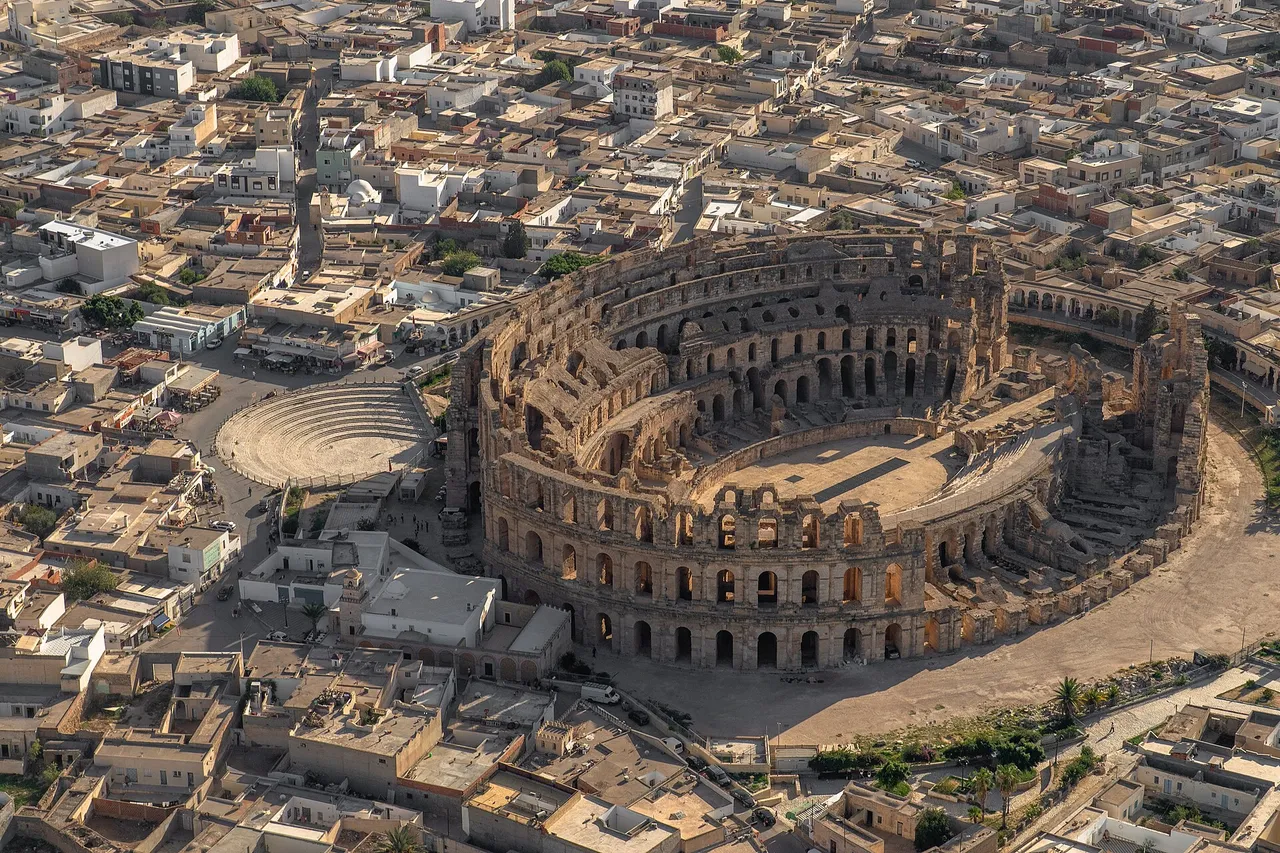
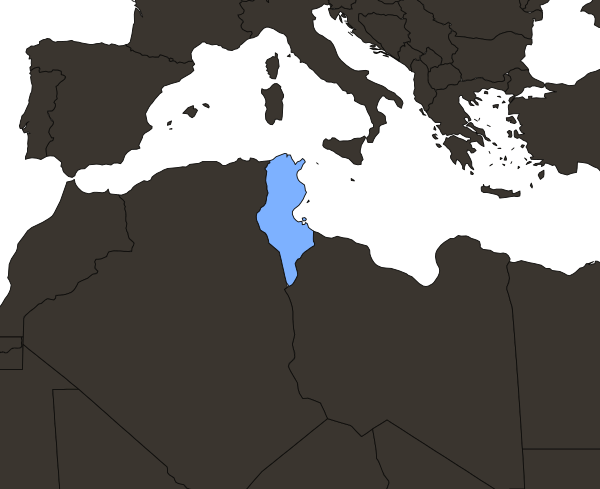
 is a North African country of about 12 million people where the Arab Spring began in December 2010. President Kais Saied, a former law lecturer, suspended parliament in 2021 and now rules under a constitution he wrote. Many of his critics are in prison. The European Union buys about 70% of Tunisia's exports.
Where Tunisia ranks
All rankings →Which alliances is Tunisia in?
All alliances →Who runs Tunisia?
President Kais Saied was born in Tunis on February 22, 1958. He taught constitutional law, never joined a party, and speaks a stiff, formal Arabic that earned him the nickname "Robocop". His wife, Ichraf Chebil, is a judge. Saied won the presidential run-off on October 13, 2019 with 72.71% of the vote. On July 25, 2021 he suspended parliament, dismissed the prime minister and began to rule by decree. A new constitution he drafted passed a referendum on July 25, 2022 with 94.6% yes on a turnout of 30.5%. He was re-elected on October 6, 2024 with 90.69% on a turnout of 28.8%. His rival Ayachi Zammel was arrested during the campaign and is still in prison. Rached Ghannouchi, 84, leader of the Islamist Ennahda party, has been jailed since April 2023 and was sentenced to life in June 2026. On October 17, 2026, thousands marched in Tunis in the largest protest against Saied in years. Sarra Zaafrani Zenzri has been prime minister since March 2025, the fourth since 2021.
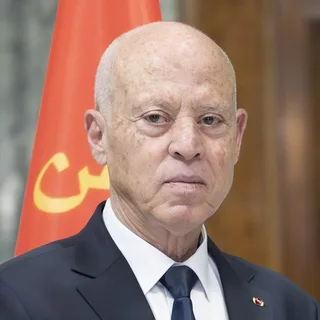
Photo (July 2023): Presidency of the Italian Republic, Wikimedia Commons, free with attribution (cropped)
Who are Tunisia's allies and rivals?
Algeria is President Kais Saied's closest partner. Algeria lent Tunisia $300 million in 2021 and another $200 million, plus a $100 million grant, in 2022. The two countries signed a military cooperation agreement on October 7, 2025. Algeria's gas pipeline to Italy crosses about 400 km of Tunisia, and Tunisia keeps about 5.25% of the gas as a fee. Europe is Tunisia's main market. In July 2023 the EU signed a broad partnership with Tunisia, offering money for the economy and for migration control. Saied refused a $1.9 billion IMF loan, calling its conditions "diktats" on April 6, 2023. Since 2024 the central bank has lent directly to the state instead. Relations with Morocco broke down after Saied received Brahim Ghali, the leader of the Western Sahara independence movement, on August 26, 2022. Both countries recalled their ambassadors. Tunisia has been a major non-NATO ally of the United States since 2015. It agreed a strategic partnership with China in May 2024.
Allies and partners
 AlgeriaLoans, gas and a 2025 military agreement
 ItalyMigration partner; 4,000 work visas a year
 FranceBiggest buyer of Tunisia's exports
 United StatesMajor non-NATO ally since 2015
 ChinaStrategic partnership since 2024; biggest supplier
Tensions
 MoroccoAmbassadors recalled in 2022 over Western Sahara
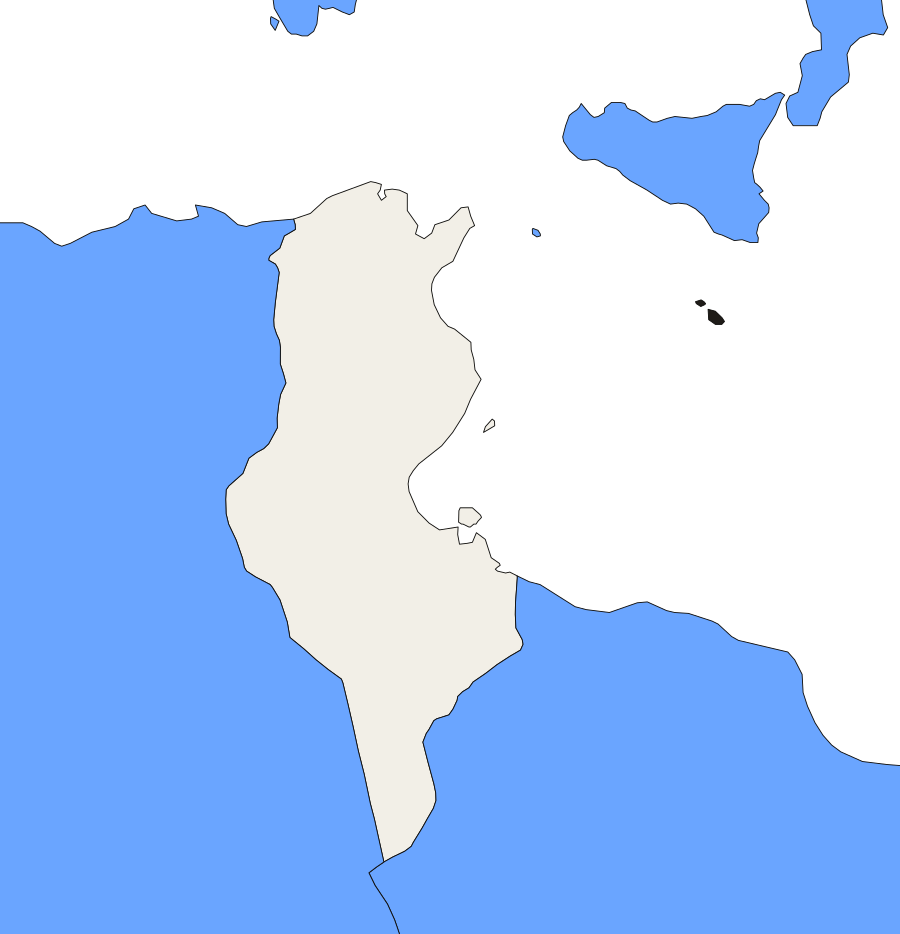
- Cap Bon Start of the ELMED power cable to Sicily, funded by the EU and the World Bank. It is due in 2028.
- El Amra Olive groves where about 20,000 African migrants camped until police cleared them in April 2025.
- Ras Ajdir Main border crossing to Libya. Closed in 2024; waits passed 70 hours in September 2026.
- Tunisia
- Partner
Who does Tunisia trade with?
Tunisia exported 63.7 billion dinars of goods in 2025 and imported 85.5 billion, a deficit of 21.8 billion dinars (National Institute of Statistics). Energy imports caused about half of the deficit. The European Union bought 69.9% of exports, led by France with 23.3% (chart). China was the largest supplier, with 12.9% of imports, and imports from Russia fell 22.3%. About half of Tunisia's exports are machinery and electrical goods, much of it wiring and parts for European carmakers. Clothing and textiles come next. Tunisia had a record olive harvest in 2025/26, about 500,000 tonnes, and earned a record 5.0 billion dinars from olive oil exports. In recent seasons it has been the world's second-largest olive oil exporter after Spain. Phosphate output fell from 8.2 million tonnes in 2010 to about 3.9 million in 2025. Government debt was about 82.5% of GDP in 2025 (World Bank), and unemployment was 14.9% in mid-2026.


Why do fewer migrants now leave Tunisia for Europe?
In 2023 about 97,000 people reached Italy by boat from Tunisia. That fell to 19,246 in 2024 and about 4,800 in 2025. By September 2026 Algeria had overtaken Tunisia as a starting point. The EU's 2023 deal paid to train and equip Tunisia's coast guard. On February 21, 2023 President Kais Saied called migrants from sub-Saharan Africa "hordes" and part of a "criminal plot" to change Tunisia's "demographic composition". Attacks on Black Africans followed. Journalists documented migrants being left in the desert near the Libyan and Algerian borders, and the UN mission in Libya and aid groups counted at least 29 deaths after such expulsions. In April 2025 police cleared olive-grove camps near El Amra where about 20,000 people lived. The UN migration agency flew 8,853 migrants home in 2025. The UN refugee agency has not been allowed to register asylum seekers since June 2024.
Why did the Arab Spring start in Tunisia?
Tunisia won independence from France on March 20, 1956. Its first president, Habib Bourguiba, banned polygamy that year in a new family law, which also made divorce possible only through a court. Zine El Abidine Ben Ali removed him in 1987 and ruled for 23 years. On December 17, 2010 Mohamed Bouazizi, a 26-year-old fruit seller whose goods had been seized, set himself on fire in Sidi Bouzid. Protests spread, and Ben Ali fled to Saudi Arabia on January 14, 2011. An official commission counted 338 dead. The uprising inspired revolts across the Arab world. Tunisia held free elections in October 2011, adopted a democratic constitution in 2014, and its National Dialogue Quartet won the 2015 Nobel Peace Prize for keeping the transition on track. Two of the Quartet's four members, the lawyers' order and the Tunisian Human Rights League, helped organize the October 17, 2026 march against President Kais Saied.