
Country profile · North Africa
 Libya
Libya
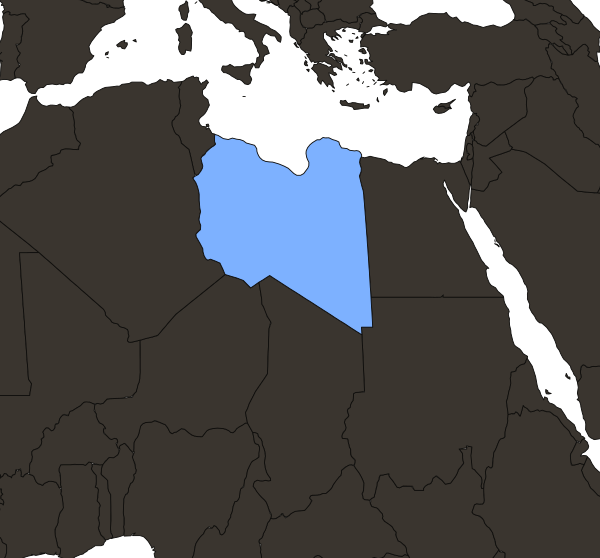
Libya has about 7.5 million people (UN, 2025). Since 2014 it has been split between a UN-recognized government in Tripoli, led by Prime Minister Abdul Hamid Dbeibah, and the east, run by Khalifa Haftar and his sons. Libya has Africa's largest proven oil reserves. Most migrants who reach Italy by sea leave from its coast.
Where Libya ranks
All rankings →Which alliances is Libya in?
All alliances →Who runs Libya?
Libya has two rival camps. In the west, Prime Minister Abdul Hamid Dbeibah leads the Government of National Unity in Tripoli, which the UN recognizes. He was born around 1959 in Misrata and ran a big state construction company under Muammar Gaddafi. A UN-led forum chose him in February 2021 to lead the country to elections that December, which never took place. In the east, Khalifa Haftar, born in 1943, commands the Libyan National Army. His forces hold the east, the center and most of the south, including most oilfields. His son Saddam Haftar is his deputy, and two other sons run the army staff and the reconstruction fund. The eastern parliament, elected in 2014 in Libya's last national election, backs a rival government. Gaddafi took power in 1969, at 27, and ruled for 42 years until he was killed in October 2011. His son Saif al-Islam was shot dead at his home in Zintan on February 3, 2026.
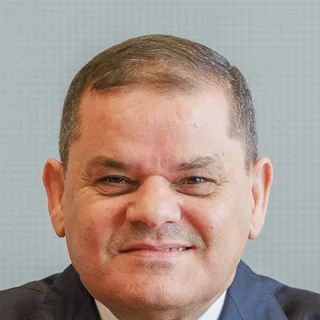
Photo (May 2024): European Union, Wikimedia Commons, CC BY 4.0 (cropped)
Who are Libya's allies and rivals?
Each camp has its own foreign backers. Turkey saved the Tripoli government in 2020, when Turkish drones and troops broke Khalifa Haftar's 14-month attack on the capital. Russia backs Haftar. Russian Wagner fighters arrived in 2019, and Russia's Africa Corps is now upgrading six air bases in Haftar's territory, a US intelligence agency reported in August 2026. The United Arab Emirates sent Haftar weapons, and Egypt, Libya's eastern neighbor, has backed him since 2014. The lines are blurring, though. Haftar's son Saddam has visited Ankara three times since 2025, and Egypt also works with Prime Minister Dbeibah. Massad Boulos, President Trump's envoy, is pushing a deal that would keep Dbeibah as prime minister and put Saddam Haftar at the head of a new presidential council. Italy buys more Libyan oil than any other country. Libya and Greece disagree about their sea border south of Crete, where Greece gave Chevron exploration blocks in February 2026.
Allies and partners
 TurkeyDrones and troops saved Tripoli in 2020
 ItalyBiggest buyer of Libyan oil; migration deal since 2017
 RussiaUpgrading six air bases in Haftar's territory
 EgyptEastern neighbor; has backed Haftar since 2014
 United Arab EmiratesArmed Haftar, UN experts reported
Tensions
 GreeceDispute over the sea border south of Crete
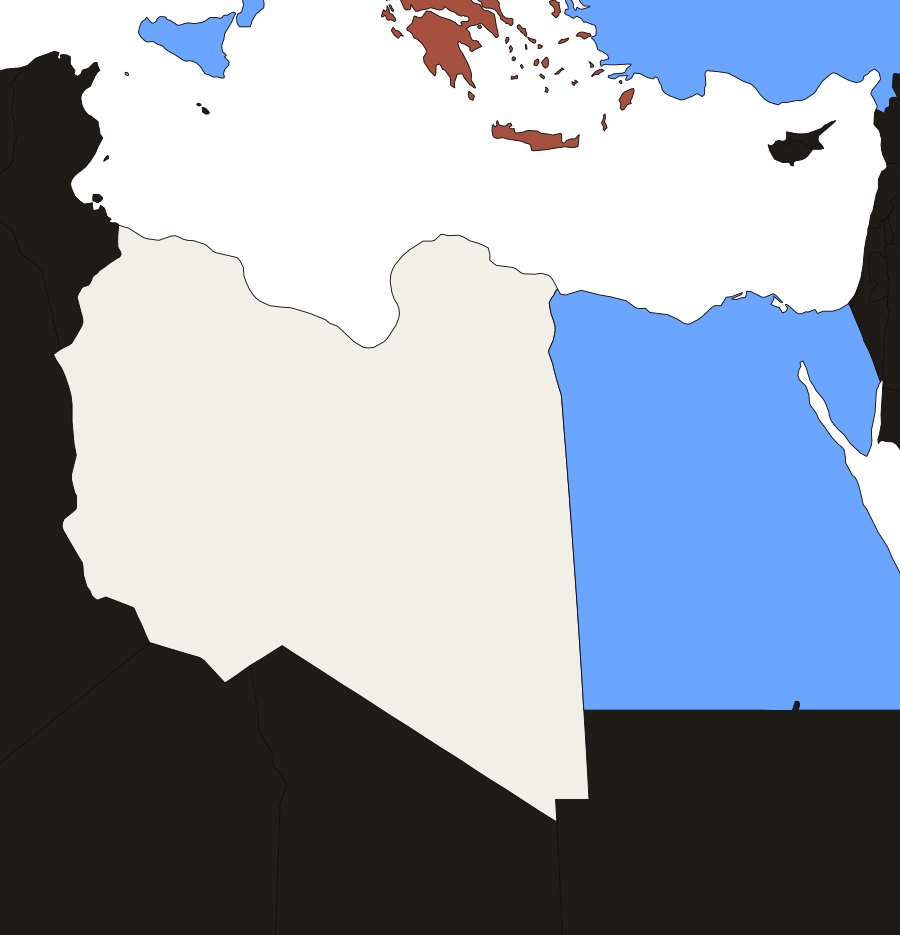
- Al-Watiya Air base near the Tunisian border, used by Turkish forces who back the Tripoli government.
- Al-Jufra Air base in the desert. Russian fighters have used it since 2019, first Wagner, now the Africa Corps.
- Tobruk Eastern port. Russian ships unloaded armored vehicles here in September 2026. Boats to Crete leave from this coast.
- Kufra Desert town where 82% of Sudanese refugees enter Libya. UN experts say Haftar's forces sent supplies to Sudan's RSF through here.
- Libya
- Partner
- Tensions
Who does Libya trade with?
In 2025 Libya exported $32.6 billion of goods and imported $28.4 billion (Central Bank of Libya). Oil and gas made up more than 94% of exports, and Italy and Germany bought almost two-fifths of them (chart). The United Arab Emirates, China and Turkey sold Libya the most. Libya pumped 1.37 million barrels of crude a day in 2025, its highest in more than a decade, against about 1.65 million before 2011. Its proven reserves of about 48 billion barrels are the largest in Africa. Libya also imports most of its fuel, and the UN envoy says 30% to 50% of it is smuggled out again. The central bank devalued the dinar twice, in April 2025 and January 2026, to about 6.4 per dollar. In October 2026 a dollar cost more than 10 dinars on the black market. About 2.2 million people are on the state payroll, and only about 1% of the land can be farmed.


Buys from
Share of Libya's imports
- United Arab Emirates17.5%
 China14.3%
- Turkey11.1%
- Egypt8.6%
- Italy7.7%
Goods, 2025. Central Bank of Libya.
Why does Libya have two governments?
After Gaddafi fell in 2011, the armed groups that had fought him kept their weapons. In 2014 the losers of that June's election seized Tripoli, and the new parliament moved to Tobruk in the east and allied with Khalifa Haftar. Haftar's forces attacked Tripoli in April 2019 and were pushed back with Turkish help in 2020. A ceasefire signed on October 23, 2020, has mostly held. Shared oil money helps keep the peace, because the central bank pays salaries in both the east and the west. Oil is also a weapon. Haftar's side blocked exports for most of 2020, and in August 2024 it shut oilfields in a fight over who runs the central bank, halving output within days. A UN-backed deal of August 30, 2026, promised elections within 24 months, but the High Council of State, an advisory body in Tripoli, rejected it on October 5. In Africa, only Nigeria pumps more oil than Libya (chart).
Oil production in Africa, 2025
Full ranking → Nigeria1,605,000
- Libya1,363,000
 Algeria1,143,000
 Angola1,031,000
- Egypt505,000
 Republic of the Congo241,000
 Gabon239,000
US Energy Information Administration, International Energy Statistics
Why do so many migrants leave from Libya?
Most people who cross the sea to Italy start in Libya. In 2025, 58,408 of the 66,306 people who reached Italy by sea came from Libya, about 88% (Italian Interior Ministry). Most boats leave from the west coast near Zawiya, Sabratha and Zuwara, where armed groups also smuggle fuel. A newer route runs from eastern Libya to the Greek island of Crete. Arrivals there rose from 4,935 in 2024 to 19,948 in 2025. Libya also takes in refugees. About 568,000 Sudanese have fled the war in Sudan into Libya since April 2023. Counting them, Libya hosts more refugees for its population than any country except Lebanon (chart). Libya has not signed the 1951 Refugee Convention. A UN mission found in 2023 that crimes against humanity were committed against migrants in its detention centers. Italy has paid and trained Libya's coast guard since 2017. In 2026 arrivals in Italy fell by more than half, but deaths at sea rose.

 Chad
Chad

 Uganda