Are China and India enemies?
In June 2020, Indian and Chinese soldiers killed each other with rocks and nail-studded clubs at 14,000 feet. The rivalry goes back to a road India never saw.
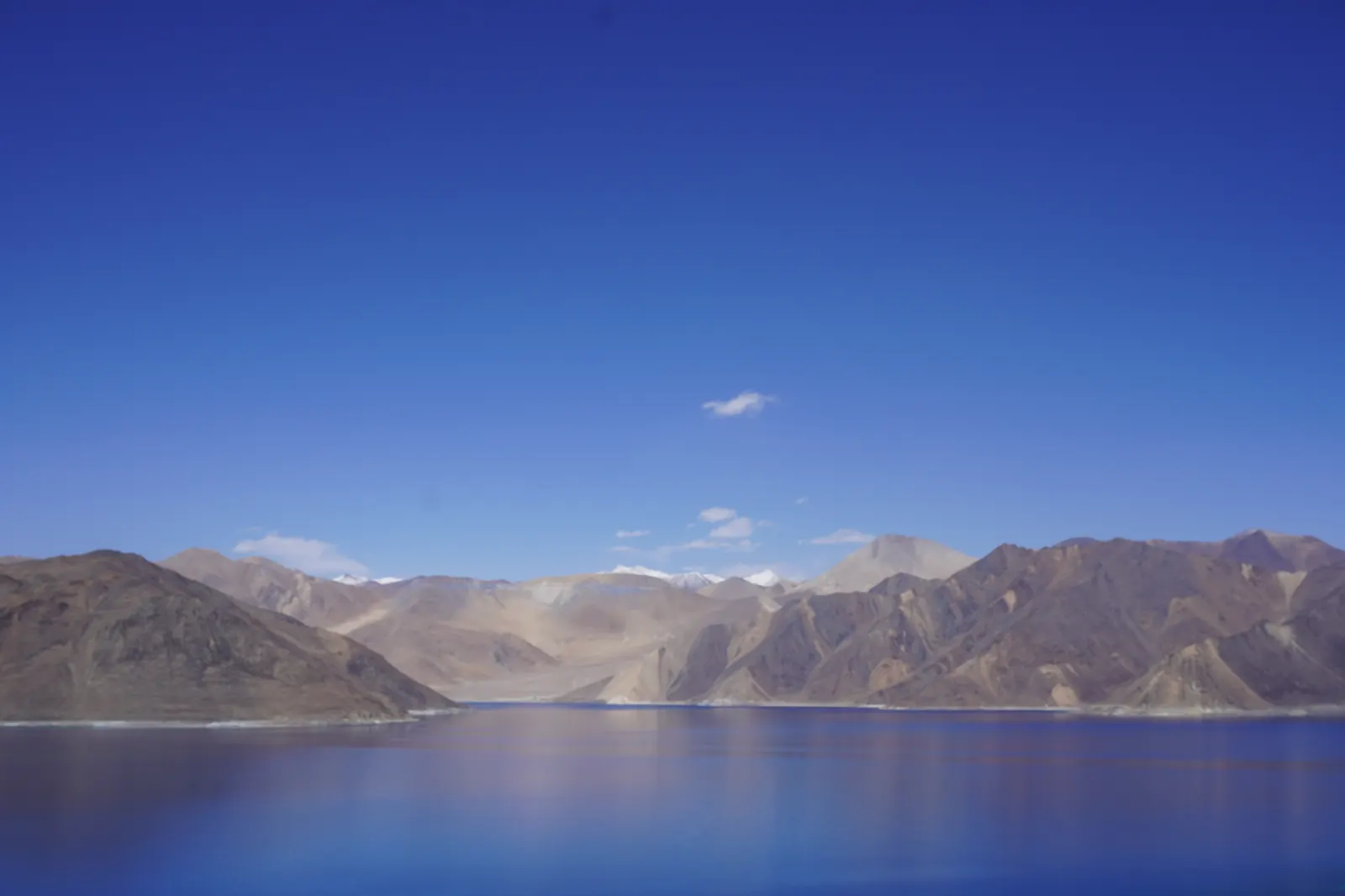
On the night of June 15, 2020, Indian and Chinese soldiers fought each other in the Galwan Valley, a narrow gorge at 14,000 feet in the western Himalayas. They used rocks, iron rods, and clubs wrapped in barbed wire. No one fired a shot. A 1996 agreement bars either side from opening fire within two kilometers of the line, so two nuclear-armed militaries fought hand to hand in the dark. Twenty Indian soldiers were killed, including the commanding officer, Colonel Santosh Babu. China acknowledged four dead; Indian intelligence estimates put the real number far higher. It was the first fatal clash between the two armies in 45 years.
India's response was immediate. Within weeks, the government banned over 200 Chinese apps, including TikTok and WeChat, and began moving tens of thousands of additional troops to the border. The relationship between the world's two most populous countries had reached its lowest point since 1962, and the valley where the soldiers died sits on a line that has been producing crises for more than sixty years.
That line is the Line of Actual Control, the unmarked, unmapped boundary where Chinese and Indian forces face each other across roughly 3,500 kilometers of the Himalayas. It is not a border. The two countries have never agreed on where it runs.
The road India never saw
For a few years after independence, India and China were friends. Jawaharlal Nehru, India's first prime minister, championed China's cause at the United Nations and promoted the slogan "Hindi-Chini bhai-bhai": Indians and Chinese are brothers. In 1954 the two countries signed a treaty pledging mutual respect for each other's territory and peaceful coexistence. Nehru believed he had secured India's northern frontier through goodwill.
While the diplomats talked, China was building a highway. Through the 1950s, the People's Liberation Army laid a road across the Aksai Chin plateau, a barren expanse at 17,000 feet, connecting Xinjiang to western Tibet. About 179 kilometers of the road passed through territory India claimed as its own. India discovered it in 1957, after it was finished. Nehru was humiliated. The friendship had been built on an assumption that China respected the border India believed in. China did not.
In March 1959, the Dalai Lama fled Tibet during a failed uprising against Chinese rule and crossed into India. Nehru granted him asylum. China called this a hostile act and began treating the McMahon Line, the border Britain had drawn between India and Tibet in 1914, as illegitimate. Beijing still refers to Arunachal Pradesh, an Indian state of 1.4 million people, as "South Tibet."
By 1962, Nehru had ordered troops forward to challenge the Chinese positions along the disputed line. China attacked on October 20. The war lasted one month. India lost 1,383 soldiers and nearly 4,000 were taken prisoner. China kept Aksai Chin, withdrew from Arunachal Pradesh, and declared a unilateral ceasefire. Nehru, who had staked India's security on a friendship that turned out to be one-sided, never recovered. He died less than two years later.
A border that keeps producing crises
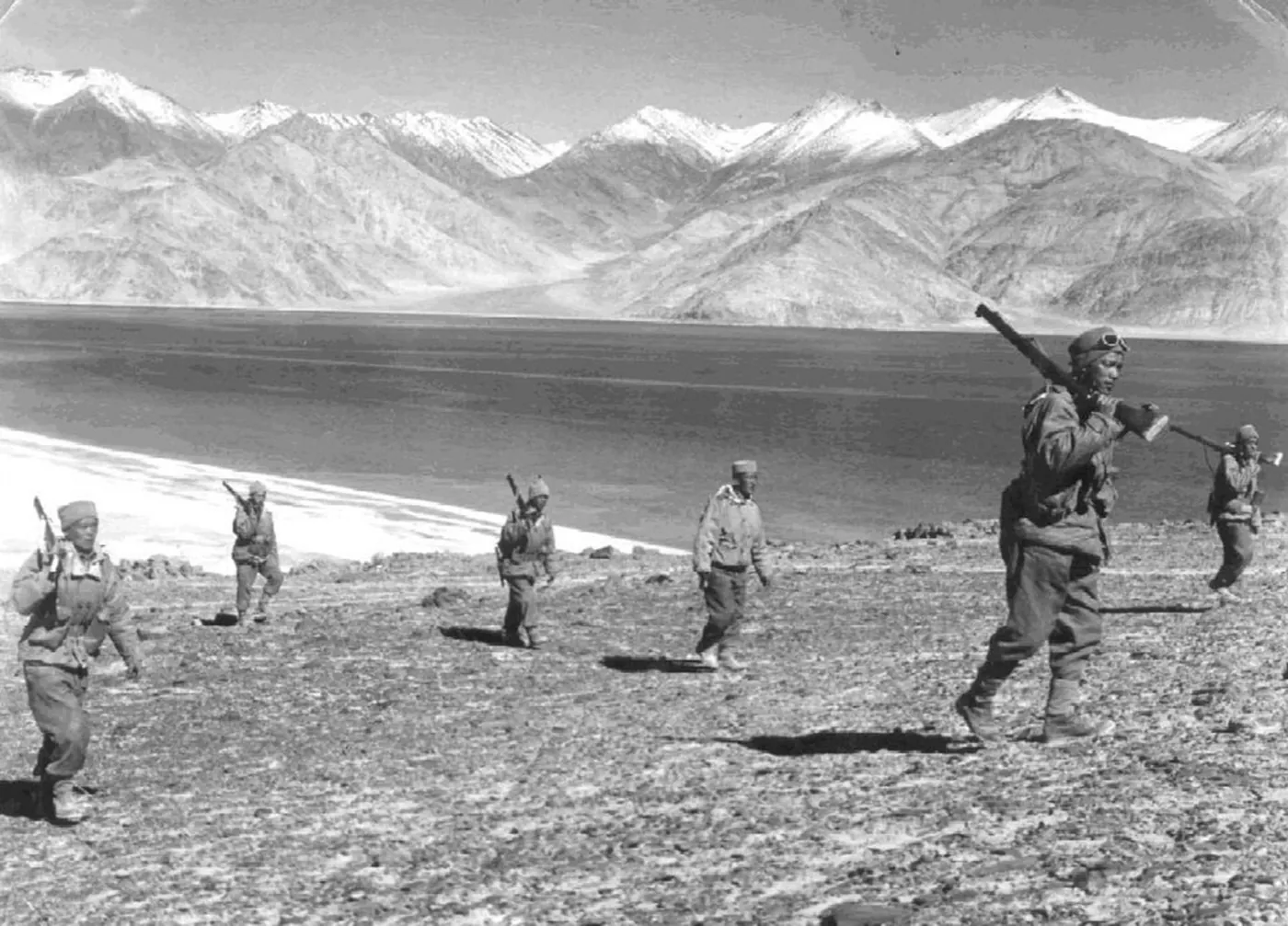
The 1962 war ended without a peace treaty. The Line of Actual Control became the ceasefire line, but no one mapped it, and the two sides still disagree on where it lies in at least a dozen places. The result is a border that generates a confrontation roughly once a decade.
In 2017, Indian troops crossed into Doklam, a plateau near the India-China-Bhutan tri-junction, to stop a Chinese road crew. The road was heading toward the Siliguri Corridor, a strip of land only 22 kilometers wide at its narrowest point that connects India's seven northeastern states to the rest of the country. If China controlled the high ground above it, India's entire northeast would be strategically vulnerable. The standoff lasted 73 days before both sides pulled back. Three years later came Galwan. Chinese and Indian forces also faced off at Pangong Tso, a lake that straddles the disputed line, where troops on both sides occupied new positions along the shoreline. After Galwan, Modi and Xi held no formal meeting for four years, though army commanders kept talking.
The two big territorial claims have not moved since 1962. China holds Aksai Chin, roughly the size of Switzerland, and India claims it as part of Ladakh. India holds Arunachal Pradesh, and China claims it as South Tibet. Neither country will give up either claim, and both know it. The dispute is frozen, not resolved.
The rivalry beyond the mountains
Since the 2000s, the competition has expanded well beyond the Himalayas.
China has built a chain of ports around India's coastline that strategists call the "String of Pearls": Gwadar in Pakistan, Hambantota in Sri Lanka (under a 99-year lease since 2017), Kyaukpyu in Myanmar, and a military base in Djibouti. Beijing says the ports are commercial. India sees encirclement. China's Belt and Road Initiative runs through several of India's neighbors, including Pakistan, where the China-Pakistan Economic Corridor passes through Kashmir, territory India claims. India is the only major Asian economy that has refused to join the BRI.
India has countered by joining the Quad with the United States, Japan, and Australia, a grouping designed to balance Chinese power in the Indo-Pacific. It has invested in ports of its own, including Chabahar in Iran, which gives India access to Afghanistan and Central Asia without crossing Pakistani territory. India has deepened military partnerships with France, Japan, and the United States. At the same time, it bought five Russian S-400 missile defense systems for $5.4 billion, a purchase that risks American sanctions but reflects India's insistence on not depending on any single partner.
Both countries are also members of BRICS and the Shanghai Cooperation Organisation, forums where they sit at the same table. India needs China's cooperation on issues from climate change to regional trade. China wants India inside institutions it leads, not aligned against it in American-backed ones. The result is that each country is simultaneously the other's partner and its main competitor.
The economic numbers make the rivalry harder to categorize still. In 2025, bilateral trade hit a record $155.6 billion, but India ran a deficit of $116 billion. India buys Chinese electronics, machinery, and chemicals; it sells comparatively little back. China is India's largest supplier of goods. The industries India is trying to build, from solar panels to smartphones, depend on Chinese inputs. Walking away from that trade would hurt India far more than it would hurt China.
What keeps them locked together
In October 2024, Narendra Modi and Xi Jinping met at the BRICS summit in Kazan, Russia, their first structured meeting in five years. The two governments announced a patrolling agreement for eastern Ladakh, where Galwan is, and promised to restart the diplomatic channels frozen since 2020.
This is the cycle the two countries have been stuck in for decades. A crisis escalates. Relations freeze. Both sides eventually agree to talk. Nothing fundamental changes. The border stays unresolved. The strategic competition around it intensifies. The trade grows. India sits in the Quad for security and buys Russian S-400s for backup, then presents that balancing act to the world as strategic autonomy. China keeps building ports in India's neighborhood while calling for peaceful coexistence, using the same language Nehru and Mao agreed to in 1954.
The two countries share a border neither has ever agreed on, a war neither has resolved, and a trade relationship neither can afford to lose. They are not allies and they are not at war. They are rivals locked in a contest that neither can win and neither can leave.
Test what you learned
5 questions on this article. About two minutes, no signup.
Orbis teaches the history behind the news
Orbis covers the rise of China, the geopolitics of India, and the rivalries reshaping Asia in five-minute lessons.