Why did Hitler declare war on the US?
Four days after Pearl Harbor, Hitler declared war on America. Nothing required him to, and it gave Roosevelt the European war he could never have asked for.
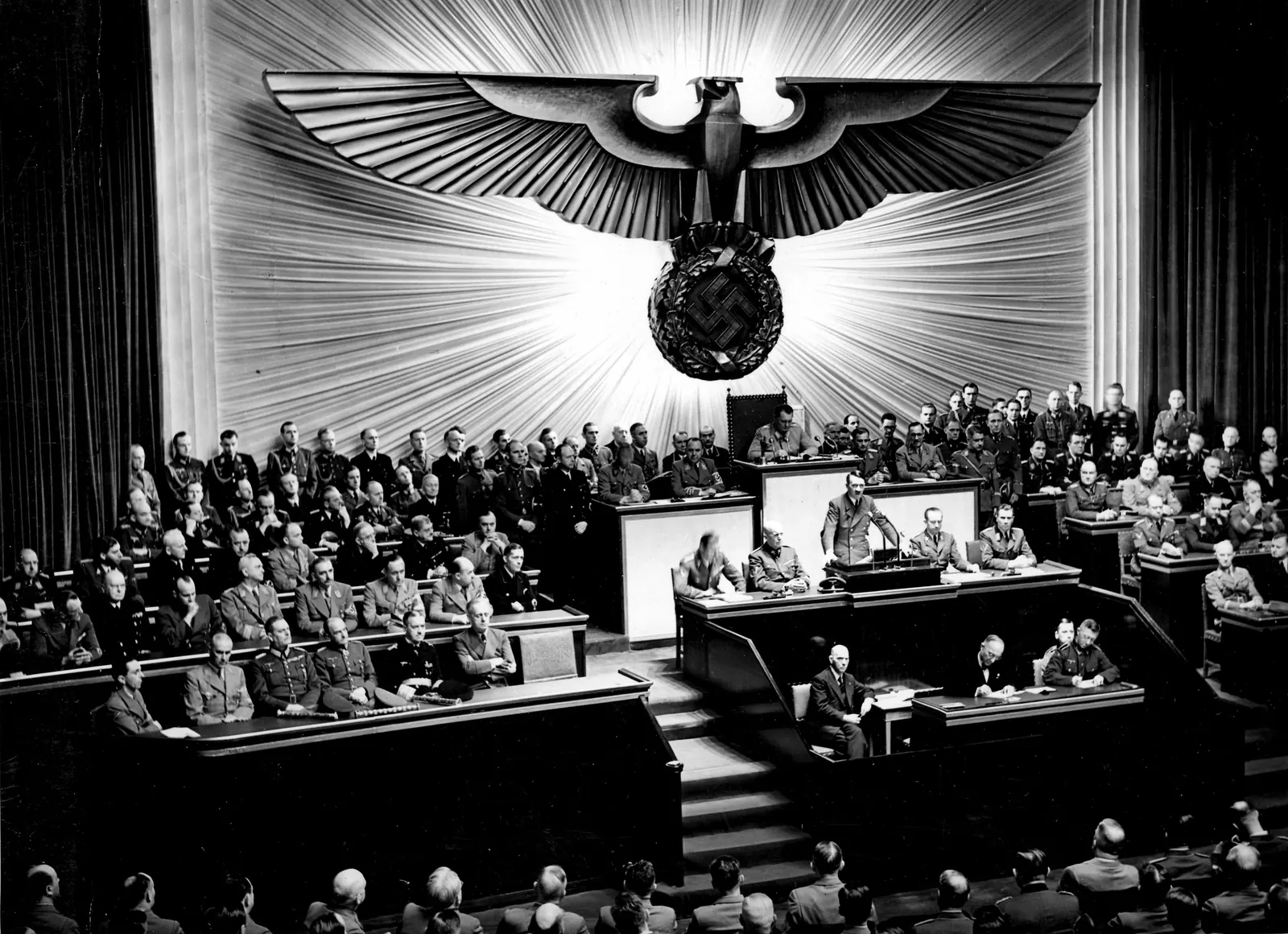
On the morning of December 11, 1941, Germany's foreign minister Joachim von Ribbentrop summoned the American chargé d'affaires in Berlin and handed him a formal declaration of war. That afternoon, Hitler took the rostrum at the Kroll Opera House, the building the Reichstag had used since the original burned in 1933, and spoke for 88 minutes in front of 855 deputies. Most of the speech was a personal attack on Franklin Roosevelt. At the end, he declared war on the United States.
Nothing obliged him to. The Tripartite Pact, the defensive alliance that Germany, Italy, and Japan had signed in September 1940, required each signatory to assist the others only if one of them was attacked by a new enemy. Japan had attacked the United States at Pearl Harbor, not the other way around. Hitler's own diplomats knew the treaty did not apply. He declared war for reasons of his own, and every one of them was wrong.
The war before the war
By the time Hitler made it official, American and German sailors had been killing each other for months.
In March 1941, Roosevelt signed the Lend-Lease Act, which allowed the United States to supply Britain with weapons, food, and fuel on credit. To make sure the supplies arrived, he ordered the Navy to escort convoys partway across the Atlantic. On September 4, a U-boat fired two torpedoes at the destroyer USS Greer south of Iceland after the Greer had been tracking it for hours and sharing its position with a British patrol plane. Both torpedoes missed. A week later, Roosevelt announced a shoot-on-sight policy against German submarines in the western Atlantic.
The shooting escalated fast. On October 17, a torpedo hit the destroyer USS Kearny while it defended a convoy under attack, killing 11 sailors. Two weeks later, on October 31, the submarine U-552 sank the destroyer USS Reuben James west of Iceland. Of the roughly 160 crew aboard, 115 died, including every officer. It was the first American warship lost to enemy action in the war.
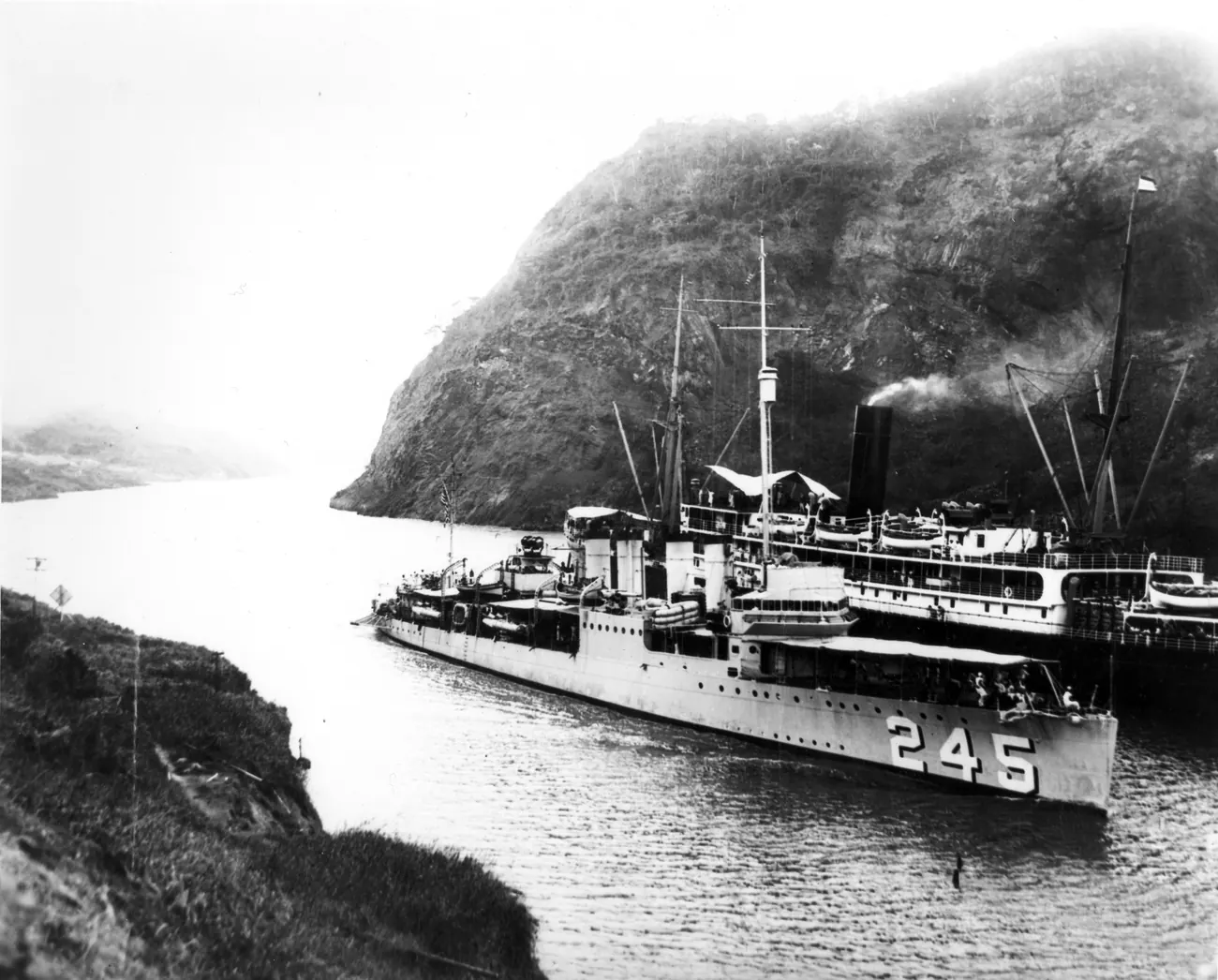
American warships were sinking. American sailors were dying. And the country still had not declared war on Germany. Roosevelt wanted Congress to act, but Congress would not give him the votes. The country was willing to help Britain. It was not willing to send its sons to fight in Europe.
What Hitler expected
The decision was not impulsive. That same day, December 11, Germany, Italy, and Japan signed a separate pact pledging not to make peace with the United States or Britain without each other's consent. Ribbentrop had been negotiating it with Japan's ambassador Hiroshi Oshima before the first bomb fell on Pearl Harbor.
Hitler had three reasons for making the war official. All three turned out to be wrong.
First, he believed the United States was already at war with Germany in everything but name. American destroyers were escorting convoys and shooting at submarines. Making the war official would free his U-boat commanders to attack American merchant shipping without restriction. He had been holding them back for months to avoid giving Congress a clear provocation.
Second, he expected Japan's offensive in the Pacific to divide American strength across two oceans. While the United States rebuilt its fleet and fought Japan, Germany would have time to finish the war against the Soviet Union, where the Wehrmacht had just been stopped outside Moscow in the first week of December.
Third, he held a deep, ideological contempt for the United States. In private he described it as "a decayed country," racially divided and incapable of sustained war. He believed American industry would take years to convert to military production and that American soldiers would not match German ones in the field.
He was wrong on every count. The U-boat campaign produced a brief surge of sinkings off the American coast in early 1942, but within months the convoy system and American shipyards had overwhelmed it. Japan's offensive did not divide American resources: the "Germany first" strategy ensured that the bulk of American power went to Europe. And American factories converted to war production faster than anyone had expected. By 1943, the United States alone was outproducing Germany, Japan, and Italy combined.
The country Roosevelt could not unite
Before Pearl Harbor, the United States was bitterly divided over the war in Europe. The America First Committee, the leading isolationist organization, had more than 800,000 members and over 450 chapters. Its most prominent voice was Charles Lindbergh, the most famous aviator in America. Polls consistently showed that most Americans supported helping Britain but opposed sending their own soldiers to fight in Europe.
Pearl Harbor changed the debate about Japan overnight. It did not change the debate about Germany. On December 8, Roosevelt asked Congress to declare war on Japan, and Congress gave it to him with a single dissenting vote. He did not ask for a declaration against Germany. He was not confident he had the votes, and he did not have a united country behind a two-ocean war.
Hitler solved the problem for him. The German declaration on December 11 made the debate irrelevant. Congress voted to accept the war unanimously: 88 to 0 in the Senate, 393 to 0 in the House. The America First Committee dissolved within days.
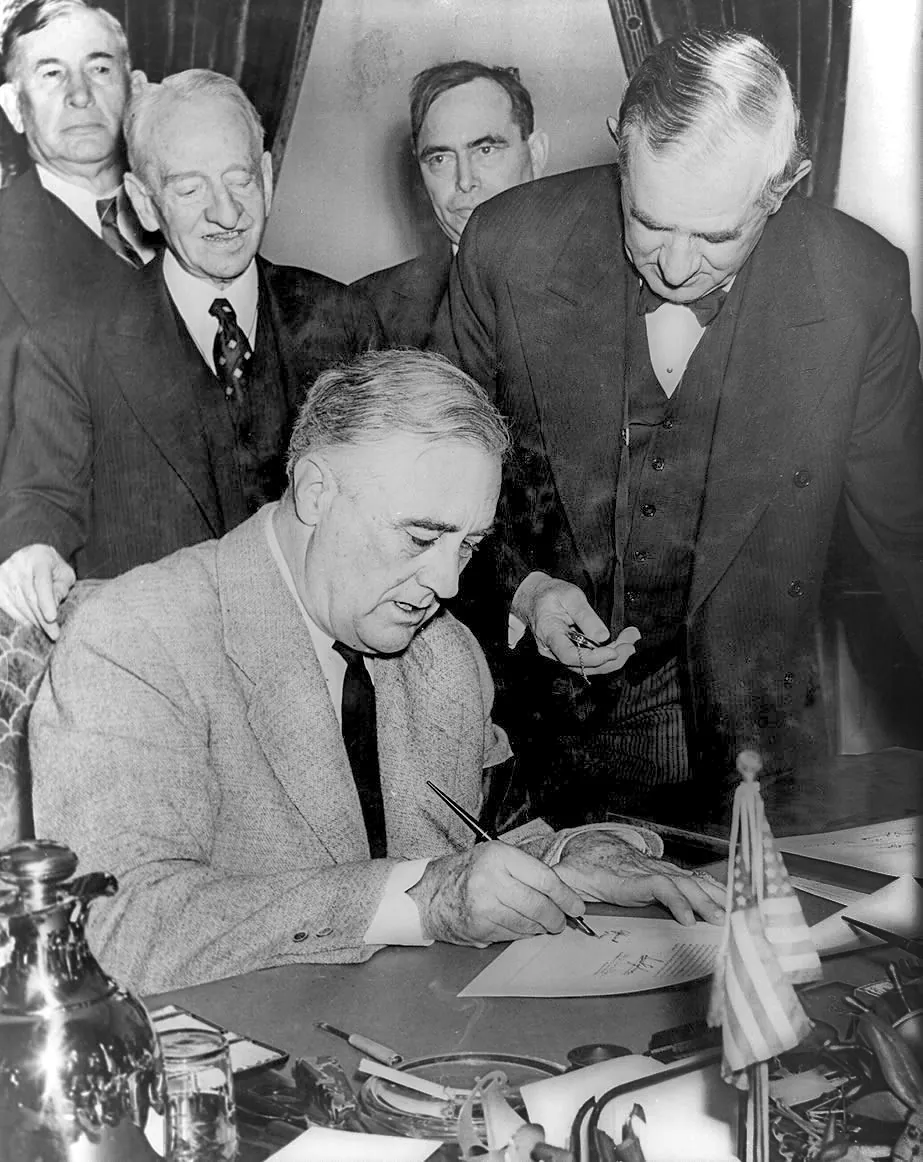
Winston Churchill was at dinner with the American ambassador when the news from Pearl Harbor arrived on the evening of December 7. Roosevelt confirmed it by phone. "We are all in the same boat now," he told Churchill. Churchill later wrote that he went to bed that night and slept "the sleep of the saved and thankful." After Hitler's declaration four days later, he sailed for Washington almost immediately. He arrived on December 22 and moved into the White House for three weeks of talks. The result was the strategy that won the war: Germany first. American and British planners had already agreed on this framework in secret staff talks in early 1941, but it could not become official policy until the United States was actually at war with Germany. Hitler made that possible.
What it cost Germany
The declaration created an alliance no country could beat. The combined industrial output of the United States, the British Empire, and the Soviet Union was overwhelming. American factories alone produced more ships, aircraft, and vehicles than all three Axis powers together. Lend-Lease sent roughly 400,000 trucks, 14,000 aircraft, and millions of tons of supplies to the Soviet Union, giving the Red Army the logistics for the deep offensives of 1943 and 1944. No single member of the alliance could have done it alone. The Soviet Union needed American trucks. Britain needed American production. The United States needed Soviet manpower to hold the Eastern Front, which consumed four out of every five German soldiers killed in the war.
Would the United States have entered the European war without Hitler's declaration? Probably. The undeclared naval war was escalating, and Roosevelt was privately committed to defeating Germany. But it was not certain, and it would not have been fast. Without a German provocation, America's fury was aimed at Japan, and isolationist resistance to a European war would have come back. Roosevelt would have needed months, possibly longer, to maneuver Congress into the war that Hitler gave him in a single afternoon. Even a delay of six months could have changed the shape of the conflict, because the Soviet Union, fighting alone against the bulk of the German army, could not wait indefinitely for a second front.
Before December 11, the United States was at war with Japan and divided over Europe. After it, the most powerful industrial economy on earth was committed to destroying Germany first. Hitler took a country that was split over whether to fight in Europe and unified it against himself. The war he chose to enter ended in his bunker three and a half years later.
Test what you learned
5 questions on this article. About two minutes, no signup.
Orbis has a full course on this
World War II. 32 lessons, each ending with a quiz like this one.