Why did Russia sell Alaska?
In 1867, Russia sold Alaska for $7.2 million. The real question is not why America bought cheap land, but why Russia was desperate to sell.
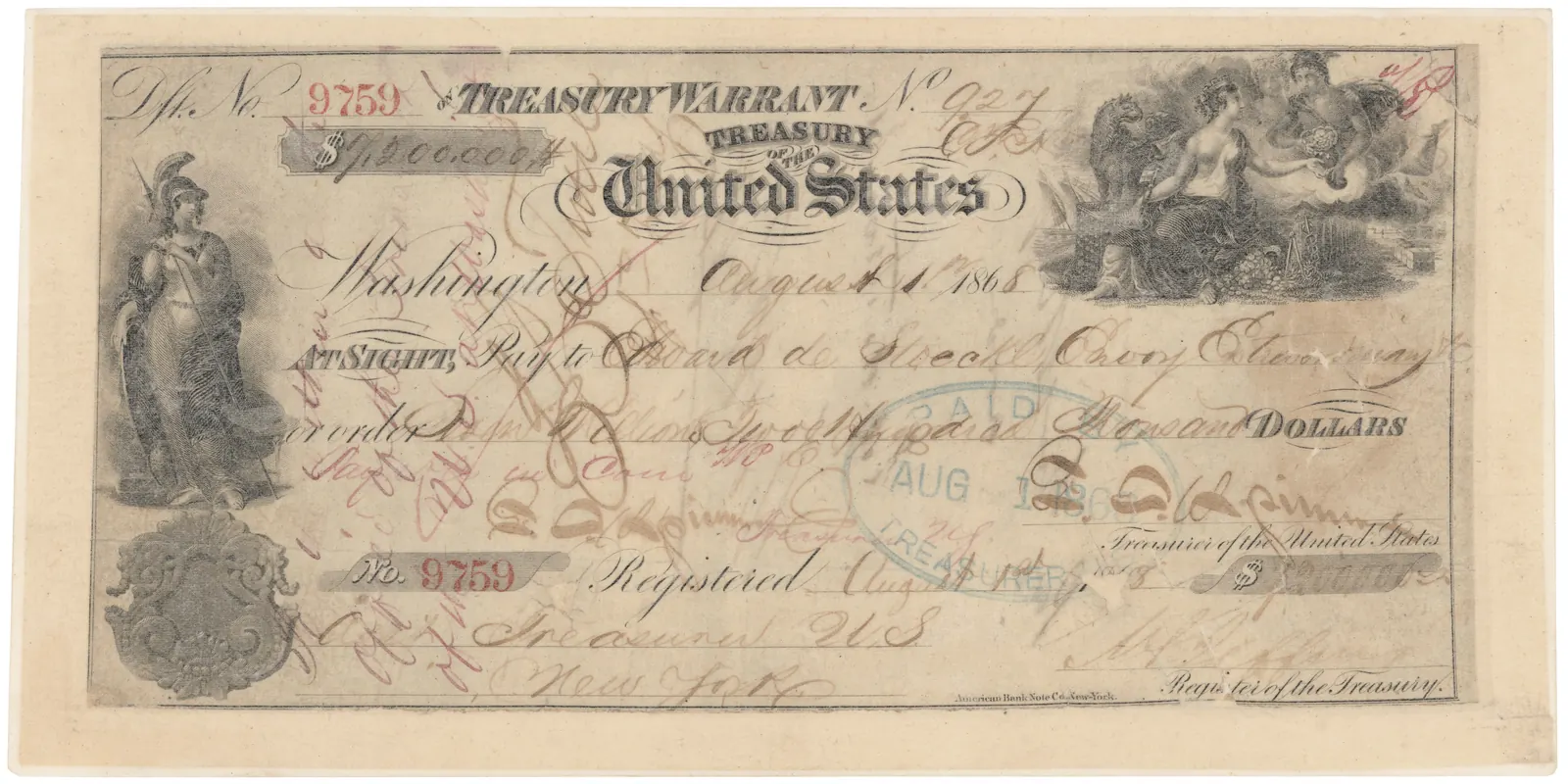
At four in the morning on March 30, 1867, Secretary of State William Seward and Russia's minister to Washington, Eduard de Stoeckl, signed a treaty at the State Department. The United States would buy 586,000 square miles of Russian territory in North America for $7.2 million, roughly $150 million today, at about two cents an acre. Seward had insisted on working through the night so the deal would be done before opposition could organize. The Senate ratified it 37 to 2 just ten days later.
The critics were loud. Newspapers mocked the purchase as "Seward's Folly," "Seward's Icebox," and "Walrussia." The House of Representatives delayed the payment for over a year. But the mockery missed the point. The question was never why America bought cheap land. It was why Russia, which had spent a century expanding eastward across Siberia, was desperate enough to sell.
A colony Russia could not hold
Russia's problem was not that Alaska was worthless. It was that Russia could not defend it.
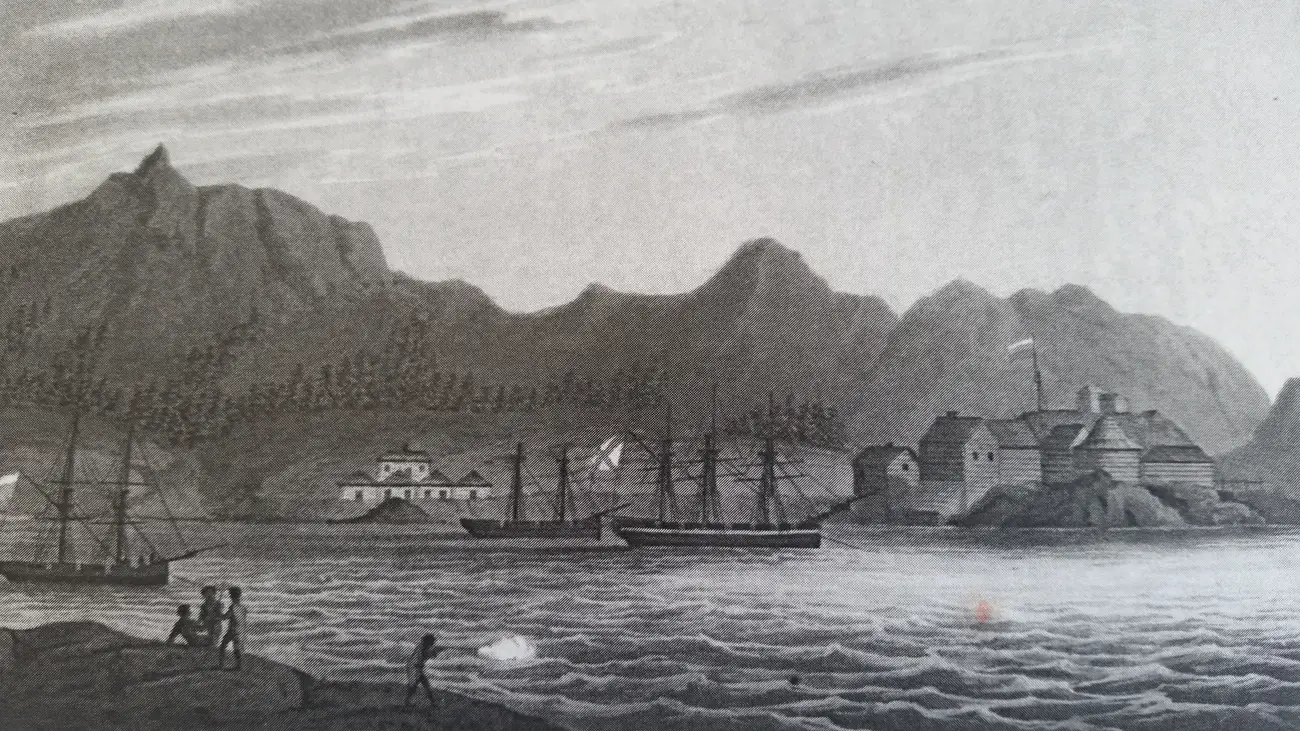
The colony had never been more than a commercial outpost. At its peak, roughly 500 ethnic Russians lived in the entire territory. The capital, New Archangel (today's Sitka), was a small wooden settlement on a forested shore. The rest of the land, an area twice the size of Texas, had almost no Russian presence at all.
The colony existed for fur. The Russian-American Company, chartered in 1799, had made fortunes hunting sea otters, whose pelts were the most valuable in the world. By the 1840s, overhunting had driven the sea otter close to extinction. The company tried whaling and timber. Nothing replaced the fur trade. By the early 1860s, the company was losing money, and its charter was allowed to expire.
Then came the lesson of the Crimean War. Russia's defeat by Britain and France in 1856 exposed a painful fact: Russia could not project naval power across the Pacific. A joint Anglo-French squadron had attacked Petropavlovsk on Russia's Pacific coast during the war. Britain already held neighboring British Columbia. In a future conflict, the Royal Navy could take Alaska, and Russia would get nothing for it.
The tsar's brother, Grand Duke Konstantin, who ran the Russian navy, made the case for selling. His logic was straightforward: sell to the friendly Americans before the British take it for free. Tsar Alexander II agreed. The sale would turn a liability into cash and place an American buffer between Russia's Pacific coast and British Canada.
Why Seward wanted it
William Seward was one of the most ambitious secretaries of state the United States has ever had. He had been a governor, a senator, and Abraham Lincoln's main rival for the 1860 Republican presidential nomination before Lincoln appointed him. He survived an assassination attempt on the same night Lincoln was shot: a co-conspirator broke into his home and slashed his face with a knife. Seward recovered, stayed in office, and turned his attention to expansion.
He believed the next century of American power would be built across the Pacific, through trade with China and Japan. Alaska would give the United States a coastline on both the North Pacific and the Arctic Ocean. It would bracket British Columbia from the north, complementing American territory to the south. During his time in office, Seward also tried to buy Greenland, Iceland, and several Caribbean islands. Alaska was the only deal that went through.
The formal transfer took place on October 18, 1867, in Sitka. American soldiers raised the flag over the old Russian fort. Most of the Russian settlers left within months. For three decades, Alaska attracted few new settlers, developed slowly, and seemed to justify every joke the critics had made.
Three waves that proved the critics wrong
The first was gold. In 1896, prospectors struck gold in the Klondike, just across the border in Canada's Yukon. The main routes to the goldfields ran through Alaskan ports and mountain passes, and the territory's value became obvious overnight. Gold was found in Alaska itself at Nome in 1899 and Fairbanks in 1903.
The second was oil. In 1968, drillers confirmed the Prudhoe Bay field on Alaska's North Slope, the largest oil deposit ever found in North America. When the Trans-Alaska Pipeline began pumping in 1977, Alaska was producing over a million barrels a day. The purchase price was paid back by petroleum revenue alone many times over.
The third was strategic position. During the Cold War, the shortest flight path for Soviet nuclear bombers to American cities ran through Alaskan airspace. Alaska became home to early-warning radar stations, interceptor bases, and missile defense installations. The colony Russia sold because it could not defend it became the front line of American defense against Russia.
That role is still growing. As Arctic ice recedes and new shipping routes open, Alaska's military and economic importance keeps rising. The United States and Russia share a maritime border across the Bering Strait, about 51 miles (82 km) wide at its narrowest point. American bases, missile interceptors, and Arctic patrol assets sit on the land Russia sold for two cents an acre. Grand Duke Konstantin's logic was sound in 1867: Russia could not hold Alaska. But the sale handed its rival the most consequential piece of real estate in the Arctic.
Test what you learned
4 questions on this article. About two minutes, no signup.
Orbis has a full course on this
Russia: Empire to Superpower. 38 lessons, each ending with a quiz like this one.