Why did the Ottoman Empire join WW1?
The Ottoman Empire joined World War I because one man, Enver Pasha, signed a secret alliance with Germany and started a war most of his own cabinet opposed.
On October 29, 1914, warships flying the Ottoman flag shelled the Russian ports of Odessa, Sevastopol, and Novorossiysk on the Black Sea. Russia declared war. Britain and France followed within days. The Ottoman Empire had entered World War I, the war that would destroy it, and most of its own government had not agreed to the decision.
The man who made it was Enver Pasha, the Ottoman Minister of War. He was 32 years old. He had seized power in a coup the year before, signed a secret alliance with Germany that summer, and then arranged the naval attack that forced the empire into the war before anyone could stop him.
An empire with no friends
By the summer of 1914, the Ottoman Empire was more isolated than it had been in centuries. The Balkan Wars of 1912 and 1913 had cost the empire roughly 83 percent of its remaining European territory in seven months. Salonica, the empire's most cosmopolitan city and the birthplace of the Young Turk movement, was now Greek. Hundreds of thousands of Muslim refugees had flooded into Anatolia. The army was humiliated.
The empire needed a great-power ally, and it had tried all of them. Russia was the oldest enemy: it wanted control of the Straits, the passage from the Black Sea to the Mediterranean that ran through the middle of the Ottoman capital. Britain had been an informal protector for decades, but by 1914 it had sided with Russia and France in the Triple Entente. In the spring of 1914, the Ottoman grand vizier, Said Halim Pasha, asked both France and Britain for a formal alliance. Both refused. Cemal Pasha, the navy minister and one of the three men who effectively ran the empire, traveled to Paris to propose a military pact. The French turned him down.
That left Germany. The German military had been training Ottoman officers since the 1880s. A German general, Liman von Sanders, had arrived in Constantinople in December 1913 to reorganize the Ottoman army. The Kaiser had visited the empire twice and styled himself a friend of Islam. Germany was the one major European power that did not want Ottoman territory. For Enver Pasha, who had served as a military attaché in Berlin and admired the Prussian officer corps, the choice was obvious.
The battleships Britain stole
On the same day the secret alliance was signed, Britain made the decision that turned Ottoman public opinion against it.
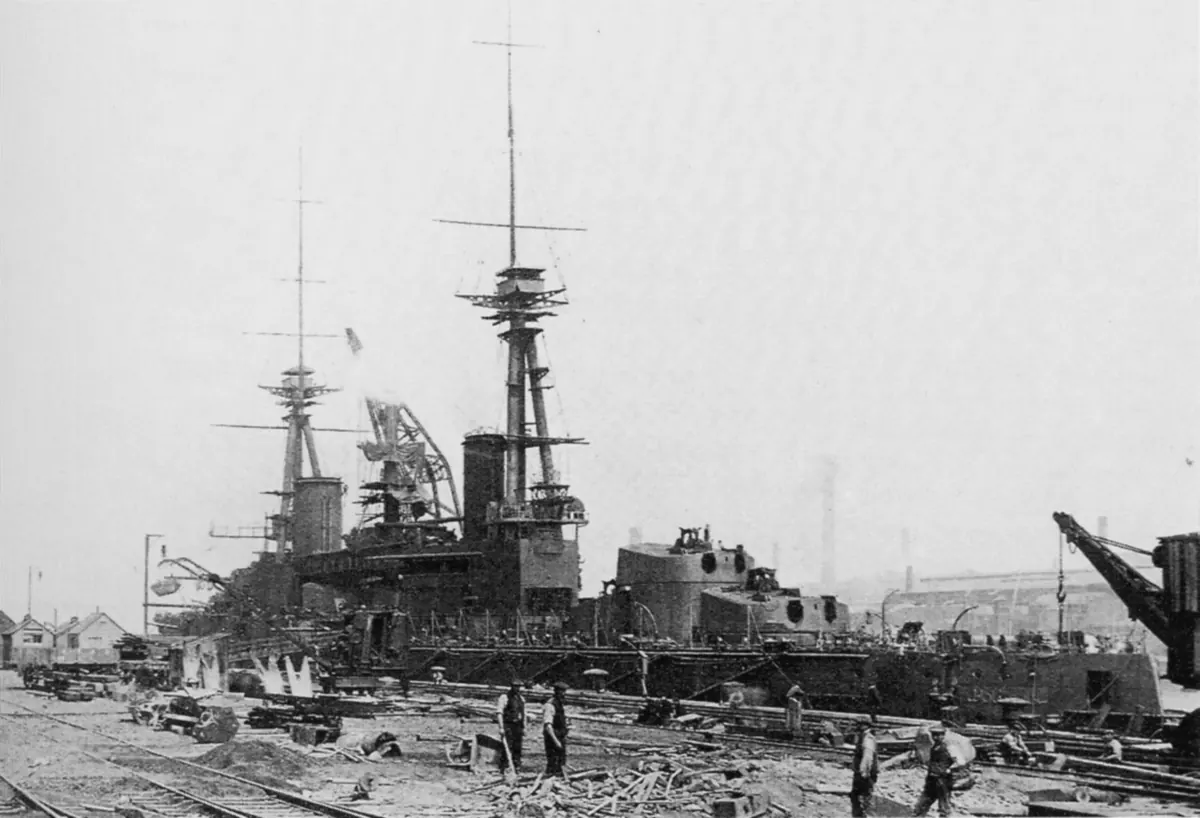
The Ottoman Empire had ordered two modern dreadnought battleships from British shipyards: the Sultan Osman I and the Reşadiye. They were the most powerful warships the empire had ever purchased, and the Ottoman public had helped pay for them. Across the empire, ordinary people donated money, and the fundraising campaign became a point of national pride. Sailors had already arrived in England to collect the ships.
On August 1, 1914, Winston Churchill, the First Lord of the Admiralty, ordered both ships seized for the Royal Navy. The decision made military sense for Britain, which needed every warship it could get. For the Ottomans, it was theft. The public was furious. Newspapers ran headlines about the stolen ships for weeks. It was the single most effective piece of propaganda Enver could have asked for, and he did not have to invent it.
Two German warships arrive as replacements
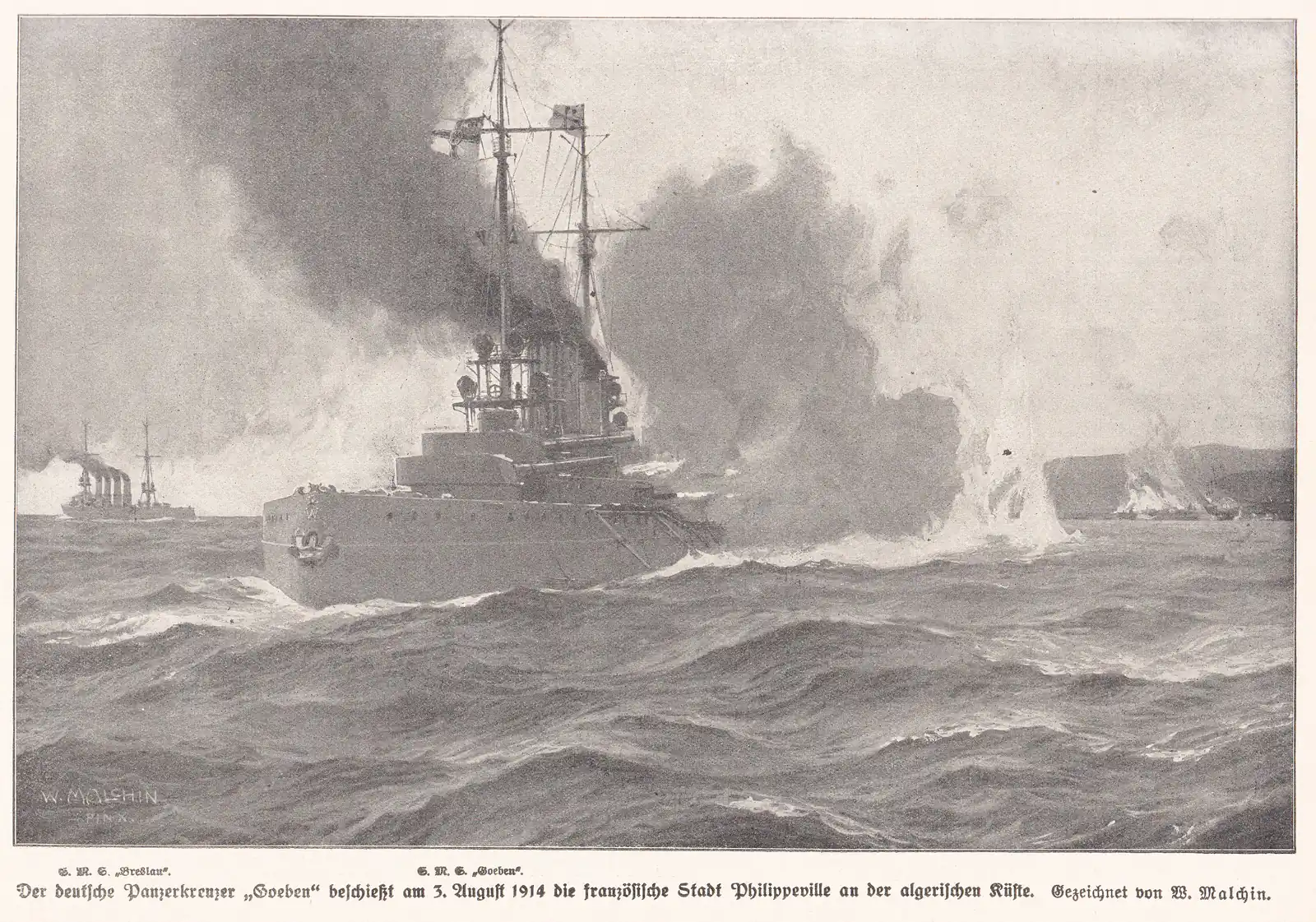
While the Ottoman public raged over the seized battleships, two German warships were running for their lives in the Mediterranean. The battlecruiser SMS Goeben and the light cruiser SMS Breslau, commanded by Admiral Wilhelm Souchon, were being chased by the British Royal Navy. On August 10, 1914, they steamed through the Dardanelles and anchored off Constantinople.
Under international law, a neutral country had to either intern belligerent warships or send them away within 24 hours. Instead, the Ottomans announced that they had purchased both ships. The Goeben became the Yavuz Sultan Selim. The Breslau became the Midilli. The German crews put on Ottoman uniforms and fezzes. Admiral Souchon became the commander of the Ottoman fleet.
It was a fiction. The ships were still crewed by Germans, still commanded by a German admiral, and still took orders from Berlin. But for the Ottoman public, Germany had given the empire two warships to replace the ones Britain stole.
The secret that most of the government did not know
The alliance had been signed on August 2, 1914, by Enver, Said Halim Pasha, Talat Pasha, and a handful of other officials. The treaty committed the Ottoman Empire to enter the war on Germany's side if Russia intervened in the Austro-Serbian conflict. Germany agreed to defend Ottoman territory and later sent 5 million Turkish liras in gold to help pay for mobilization.
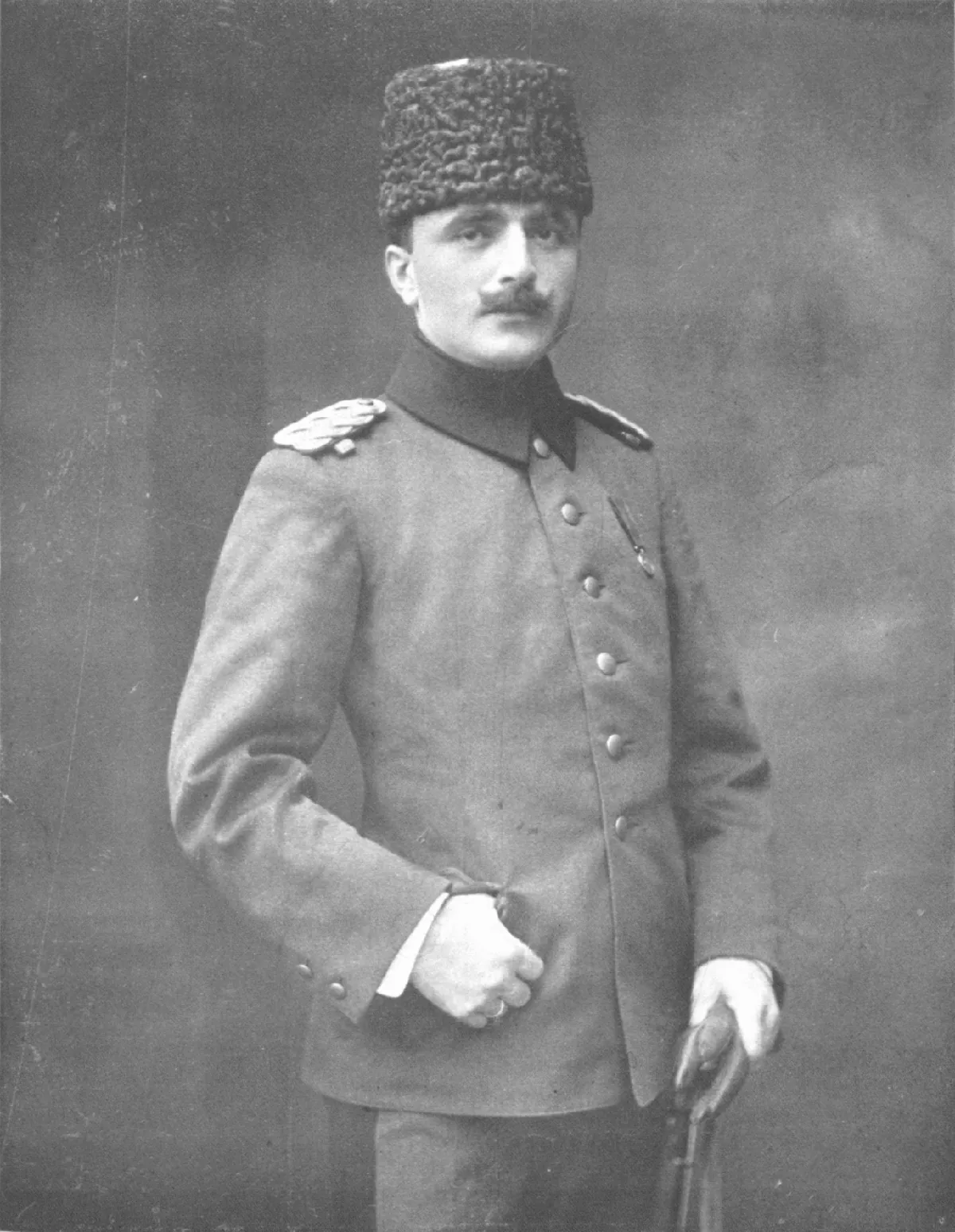
Enver was 32. He had led an armed raid on the Sublime Porte in January 1913 that killed the war minister and brought the Committee of Union and Progress back to power. In his office, he kept portraits of three generals he admired: Frederick the Great, Napoleon, and himself. The American ambassador Henry Morgenthau, who dealt with him regularly, identified audacity as his defining quality. He was certain that German military power would restore the empire's lost territories.
Most of the Ottoman cabinet learned about the alliance only after it was signed. Several ministers opposed entering the war. The empire declared armed neutrality and mobilized its army, but for nearly three months the question of whether to actually fight remained unresolved. Enver did not intend to let it stay that way.
The attack that ended the debate
On October 29, 1914, Admiral Souchon took the Ottoman fleet into the Black Sea. He had orders from Enver. Without a declaration of war, the fleet bombarded Odessa, Sevastopol, Novorossiysk, and Feodosia. Russian ships were sunk. The attacks were presented as a response to Russian provocations, but the Russian Black Sea Fleet had not fired first.
The cabinet erupted. Several ministers, including the finance minister Cavid Bey, resigned in protest. Said Halim Pasha, the grand vizier who had co-signed the German alliance, claimed he had not authorized the attack. It did not matter. Russia declared war on November 1. Britain and France followed on November 5. The Ottoman Empire was at war, pulled in by a 32-year-old war minister who had arranged the attack specifically to make neutrality impossible.
What the gamble cost
The war that Enver started destroyed the empire he was trying to save. His personal command of the Caucasus offensive in the winter of 1914 sent roughly 90,000 soldiers into the mountains without winter equipment. An estimated 25,000 froze before the fighting started. The genocide of an estimated 1 to 1.5 million Armenians followed. By 1918, British forces had taken Palestine, Syria, and Mesopotamia. The empire signed an armistice, and the borders that Britain and France drew to replace it created the modern Middle East.
Enver fled Constantinople in November 1918. He spent his last years trying to organize a pan-Turkic revolt in Central Asia. On August 4, 1922, leading a cavalry charge against a Red Army detachment near Baldzhuan in present-day Tajikistan, he was killed. He was 40. In 1996, Turkey brought his remains home and reburied them in Istanbul.
The Ottoman entry into World War I shows how little it takes to pull a country into a war it cannot win. Not a democratic vote, not a cabinet consensus, not even a clear national interest. One determined man with enough authority, a foreign ally willing to provide the means, and a single provocation at the right moment. Turkey's government in 2026 invokes the Ottoman past to justify its military reach into Syria, Libya, and the eastern Mediterranean. The specific memory it avoids is the one that matters most: the summer of 1914, when a 32-year-old officer who kept a portrait of himself alongside Napoleon signed a secret treaty and dragged an empire into the grave.
Test what you learned
5 questions on this article. About two minutes, no signup.
Orbis has a full course on this
The Ottoman Empire. 32 lessons, each ending with a quiz like this one.