
Why is the Middle East so unstable?
The Middle East was governed as a single state for 400 years. Four structural forces explain why it has been in conflict ever since.
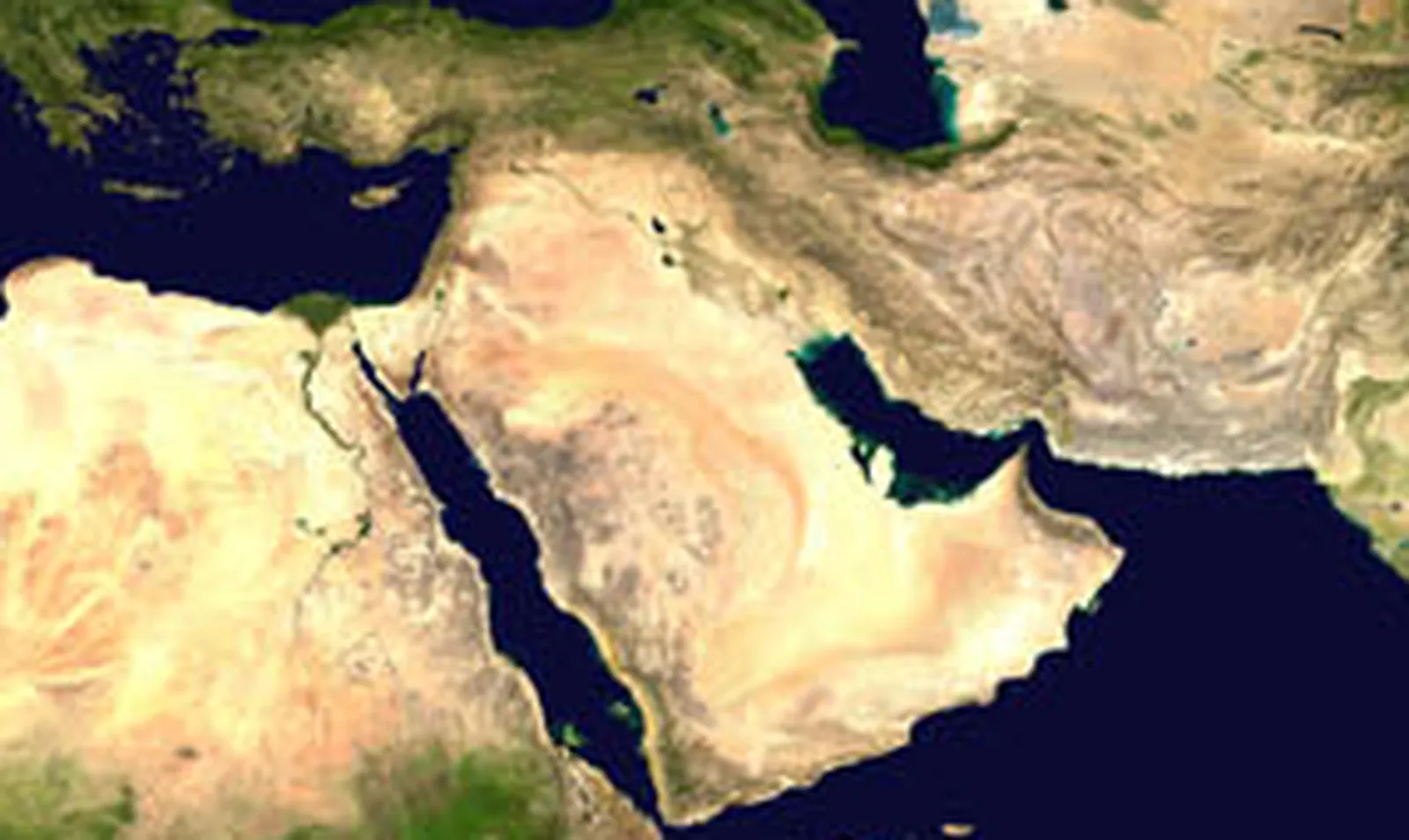
Since 2001, the United States has invaded two countries in the Middle East. A civil war in Syria has killed more than 500,000 people and displaced roughly half the country's population. Iraq fell apart along sectarian lines after the American invasion in 2003. Libya collapsed after NATO intervention in 2011. Yemen has been bombed for a decade. Lebanon's economy and government have both disintegrated. Iran and Saudi Arabia have spent forty years fighting each other through proxies in at least five countries, and in 2026 they came closer to a direct war than at any point since 1979.
No other region produces this density of conflict. The question is why. The answer is not one cause but four, each reinforcing the others: borders that were drawn by outsiders and never matched the people living inside them, oil wealth that made democratic bargaining unnecessary, a religious fault line that rival powers learned to weaponize, and outside intervention that never stopped.
The region was not always like this
The Middle East was not always unstable. For most of the last thousand years, it was governed by large empires that kept order across enormous, diverse territories. For long stretches, it was the most advanced region on earth.
Under the Abbasid Caliphate, which ruled from Baghdad starting in 750 AD, the Middle East experienced what historians call the Islamic Golden Age. Baghdad was probably the largest city in the world by the ninth century, with a population that may have reached a million. The caliph al-Ma'mun founded the House of Wisdom, a library and research center where scholars translated Greek, Persian, and Indian texts into Arabic and built on them. Al-Khwarizmi wrote the treatise that gave algebra its name. The word "algorithm" comes from a Latin version of his name. Physicians, astronomers, and chemists working in Arabic advanced fields that Europe would not catch up with for centuries. This was not a backwater waiting to be civilized. It was the civilization.
The Mongols destroyed Baghdad in 1258, killing the caliph and much of the city's population. But within three centuries, the Ottoman Empire restored order to the region. From Suleiman the Magnificent in the 1500s until World War I, the Ottomans governed most of the Middle East as a single state for roughly four hundred years. The empire classified its subjects by religious community, not ethnicity. Greek Orthodox Christians, Armenian Christians, Jews, and Muslims each kept their own courts and schools. The system was unequal: non-Muslims paid a special tax and could not serve in the military. But it held, because the empire was large enough and powerful enough that nobody inside it could change it.
That order ended in 1918. The Ottoman Empire entered World War I in 1914 on the losing side, led into the war by Enver Pasha, a 31-year-old minister of war who believed an alliance with Germany would restore the empire's strength. He was wrong. By 1918, British forces had taken Palestine, Syria, and Mesopotamia. On October 30, 1918, the Ottoman government signed an armistice. An empire that had governed the Middle East for centuries was gone, and nothing replaced it.
The borders outsiders drew
What replaced the Ottoman Empire was not self-determination. It was a deal between Britain and France.
In May 1916, while the war was still going on, a British diplomat named Mark Sykes and a French diplomat named François Georges-Picot met in London and divided the empire's Arab provinces between their two countries. France got Syria and Lebanon. Britain got Iraq, Jordan, and Palestine. The boundaries did not follow rivers, mountains, ethnic lines, or the old Ottoman provinces. They followed what Britain and France wanted.
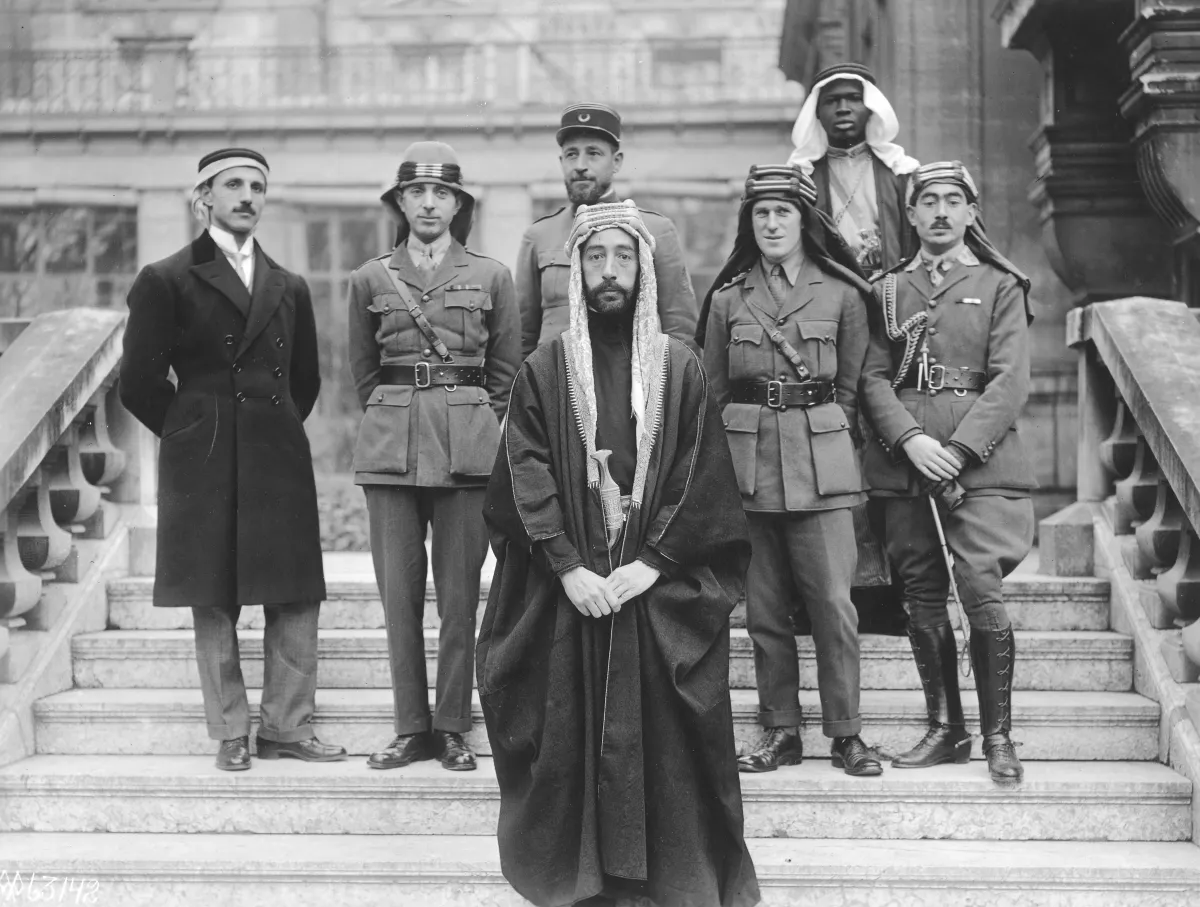
Iraq was assembled from three Ottoman provinces that had never been a single unit: Mosul in the Kurdish north, Baghdad in the Sunni Arab center, and Basra in the Shia Arab south. Britain installed a king from the Hejaz, in what is now Saudi Arabia, who had never set foot in the country. France carved Lebanon out of Syria to create a Christian-majority state, then allocated political power by sect based on a 1932 census. Lebanon has not held another census since, because a new count would upend the entire distribution of offices. The Sykes-Picot agreement also left 40 million Kurds split across four countries with no state of their own.
Arab nationalists tried to undo the borders. Egypt and Syria merged into a single country in 1958. The union collapsed within three years because Syrian officers discovered that unification meant taking orders from Cairo. By then each artificial state had built an army, a treasury, and a political class whose careers depended on the state's survival. The borders had become permanent, not because anyone liked them, but because changing them would mean war.
Oil made it worse
Then oil was discovered under those borders, and everything got harder.
Commercial oil was found in Iran in 1908, Iraq in 1927, Bahrain in 1932, and Saudi Arabia in 1938. By the 1970s, the Middle East held roughly half of the world's proven oil reserves. Borders that had been drawn to manage railways and pilgrimage routes now determined ownership of the most valuable commodity on earth.
Oil changed the relationship between governments and their people. A government that lives on taxes has to bargain with its population, because it needs their compliance to collect. A government that lives on oil revenue does not. Its income arrives at an export terminal on the coast, and all it needs is enough force to hold the terminal and the pipeline. In 2024, oil still provided about 60 percent of Saudi government revenue. The Gulf states could afford to buy domestic peace with subsidies and public jobs instead of building the parliaments and courts that produce accountable government. Their security services grew faster than their legislatures.
Oil also guaranteed that outside powers would keep intervening. Any country that depended on Middle Eastern oil had an interest in who governed the countries that produced it. The CIA's 1953 coup that overthrew Iran's elected prime minister, Mohammad Mosaddegh, happened because he nationalized the oil. American protection of Saudi Arabia, which has lasted since 1945, exists because the kingdom sits on the world's largest conventional reserves. Every major outside intervention in the region, from the 1953 coup to the 2003 invasion of Iraq, has had an oil dimension.
1979 changed everything
The Sunni-Shia divide is 1,400 years old, but for most of that history it was not the primary driver of conflict in the Middle East. That changed in 1979, when three events happened within twelve months and turned a religious difference into a geopolitical fault line.
In February 1979, a revolution led by Ayatollah Ruhollah Khomeini overthrew the Shah of Iran and replaced a secular monarchy with a Shia theocracy. Khomeini was 76 years old and had spent fifteen years in exile. He returned to Tehran on a chartered Air France 747 loaded with roughly 120 journalists, partly because their presence made it harder for loyalist forces to shoot the plane down. He declared the revolution a model for the entire Muslim world and called the Saudi monarchy illegitimate.
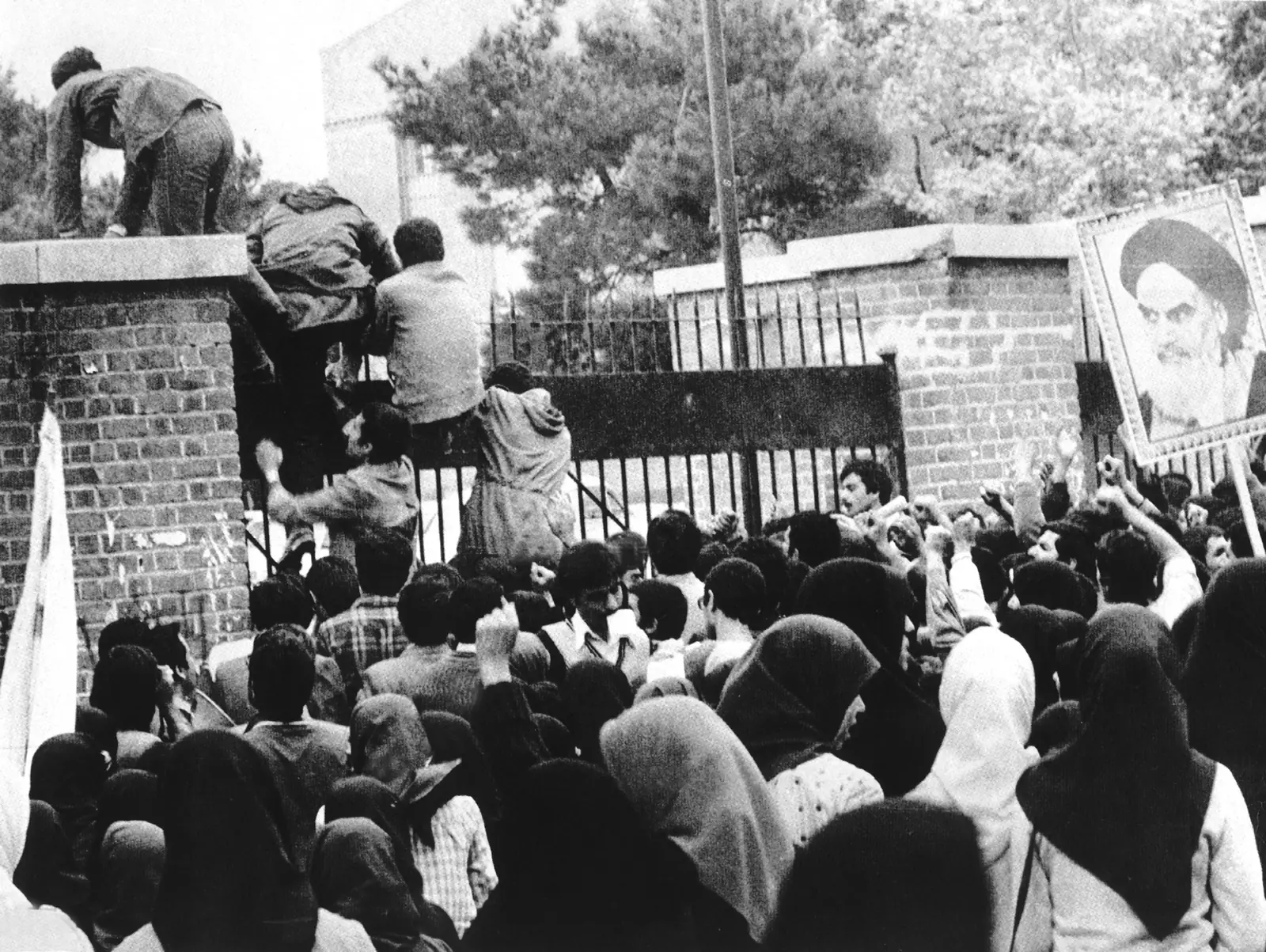
Saudi Arabia's answer was to spend. Over the following decades, the kingdom poured tens of billions of dollars into Wahhabi mosques, schools, and preachers from Pakistan to Nigeria. Where Iran exported Shia revolution, Saudi Arabia exported Sunni conservatism. Two oil-rich governments were now funding competing versions of Islam across the Muslim world, and every country with a mixed Sunni-Shia population became a potential front.
In November 1979, armed militants seized the Grand Mosque in Mecca, the holiest site in Islam. The siege lasted two weeks. The Saudi government crushed it with French commando assistance, but the shock pushed the monarchy to give conservative clerics more power over Saudi society, accelerating the export of hardline Islam.
In December 1979, the Soviet Union invaded Afghanistan. The United States, Saudi Arabia, and Pakistan funneled money and weapons to the mujahideen fighters who opposed the Soviets. When the Soviets withdrew in 1989, those fighters did not disband. Some formed the Taliban, which took power in Afghanistan in 1996. Others, led by Osama bin Laden, formed al-Qaeda. The American invasion of Iraq in 2003 eventually produced ISIS. A war funded to counter the Soviet Union created the groups that drove the next three decades of conflict in the region.
Why it keeps going
Each of these forces reinforces the others. Bad borders created states that were hard to govern, so rulers relied on force. Oil revenue paid for the force and removed the incentive to build legitimate institutions. Outside powers backed those rulers because they needed the oil. The Sunni-Shia split gave rival powers a way to recruit allies and fight each other through proxies instead of directly. And every intervention created new grievances that fed the next round.
The Iran-Iraq War from 1980 to 1988 killed roughly a million people. Saudi Arabia backed Iraq with tens of billions of dollars. The American invasion of Iraq in 2003 removed Saddam Hussein and replaced a Sunni-dominated government with a Shia-majority parliament for the first time, handing Iran an opening it has used ever since. Syria's civil war, which started in 2011 as an Arab Spring protest movement, pulled in Iran, Saudi Arabia, Russia, Turkey, and the United States, each backing different factions. At the conflict's peak, more than a thousand armed groups were operating inside a country smaller than the state of Minnesota.
In 2026, the pattern is still running. Iran and Saudi Arabia, after a brief Chinese-brokered reconciliation in 2023, are closer to direct war than at any point in decades. Houthi drones have shut down Red Sea shipping. Iran has closed the Strait of Hormuz, the waterway through which roughly 20 percent of the world's oil passes. Not one of the four forces that made the region unstable has gone away. The borders are still there. The oil is still there. The sectarian networks have their own leaders, their own funding, and their own reasons to keep fighting. And outside powers still need the oil, which means they keep coming back.
Test what you learned
5 questions on this article. About two minutes, no signup.