Why did the US lose the Vietnam War?
The US dropped more bombs on Vietnam than on all of World War II, sent 536,000 troops, and won most of its battles. It lost because it fought the wrong war.
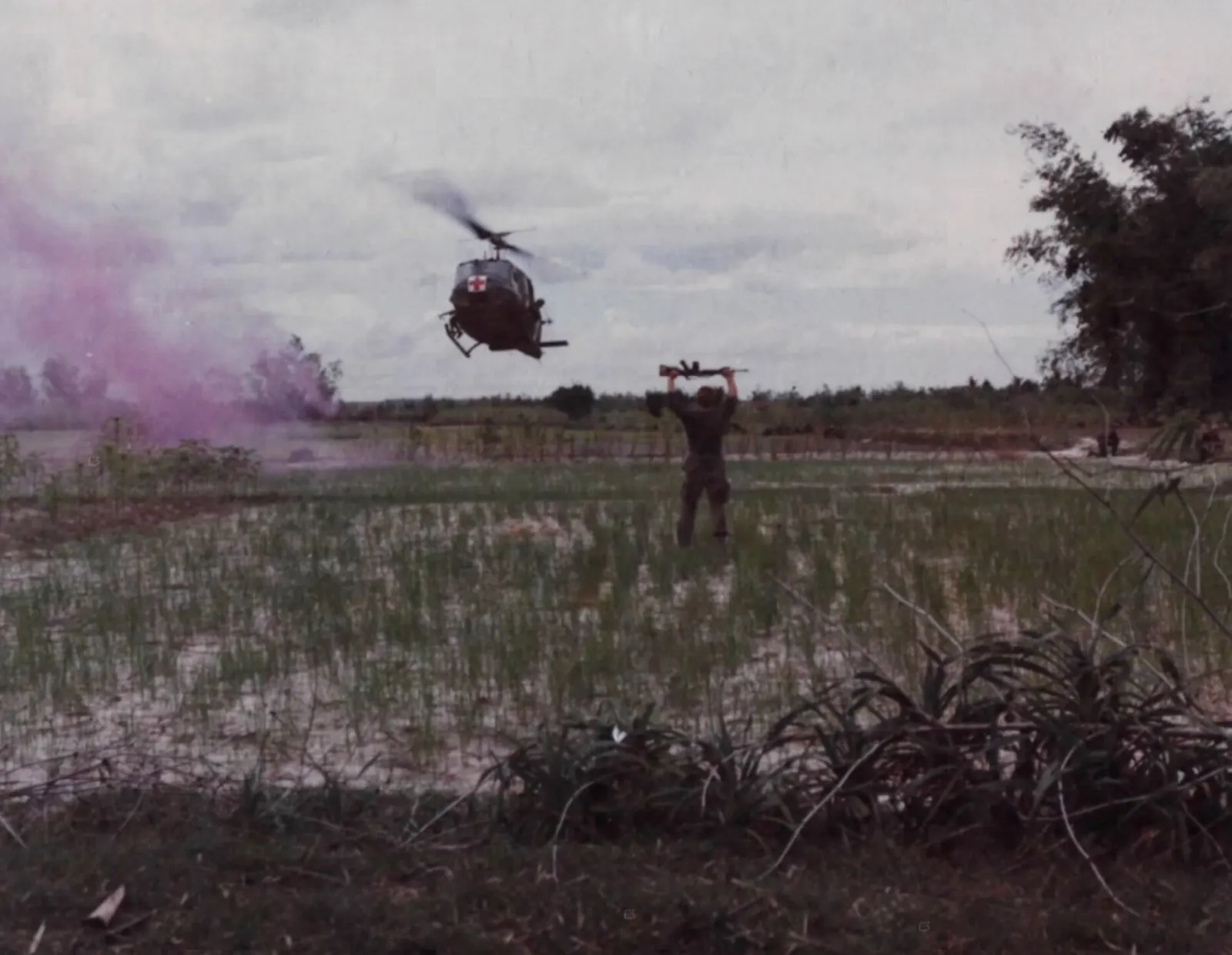
Between 1965 and 1973, the United States sent more than three million soldiers to Vietnam, dropped more bomb tonnage than in all of World War II, and spent the equivalent of nearly a trillion dollars in today's money. It won almost every major battle. It still lost the war. The reason is not complicated: the United States treated a Vietnamese fight for national independence as a Cold War contest, and tried to win with firepower a war that could only be decided by political will. Vietnamese commanders understood this from the start. It took American leaders twenty years and 58,220 dead to reach the same conclusion.
Inheriting France's war
Vietnam had been a French colony since the 1880s. When Japan occupied it during World War II, a resistance movement emerged under Ho Chi Minh, a former pastry cook turned revolutionary who had spent decades in exile from Paris to Moscow. When Japan surrendered in August 1945, Ho proclaimed Vietnamese independence in Hanoi, opening with a line from the American Declaration of Independence: "All men are created equal." He wrote at least eight letters to President Truman asking for American support against France's return. Truman never answered.
France fought to keep its colony and lost. The decisive battle came at Dien Bien Phu in 1954, where the Vietnamese general Vo Nguyen Giap dragged artillery up mountain slopes by bicycle and manpower, surrounded the best French troops, and forced their surrender after a 56-day siege. The Geneva Accords that followed split Vietnam at the 17th parallel, with Ho's government in the North and an American-backed government under Ngo Dinh Diem in the South. Nationwide elections were promised for 1956. They were never held, because Washington and Saigon knew Ho would win them.
The United States stepped into France's boots because of an idea President Eisenhower laid out that same year: if Vietnam fell to communism, the rest of Southeast Asia would follow. The argument became known as the domino theory, and it was powerful. Applied to Vietnam, it was also wrong. Vietnamese communism was a nationalist movement, not a branch office of Moscow or Beijing. But that would take twenty years and a lost war to prove.
The blank check
Through the late 1950s and early 1960s, the American commitment grew slowly, from 900 military advisors under Eisenhower to 16,000 under Kennedy. The South Vietnamese government was authoritarian, Catholic in a mostly Buddhist country, and deeply unpopular. In November 1963, Diem was overthrown and killed in a coup the Kennedy administration had tacitly approved. Three weeks later, Kennedy himself was assassinated.
The full escalation came in August 1964. The destroyer USS Maddox reported being attacked by North Vietnamese torpedo boats in the Gulf of Tonkin. Two days later, the Maddox reported a second attack in darkness and bad weather. That second attack almost certainly never happened. The radar contacts were weather ghosts, and senior officials knew it at the time, as declassified NSA records confirmed in 2005. President Johnson did not wait for confirmation. The Gulf of Tonkin Resolution passed 88 to 2 in the Senate and 416 to 0 in the House, giving Johnson authority to wage war without a formal declaration. He later compared the resolution to "grandma's nightshirt: it covered everything."
American combat troops landed at Da Nang in March 1965. By 1968, there were 536,000 of them, most of them draftees. The military strategy was attrition: kill enough of the enemy and Hanoi would be forced to negotiate. The central measure of success was the body count. Counts were inflated, civilians were undercounted, and tactics maximized firepower at the expense of the people the United States was supposed to be protecting. The strategy assumed Hanoi had a breaking point. Vietnamese commanders had calculated, correctly, that American politics would break first.
Tet and the unraveling
On January 30, 1968, during the Vietnamese New Year cease-fire, North Vietnamese and Viet Cong forces attacked more than a hundred cities and towns across South Vietnam at once. Guerrillas fought their way into the US Embassy compound in Saigon. The fighting lasted six weeks. American and South Vietnamese forces defeated every attack, and the Viet Cong was so badly mauled it never recovered as a fighting force.
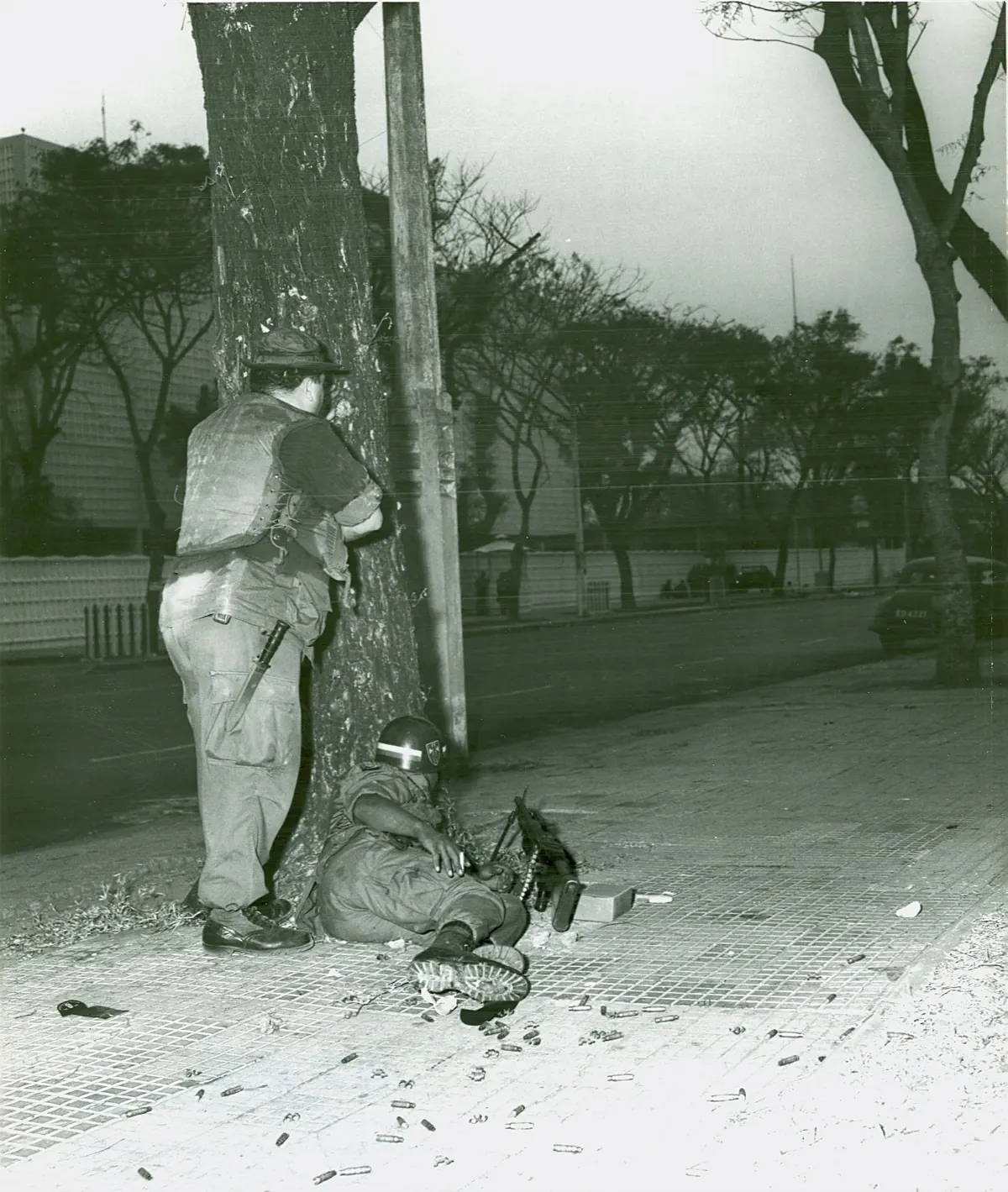
The Tet Offensive was a military defeat for the communists and a political catastrophe for the United States. For the previous year, American commanders had told Congress and the press that victory was near. The images of enemy fighters inside the embassy, of house-to-house combat in the imperial city of Hue, did not look like winning. Walter Cronkite, the most trusted journalist in America, flew to Vietnam, came back, and told his audience the war was a stalemate. Johnson reportedly said: "If I've lost Cronkite, I've lost middle America." Five weeks later, he announced he would not run for reelection.
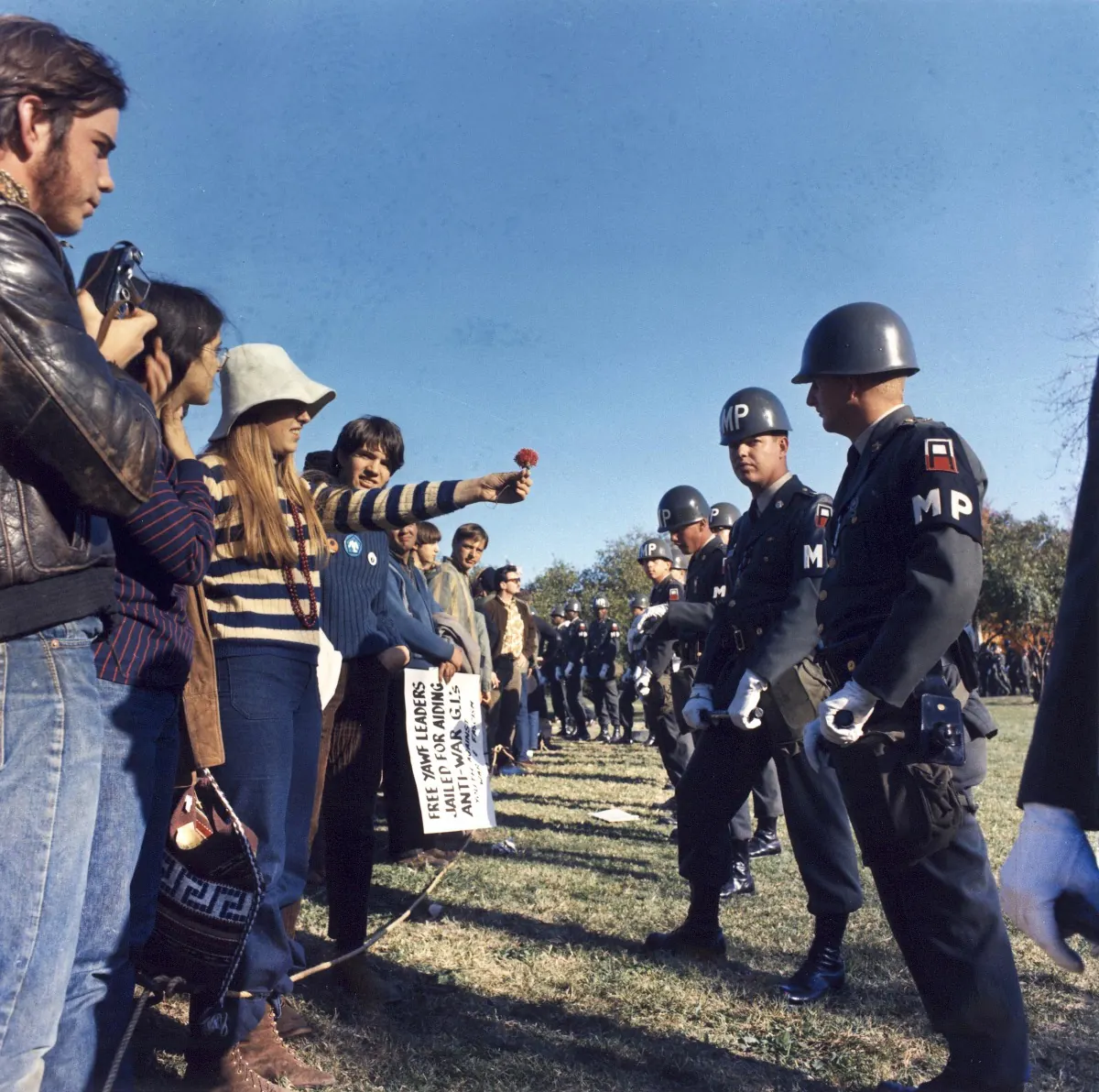
Richard Nixon won the presidency in 1968 promising a secret plan to end the war. His answer was Vietnamization: hand the fighting back to the South Vietnamese army while withdrawing American troops and expanding the bombing into Cambodia and Laos. In 1970 he sent troops into Cambodia, setting off the largest student protests in American history. At Kent State, Ohio National Guard troops shot four unarmed students dead. The country had reached a point where its own soldiers were killing its own college students over a war in Southeast Asia.
The Paris Peace Accords were signed in January 1973. American troops withdrew within sixty days. Le Duc Tho, the North Vietnamese negotiator, declined the Nobel Peace Prize he was awarded alongside Henry Kissinger. He said the war was not over. He was right. With American troops gone and Congress cutting off further aid, South Vietnam held on for two more years before collapsing. On April 30, 1975, North Vietnamese tanks crashed through the gates of the presidential palace in Saigon as the last Americans fled by helicopter from a rooftop across the city.
What the war proved
The cost was 58,220 Americans dead, between 1.5 and 3 million Vietnamese dead, and a country poisoned by the chemical defoliant Agent Orange. The destabilization of Cambodia helped produce the Khmer Rouge genocide, which killed roughly two million more.
And then the domino theory was tested against reality. A unified communist Vietnam did not become a Soviet or Chinese puppet. By 1979 it was at war with China, which invaded after Vietnam overthrew the Khmer Rouge in Cambodia. The monolithic communist bloc that the domino theory assumed had never existed. Vietnam had been fighting for Vietnam all along.
The United States fought the wrong war for twenty years. It read a fight for national independence as a Cold War domino, poured half a million troops into a country whose politics it never understood, and discovered that no amount of bombing can produce the political will that actually decides these conflicts. The same lesson returned in Afghanistan, where two decades and more than two trillion dollars built a government that dissolved in eleven days in August 2021. The pattern is visible now in debates over arming Ukraine and what a war over Taiwan would cost. The question is always the same: not which side has more firepower, but which side will keep paying for the outcome longer. In Vietnam, the answer was never close.
Test what you learned
5 questions on this article. About two minutes, no signup.
Orbis has a full course on this
The Cold War. 22 lessons, each ending with a quiz like this one.