Why does China support North Korea?
North Korea is poor, nuclear-armed, and widely sanctioned. China keeps it alive anyway, because the alternative is an American ally on its border.
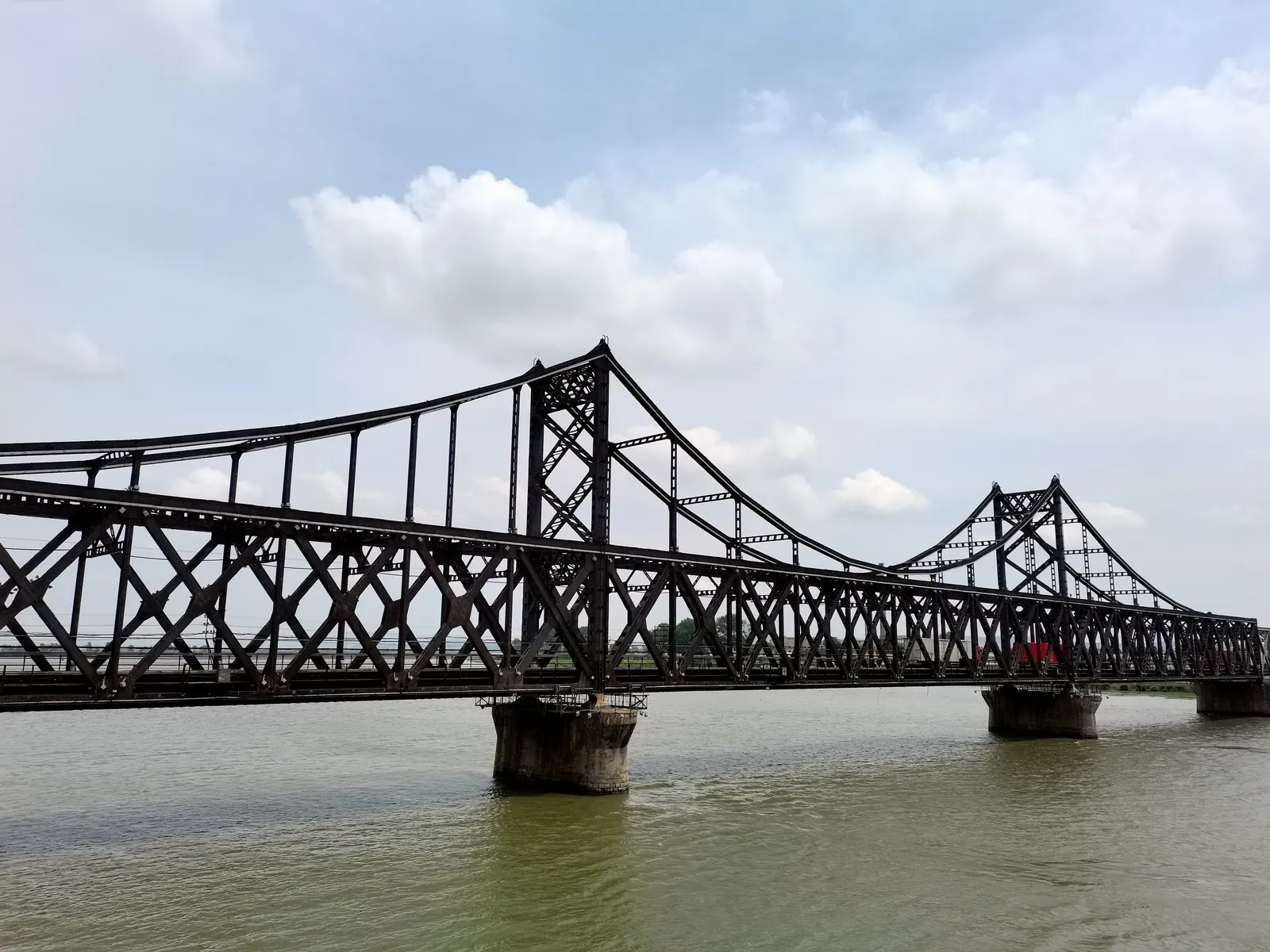
China sends North Korea roughly 500,000 tons of crude oil a year through a pipeline that runs under the Yalu River from Dandong to Sinuiju. It supplies most of the food, fuel, and machinery that keep the country running. In 2025, bilateral trade hit $2.7 billion, nearly all of it Chinese exports flowing north. Without China, North Korea's economy would collapse within months.
This is not charity, and it is not ideology. China props up one of the most repressive governments on Earth for a reason that has held steady since 1950: a buffer state on the border, however ugly, is better than an American-allied one.
Blood paid in Korea
The relationship was forged in war. In October 1950, hundreds of thousands of Chinese soldiers crossed the Yalu River into Korea to stop American-led UN forces from reaching China's border. Mao Zedong pushed the decision through over the objections of most of his leadership, using an old proverb: if the lips are gone, the teeth will be cold. A hostile army on the Yalu, he argued, was a knife at the throat of the revolution China had just won.
The cost was enormous. Estimates of Chinese dead range from 180,000 to over 400,000. Among them was Mao Anying, Mao's eldest son, killed by an American airstrike in November 1950. The war ended in a 1953 armistice that left the border roughly where it started, at the 38th parallel. No peace treaty was ever signed.
China called it the War to Resist America and Aid Korea, and it became a founding myth of the People's Republic. For a country that had spent a century being carved up by foreign powers, fighting the world's strongest military to a standstill was proof that the era of humiliation was over. In 2021, as tensions with Washington rose, Beijing poured resources into a film about the battle at Chosin Reservoir. "The Battle at Lake Changjin" became the highest-grossing movie in Chinese history.
The lesson Beijing took from Korea never changed: the blood China spent to keep North Korea alive must not be wasted by letting it fall.
The treaty nobody else has
In July 1961, Zhou Enlai and Kim Il-sung signed the Sino-North Korean Treaty of Friendship, Cooperation and Mutual Assistance in Beijing. Article 2 commits both sides to take all necessary measures against any country or coalition that attacks either one. For decades it was China's only mutual defense pact with any nation.
The timing was strategic. Kim had just signed a similar treaty with the Soviet Union, and the Sino-Soviet split was deepening. China wanted to keep North Korea in its orbit rather than lose it to Moscow. The treaty was renewed in 1981 and 2001, and it remains in force today.
In practice, the treaty gives Beijing leverage and a headache in equal measure. It obligates China to defend a country whose behavior it cannot control. North Korea has tested nuclear weapons six times, launched hundreds of ballistic missiles, and built an arsenal that most analysts estimate at 40 to 60 warheads. China voted for UN sanctions after every nuclear test, then quietly ensured the sanctions never bit hard enough to destabilize the regime.
The buffer logic
The strategic calculus is simpler than it looks. If North Korea collapsed, China would face two problems it considers worse than anything the Kim dynasty has done.
The first is refugees. North Korea has 26 million people, most of them malnourished and with no experience of the outside world. A sudden collapse would send millions across the Yalu into China's northeastern provinces, where the economy is already struggling and ethnic Koreans make up a significant minority. China has quietly built fences and reinforced border infrastructure along the Yalu for exactly this reason.
The second is the military map. South Korea hosts roughly 28,500 American troops. If the two Koreas unified under Seoul's government, American soldiers and American missile defense systems could end up on the Chinese border. From Beijing's perspective, that would undo everything China fought for in 1950.
This is why China tolerates North Korea's nuclear program despite opposing it. A nuclear North Korea is dangerous and embarrassing. A collapsed North Korea, or one absorbed into an American-allied South, is strategically catastrophic. Between the two, Beijing chooses the problem it can manage.
The economic leash
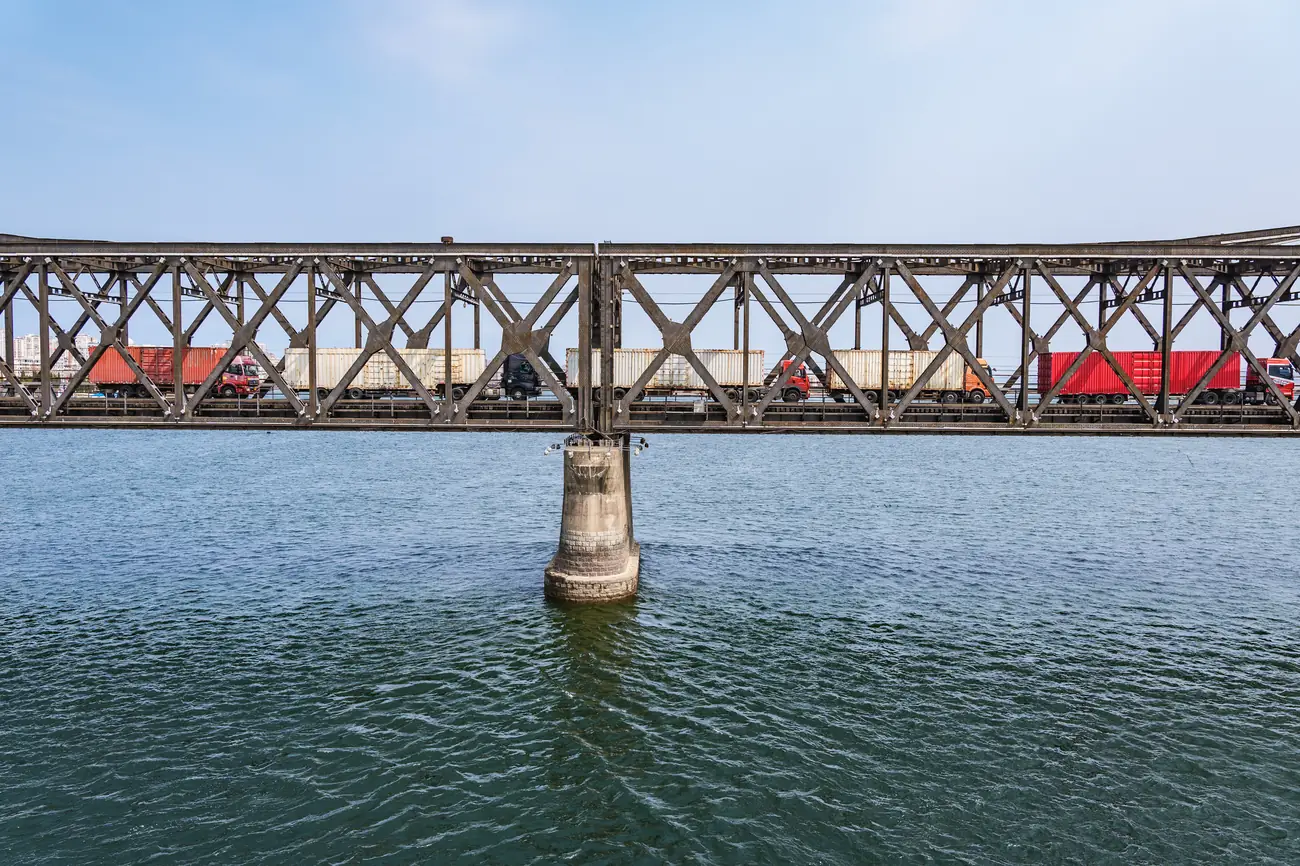
China accounts for more than 90 percent of North Korea's foreign trade. The Dandong-Sinuiju corridor handles most of it: crude oil through the pipeline, everything else by truck and rail across the Friendship Bridge.
The dependency gives Beijing a tool it has used sparingly but pointedly. After North Korea's third nuclear test in 2013, Chinese oil deliveries reportedly dipped. After the sixth test in 2017, China backed the toughest UN sanctions yet, cutting North Korean coal and textile exports. Official trade fell by about 90 percent.
But the trade did not stop. It moved to smuggling, ship-to-ship transfers at sea, and front companies in Southeast Asia. UN investigators documented hundreds of violations with satellite photographs. China's public position is that it complies with all resolutions. The evidence says it enforces them just enough to signal displeasure, never enough to threaten the regime's survival.
The pattern is consistent. When North Korea does something that embarrasses Beijing, China tightens the screws. When the regime looks shaky, China loosens them. The goal is not to punish or reward. It is to keep North Korea dependent, stable, and above all, intact.
The relationship is not friendship
Chinese officials sometimes describe the bond as "close as lips and teeth," the phrase Mao used before sending troops to Korea. In practice, the relationship is closer to mutual hostage-taking.
China does not like North Korea's nuclear weapons. Every test raises the risk of an arms race in East Asia: Japan, South Korea, and Taiwan all have the technology to build nuclear weapons within months if they decided to. Every missile launch pushes South Korea and Japan closer to the United States and justifies the American military presence that China wants to shrink.
North Korea, for its part, has never been a grateful client. Kim Il-sung played China and the Soviet Union against each other for decades. His grandson Kim Jong-un has done the same with China and Russia. In 2024, Kim signed a mutual defense pact with Vladimir Putin, the first time North Korea had a military treaty with Russia since the Soviet one lapsed in 1991. North Korean soldiers went to fight in Ukraine, and Russia began sharing missile and satellite technology with Pyongyang. China was not consulted.
Xi Jinping and Kim have met several times since 2018, including a Chinese state visit to Pyongyang in June 2026. The meetings produce declarations of eternal friendship. They do not produce Chinese control over North Korean decisions. Beijing has learned to live with that.
Why it will not change
The support continues because every alternative is worse from Beijing's point of view. Abandoning North Korea means risking collapse, refugees, and American forces on the Yalu. Pressuring it too hard means risking the same outcome through instability. Embracing it fully means owning every provocation and every missile test.
So China does what it has done since 1953: it keeps the regime alive at the lowest possible cost, complains about its behavior in private, and blocks anyone else from doing anything that might bring it down. When the UN Security Council considered tougher sanctions in 2022, Russia vetoed the resolution. China did not need to. It had already made clear that regime change in Pyongyang was a red line.
Korean reunification under Seoul would create Asia's fourth-largest economy and a democracy of 80 million people on China's border, backed by a treaty alliance with the United States. That is the scenario every Chinese strategic thinker agrees must be prevented. As long as it remains possible, China will keep the oil flowing, the trucks crossing the bridge at Dandong, and the Kim regime standing, not out of love, but out of a calculation that has not changed in 75 years.
Test what you learned
5 questions on this article. About two minutes, no signup.
Orbis has a full course on this
The Korean Peninsula. 24 lessons, each ending with a quiz like this one.