Why were the Mongols so successful?
The Mongols had the same horses and bows as every steppe army before them. What made them different was how Genghis Khan organized them.
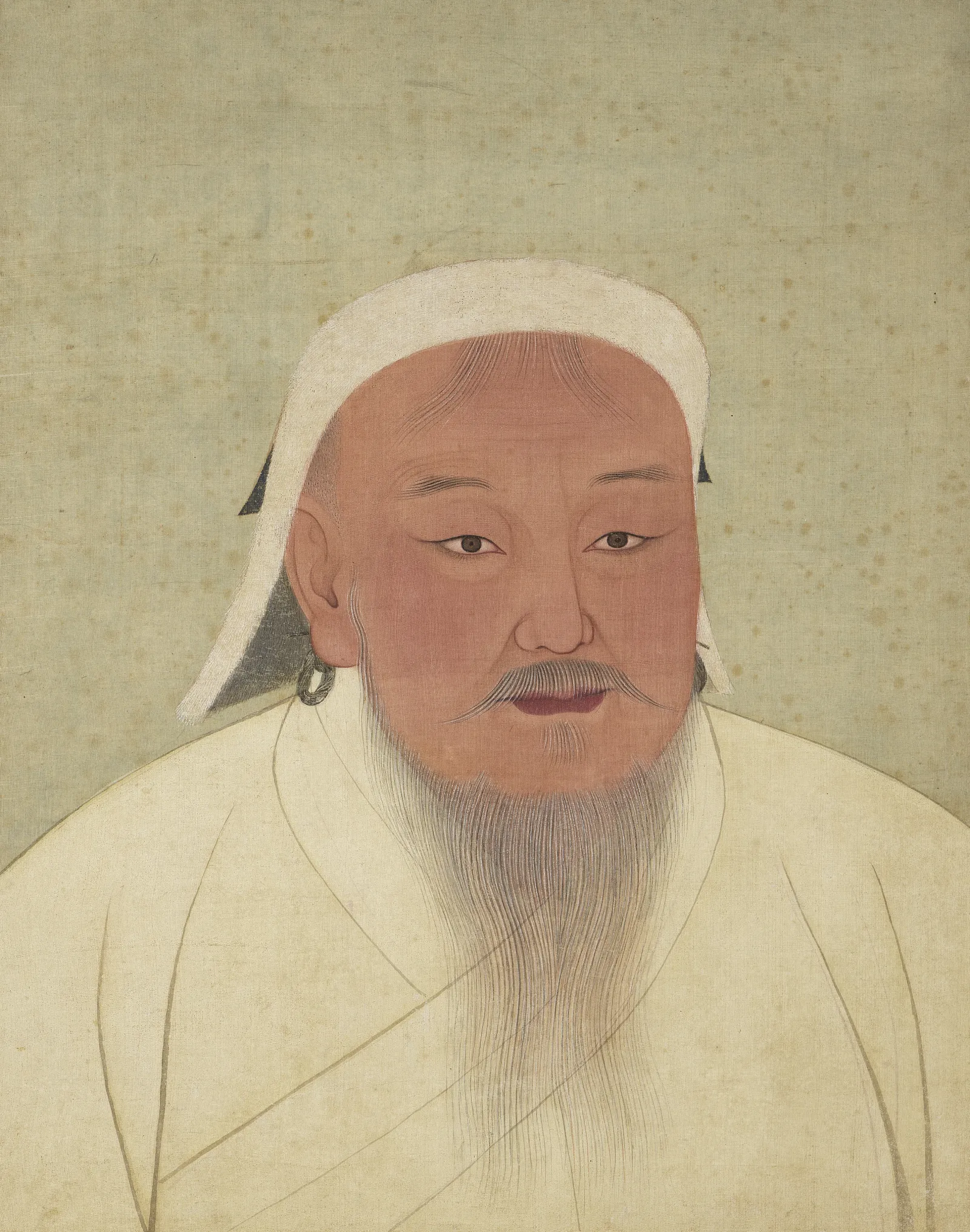
In 1206, a man who had grown up abandoned by his own tribe, captured by enemies, and nearly killed by his half-brother took the title Genghis Khan and unified the nomadic peoples of the Mongolian steppe. Over the next fifty-four years, he and his successors conquered more territory than the Roman Empire took four centuries to build. At its peak the Mongol Empire covered roughly 24 million square kilometers, from Korea to Hungary, from Siberia to the Persian Gulf. No empire before or since has conquered that much land that fast.
Other steppe peoples had done versions of this before. The Scythians raided Persia. The Huns pushed into Europe. The Turks built empires across Central Asia. All of them rode the same horses and shot the same composite bows. What made the Mongols different was not their weapons. It was how Genghis Khan organized the people who carried them.
An army built on merit, not blood
Before Genghis Khan, steppe armies were tribal. Warriors fought under their own clan leaders, and loyalty ran along bloodlines. Genghis Khan dismantled this system entirely. He reorganized his army into decimal units: squads of 10, companies of 100, regiments of 1,000, and divisions of 10,000 called tumens. Members of different tribes were deliberately mixed together so that soldiers' loyalty ran up the chain of command, not back to their clans. Deserting meant abandoning the squad, and the punishment was death for the entire squad if one man ran.
He promoted by ability. Subutai, the general who destroyed Poland and Hungary in the same week in 1241, was the son of a blacksmith from a forest tribe in Siberia. Jebe, one of Genghis Khan's most trusted commanders, started as an enemy soldier. During a battle against Genghis Khan's forces, Jebe shot the horse out from under him. After his tribe was defeated, Jebe admitted to the shot. Genghis Khan promoted him for his honesty and skill. In an era when every other army on earth assigned command by birth, the Mongol army assigned it by talent.
This was the innovation that other steppe empires never made. The Huns fell apart within a year of Attila's death. The Mongol Empire eventually fractured too, but the army Genghis Khan built kept winning battles for decades after he died, because its discipline came from the structure, not from one leader's personal authority.
Speed and intelligence
Every Mongol soldier rode with three to five spare horses, rotating between them so that the herd could cover ground no infantry army could match. A Mongol force could move 60 to 80 miles in a day. A European army on good roads averaged about 20. That speed was not just tactical. It was strategic: armies appeared where enemies did not expect them, and the distances between Mongol columns made it almost impossible for defenders to know where the main attack would come.
Behind the armies, Genghis Khan built the Yam, a relay system of postal stations spaced roughly 25 to 30 miles apart across the empire. Each station kept fresh horses, food, and shelter. A messenger carrying a golden tablet called a paiza could requisition any horse and any supplies at any station, and obstructing a messenger was punishable by death. Messages crossed the empire at roughly 200 miles per day, which meant Genghis Khan in Mongolia could receive intelligence from the borders of Persia in about two weeks. No government in the world matched that speed of communication until the telegraph arrived six centuries later.
The Mongols also sent merchants and spies into enemy territory years before an invasion. When Genghis Khan invaded the Khwarezmian Empire in 1219, he already knew the locations of its cities, the disposition of its garrison forces, and the political feuds between the sultan and his governors. The invasion itself was provoked when the governor of the border city of Otrar executed a Mongol trade caravan of roughly 450 merchants and seized their goods. Genghis Khan sent diplomats to demand justice. The Khwarezmian sultan, Muhammad II, responded by killing one of the diplomats and shaving the beards of the other two. The war that followed destroyed the Khwarezmian Empire within two years.
They learned every weapon they did not have
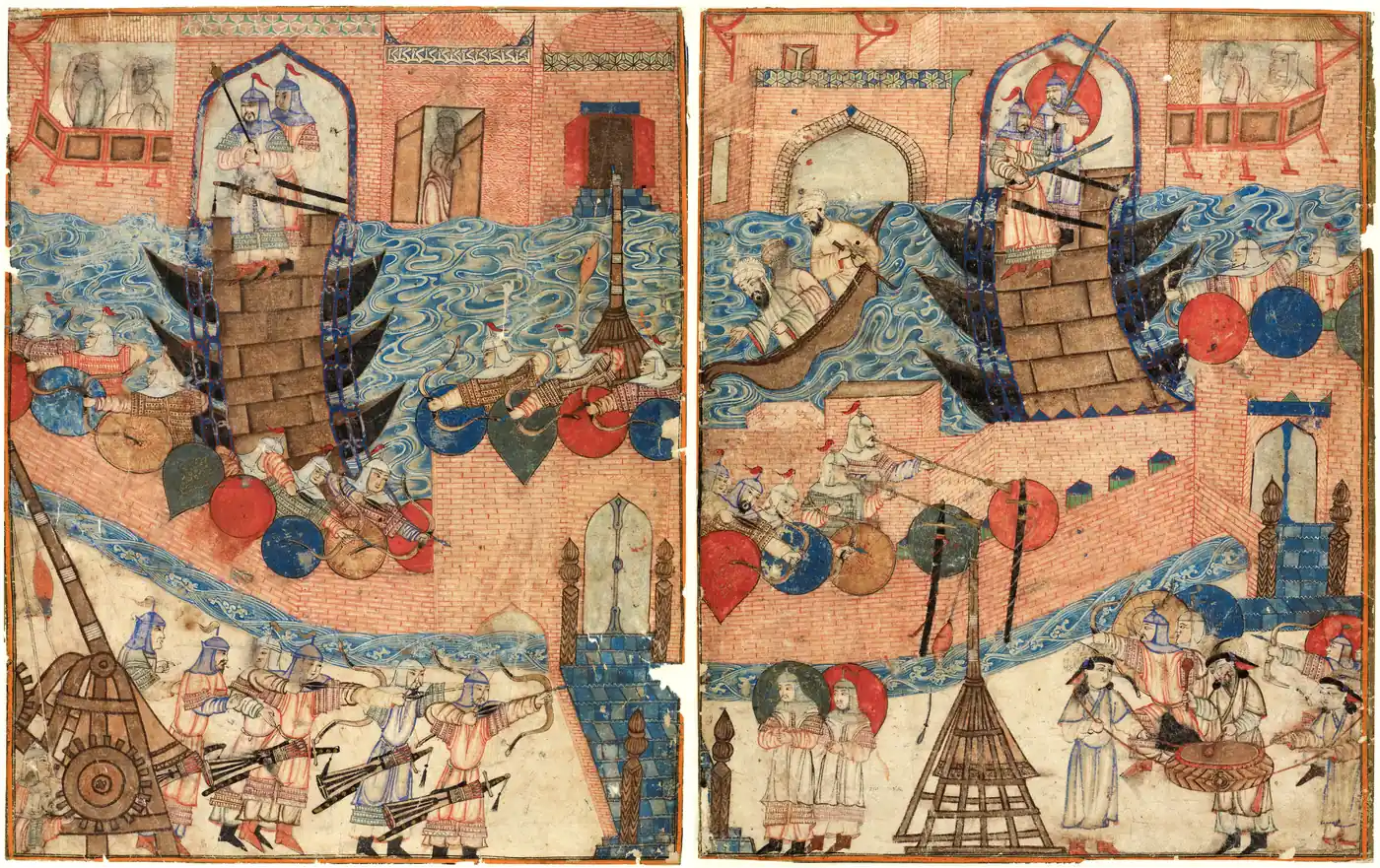
The Mongols started as horsemen on open grassland. They had no experience with siege warfare, and their first encounters with fortified cities in northern China went badly. They could not take the walls.
They solved this by recruiting engineers from every civilization they conquered. Chinese engineers brought gunpowder, siege crossbows, and catapults. Persian and Muslim engineers brought trebuchets and naphtha incendiaries. By the 1250s, the Mongol army carried a corps of specialists from across Eurasia who could break any fortification on earth. When Hulegu Khan besieged Baghdad in 1258, his engineers built pontoon bridges across the Tigris, diverted waterways to flood the defenders' positions, and breached the walls with trebuchets. The city fell in less than two weeks. The Abbasid caliph, who had ruled the symbolic center of Islam for five centuries, was executed. By one account, Hulegu had the caliph rolled in a carpet and trampled by horses, because Mongol custom forbade spilling royal blood onto the ground.
Terror as a calculated strategy
The Mongol massacres are famous: the chronicler Juvayni reported that a cleric at the city of Merv in 1221 spent thirteen days counting the dead and reached 1.3 million. The real number was almost certainly lower, but even conservative estimates suggest hundreds of thousands. At Nishapur, the Mongols reportedly stacked severed heads into pyramids.
This was not random violence. The Mongols followed a consistent pattern. Cities that surrendered without a fight were usually spared, taxed, and absorbed into the empire. Cities that resisted and lost were destroyed, and their populations killed or enslaved. The pattern created a rational incentive: each massacre made the next city more likely to open its gates. By the time Mongol armies reached new territory, their reputation arrived ahead of them, and many cities chose surrender over the fate of Merv. The terror reduced the Mongols' own casualties. Fewer sieges meant fewer dead Mongol soldiers.
What the conquests connected
The Mongol Empire lasted in its unified form for roughly 150 years before splitting into rival successor states: the Golden Horde in Russia, the Chagatai Khanate in Central Asia, the Ilkhanate in Persia, and the Yuan dynasty in China. But in those 150 years, the organizational system Genghis Khan built created something no earlier conqueror had managed. The Yam, the trade protections, and the religious tolerance that allowed Christians, Muslims, Buddhists, and Daoists to practice freely across the empire opened a corridor of exchange between East Asia and Europe. Merchants, missionaries, and diplomats traveled the length of the continent under Mongol protection. Marco Polo reached China along routes the Mongol system secured.
Historians call this period the Pax Mongolica, the Mongol peace, and the name is not ironic despite the violence that created it. For roughly a century, the Silk Road carried more trade than at any point in its history. Gunpowder, paper, printing, and the compass moved west. Silver, horses, and glass moved east. The exchange reshaped both ends of Eurasia. Europe's awareness of China, sharpened by travelers like Marco Polo, fed the ambition that eventually drove the Age of Exploration. Columbus sailed west in 1492 looking for a sea route to the China that Marco Polo had described. The Mongols conquered the largest land empire in history not just because they fought better than anyone else, but because Genghis Khan built an organization that could absorb, learn from, and connect the civilizations it destroyed.
Test what you learned
5 questions on this article. About two minutes, no signup.
Orbis teaches the history behind the news
Orbis covers the Mongol Empire in five-minute lessons, from Genghis Khan's rise to the fall of Baghdad and the Golden Horde.