Alliance · Union
ECOWAS
Economic Community of West African States
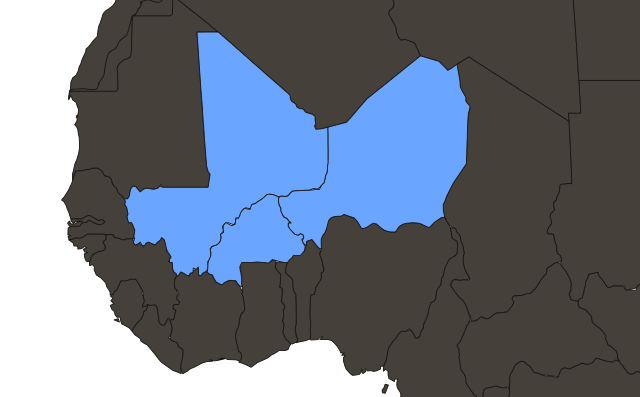
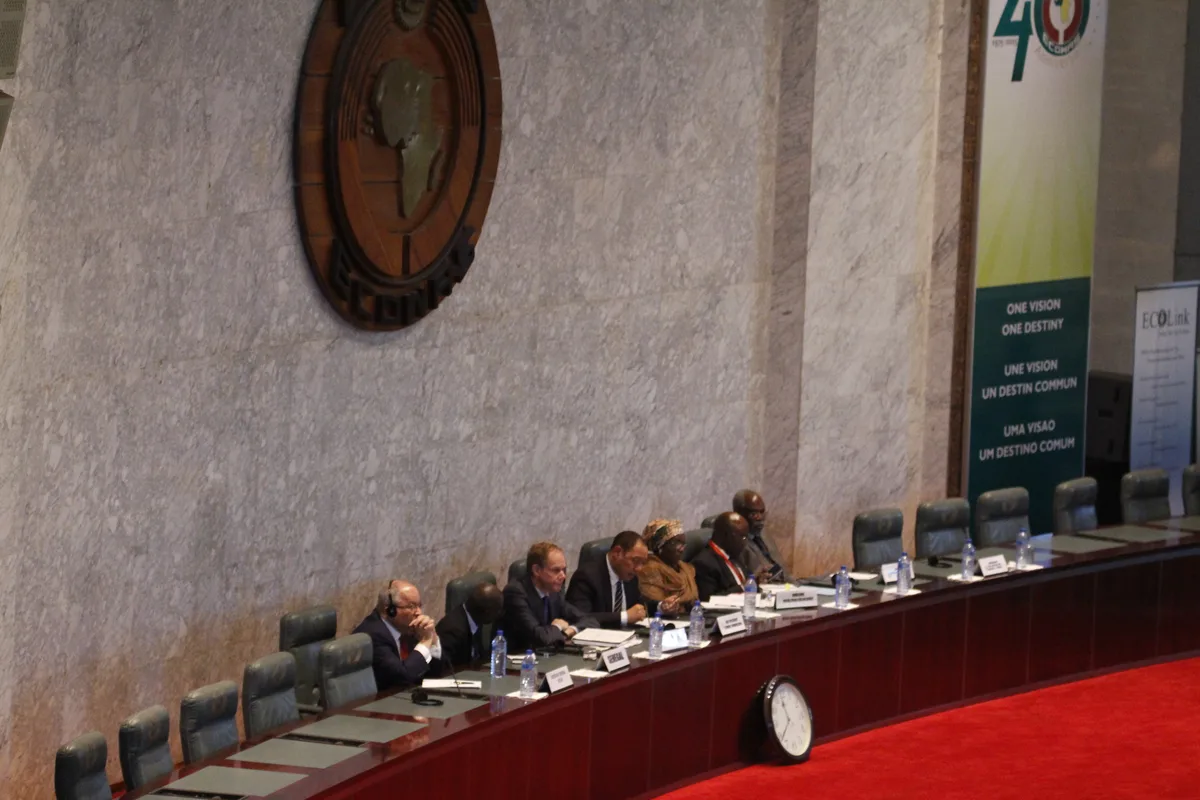
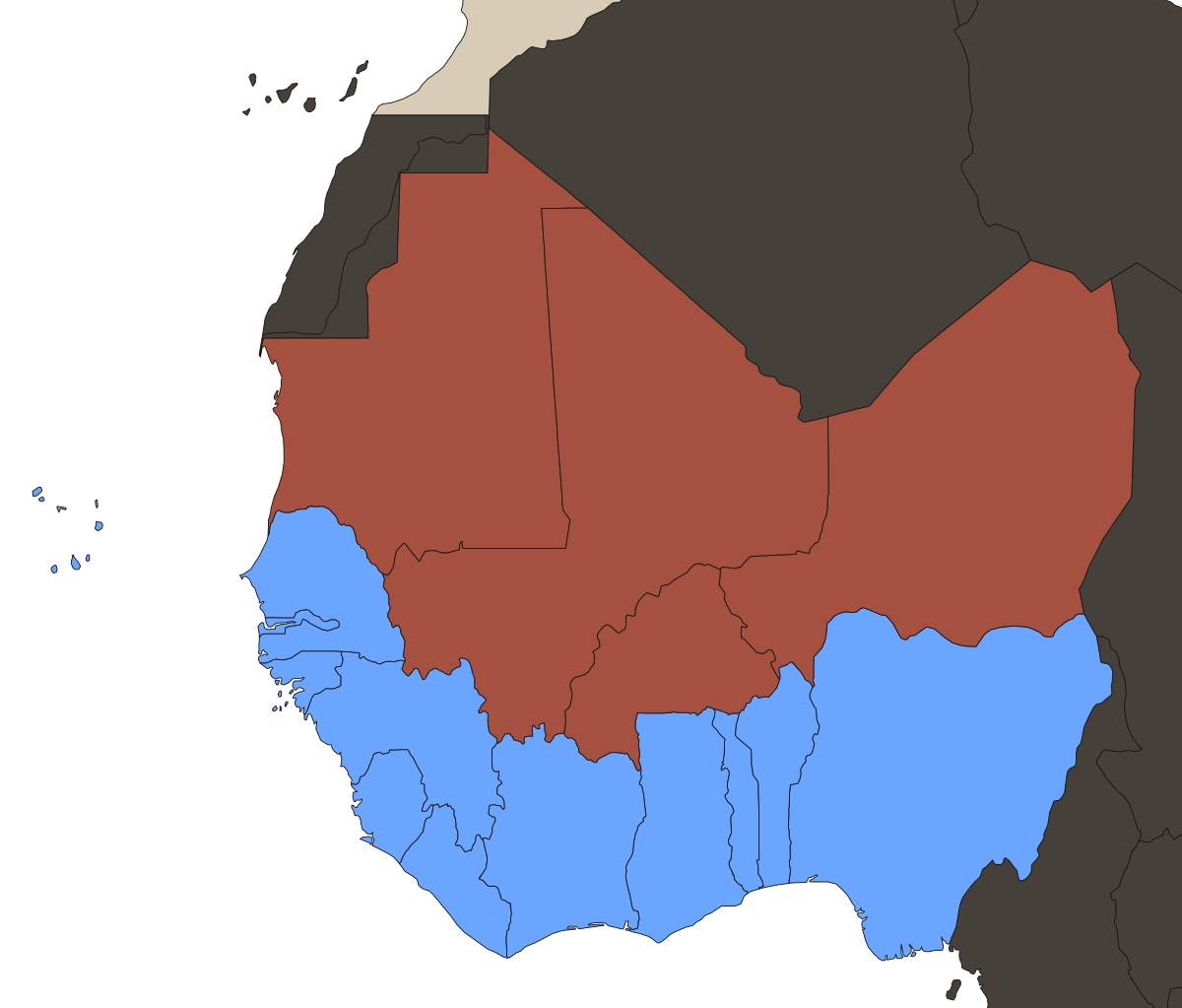
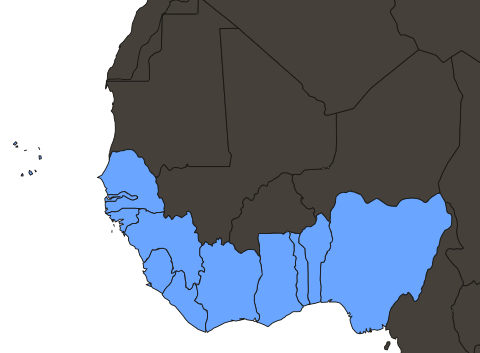
The Economic Community of West African States is a union of 12 countries in West Africa, down from 15 after Mali, Burkina Faso and Niger left on January 29, 2025. It was founded in Lagos in 1975. Its headquarters are in Abuja, Nigeria. Guinea-Bissau is suspended after a coup in November 2025. ECOWAS has a free-movement zone, a common passport and plans for a shared currency called the Eco.
- Members
- 12
- Three left in January 2025
- Founded
- 1975
- By the Treaty of Lagos, May 28
- Headquarters
- Abuja
- Nigeria
- Left in 2025
- 3
- Mali, Burkina Faso and Niger
- Commission President
 Birame Diop
- Since September 2026
Which countries are in ECOWAS?
ECOWAS has 12 members, all in West Africa. Fifteen countries signed the Treaty of Lagos on May 28, 1975. Cabo Verde joined in 1977, bringing the total to 16. Mauritania left in December 2000 and became an associate member in August 2017. Mali, Burkina Faso and Niger left on January 29, 2025, after their military governments said ECOWAS had failed to help them against jihadist violence.
Nigeria's General Yakubu Gowon and Togo's Gnassingbé Eyadéma toured the region in 1972 to build support for the community. Gowon is the last living signatory. At the 50th anniversary ceremony in Lagos in May 2025, Nigeria's President Tinubu paid tribute to him. Morocco applied to join on February 24, 2017. The summit agreed in principle that June, but no decision has followed.
- Member
- Applied
- Left
- Not a member
How ECOWAS grew and shrank
Countries that joined in each year, and the total after


 197515 founders
 197716
- 200015, Mauritania left
- 202512, Burkina Faso, Mali and Niger left
All 12 members and the year each joined
- Benin1975
- Cape Verde1977
- Côte d'Ivoire1975
- Gambia1975
- Ghana1975
- Guinea1975
- Guinea-Bissau1975
- Liberia1975
- Nigeria1975
- Senegal1975
- Sierra Leone1975
- Togo1975
Who is suspended, and why?
Guinea-Bissau has been suspended since November 27, 2025. On November 26 the military detained President Umaro Sissoco Embaló, who left for Senegal. Army chief General Horta N'Tam was sworn in as transitional president for one year. ECOWAS suspended Guinea-Bissau under its 2001 Protocol on Democracy and Good Governance, which allows suspension when democracy is disrupted. On October 8, 2026, Prime Minister Ilídio Vieira Té said the conditions for the elections set for December 6 had not been met, and the electoral commission said a vote on that date was not technically possible. No new date has been set.
Guinea was suspended in September 2021 after Colonel Mamady Doumbouya took power. It was fully reinstated on January 28, 2026 after Doumbouya won an election. Before they left, Mali was suspended in May 2021, Burkina Faso in January 2022, and Niger after its July 2023 coup.
-
Guinea-BissauSuspended
Suspended since November 27, 2025 after a coup. In October 2026 the transitional government said the December 6 elections could not go ahead. No new date has been set. Senegal leads ECOWAS mediation.
-
GuineaReinstated
Suspended in September 2021 after a coup. Reinstated on January 28, 2026 after Doumbouya won a presidential election with 86.72%.
-
MaliLeft
Suspended in May 2021 after a coup. Announced withdrawal in January 2024. Left on January 29, 2025.
-
Burkina FasoLeft
Suspended in January 2022 after a coup. Announced withdrawal with Mali and Niger. Left on January 29, 2025.
-
NigerLeft
Suspended after the July 2023 coup. ECOWAS threatened force and ordered its standby force activated. Left on January 29, 2025.
Why did Mali, Burkina Faso and Niger leave?
The three countries said ECOWAS had failed to help them fight jihadist groups and had imposed sanctions they called "illegal, illegitimate, inhumane and irresponsible." After Niger's July 2023 coup, ECOWAS gave the junta one week to reinstate President Bazoum and ordered the activation of its standby force. No intervention took place. On January 28, 2024 all three announced immediate withdrawal.
The three formed the Alliance of Sahel States, which became a confederation in July 2024. ECOWAS set a transition period to July 29, 2025. It told member states to keep recognizing the three countries' passports and their citizens' visa-free movement rights until further notice, and kept trade preferences for their goods. On October 17, 2026 the first ECOWAS-AES ministerial dialogue took place in Dakar. Ministers from both sides agreed to set up working groups toward a cooperation framework. There was no talk of the three rejoining.
ECOWAS in 2024
15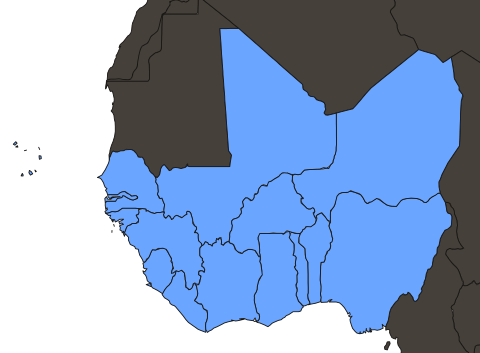
What has ECOWAS done?
ECOWAS runs a free-movement zone that lets citizens travel visa-free for up to 90 days. It created the ECOWAS passport in 2000 and a biometric ID card in 2014. From January 1, 2027 the biometric card will be accepted as a travel document at all official crossings. The bloc has been planning a shared currency, the Eco, for years. The July 2026 summit reaffirmed a 2027 launch for the members that meet the convergence criteria. Members are expected to meet those criteria by December 31, 2026.
ECOWAS has intervened militarily several times. Its monitoring group ECOMOG deployed to Liberia in August 1990. In February 1998 it drove a military junta out of Freetown, Sierra Leone, and President Kabbah was reinstated. In January 2017 Senegal-led ECOWAS troops entered The Gambia after Yahya Jammeh refused to accept his election defeat. In December 2025 it deployed standby-force units to Benin after a failed coup attempt.
Key moments in ECOWAS history
- 197515 countries sign the Treaty of Lagos on May 28
- 1979The Free Movement Protocol lets citizens travel visa-free for up to 90 days
- 1990ECOMOG deploys to Liberia with about 3,000 to 4,000 troops, mostly Nigerian
- 1998ECOMOG drives a military junta out of Freetown, Sierra Leone
- 2017ECOWAS troops enter The Gambia after Jammeh refuses to leave power
- 2025Mali, Burkina Faso and Niger leave. ECOWAS celebrates its 50th anniversary in Lagos
- 2025Standby force deployed to Benin after a failed coup attempt in December
- 2026Leaders approve a roadmap for a 1,650-strong counter-terror brigade, aiming for full capability by July 2027
Who leads ECOWAS?
General Birame Diop of Senegal leads the ECOWAS Commission, and Senegal's President Bassirou Diomaye Faye chairs the Authority of Heads of State and Government. The Chair is a sitting head of state chosen by the other leaders for a one-year term, which can be renewed. The Commission President is an appointed official who runs day-to-day operations. Diop took over as Commission President on September 1, 2026, for a four-year term. He is an air force pilot who served as Senegal's chief of the general staff and then as a military adviser to UN Secretary-General Guterres.
Bassirou Diomaye Faye, the president of Senegal, became chair on July 19, 2026. He was released from prison less than two weeks before winning Senegal's March 2024 election, and at 44 became Africa's youngest elected leader.
-
SenegalCommission President
General Birame Diop, since September 1, 2026. He is a former air force pilot who served as a military adviser to the UN Secretary-General and as Senegal's armed forces minister. He succeeded Omar Alieu Touray of The Gambia.
-
SenegalChair of the Authority
President Bassirou Diomaye Faye, since July 19, 2026. He succeeded Julius Maada Bio of Sierra Leone.
Is it in ECOWAS?
Short answers for the countries people ask about most.
Is Mali in ECOWAS?
LeftA founder in 1975. Mali left on January 29, 2025 and is now in the Alliance of Sahel States.
Is Niger in ECOWAS?
LeftA founder in 1975. Niger left on January 29, 2025 alongside Mali and Burkina Faso.
Is Burkina Faso in ECOWAS?
LeftIt signed the treaty in 1975 as Upper Volta. It left on January 29, 2025 and joined the Alliance of Sahel States.
Is Mauritania in ECOWAS?
AssociateA founder that left in December 2000. Mauritania signed an associate-membership agreement in August 2017.

Is Morocco in ECOWAS?
AppliedMorocco applied on February 24, 2017. The summit agreed in principle that June, but no decision has followed.

Is Cameroon in ECOWAS?
NoCameroon has never been a member. It belongs to the Central African blocs ECCAS and CEMAC.

Is Chad in ECOWAS?
NoChad has never been a member. It is a Central African country in ECCAS and CEMAC, and is not in the Alliance of Sahel States either.
Is Guinea in ECOWAS?
YesA founder in 1975. Guinea was suspended after a 2021 coup and fully reinstated on January 28, 2026.
Is Cabo Verde in ECOWAS?
YesCabo Verde joined in 1977, the only member that was not among the 15 founders.