Kurdish armed movement · Turkey and Iraq
Kurdistan Workers’ Party (PKK)
Dissolved in 2025, disarmament pendingUpdated November 13, 2026
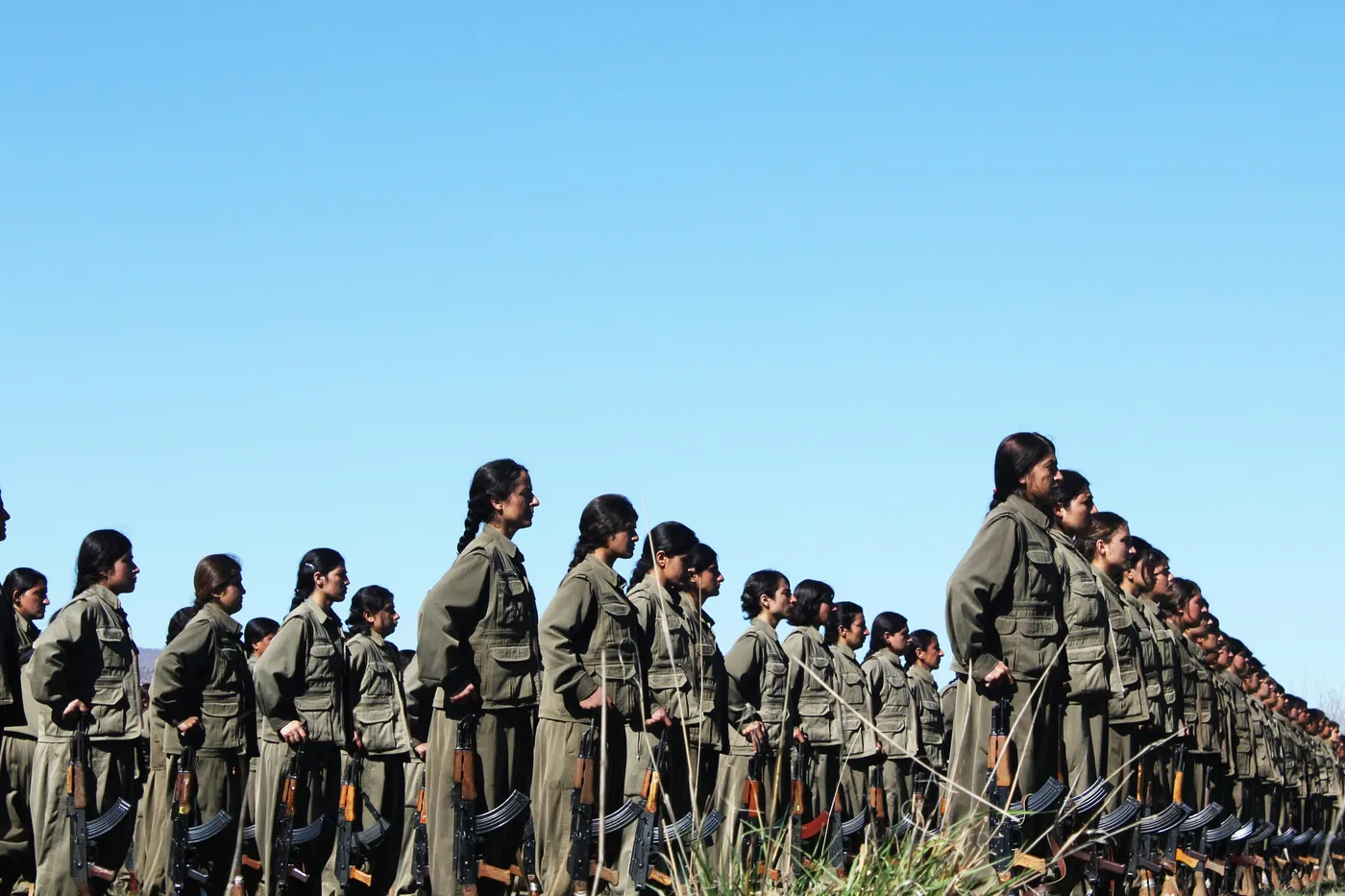
The Kurdistan Workers' Party, or PKK, is a Kurdish armed movement that fought Turkey from 1984 to 2025. It dissolved itself in May 2025, after its jailed founder Abdullah Öcalan called on it to lay down arms. The United States, the European Union and Turkey still list it as a terrorist organization. Germany's domestic intelligence agency says cash donations are its main income there. About 4,000 of its fighters remain in northern Iraq, mainly in the Qandil mountains. They have not handed over most of their weapons.
- Leader
- Abdullah Öcalan
- imprisoned since 1999
- Fighters
- About 4,000
- in northern Iraq (2026 estimates)
- Holds
- Qandil mountains
- in Iraq, near the Iranian border
- Founded
- 1978
- armed insurgency from 1984
- Status
- Dissolved
- May 12, 2025
Who funds the PKK?
Where the money comes from and how it is collected.
- From abroad
- Diaspora donationsGermany's domestic intelligence agency, the BfV, says the PKK collected 13 to 14 million euros in Germany alone in 2025. The money is collected in person and in cash.
 Syria (until 1998)Syria hosted the PKK and its leader Öcalan in Damascus until 1998. Under the Adana Agreement of October 20, 1998, Syria agreed to close PKK bases.
- European fundraising networkThe BfV says the PKK's Economy and Finance Bureau controls fundraising across Europe. A Paris court convicted 11 people of extortion and illegal fundraising for the group.
- At home
- Drug traffickingThe US government named the PKK a significant foreign narcotics trafficker in 2008. The US Treasury says the group taxed drug shipments through its territory. The PKK denies involvement.
PKK
Partiya Karkerên Kurdistanê
The money pays for the organization's structure and its media network. The annual fundraising campaign, called the kampanya, sets each donor's amount according to their income.
No credible estimate of the PKK's total budget is public. The German figure of 13 to 14 million euros covers only one country.
ConfirmedReported, denied
Where are the PKK’s fighters now?
About 4,000 fighters remain in northern Iraq, mainly in the Qandil mountains. The PKK says it pulled all its forces out of Turkey in October 2025.
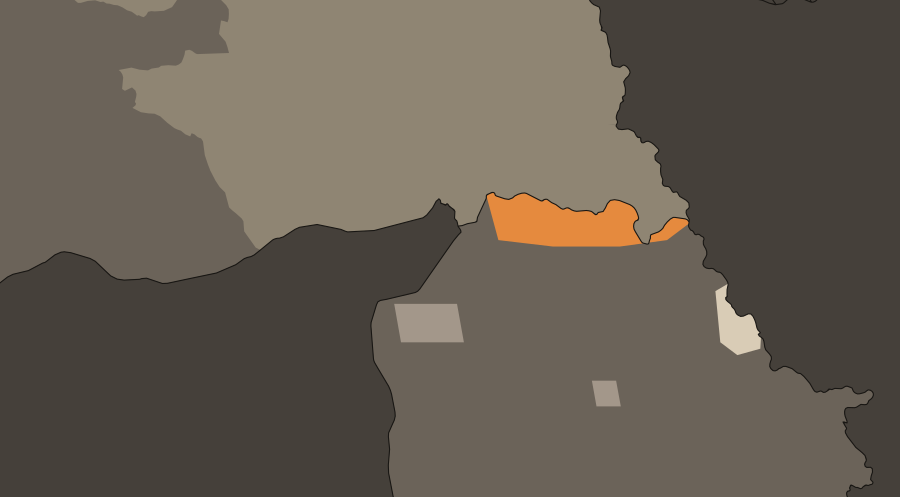
Qandil, where its fighters remainTurkey’s bases inside IraqHanded to Iraq’s forces in 2026Where it fought until 2025Areas are drawn approximately. The PKK said it pulled its fighters out of Turkey in October 2025 and out of the Zap border area in November 2025. Turkey’s bases reach up to 40 km into Iraq.
- Qandil mountainsHeadquartersThe PKK's main command is based here, near the Iranian border. All senior leaders are believed to be in Qandil. On October 26, 2025, the PKK held a withdrawal ceremony at Raperîn, nearby, where 25 fighters who had left Turkey appeared.
- Jasana caveWeapons burnedOn July 11, 2025, 30 fighters burned their rifles and machine guns here. KCK co-chair Besê Hozat said, “We are destroying our weapons of our own free will.”
- SinjarHanded to IraqThe YBŞ, a PKK-linked Yazidi force, took its current form in 2014. That year the Islamic State attacked Sinjar's Yazidis, and PKK fighters helped open an escape route. The YBŞ began handing over weapons to the Iraqi government on October 26, 2026. The YBŞ said it had 4,165 fighters. Security of Mount Sinjar passed to Iraq's federal government.
- Makhmour campRefugee campA camp of more than 10,000 Kurdish refugees, founded in 1998. The PKK left 10 military positions around the camp on November 3, 2026. The Iraqi army took 5 positions and the Peshmerga took 5.
- ZapTurkish basesTurkey built a network of bases inside Iraq through its Claw operations, which began in 2020. The PKK said it withdrew its fighters from the Zap area on November 16-17, 2025.
- Gara mountain2021 killingsIn February 2021 Turkey said the PKK had executed 13 captives here, including soldiers and civilians. The PKK said they died in clashes. The United States condemned the killings.
- DiyarbakırFounded nearbyThe largest Kurdish-majority city in Turkey. The PKK was founded on November 27, 1978, at a congress in Fis village, Lice district, in Diyarbakır province. About 25 people attended.
- Şemdinli1984One of two towns the PKK attacked on August 15, 1984, starting its armed insurgency. The other was Eruh, in Siirt province. Şemdinli sits in Hakkari, on the border with Iraq.
- KobaniSyriaThe YPG, which Turkey calls the PKK's Syrian branch, fought the Islamic State here in 2014-2015. The YPG later formed the core of the US-backed Syrian Democratic Forces. The SDF dissolved on August 25, 2026.
What weapons does the PKK have?
Small arms, anti-aircraft missiles and drones. No heavy weapons, long-range missiles or armor.
Small arms
AKM rifles, PK/PKM machine guns · Soviet designs
The main weapons seen in the PKK's hands. Thirty fighters burned rifles and machine guns at a ceremony on July 11, 2025.
Rocket launchers
Type 69 RPG · Chinese design
Seen in published photos of PKK fighters.
Anti-aircraft missiles
SA-16 or SA-18 Igla (MANPADS) · Soviet design
On May 13, 2016, a Turkish AH-1W Cobra helicopter was downed at Çukurca, in Hakkari province. Turkey's army said it was “probably shot down” by an air-defense weapon. The PKK released video of the incident. The exact missile model has not been officially confirmed.
IEDs and car bombs
Improvised devices · Locally made
On October 23, 2024, attackers hit the defense firm TUSAŞ in Ankara with explosives and guns, killing 5 people. The PKK's armed wing, the HPG, claimed the attack.
Drones
Off-the-shelf and modified drones · Commercial
The PKK first used explosive drones in August 2017 against a Turkish base near Şemdinli. It later used model planes against air bases in Batman and Diyarbakır in 2021.
- Fighters who burned weapons
- 30
- fighters destroyed their arms on July 11, 2025
- Turkish bases in Iraq
- 136
- at least, as of December 2024 (BBC)
- Fighters in Iraq
- About 4,000
- Iraqi reports, September 2026
Is the PKK still a terrorist group?
The United States, the European Union, the United Kingdom, Turkey, Canada and Australia all still list it. None of them has lifted its listing since the PKK dissolved.
 United StatesForeign Terrorist Organization since October 1997
 European UnionOn the EU terrorist list since 2002
 United KingdomProscribed since March 2001
 TurkeyTerrorist organization under Turkey's Anti-Terror Law
 CanadaListed entity since December 10, 2002
 AustraliaListed since December 17, 2005
 IraqDeclared a “banned organization” on March 14, 2024, but not a terrorist listing
- UN Security CouncilNot listed
 RussiaNot listed
 ChinaNot listed
What happened to the PKK?
The PKK announced its dissolution on May 12, 2025, but it has not fully disarmed. On October 22, 2024, Devlet Bahçeli, the leader of Turkey's nationalist MHP party, invited Abdullah Öcalan to address parliament and call on the PKK to dissolve. On February 27, 2025, Öcalan issued a statement from prison: “All groups must lay down their arms and the PKK must dissolve itself.” On March 1 the PKK declared a ceasefire.
The PKK held its 12th congress in May 2025, with 232 delegates. On May 12 it announced that it had ended armed struggle and dissolved its structure. It set conditions: Öcalan must lead the process, and there must be a legally binding guarantee.
On July 11, 2025, 30 fighters burned their weapons at a cave in Iraq. On October 26, 2025, the PKK said all its forces in Turkey were withdrawing to northern Iraq. In November 2025 it said it had left the Zap border area. About 4,000 fighters remain in northern Iraq. The bulk of the arsenal has not been handed over. Turkey's intelligence agency, MİT, is to inventory the weapons before Turkey's National Security Council certifies disarmament.
How the PKK reached dissolution
- Oct 22, 2024MHP leader Bahçeli invites Öcalan to address parliament and dissolve the PKK.
- Oct 23, 2024Attackers hit the defense firm TUSAŞ in Ankara, killing 5 people. The PKK's armed wing claims the attack.
- Feb 27, 2025Öcalan calls from prison for the PKK to lay down arms and dissolve.
- Mar 1, 2025The PKK declares a ceasefire.
- May 12, 2025The PKK announces it has dissolved.
- Jul 11, 2025Thirty fighters burn their weapons at Jasana cave in Iraq.
- Aug 5, 2025Turkey's parliament opens a commission on the peace process.
- Oct 26, 2025The PKK says all its forces in Turkey have withdrawn to northern Iraq.
- Feb 18, 2026The parliamentary commission adopts its report, 47 to 2.
- Aug 10, 2026Turkey's parliament passes Law 7595, a conditional law for PKK fighters.
- Nov 3, 2026The PKK leaves 10 positions around Makhmour camp in Iraq.
What does Turkey's 2026 law do for PKK fighters?
The law suspends prosecutions and prison sentences for 5 to 10 years for PKK members who give up their arms. Turkey's parliament passed it on August 10, 2026, with 467 votes in favor. Its formal name is Law 7595, the Law on Strengthening National Solidarity and Social Integration. It is not an amnesty. It does not cover intentional murder and other serious crimes. It excludes the founding leaders, including Öcalan.
The law does not take effect on its own. It starts only after Turkey's National Security Council, the MGK, certifies that the PKK has fully disarmed. That decision is published in the Official Gazette, and former fighters then have 6 months to apply. A 17-member parliamentary commission is to monitor the process. It was still being formed in mid-November 2026.
As of November 2026, the MGK has not issued its certification. Mithat Sancar, a DEM Party lawmaker, said on October 31 that the process had been on “a pause” for two months. DEM co-chair Tuncer Bakırhan said he thought disarmament could be completed by November 27, the PKK's founding anniversary. Some sources say the certification could slip to January 2027.
467
lawmakers voted for Law 7595 on August 10, 2026
The law suspends prosecutions for PKK members who disarm. It excludes the senior leaders and takes effect only after Turkey's National Security Council certifies full disarmament.
What happens to Abdullah Öcalan?
Öcalan is still in prison on İmralı island, and his legal status has not changed. He was captured by Turkish intelligence in Nairobi on February 15, 1999. He was sentenced to death on June 29, 1999. Turkey commuted the sentence to aggravated life imprisonment in 2002, after it abolished the death penalty. He has been held on İmralı island, in the Sea of Marmara, ever since. He was about 77 years old in 2026.
On October 31, 2026, DEM's Mithat Sancar confirmed that Öcalan had been moved to a newly built 250-square-meter building inside the prison complex. His legal status has not changed. In 2014, the European Court of Human Rights ruled that his life sentence without any chance of release breached the ban on inhuman treatment. In 2025, Turkey's government told the Council of Europe that it would not extend the “right to hope,” which allows review of life sentences, to prisoners serving aggravated life terms, including Öcalan.
The PKK says his release is essential to the peace process. Military commander Murat Karayılan said Öcalan “needs to have his physical freedom. Without this, nothing works.” The 2026 law excludes Öcalan by design.
How many people died in the PKK conflict?
More than 40,000 people have been killed since the PKK's insurgency began in 1984, according to widely cited estimates. The number includes Turkish soldiers, PKK fighters, civilians and others on all sides. Civilians also lost their homes. Human Rights Watch says Turkish security forces emptied about 3,000 villages in the southeast in the 1990s, and it cites official figures of 378,335 villagers displaced. On December 28, 2011, Turkish air strikes killed 34 Kurdish villagers carrying smuggled goods near Roboski, in Şırnak province. Turkish officials said the villagers had been mistaken for PKK fighters.
The International Crisis Group counted at least 5,858 named dead from July 2015 to February 2022. They were 1,322 Turkish security personnel, 3,717 PKK fighters, 593 civilians and 226 people whose status was unclear. Crisis Group says most of the civilians died in urban clashes in the southeast or in PKK bombings in Turkish cities. That count covers only the period after the earlier peace process collapsed in 2015.
The PKK gave its own count on August 28, 2026. Military commander Karayılan said the group had lost 25,922 named members and about 27,000 in total since its founding. That figure includes 3,262 killed fighting the Islamic State and 760 members of its urban militia. No independent body has verified any of these numbers.
Since 1984
40,000+
people killed, all sides, in the PKK conflict
The number is a widely cited estimate that includes Turkish security forces, PKK fighters and civilians. No single body has counted all the dead.
Who leads the PKK?
Abdullah Öcalan remains the symbolic leader from prison. His February 2025 call for dissolution was obeyed within weeks. KCK co-chair Besê Hozat said, “Only Öcalan can take weapons from the hands of the PKK fighters.”
The day-to-day leadership sits in the Qandil mountains. Murat Karayılan commands the armed forces. Cemil Bayık, a founding member, and Besê Hozat have co-chaired the KCK, the PKK's umbrella body, since 2013. Duran Kalkan is a senior leader. The United States offers rewards of up to $5 million for Karayılan, $4 million for Bayık and $3 million for Kalkan. All three were designated under the Kingpin Act for alleged drug trafficking.
The 2026 law excludes these leaders from its benefits. All are believed to be in Qandil. No senior leader was reported killed or arrested in 2025 or 2026.
The leadership
- Founder and symbolic leaderAbdullah Öcalan. Imprisoned on İmralı island since 1999. His February 2025 call led to the PKK's dissolution. He is about 77 years old.
- Military commanderMurat Karayılan. Commands the HPG armed forces. The US offers up to $5 million for information on him.
- KCK co-chairCemil Bayık. A founding member of the PKK. The US offers $4 million for him.
- KCK co-chairBesê Hozat. Spoke at the weapons-burning ceremony on July 11, 2025.
- Senior leaderDuran Kalkan. The US offers $3 million for him. He said in October 2026 that the PKK “poses no armed threat.”
Is the PKK the same as the SDF?
No. They are separate organizations, although Turkey says they are linked. Turkey says the YPG, the militia that formed the core of the Syrian Democratic Forces, is the PKK's Syrian branch. The United States partnered with the SDF to fight the Islamic State in Syria but kept the PKK on its terrorist list. It never designated the SDF or the YPG. In April 2016, US Defense Secretary Ash Carter answered “yes” in the Senate when asked whether the YPG was aligned with the PKK. The US State Department said its policy had not changed.
Under a deal between the Syrian government and the SDF in January 2026, non-Syrian PKK members were to leave Syria. The SDF formally dissolved on August 25, 2026, and its fighters began joining the Syrian military.
Inside Turkey, the DEM Party is a legal party in parliament that acts as the go-between with Öcalan. Its delegation carried Öcalan's February 2025 message from İmralı island to the public. Turkey's government alleges that DEM has organic links to the PKK. DEM rejects that claim and says it is an independent political party.
Questions about the PKK
Is the PKK still active in 2026?
The PKK has dissolved, but it still has armed fighters. It declared a ceasefire on March 1, 2025, and announced its dissolution on May 12, 2025. About 4,000 of its fighters remain in northern Iraq, mainly in the Qandil mountains. They have not fully disarmed. Senior leader Duran Kalkan said in October 2026 that the PKK “poses no armed threat.”
Is the PKK part of the Kurdish government in Iraq?
No. The PKK is separate from the Kurdistan Regional Government in Iraq, which is run by the KDP and PUK parties. Iraq declared the PKK a banned organization in March 2024. The PKK's bases in Qandil are outside the regional government's direct control.
How many rockets does the PKK have?
The PKK is not known to have artillery rockets or long-range missiles. Its weapons are small arms, rocket-propelled grenades, anti-aircraft missiles, IEDs and drones. No public estimate of its total stockpile exists. Turkey's intelligence agency, MİT, is supposed to inventory the arsenal before Turkey's National Security Council certifies disarmament.
What does the PKK want?
The PKK originally fought for an independent Kurdish state. It says it dropped that goal in the 2000s, and Germany's domestic intelligence agency, the BfV, also describes its aim as autonomy. The UK government still describes it as a separatist movement seeking an independent Kurdish state. It now says it wants cultural autonomy, local self-government for Kurds in Turkey, constitutional recognition of Kurdish identity and the release of its founder Abdullah Öcalan.
Is Abdullah Öcalan still alive?
Yes. Öcalan is held on İmralı island in Turkey. On October 31, 2026, DEM Party lawmaker Mithat Sancar confirmed that Öcalan had been moved to a new building inside the prison. Öcalan issued a public message on February 27, 2026, the anniversary of his call to dissolve.
Why did the PKK dissolve?
The PKK says it dissolved in response to a call from its founder, Abdullah Öcalan. The initiative came from Devlet Bahçeli, the leader of Turkey's nationalist MHP party, in October 2024. Bahçeli invited Öcalan to call for dissolution. He linked this to a possible path to parole for Öcalan. Öcalan issued the call in February 2025. The PKK was also under heavy military pressure. The conflict monitor ACLED says Turkish air and drone strikes on PKK targets rose from 414 in 2018 to 4,427 in 2024. The PKK's congress decided to dissolve in May 2025. Turkey's parliament then passed a law in August 2026 offering suspended sentences for fighters who disarm.