Former Kurdish-led force · Syria
Syrian Democratic Forces (SDF)
Dissolved into Syria’s army in August 2026Updated November 13, 2026
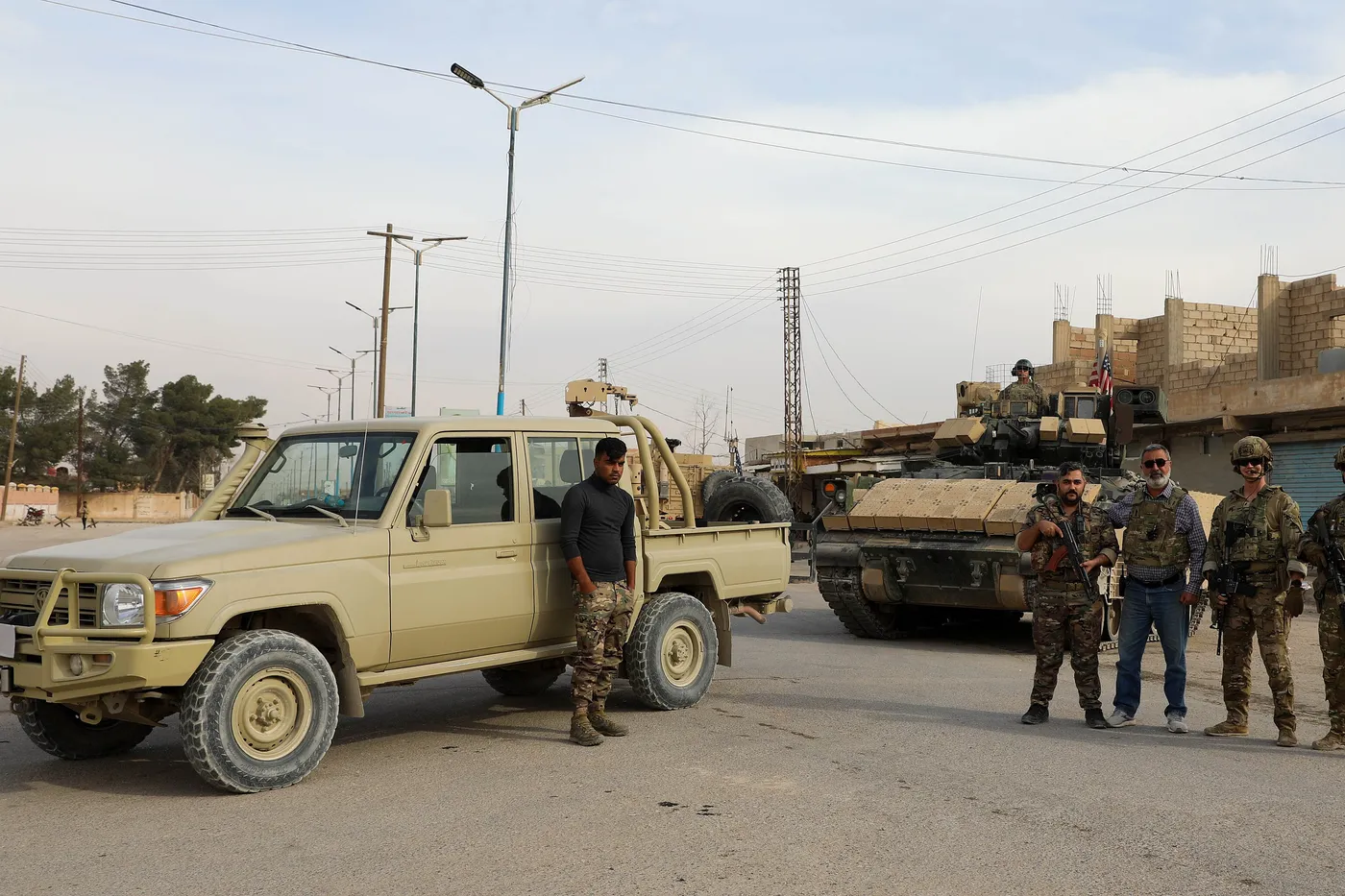
The Syrian Democratic Forces were a Kurdish-led, multi-ethnic force that fought ISIS in Syria from 2015 to 2026. The United States funded and armed them through the Pentagon’s Counter-ISIS budget, which provided $147.9 million for Syria in fiscal year 2025. At their peak they held more than a quarter of Syria, including most of its oil fields. They had US-supplied machine guns, mortars and armored vehicles. A government offensive took about 80% of their land in January 2026, and the SDF dissolved into Syria’s army on August 25, 2026.
- Commander
- Mazloum Abdi
- now adviser to Syria’s president
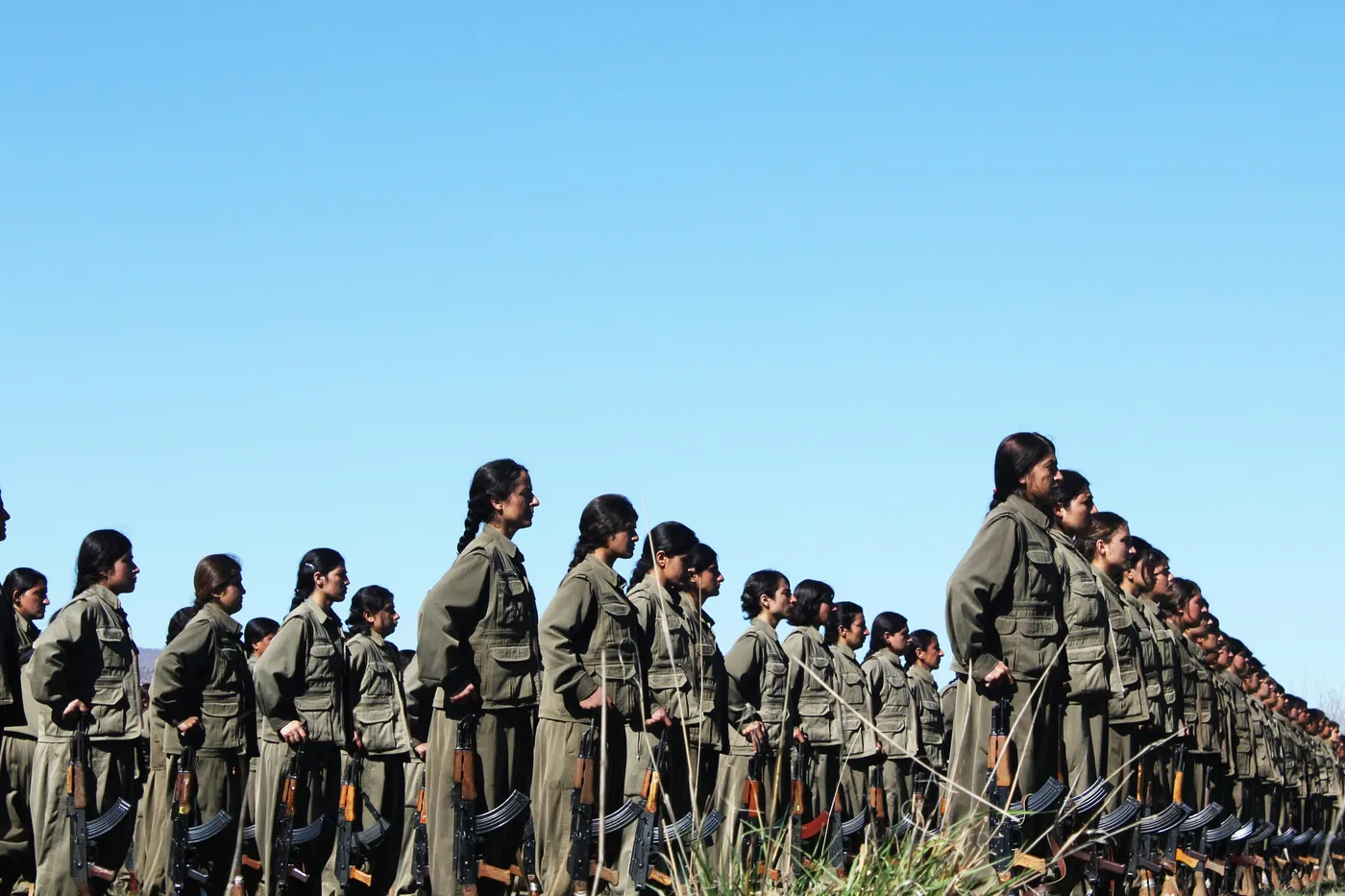
- Fighters
- About 35,000
- before dissolving in August 2026
- Held
- Over a quarter of Syria
- including most of its oil, until January 2026
- Main backer
 United States
- $147.9m for Syria in fiscal year 2025
- Founded
- October 2015
- dissolved August 25, 2026
Who funded the SDF?
Where the money and the weapons came from.
- From abroad
- United States (Pentagon)The Pentagon’s Counter-ISIS Train and Equip Fund provided $147.9 million for Syria in fiscal year 2025. The money covered training, equipment, logistics and monthly stipends for SDF fighters.
- US weaponsIn 2015 the US airdropped 45 tons of rifles, mortars and ammunition. In May 2017 President Trump approved heavy machine guns, mortars, anti-tank weapons and armored vehicles for the YPG.
- At home
- Oil fieldsOil made up about 77% of the AANES’s revenue in the first half of 2025, bringing in roughly $416 million. The SDF began selling oil to Syria’s new government in February 2025.
- Semalka crossingThe border crossing to Iraqi Kurdistan was the AANES’s main trade route. The exact customs revenue was never published.
- AANES budgetThe AANES approved a 2025 budget projecting $855 million in revenue and $1.09 billion in spending. Oil was the largest source.
SDF
Syrian Democratic Forces
The SDF’s civil government, the AANES, ran its own budget, oil company and customs. Revenue paid for fighters’ salaries, schools, police and local services.
In the first half of 2025 the AANES reported $542 million in revenue and $321 million in spending, according to The Syria Report. Since January 2026 the oil fields and border crossings belong to Syria’s government.
Confirmed
What territory did the SDF hold?
The SDF held more than a quarter of Syria until January 2026. A government offensive took about 80% of that in less than a week. The SDF dissolved in August 2026 and holds no territory today.
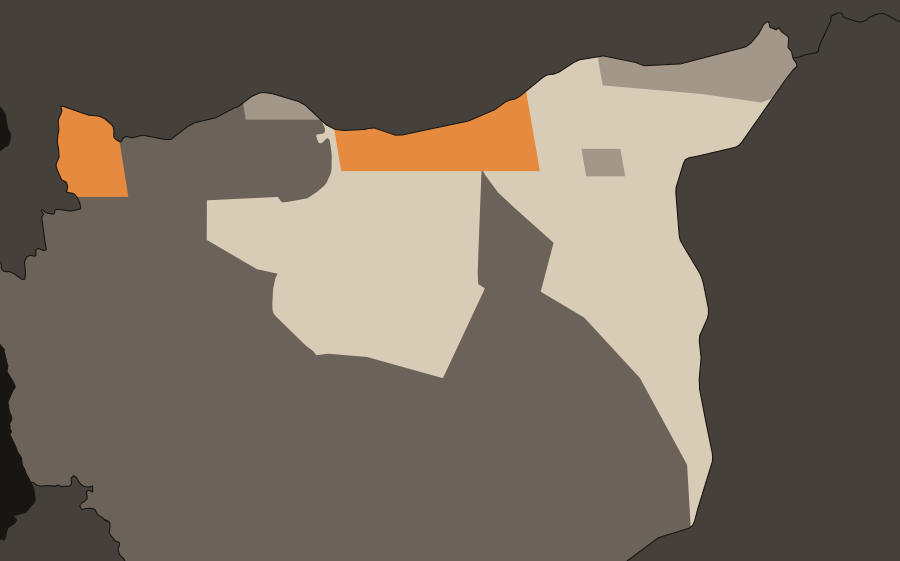
Former SDF units, now in Syria’s armyHeld by the SDF until January 2026Taken by Turkey and allied Syrian groups in 2018 and 2019Rest of SyriaAreas are drawn approximately. The SDF lost Tal Rifaat and Manbij in December 2024. Syria’s army entered Tishreen Dam in April 2025. The SDF lost the Aleppo districts and most of its land in January 2026. It dissolved on August 25, 2026.
- QamishliFormer capitalThe capital of the AANES and the SDF’s main headquarters. Syria’s Interior Ministry deployed there on February 3, 2026. The Qamishli brigade now serves under the army’s 60th Division.
- HasakahFormer HQAn SDF command center. Government security forces have been in the city since February 2, 2026. The Ghweiran prison nearby still held about 400 ISIS detainees in April 2026. In early November 2026 residents held protests over Kurdish-language education.
- KobaniSiege 2014-15The YPG held Kobani against an ISIS siege from September 2014 to January 2015 with US air support. Syrian government forces besieged it again in January and February 2026. A former SDF Kobani brigade remains there. On September 12, 2026, a fire during a prison riot killed at least 7 people.
- RaqqaLost 2026The SDF took Raqqa from ISIS on October 17, 2017. It became government-held on January 18, 2026, when tribal forces entered the city ahead of the Syrian army.
- TabqaDamHome to Syria’s largest dam and an airbase. The government took both on January 18, 2026.
- Al-Omar oil fieldOilSyria’s largest oil field. Output had fallen to under 5,000 barrels a day before the government took it on January 18, 2026. It once produced about 50,000 barrels a day.
- Al-Hol campCamp closedA camp that held about 28,000 people in January 2026, including about 12,500 foreigners. The SDF withdrew on January 20 and the camp was closed on February 22, 2026.
- Sheikh MaqsoudAleppoA Kurdish district of Aleppo. The SDF lost it after a government offensive on January 6 to 10, 2026. About 162,000 people fled the fighting.
- Tishreen DamFront 2024-25A front line between the SDF and the Turkish-backed Syrian National Army from December 2024 to April 2025. About 280 people were killed by January 7, 2025, according to the Syrian Observatory for Human Rights. Under a US-brokered deal, Syria’s army entered the dam around April 14, 2025.
What weapons did the SDF have?
US-supplied arms, captured Soviet-era vehicles and home-built drones.
Small arms and support weapons
AK-pattern rifles, US heavy machine guns and mortars · US airdrop (2015, 45 tons) and 2017 approval
On May 9, 2017, President Trump approved sending heavy machine guns, mortars, anti-tank weapons and armored vehicles to the YPG.
Armored vehicles
Guardian APCs, T-55 tanks, MT-LBs, BMPs, technicals · US-supplied and captured
The US provided Guardian armored personnel carriers. The SDF also used captured Soviet-era T-55 tanks, MT-LB carriers and BMP infantry fighting vehicles, along with pickup trucks fitted with weapons.
Drones
Home-built and commercial attack drones · Locally made
One analysis counted SDF drone strikes rising from 61 in December 2024 to 135 in January 2025. About 57% of the strikes hit vehicles. Forbes reported that some drones used against the Turkish-backed SNA appeared more advanced than the SDF’s known arsenal.
Air defense
Shoulder-fired missiles · Various
On December 9, 2024, the SDF accidentally shot down a US MQ-9 Reaper drone near Tell Tamer, mistaking it for a Turkish drone.
- ISIS detainees moved
- 5,704
- from Syria to Iraq, January to February 2026
- Fighters integrated
- About 12,000
- of about 35,000, by late August 2026
- Pentagon funding (FY2025)
- $147.9m
- Counter-ISIS Train and Equip Fund
Was the SDF a terrorist group?
No Western government or UN body listed the SDF. The United States, the European Union and the United Kingdom list the PKK, which Turkey says controls the SDF.
 TurkeyTurkey treats the SDF’s core, the YPG and the PYD, as the Syrian branch of the PKK and therefore as a terrorist organization.
- United StatesNot listed
 European UnionNot listed
 United KingdomNot listed
- UN Security CouncilNot listed
 RussiaNot listed
 ChinaNot listed
How did the SDF rise and fall?
The YPG organized in Kurdish areas of Syria in 2011 and 2012 as government forces pulled out during the civil war. In September 2014 ISIS besieged the town of Kobani. The YPG held it with US air support. The battle made the YPG the US military’s main ground partner against ISIS.
On October 10, 2015, the YPG and several Arab, Syriac and Turkmen groups formed the Syrian Democratic Forces. They announced it at a press conference in al-Hasakah the next day. In 2017 a US general said the YPG had been told to rebrand and add “democratic” to its name because Turkey objected to its links with the PKK. The SDF took Raqqa from ISIS on October 17, 2017, and declared the end of the caliphate after taking Baghouz on March 23, 2019. At its peak the SDF held more than a quarter of Syria, including most of its oil.
Turkey’s offensives took Afrin in 2018 and the border strip from Ras al-Ain to Tal Abyad in 2019. After Assad fell in December 2024, Mazloum Abdi signed an integration deal with President Ahmad al-Sharaa on March 10, 2025. When the deal stalled, the government and Arab tribes attacked in January 2026 and took about 80% of SDF territory. The last US base was handed over on April 16, 2026. On August 25, 2026, Abdi announced the SDF’s dissolution in Damascus, saying the group was moving “from the era of weapons to the era of peace.”
How the SDF rose and fell
- 2011-12Mazloum Abdi, a PKK member since 1990, returns to Syria and helps organize the YPG as government forces pull out.
- Sep 2014ISIS besieges Kobani. The YPG holds it with US air support.
- Oct 2015The SDF is founded in al-Hasakah with Kurdish, Arab and Syriac groups.
- Oct 2017The SDF takes Raqqa from ISIS.
- Jan 2018Turkey launches Operation Olive Branch. It takes Afrin in March.
- Mar 2019Baghouz falls. The SDF declares the end of the caliphate.
- Oct 2019Turkey’s Operation Peace Spring takes Ras al-Ain and Tal Abyad.
- Mar 2025Abdi signs an integration deal with President al-Sharaa.
- Jan 2026A government offensive takes Raqqa, Deir ez-Zor and the oil fields.
- Apr 2026The last US base is handed over to Syria’s government on April 16.
- Aug 2026The SDF dissolves on August 25. Abdi is named presidential adviser.
Why did the SDF collapse in January 2026?
The SDF collapsed after a stalled integration deal led to a government offensive in January 2026. The March 10, 2025 deal between Abdi and al-Sharaa set an end-of-2025 deadline for full integration. It stalled. The SDF wanted to join the army as a single bloc and wanted a decentralized system. Damascus wanted fighters to join one by one and opposed decentralization. Meanwhile the SDF kept its oil fields, border crossings and heavy weapons. In the Aleppo districts of Sheikh Maqsoud and Ashrafieh, an April 2025 deal was supposed to remove SDF fighters, but clashes broke out in October 2025 and again in January 2026.
On January 6, 2026, fighting broke out in the Aleppo districts, and government forces moved in. Each side blamed the other for starting it. About 162,000 people fled. On January 13 the government and Arab tribal forces launched a broader offensive. A 2019 survey of 391 SDF fighters found that about 69% were Arab and 17% were Kurdish, even though the YPG held the command. Many Arab tribes in Deir ez-Zor resented Kurdish-led rule. Some fought the SDF in August and September 2023 after it arrested a local Arab commander, Ahmed al-Khabil. Syria Direct reported that tribal uprisings and defections helped the government push the SDF out of Raqqa and Deir ez-Zor in less than 48 hours. By January 18 the government held Raqqa, Tabqa, the Euphrates Dam, Deir ez-Zor’s oil fields and al-Shaddadi.
The United States mediated but did not defend the SDF. On January 18 the two sides signed a 14-point deal handing the oil fields and border crossings to the state. A more detailed agreement followed on January 29 or 30. The SDF kept only its Kurdish-majority areas around Hasakah, Qamishli and Kobani.
Territory
About 80%
of SDF land lost in January 2026
A government offensive backed by Arab tribal forces took Raqqa, Tabqa, the oil fields and eastern Deir ez-Zor in less than a week. The Middle East Institute estimated about 80% was lost in 24 hours on January 17 to 18.
What happened to the ISIS prisoners and camps?
Most of the detainees the SDF guarded were moved to Iraq, and Syria’s government took over the camps. The SDF guarded thousands of ISIS detainees and tens of thousands of their family members in camps. When the government offensive began in January 2026, those prisons and camps were at risk.
At al-Shaddadi prison, detainees escaped during the fighting. The figures vary widely. Syria’s Interior Ministry said 120 escaped. A US official said about 200. The SDF claimed 1,500. Each side blamed the other for the escape. From January 21 to February 12, 2026, the US military moved 5,704 suspected ISIS detainees from Syria to Iraq. They came from 61 countries and included 3,543 Syrians and 467 Iraqis.
Al-Hol camp held about 28,000 people in January 2026, including about 12,500 foreigners from more than 60 countries. Human Rights Watch reported that up to 20,000 were left without monitoring after the SDF withdrew on January 20. The camp was closed on February 22, 2026. Roj camp held about 2,200 people. Government security entered Roj on November 7, 2026, and began removing residents for repatriation. The Ghweiran prison in Hasakah still held about 400 detainees under former SDF counter-terrorism units in April 2026.
Detainees
5,704
Suspected ISIS detainees moved from Syria to Iraq
The US military transferred them from January 21 to February 12, 2026. They came from 61 countries.
Why did Turkey fight the SDF?
Turkey considers the YPG and the PYD to be the Syrian branch of the PKK, which has fought the Turkish state since 1984. Turkey’s Foreign Ministry says the PYD was “set up under the control of PKK terrorist organization in 2003.” Mazloum Abdi joined the PKK in 1990 and served on its Executive Council from 2004. Turkey’s President Recep Tayyip Erdogan called him the “adoptive son” of jailed PKK leader Abdullah Ocalan. The SDF denied any organizational ties to the PKK but acknowledged Ocalan’s ideas. In February 2025 Abdi said Ocalan’s call for the PKK to disarm was “not related to us in Syria.”
The United States saw it differently. The US government treated the SDF as its main partner against ISIS. The Pentagon funded, trained and armed it through its Counter-ISIS budget. This made the SDF one of the sharpest points of disagreement between the two NATO allies.
The January 18, 2026 deal committed the SDF to remove “all non-Syrian PKK leaders and members.” On May 12, 2025, the PKK had announced its dissolution, and on July 11, 2025, 30 PKK fighters burned their weapons near Sulaymaniyah in Iraq. After the SDF dissolved, Turkey said the move would help “Syrian unity.” A Turkish framework law took effect on August 18, 2026, but its benefits apply only after Turkey’s National Security Council certifies that the PKK has disbanded.
Turkey’s three operations in northern Syria
- Euphrates Shield (2016)Took territory from ISIS along the Turkish border west of the Euphrates. Turkey also aimed to stop the SDF from linking its eastern and western areas.
- Olive Branch (2018)Took Afrin, a Kurdish-majority canton in northwestern Syria. The UN said more than 137,000 people were displaced.
- Peace Spring (2019)Took the border strip from Ras al-Ain to Tal Abyad. More than 200,000 people were displaced.
Who led the SDF?
Mazloum Abdi commanded the SDF from its founding in 2015 until its dissolution in August 2026. He was born around 1967 near Kobani and joined the PKK in 1990. The US Army chose him to lead the SDF on the recommendation of the Kurdistan Regional Government’s intelligence service. In 2019 Turkey said he was subject to an Interpol red notice and asked the United States to hand him over. On August 27, 2026, President al-Sharaa named him an adviser to the presidency. On November 6, 2026, Abdi said integration would be complete by the end of the year.
Ilham Ahmed led the AANES’s foreign relations. She now sits in Syria’s People’s Assembly on the Foreign Relations Committee. On October 12, 2026, she called the integration “in a testing phase.”
Sipan Hemo commanded the YPG. He was named deputy defense minister for the eastern region on March 10, 2026.
Ruksen Muhammad is the YPJ spokeswoman. She negotiated two battalions of 400 women each in the Interior Ministry’s special forces. According to The Defense Post, Syria’s Defense Minister Murhaf Abu Qasra has refused to allow women in the army.
The leadership
- SDF commander, now presidential adviserMazloum Abdi. Led the SDF from 2015 to 2026. A former PKK member who became one of the US military’s closest partners in Syria.
- AANES foreign relations, now in parliamentIlham Ahmed. Now sits on the Foreign Relations Committee in Syria’s People’s Assembly.
- YPG commander, now deputy defense ministerSipan Hemo. Named deputy defense minister for the eastern region on March 10, 2026.
- YPJ spokeswomanRuksen Muhammad. Negotiated the inclusion of two 400-strong women’s battalions in the Interior Ministry.
Is the integration into Syria’s army working?
Integration is only partly complete. By late August 2026, about 12,000 of about 35,000 SDF fighters had joined Syria’s army, according to a Kobani brigade commander quoted by The Defense Post. Four brigades were formed: the Hasakah, Derik and Qamishli brigades under the army’s 60th Division, and the Kobani brigade attached to an Aleppo division.
Several problems remain. What happened to the SDF’s heavy weapons was unresolved at the time of the dissolution, according to Al Jazeera. The YPJ submitted a roster of 1,484 women, but the defense minister has refused women in the army, according to The Defense Post. Two battalions of 400 women each are planned for the Interior Ministry’s special forces instead. The remaining 684 women may join the police.
On September 12, 2026, a fire during a prison riot in Kobani killed at least 7 people. In early November 2026, residents of Hasakah and Qamishli protested over Kurdish-language education. Ilham Ahmed called the integration “in a testing phase” on October 12. Abdi said on November 6 that it would be complete by the end of 2026.
Questions about the SDF
Is the SDF the same as the PKK?
The SDF and the PKK were separate organizations, but Turkey says the PKK controlled the SDF. The SDF was a multi-ethnic force with Kurdish, Arab, Syriac and Turkmen fighters. A 2019 survey found about 69% of its rank and file were Arab. However, its command was dominated by the YPG, which Turkey’s Foreign Ministry describes as the Syrian branch of the PKK. The United States did not list the SDF or the YPG as terrorist organizations but does list the PKK.
Does the SDF still exist?
No. Mazloum Abdi announced the SDF’s dissolution in Damascus on August 25, 2026. About 12,000 of its roughly 35,000 fighters had joined Syria’s army by late August. Abdi said on November 6, 2026, that integration would be complete by the end of the year.
How many fighters did the SDF have?
About 35,000 before dissolving, according to a former SDF brigade commander quoted by The Defense Post. The SDF’s own claim in 2025 was 100,000, but that included about 30,000 police and security personnel. A 2016 US military estimate put the number at about 45,000.
Did the US arm the SDF?
Yes. In 2015 the US airdropped 45 tons of rifles, mortars and ammunition. In May 2017 President Trump approved heavy machine guns, mortars, anti-tank weapons and armored vehicles. The Pentagon’s Counter-ISIS budget provided $147.9 million for Syria in fiscal year 2025.
What happened to al-Hol camp?
Al-Hol held about 28,000 people in January 2026, including about 12,500 foreigners. The SDF withdrew on January 20, 2026, during the government offensive. Human Rights Watch reported that up to 20,000 people were left without monitoring. The camp was closed on February 22, 2026.
Is the SDF part of Syria’s government now?
The SDF no longer exists, but many of its fighters and leaders now serve Syria’s state. Former SDF fighters serve in four brigades of Syria’s army. Mazloum Abdi is an adviser to President al-Sharaa. Ilham Ahmed sits in parliament. Sipan Hemo is deputy defense minister for the eastern region. The SDF no longer exists as a separate force.