
Country profile · Caribbean
 Dominican Republic
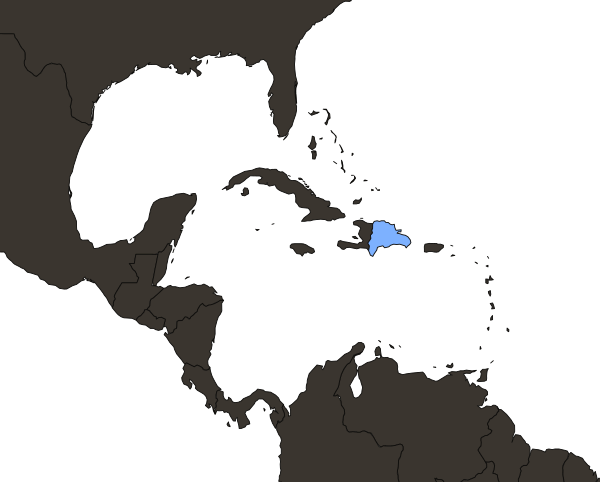
The Dominican Republic shares the Caribbean island of Hispaniola with Haiti and has about 11 million people. President Luis Abinader was re-elected in 2024 and cannot run again in 2028. Tourism, free trade zones, gold mining and money sent home by emigrants drive the economy. In 2025 the country deported 379,553 Haitians.
Where the Dominican Republic ranks
All rankings →Who runs the Dominican Republic?
The Dominican Republic is a presidential republic. President Luis Abinader was born in Santo Domingo in 1967. His grandfather came from Lebanon in 1898. Abinader studied economics and ran family tourism and cement businesses. He lost the 2016 election, then won in July 2020 with 52.5% of the vote. That ended 16 years of rule by the Dominican Liberation Party. He was re-elected on May 19, 2024 with 57.4%. His Modern Revolutionary Party holds 146 of the 190 seats in the Chamber of Deputies (chart). A 2024 constitutional reform locked in a limit of two terms in a row, so Abinader cannot run in 2028. The front-runners to succeed him are Carolina Mejía, mayor of Santo Domingo's National District, and Tourism Minister David Collado. On April 8, 2025 the roof of the Jet Set nightclub in Santo Domingo collapsed and killed 236 people. The next general election is due on May 21, 2028.

- Modern Revolutionary Party 146
- Other parties 44
Photo (April 2024): US Joint Chiefs of Staff, Wikimedia Commons, public domain (cropped)
Who are the Dominican Republic's allies and rivals?
The United States is by far the most important partner. About 2.5 million people of Dominican origin live there. Since November 2025 President Luis Abinader has let US tanker and transport planes use San Isidro air base and Las Américas airport for counter-drug operations. In 2026 the Dominican Republic joined President Donald Trump's "Shield of the Americas" coalition against drug cartels. Since July 24, 2026 the United States has charged a 12.5% tariff on most Dominican goods. Abinader wants the rate cut to 10%. The Dominican Republic dropped Taiwan and recognized China on May 1, 2018. In 2020 Abinader barred Chinese investment in ports, airports and telecoms. Venezuela broke off ties in 2024 after Abinader rejected its disputed election. Flights resumed in March 2026, and on October 8, 2026 the two countries agreed a plan to restore relations. In August 2026 the Dominican Republic expelled nine Cuban diplomats.
Allies and partners
 United StatesUS planes use two Dominican airports since 2025
 SpainFormer ruler; Spanish chains own many hotels
 ChinaRecognized in 2018; second-largest supplier

- San Isidro Air base east of Santo Domingo. US tanker and transport planes have used it since November 2025.
- Dajabón Busiest border crossing. 202,294 people were deported to Haiti through it from October 2024 to August 2026.
- Pueblo Viejo One of the largest gold mines in the Americas, run by Barrick. Gold was the top single export in 2025.
- Punta Cana Beach resort area. Its airport handled more than 11 million passengers in 2025, the country's busiest.
- Dominican Republic
- Tensions
Who does the Dominican Republic trade with?
The Dominican Republic exported $14.4 billion of goods in 2025 and imported $29.9 billion (UN Comtrade). The United States bought 54% of exports and supplied 42% of imports (chart). Gold from the Pueblo Viejo mine was the largest single export, worth $2.4 billion. Most of it went to India. Medical devices made in free trade zones earned $2.9 billion. The zones hold 858 companies and employ about 200,000 people. Haiti is the third-largest market and buys about $1.2 billion of Dominican goods a year. China supplied 20% of imports. Tourism adds about 16% of GDP when indirect effects are counted (Asonahores). A record 11.7 million visitors came in 2025. The economy grew 5% in 2024 and 2.1% in 2025, and the IMF expects 4.6% in 2026. No major credit agency rates the country investment grade.
Sells to
Share of the Dominican Republic's exports
- United States54.3%
 India11.2%
 Haiti8.1%
 Canada5.3%
 Netherlands3.3%
Buys from
Share of the Dominican Republic's imports
- United States41.7%
- China20.1%
- Spain4.8%
 Mexico4.0%
 Brazil3.1%
Goods, 2025, as reported by the Dominican Republic. UN Comtrade.
Why does the Dominican Republic deport so many Haitians?
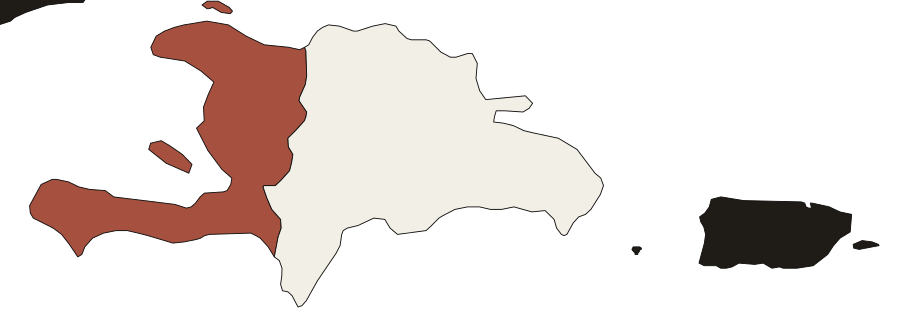
The Dominican Republic shares the island of Hispaniola with Haiti, which is much poorer. In 2025 gangs controlled about 90% of Haiti's capital, Port-au-Prince (UN). Haiti ruled the whole island from 1822 until Dominican independence on February 27, 1844. In October 1937 the dictator Rafael Trujillo ordered the killing of Haitians along the border. Estimates of the dead range from about 5,000 to more than 20,000. A 2017 survey counted about 500,000 Haitian-born people in the country. In 2013 the Constitutional Court ruled that people born since 1929 to parents without legal residence were not citizens, which left about 130,000 people stateless (Minority Rights Group). In October 2024 President Luis Abinader ordered up to 10,000 deportations a week. The country deported 276,215 people in 2024, 379,553 Haitians in 2025 and 250,429 people from January to July 2026. Work on a border wall began in February 2022. By September 2026 about 25 km was finished and 29.5 km more was being built.
Why do emigrants matter so much to the Dominican Republic?
About 2.5 million people of Dominican origin live in the United States, and 41% of Dominican immigrants there live in New York. About 194,000 Dominican-born people live in Spain. Dominicans abroad sent home a record $11.9 billion in 2025, according to the central bank, and about 80% came from the United States. The World Bank, which counts differently, puts 2025 remittances at $12.4 billion, 19th in the world (chart). From January to September 2026 remittances reached $9.5 billion, and the central bank expects about $12.6 billion for the year. A US tax of 1% on transfers paid in cash took effect on January 1, 2026. Many Dominicans still try to reach Puerto Rico in small boats called yolas, across the Mona Passage. At least 217 were caught at sea and sent back in 2026 by early October. The United States deported 3,986 Dominicans in 2025.
Remittances received, 2025
Full ranking →- Mexico$65.1bn
 Philippines$41.6bn
 Guatemala$25.7bn
 Colombia$13.1bn
- Dominican Republic$12.4bn
 Honduras$11.9bn
World Bank World Development Indicators, from KNOMAD and IMF balance of payments data, October 2026