
Country profile · Central Asia
 Tajikistan
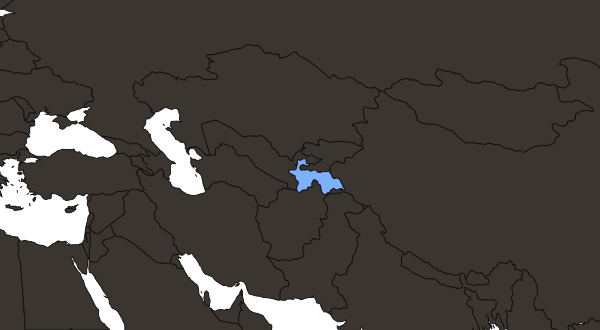
 is a mountainous, Persian-speaking country of about 10.7 million people in Central Asia, and the poorest of the former Soviet republics. President Emomali Rahmon has ruled since 1992, and his son Rustam Emomali is first in line to take over. Money sent home by migrants, most of them in Russia, equaled more than half of the economy in 2025 (World Bank).
Where Tajikistan ranks
All rankings →Which alliances is Tajikistan in?
All alliances →Who runs Tajikistan?
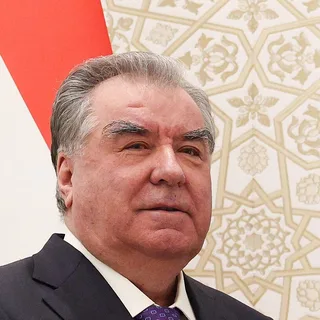
President Emomali Rahmon was born on October 5, 1952, in Danghara, in the south. He served in the Soviet Pacific Fleet, worked as an electrician and ran a state farm from 1987. Parliament made him head of state on November 19, 1992, during the civil war of 1992 to 1997, which killed an estimated 50,000 people, possibly far more. He has been president since November 1994, longer than any other current leader in the former Soviet Union. A 2015 law named him "Leader of the Nation" with lifelong immunity. A 2016 referendum removed his term limits and lowered the minimum age for president from 35 to 30. His son Rustam Emomali, born in 1987, is mayor of Dushanbe and has chaired the upper house of parliament since April 2020. That makes him first in line to take over. Rahmon has nine children. The next presidential election is due by about October 2027. Rahmon's People's Democratic Party won 49 of the 63 seats in the lower house in March 2025 (chart).
- People's Democratic Party 49
- Agrarian Party 7
- Party of Economic Reforms 5
- Socialist (1) and Democratic (1) 2
Photo (April 2025): European Union, Wikimedia Commons, free with attribution (cropped)
Who are Tajikistan's allies and rivals?
Russia is Tajikistan's main military ally. Both belong to the Russian-led CSTO. Russia's 201st military base, its largest military base abroad, has units in Dushanbe and Bokhtar, and its lease runs to 2042. President Putin made a state visit in October 2025. China is Tajikistan's largest creditor. China was owed more than $700 million of $3.04 billion in external debt in October 2025 (Ministry of Finance). In 2011 Tajikistan gave China about 1,100 sq km of the Pamir mountains to settle the border. President Emomali Rahmon and President Xi Jinping signed a friendship treaty on May 12, 2026. Chinese Premier Li Qiang visited Dushanbe on October 18 to 20, 2026. Tajikistan has not recognized the Taliban government in Afghanistan. Attacks from Afghanistan killed five Chinese workers in Tajikistan in November 2025. Border clashes with Kyrgyzstan killed 55 people in 2021 and at least 94 in 2022. A border treaty took effect on March 31, 2025, and the crossings reopened.
Allies and partners
 RussiaLargest Russian base abroad; lease to 2042
 ChinaLargest creditor; friendship treaty signed in 2026
 UzbekistanVisa-free travel since 2018
 KyrgyzstanBorder treaty in force since March 2025
 United StatesRahmon at the White House in November 2025
Tensions
 AfghanistanTaliban not recognized; deadly attacks across the border
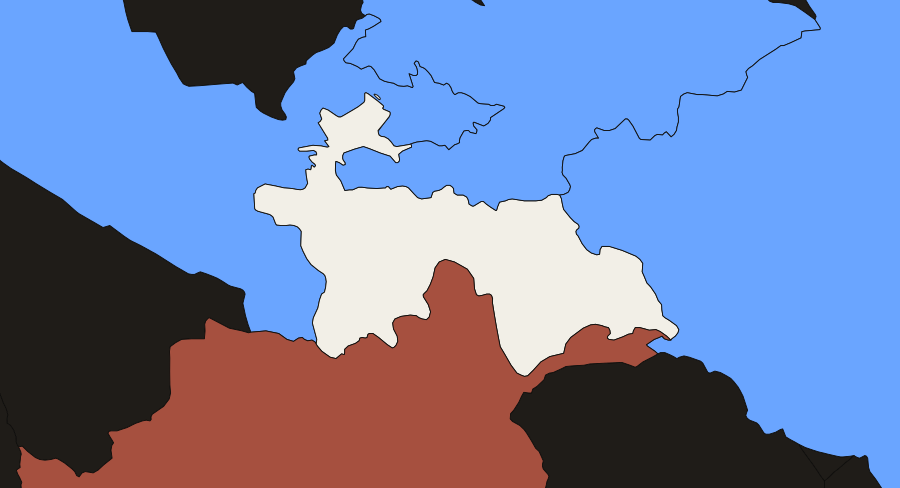
- Dushanbe Capital. Russia's 201st military base, its largest abroad, has units here and in Bokhtar.
- Isfara Border area where clashes with Kyrgyzstan killed 55 people in 2021. A border treaty took effect in 2025.
- Darvoz Two Chinese road workers were killed here in an attack from Afghanistan on November 30, 2025.
- Kulma Pass Road crossing into China. Tajikistan gave China about 1,100 sq km of the Pamirs in 2011.
- Tajikistan
- Partner
- Tensions
Who does Tajikistan trade with?
Tajikistan exported about $2.4 billion of goods in 2025 and imported about $8.2 billion, a deficit of about $5.8 billion (Customs Service). In 2025 China overtook Russia as its largest trade partner, with 28.0% of trade against 26.9% for Russia. Tajikistan's last full report to UN Comtrade is for 2023, and it leaves out gold (chart). In January to May 2026, Switzerland bought 36.3% of Tajikistan's exports, mostly gold (Statistics Agency). Tajikistan mined about 22,000 tonnes of antimony in 2025, about a fifth of the world's output, third after China and Russia (US Geological Survey). Iran buys most of Tajikistan's cotton fiber. The largest imports are oil products and cars. The economy grew 8.4% in 2025, and the IMF expects 7.3% in 2026.
Sells to
Share of Tajikistan's exports
- China24.8%
 Kazakhstan20.2%
 Turkey13.1%
- Uzbekistan10.7%
- Russia10.7%
Buys from
Share of Tajikistan's imports
- Russia21.2%
- China18.2%
- Kazakhstan17.8%
- Uzbekistan6.8%
- United States4.7%
Goods except gold, 2023, as reported by Tajikistan (its latest year in UN Comtrade).
Why do so many Tajiks work in Russia?
Tajikistan's economy cannot employ its young and fast-growing population. Half of Tajiks are younger than 23. For every four people working at home, about one works abroad, mostly in Russia (World Bank). More than one million Tajiks work in Russia. In 2025, 1.44 million Tajik citizens entered Russia, 950,000 of them for work (Russian border service data). Migrants sent home $10.18 billion in 2025, equal to 57.7% of GDP, the highest share in the world (chart). The World Bank's own reports use a narrower measure of about 46% of GDP. Life for migrants in Russia got harder after the Crocus City Hall attack near Moscow on March 22, 2024, which killed 149 people. The four gunmen were Tajik citizens, and a Moscow court gave them life sentences on March 12, 2026. About 160,000 Tajiks are on Russia's register of migrants without legal status. Tajik arrivals for work fell 18% in the first half of 2026.
Money sent home, share of GDP, 2025
Full ranking →- Tajikistan57.7%
 Nepal32.3%
 Honduras30.1%
 El Salvador27.5%
- Uzbekistan14.4%
 Philippines8.5%
World Bank World Development Indicators, from KNOMAD and IMF balance of payments data, October 2026
What is the Rogun dam?
Rogun is a dam and hydropower plant on the Vakhsh River, east of Dushanbe. It is designed to be 335 meters high, which would make it the tallest dam in the world. Its first turbine started on November 16, 2018, and the second on September 9, 2019. In August 2026 the dam was about 190 meters high (Webuild, the Italian builder). When finished it should have 3,780 megawatts and produce about 14.4 billion kilowatt-hours a year. That is enough to end the winter power cuts and sell electricity abroad. The World Bank put the cost to complete it at $6.29 billion in December 2024 and has given $650 million in grants. The World Bank expects it to be fully running in 2033. More than 50,000 people will be resettled. Uzbekistan, downstream, long opposed the dam but dropped its objections in 2018. Hydropower made about 89% of Tajikistan's electricity in the first half of 2026. Villages got only six or seven hours of power a day in winter 2025 to 2026.