
Country profile · Southern Africa
 Zimbabwe
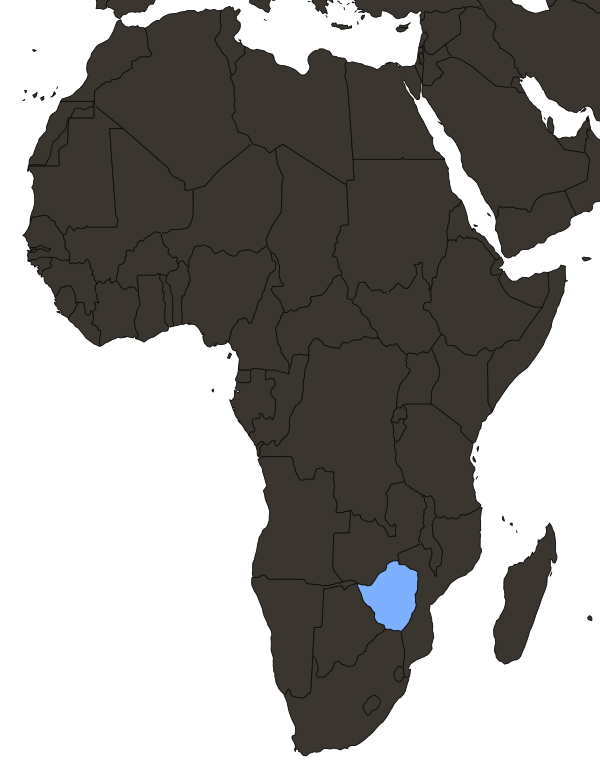
 is a landlocked country in southern Africa with about 17 million people. President Emmerson Mnangagwa, 84, took power after the army pushed Robert Mugabe out in 2017. In July 2026 he signed a constitutional amendment that extended his term from 2028 to 2030. Zimbabwe is Africa's largest lithium miner, and gold is its biggest export.
Where Zimbabwe ranks
All rankings →Which alliances is Zimbabwe in?
All alliances →Who runs Zimbabwe?
President Emmerson Mnangagwa was born on September 15, 1942 in Shabani, now Zvishavane. His nickname is "the Crocodile." In 1965 he was sentenced to death for blowing up a train, reportedly spared because he was under 21, and spent 10 years in prison. Robert Mugabe fired him as vice president on November 6, 2017. Days later the army took over, and Mnangagwa was sworn in on November 24, 2017. He won elections in 2018 and in August 2023 with 52.6%. On July 7, 2026 he signed a constitutional amendment, passed without a referendum, that lengthens terms from five to seven years. It moves the next election from 2028 to 2030 and lets Parliament, not voters, choose the president. Court challenges are pending. Vice President Constantino Chiwenga, who led the 2017 coup, criticized the plan at the ruling party's conference in October 2026. In December 2024 he signed the law that abolished the death penalty.
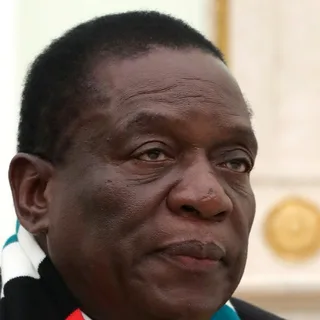
Photo (January 2019): Kremlin.ru, Wikimedia Commons, CC BY 4.0 (cropped)
Who are Zimbabwe's allies and rivals?
South Africa is Zimbabwe's largest supplier of imports. China says it is Zimbabwe's largest foreign investor, at about $10 billion. Chinese firms own or co-own most large lithium mines. Zimbabwe owes China about $2 billion, its largest single government creditor. President Emmerson Mnangagwa went to Moscow for Russia's Victory Day parade in May 2025, and Russia gave him a presidential helicopter in 2023. The United States ended its sanctions program on Zimbabwe on March 4, 2024 but put Mnangagwa, his wife and Vice President Constantino Chiwenga under personal sanctions for corruption. In October 2026 Mnangagwa made Kudakwashe Tagwirei, a businessman under US and UK sanctions, a cabinet minister. US health aid, nearly $2 billion since 2006, ended in September 2026 after Zimbabwe rejected a new deal. The European Union lifted its personal sanctions in February 2026 but kept an arms embargo. Zimbabwe left the Commonwealth in 2003 and has not been readmitted.
Allies and partners
 South AfricaLargest supplier; about 1 million Zimbabweans live there
 ChinaLargest investor; owns most lithium mines
 RussiaClose political ties; nuclear cooperation deal
 MozambiquePort of Beira is Zimbabwe's route to the sea
Tensions
 United StatesSanctions on the president; health aid ended
 United KingdomFormer ruler; opposes return to Commonwealth
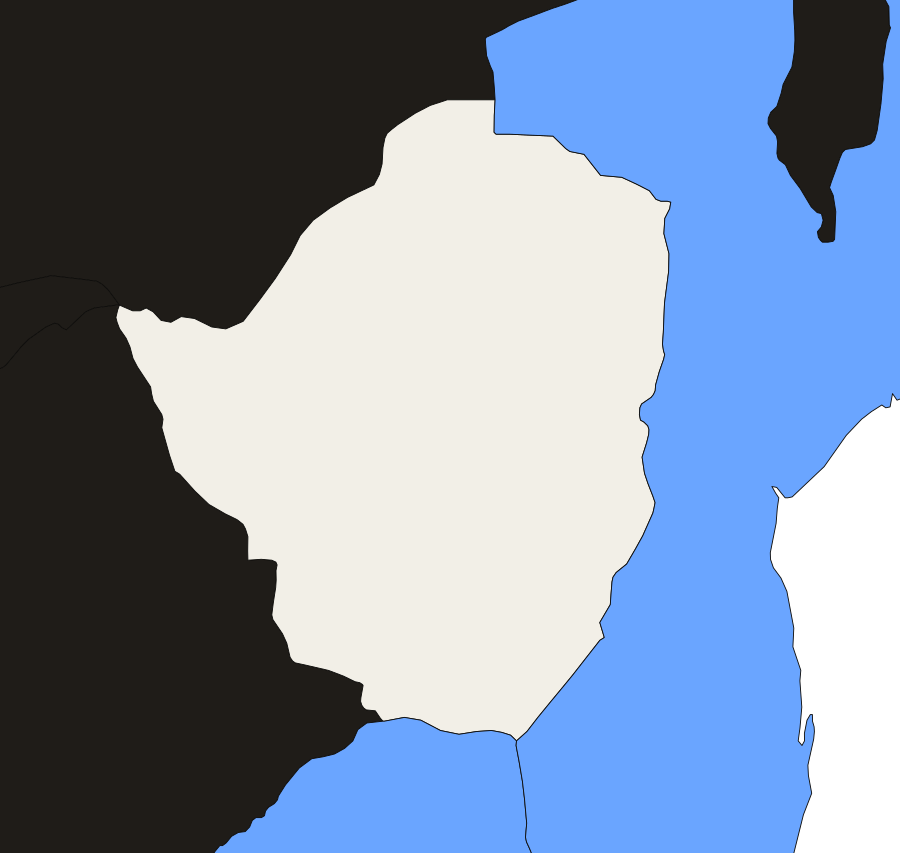
- Arcadia mine Lithium mine east of Harare owned by China's Huayou. It has Zimbabwe's only working lithium sulphate plant.
- Lake Kariba Dam on the Zambezi that gives most of Zimbabwe's power. Drought cut its output to about a quarter of capacity in February 2026.
- Beira Mozambican port about 560 km from Harare. Most of Zimbabwe's fuel arrives through it.
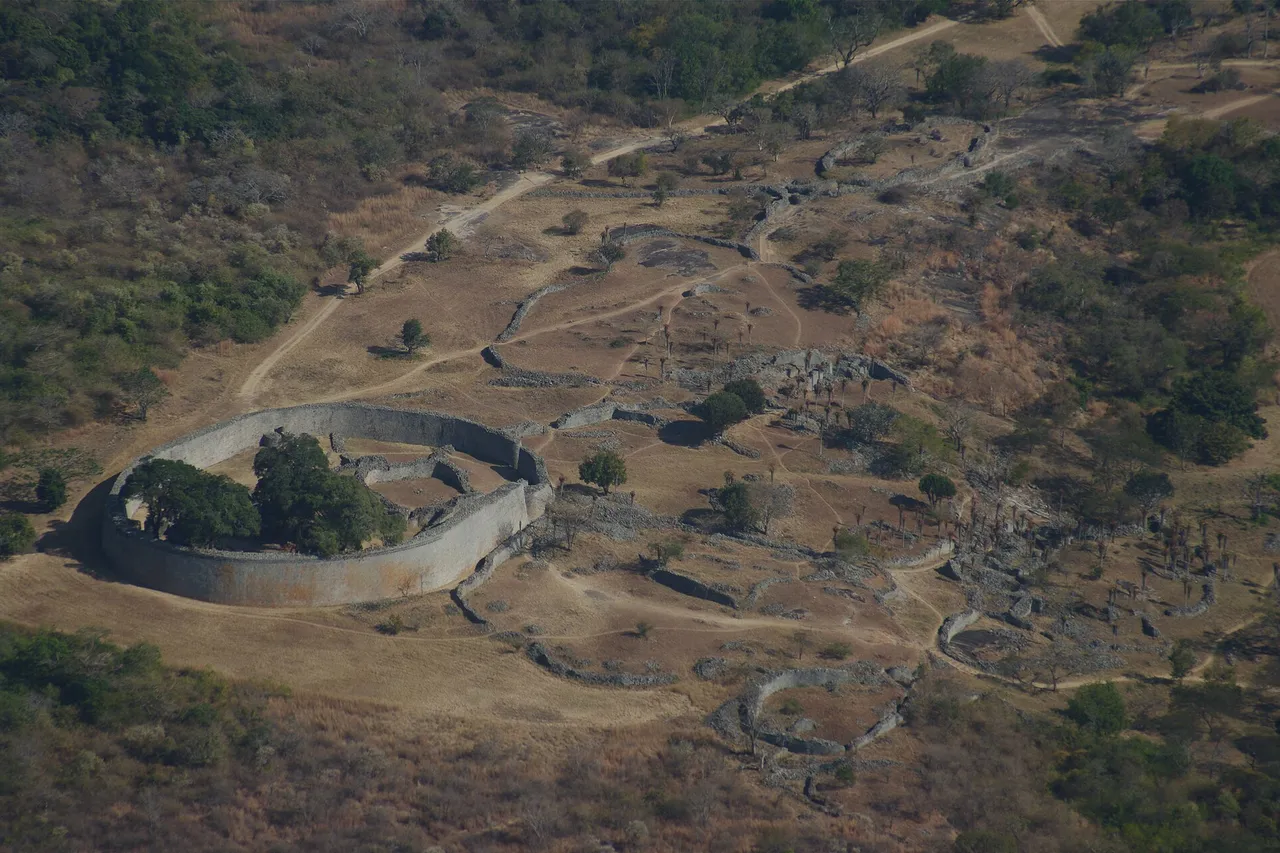
- Great Zimbabwe Stone city built from the 11th to the 15th century. The country took its name from it in 1980.
- Zimbabwe
- Partner
Who does Zimbabwe trade with?
Zimbabwe exported goods worth $7.43 billion in 2024 and imported $9.53 billion (UN Comtrade). The United Arab Emirates bought 36.6% of exports, mostly gold, and South Africa 27.6% (chart). South Africa supplied 39.5% of imports and China 13.9%. Zimbabwe's own figures put 2025 exports at a record $9.71 billion. Gold earned $4.6 billion, almost half of the total. Deliveries of gold to the state refinery reached a record 46.7 tonnes in 2025. Zimbabwe is also the world's third-largest platinum miner (USGS). Tobacco farmers sold a record crop of about 358 million kilos in 2026, but lower prices cut its value to about $890 million. China is the largest buyer of tobacco. Zimbabweans abroad sent home $2.45 billion in 2025. The economy grew by 8.3% in 2025, and the IMF expects 5% in 2026. More than 80% of payments are made in US dollars.
Sells to
Share of Zimbabwe's exports
 United Arab Emirates36.6%
- South Africa27.6%
- China17.3%
- Mozambique3.4%
 Zambia1.9%
Buys from
Share of Zimbabwe's imports
- South Africa39.5%
- China13.9%
 Bahamas7.7%
- Mozambique4.2%
 Singapore3.5%
Goods, 2024. UN Comtrade (Zimbabwe's own figures).
Why does Zimbabwe's lithium matter?
Lithium is used in the batteries of electric cars and phones. Zimbabwe mined 9.7% of the world's lithium in 2025, the fourth-largest share after Australia, China and Chile, and the largest in Africa (USGS) (chart). Output rose from 20,000 tonnes in 2024 to 28,000 tonnes in 2025. Chinese companies bought the main mines after 2021. Huayou owns Arcadia, Sinomine owns Bikita, and Yahua runs Kamativi with the Zimbabwean state. The industry says more than 80% of output comes from Chinese-owned or Chinese-partnered mines. Zimbabwe wants the processing done at home. It banned exports of raw lithium ore in 2022, briefly stopped all concentrate exports in February 2026, and then allowed them under quotas with a 10% export tax. A full ban on concentrate exports starts on January 1, 2027. Only Huayou's plant at Arcadia can process the ore so far. In the first nine months of 2026 lithium earned about $2.16 billion, more than platinum.


Why did Zimbabwe's economy collapse?
Robert Mugabe led Zimbabwe from independence on April 18, 1980 until November 21, 2017. In 1983 to 1987 an army brigade trained by North Korea killed an estimated 20,000 civilians in Matabeleland and the Midlands, in the Gukurahundi massacres. From 2000 the government seized the farms of about 4,000 white commercial farmers. Tobacco, the main export crop, dropped from 237 million kilos in 2000 to 49 million in 2008. The government printed money to pay its bills. By mid-November 2008, inflation reached an estimated 79.6 billion percent a month (Steve Hanke). In January 2009 the central bank issued a 100 trillion dollar note, and people simply used US dollars. Since then Zimbabwe has tried several currencies of its own. The latest, the ZiG, was launched in April 2024 and lost 43% of its value in September 2024. Under a 2020 deal, Zimbabwe promised $3.5 billion to the former white farmers, and had paid about $520 million by October 2026.