
Territory of the United States · South Pacific
American Samoa
Self-governingUpdated November 11, 2026
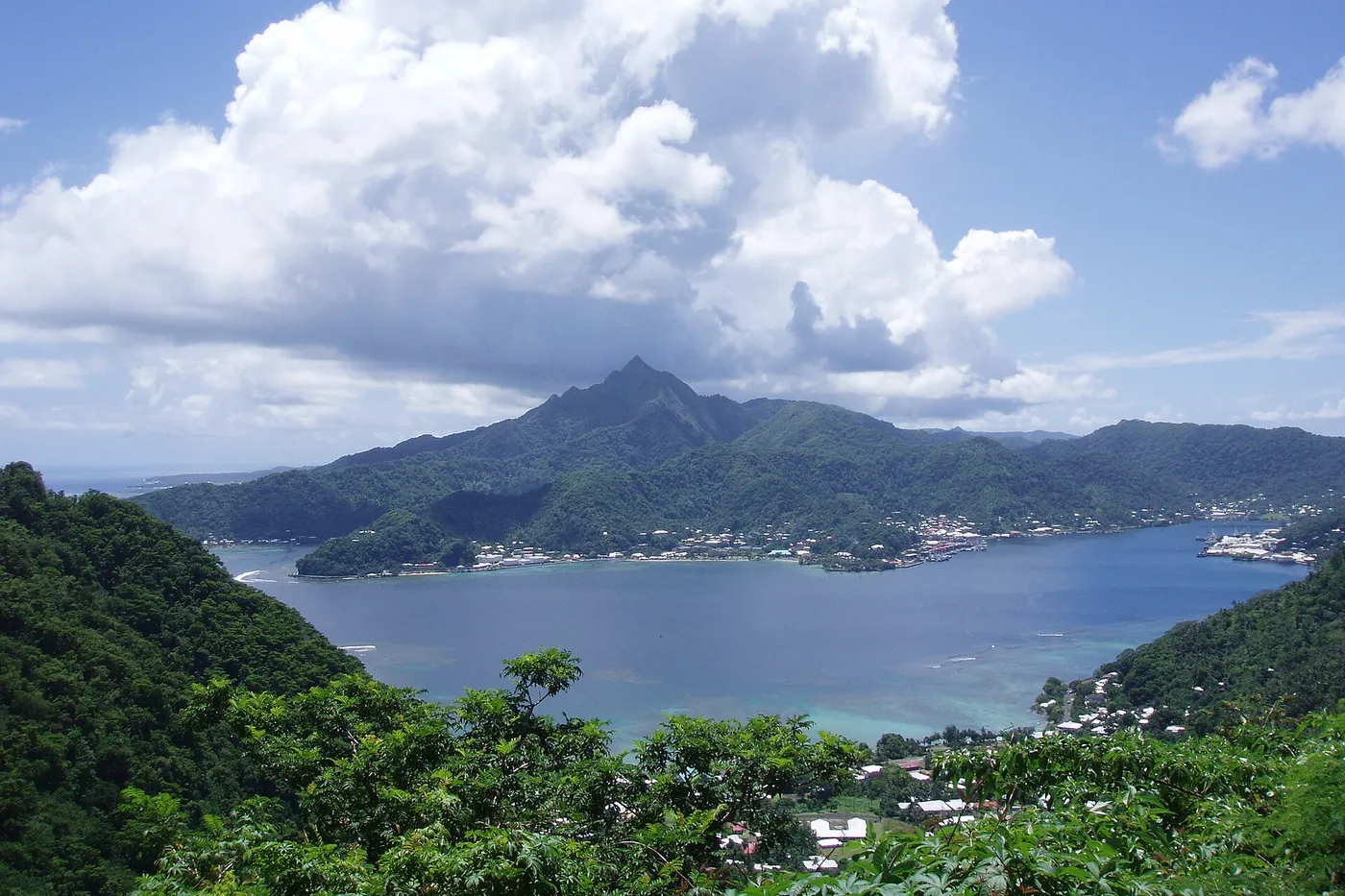
American Samoa is an unincorporated, unorganized territory of the United States in the South Pacific. Local chiefs ceded the islands to the United States in 1900 and 1904. Its people are US nationals, not US citizens. It is the only inhabited US territory where this is so. StarKist runs the only tuna cannery and is the largest private employer. The federal government plans a deep-sea mining lease sale off the territory, which the territorial government and the Fono oppose.

- Capital
- Pago Pago
- on Tutuila, the main island
- GDP
- $871 million
- 2022, the latest official year
- EEZ
- About 400,000 km²
- exclusive economic zone
- Enlistment
- About 166/year
- Army active and reserve recruits
- From Washington
- 11,300 km
- as the crow flies
 United States
American Samoa in 30 seconds
- American Samoa is an unincorporated, unorganized US territory. Its people are US nationals, not US citizens. They carry US passports with an endorsement saying the holder is not a citizen.
- StarKist operates the territory’s only tuna cannery, in Pago Pago, with about 2,300 workers. It accounts for about 80% of exports and about a quarter of all canned tuna eaten in the United States in 2023.
- The territory’s Senate is not popularly elected. Its 18 senators are chosen by county councils and must hold matai (chief) titles. Communal land cannot be sold to non-Samoans.
- The federal government plans to hold a deep-sea mining lease sale on November 19, 2026, for waters east of the Manu’a Islands. The Interior Department says the sale would reduce US dependence on foreign sources of critical minerals such as nickel and cobalt. The territorial government, the Fono and environmental groups oppose it. The territory controls only waters within 3 nautical miles of shore.
Is American Samoa part of the United States?
American Samoa belongs to the United States but is not fully part of it. It is an unincorporated, unorganized territory. Only some parts of the US Constitution apply there. Congress has never passed an Organic Act for it.
The United States acquired the territory through deeds of cession. Chiefs of Tutuila and Aunu’u signed the first deed on April 17, 1900. Chiefs of the Manu’a Islands signed the second on July 16, 1904. Congress ratified both in 1929. The US Navy ran the territory until 1951, when Executive Order 10264 transferred it to the Department of the Interior.
The Revised Constitution of American Samoa took effect on July 1, 1967. It set up the current system of local self-government, but the Interior Secretary keeps final authority. Governors were appointed until the first election for governor in 1977. Since January 4, 2025, amendments to the constitution again need only the Interior Secretary’s approval, after Congress repealed a 1983 law that had required an Act of Congress.
The United Nations lists American Samoa as a non-self-governing territory. The territorial government wants it to stay on the list until its people choose their future status.
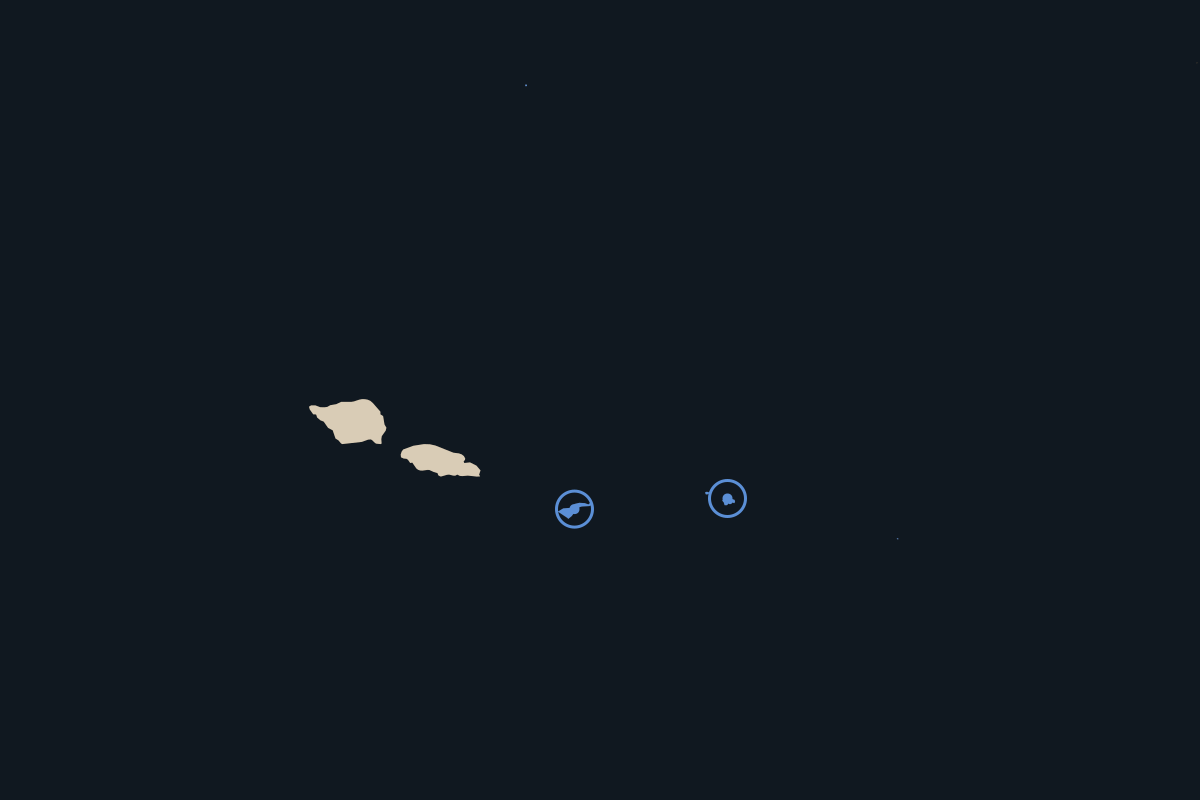 Tutuila
Pago Pago
Manu'a Islands
Swains Island
Rose Atoll
SAMOA
Apia
South Pacific Ocean
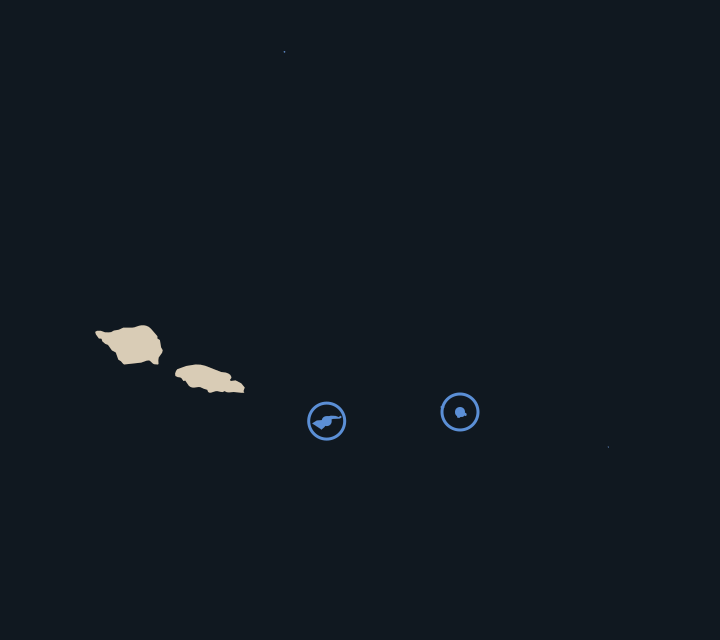 Tutuila
Pago Pago
Manu'a Islands
Swains Island
Rose Atoll
SAMOA
Apia
South Pacific Ocean
Why are American Samoans not US citizens?
Federal law makes people born in American Samoa US nationals, not US citizens. American Samoa is the only inhabited US territory where this is so. People in Guam, Puerto Rico, the US Virgin Islands and the Northern Mariana Islands are all citizens by birth.
In the Fitisemanu v. United States case, three American Samoans living in Utah argued that the 14th Amendment makes anyone born on US soil a citizen. A federal district court in Utah ruled for them in December 2019. The US Court of Appeals for the 10th Circuit reversed that ruling 2 to 1 on June 15, 2021. The majority relied on the Insular Cases, Supreme Court rulings from the early 1900s on overseas territories. Critics, including Justice Neil Gorsuch, have said those rulings rest on racial stereotypes. The Supreme Court declined to hear the case on October 17, 2022. The American Samoa government and Delegate Amata Coleman Radewagen sided against the plaintiffs. They argued that imposing citizenship could threaten fa’a Samoa, communal land ownership and the matai system.
Delegate Radewagen introduced H.R. 6158 in November 2025 to let nationals opt into citizenship more easily, rather than grant it automatically at birth. No committee action has been reported.
What US national status means in practice
- US passportIssued with endorsement code 09, stating the holder is a national, not a citizen
- Live and work in the USNationals can live and work anywhere in the 50 states without a visa
- Cannot voteNationals cannot vote in federal or state elections unless they naturalize
- Naturalization requiredTo become a citizen, a national must move to a US state and go through the naturalization process
- Some jobs restrictedCertain federal and law enforcement positions require citizenship
Who runs American Samoa?
Governor Pula Nikolao Pula, a Republican, has led American Samoa since January 3, 2025. He is the first Republican governor since Peter Tali Coleman, who left office in 1993. Governor Pula is the youngest of 12 children. He worked for 11 years for US Senator Daniel Inouye and later became the first Samoan to direct the Interior Department’s Office of Insular Affairs, the federal office that now oversees the territory he governs.
Governor Pula won the November 19, 2024, runoff with 59.8% of the vote, defeating incumbent Lemanu Peleti Mauga. His lieutenant governor is Pulu Ae Ae Jr.
The legislature, the Fono, is bicameral and formally nonpartisan. The Senate has 18 members chosen by county councils according to Samoan custom. Senators must hold matai titles and serve 4-year terms. The House has 21 members, 20 elected by popular vote for 2-year terms plus a delegate from Swains Island. Delegate Amata Coleman Radewagen, a Republican, won re-election to the US House on November 3, 2026, with 60.7% of the vote, according to unofficial results.
Governor’s runoff, November 19, 2024
59.8%
Pula Nikolao Pula (Republican)
Pula beat incumbent Lemanu Peleti Mauga with 5,846 votes to 3,925 out of 9,771 cast. He is the first Republican governor since 1993.
How does American Samoa make money?
The economy depends mainly on tuna canning and federal spending. GDP was $871 million in 2022, the latest official year. The Bureau of Economic Analysis paused its territory GDP estimates after the Office of Insular Affairs paused funding for the work.
StarKist operates the territory’s only cannery, in Pago Pago, and is the largest private employer, with about 2,300 workers. The cannery accounts for about 80% of exports. About a quarter of canned tuna eaten in the United States in 2023 came from American Samoa. The White House says it is the only tuna processor that qualifies as "Buy American" for military rations and school lunches.
Federal grants provide most of the government’s revenue. In fiscal year 2025, grant revenue was $433 million, compared with $114.9 million in local revenue. The minimum wage is set by federal law and rises by 40 cents every 3 years. The fish canning rate has been $6.36 per hour since September 30, 2024. The next step, to $6.76, is due on September 30, 2027.
Largest employers
How did the United States get American Samoa?
The United States acquired American Samoa through an agreement among three foreign powers and through deeds of cession signed by local chiefs. On December 2, 1899, the United States, Germany and the United Kingdom signed the Tripartite Convention. It divided the Samoan Islands between the United States and Germany. No Samoans were party to the agreement. Germany took the western islands, which are now the independent country of Samoa. The United States took the eastern islands.
Chiefs of Tutuila and Aunu’u signed a Deed of Cession on April 17, 1900. The Manu’a chiefs signed their deed on July 16, 1904. Congress did not ratify these agreements until 1929. The US Navy governed for 51 years. In the 1920s, a Samoan protest movement called the Mau demanded an end to Navy rule and a civilian government. The Navy arrested protesters and deported some leaders, including Samuel Sailele Ripley. In 1951, responsibility passed to the Department of the Interior. The Revised Constitution took effect on July 1, 1967. In 1977, voters elected Peter Tali Coleman in the territory’s first election for governor.
From the Tripartite Convention to today
- 1899The US, Germany and the UK sign the Tripartite Convention, which splits the Samoan Islands between the US and Germany
- 1900Chiefs of Tutuila and Aunu’u sign the Deed of Cession on April 17, now Flag Day
- 1904Manu’a chiefs sign their Deed of Cession on July 16
- 1925Swains Island added by joint resolution of Congress
- 1929Congress ratifies both deeds of cession
- 1951Administration transfers from the Navy to the Department of the Interior
- 1967The Revised Constitution takes effect on July 1
- 1977Peter Tali Coleman wins the territory’s first election for governor
- 2022The Supreme Court declines to hear Fitisemanu, leaving the 10th Circuit ruling in place
- Oct 2026The federal government sets November 19 for the first US deep-sea mining lease sale off the territory
Why does American Samoa matter?
Tuna
StarKist’s Pago Pago cannery accounts for about 80% of the territory’s exports and about a quarter of all canned tuna eaten in the United States. The White House calls it the only "Buy American"-compliant tuna processor for military rations and school lunches.
Military service
American Samoa has one of the highest military enlistment rates per capita of any US state or territory. About 166 residents join the Army each year. Delegate Radewagen told Congress in 2025 that the territory is "surrounded on three sides by countries that have increasingly entered China’s orbit."
The citizenship question
American Samoa is the only inhabited US territory whose people are nationals, not citizens. Whether the Constitution requires birthright citizenship in the territories is unresolved. Plaintiffs in the Fitisemanu case argued that the 14th Amendment already makes people born there citizens. The territory’s own leaders have argued against imposing it, saying it could threaten communal land and the matai system.
Questions about American Samoa
Do American Samoans have US passports?
Yes. People born in American Samoa receive US passports. The passports carry endorsement code 09, which states that the holder is a US national and not a US citizen. Nationals can live and work anywhere in the United States without a visa.
Can American Samoans vote for president?
No. American Samoa has no electoral votes. Residents cannot vote for president or for voting members of Congress. The territory elects one non-voting delegate to the US House of Representatives.
What currency does American Samoa use?
The US dollar. American Samoa uses the same currency as the 50 states.
What is the matai system?
The matai system is the traditional Samoan system of chiefly authority. Each extended family chooses a matai, or chief, who manages family affairs and communal land. In American Samoa, senators must hold matai titles. Communal land cannot be sold to non-Samoans. Other sales of communal land need the governor’s approval, after review by the Land Commission.
How many people live in American Samoa?
The 2020 US Census counted 49,710 people, down about 10.5% from 2010. The territorial government’s own mid-2024 estimate is 53,616. It has called the 2020 census an undercount. The UN estimates 46,765 for mid-2024. About 83% of the population is Samoan.
Is American Samoa the same as Samoa?
No. Samoa is an independent country to the west. Its capital, Apia, is about 125 km (78 miles) from Pago Pago. The two were split by the 1899 Tripartite Convention. They share language, culture and family ties, but they have separate governments.
Other US territories
All territories → Puerto RicoIts 3.2 million people are US citizens but cannot vote for president and have no voting seat in Congress.Self-governing
 GuamAndersen Air Force Base and Naval Base Guam make it the westernmost US territory with major military bases.Self-governing
 US Virgin IslandsThe only place under the US flag where cars drive on the left, a habit kept from Danish colonial times.Self-governing
 Northern Mariana IslandsThe 1945 atomic bomb missions against Hiroshima and Nagasaki took off from Tinian, one of its islands.Self-governing
 US Minor Outlying IslandsNo permanent residents, only rotating military, contractor and wildlife staff; Midway gave its name to the 1942 battle.Run by an administrator