
Territory of the United States · Western Pacific
Northern Mariana Islands
Self-governingUpdated November 11, 2026
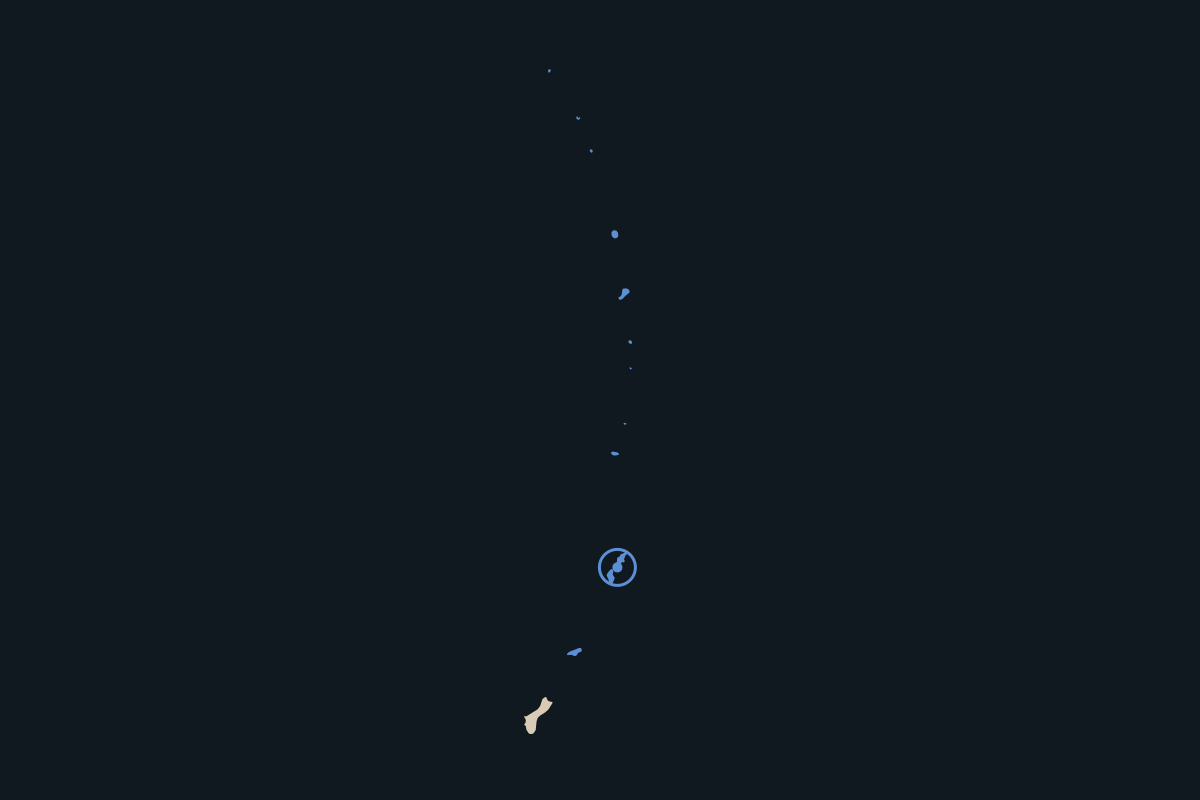
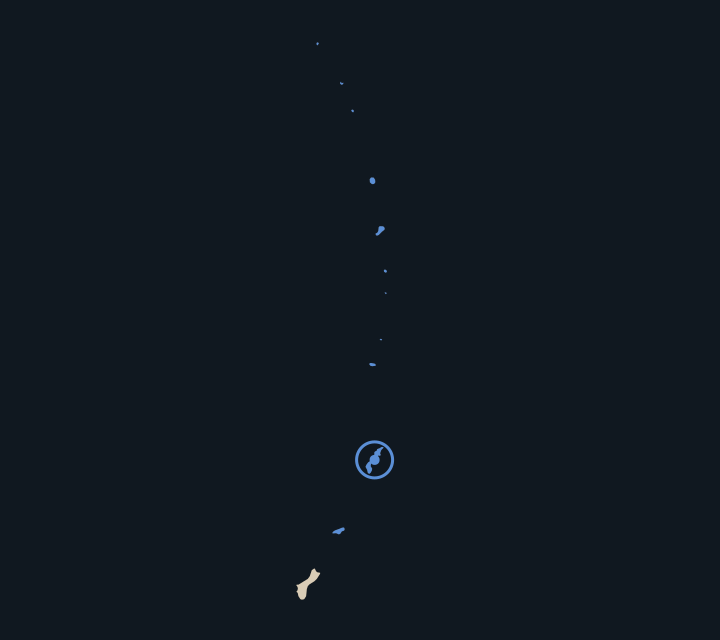
The Northern Mariana Islands are a self-governing commonwealth in political union with the United States. The 14 islands sit in the western Pacific, north of Guam. The people voted for this status in 1975, and residents became US citizens in 1986. They cannot vote for president. The United States is spending about $800 million on airfields on Tinian as a backup to bases on Guam. On October 27, 2026, the Department of Homeland Security announced it would suspend visa-free entry for Chinese visitors, citing security risks.
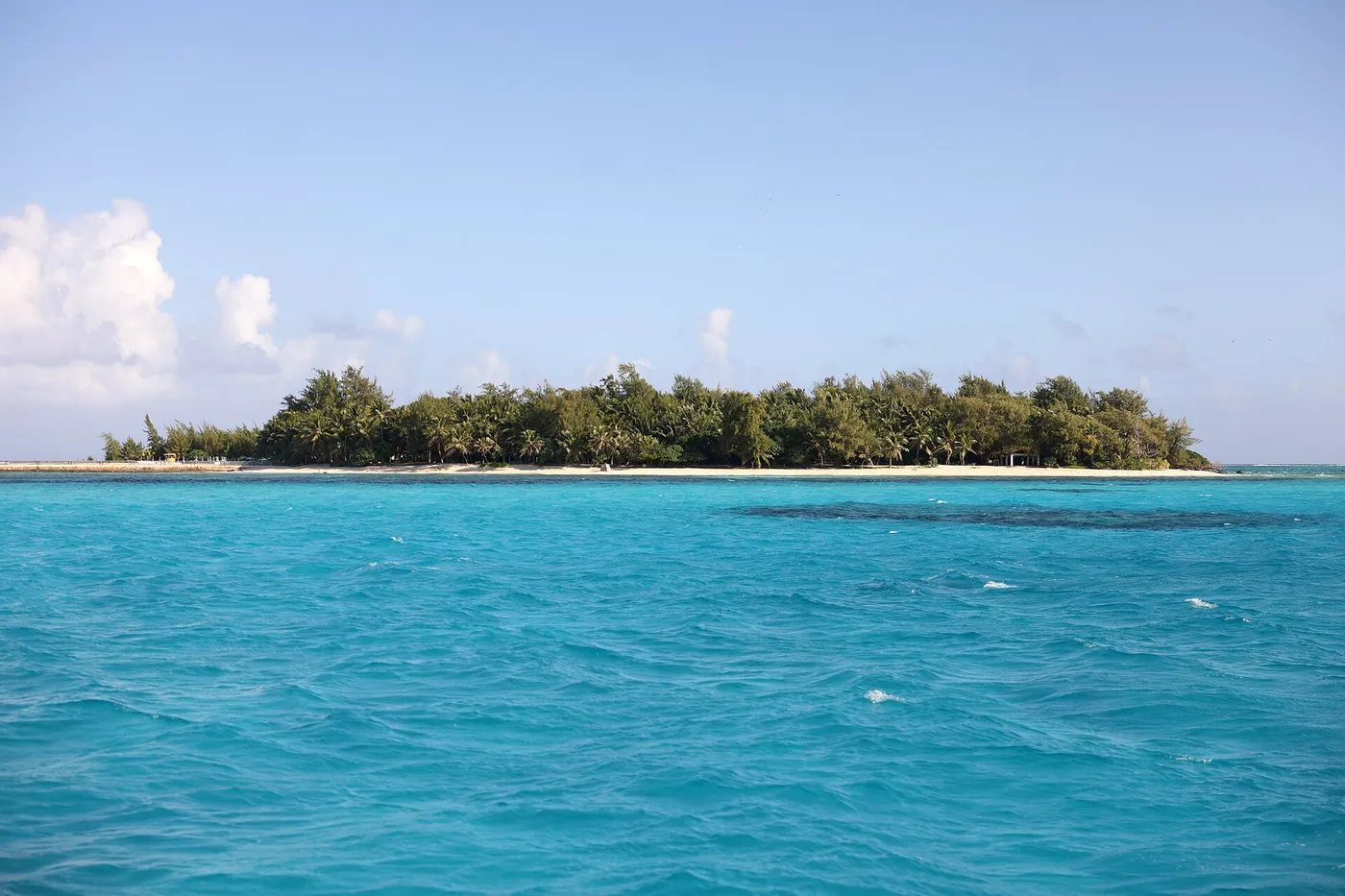

- Capital
- Saipan
- home to 43,385 of the 47,329 residents
- Visitors (FY2025)
- 160,640
- down 32% from FY2024
- Languages
- 3 official
- Chamorro, Carolinian and English
- Islands
- 14
- most people live on Saipan, Tinian and Rota
- From Washington
- 12,500 km
- as the crow flies
 United States
Northern Mariana Islands in 30 seconds
- The Northern Mariana Islands are a US commonwealth. Residents are US citizens but cannot vote for president. Unlike Guam, the islands chose their status in a 1975 vote and have their own constitution.
- The United States is spending about $800 million on airfields on Tinian as a backup to Andersen Air Force Base on Guam. In July 2026, the Navy approved two live-fire training ranges on Tinian and dropped plans for the island of Pagan.
- On October 27, 2026, the Department of Homeland Security announced it would suspend visa-free entry for Chinese visitors, citing birth tourism and security risks near military sites.
- The population fell 12.2% between 2010 and 2020, to 47,329. Visitor arrivals in fiscal year 2025 were 160,640, down from 424,858 in fiscal year 2019.
Is the Northern Mariana Islands part of the US?
Yes. The Northern Mariana Islands are a self-governing commonwealth in political union with the United States. The Covenant, signed in 1975 and fully in force since November 3, 1986, defines the relationship. The United States controls defense, foreign affairs and immigration. The islands run their own local laws, taxes and courts under their own constitution, which took effect on January 9, 1978.
People born in the Northern Mariana Islands are US citizens with US passports. They cannot vote for president. They elect one non-voting delegate to the House of Representatives, Kimberlyn King-Hinds, a Republican who was re-elected on November 3, 2026, with 63.7% of the vote.
The islands differ from Guam in several ways. The Northern Mariana Islands chose commonwealth status in a 1975 plebiscite, in which 78.8% voted yes. Guam never voted to become a territory. The Northern Mariana Islands have their own constitution and restrict land ownership to people of Northern Marianas descent, meaning Chamorro or Carolinian ancestry. Guam remains on the UN list of non-self-governing territories. The Northern Mariana Islands are not on the list.
 Saipan
Tinian
Rota
Pagan
Northern Mariana Islands
Guam
Philippine Sea
Pacific Ocean
 Saipan
Tinian
Rota
Pagan
Northern Mariana Islands
Guam
Philippine Sea
Pacific Ocean
Why is the US military building on Tinian?
The United States is turning Tinian into a backup for Andersen Air Force Base on Guam, about 175 km to the south. US military planners say spreading forces across more locations makes them harder for China to hit with missiles. The Pentagon is spending about $800 million across Tinian's two airfields.
The Tinian Divert Airfield, at Tinian International Airport, is an Air Force project expected to finish in 2027. North Field, the World War II base where the Enola Gay took off in 1945, is being restored. A detachment of 250 personnel supported the Valiant Shield exercise in 2026. Admiral Samuel Paparo, commander of US Indo-Pacific Command, toured North Field on June 28, 2026.
The US military has leased the northern two-thirds of Tinian since 1983. In July 2026, the Navy approved two live-fire training ranges there, down from 14 in earlier plans, and dropped plans for the island of Pagan. Tinian and Pagan community groups had sued the Navy in 2016 to stop live-fire training on both islands. Local residents on Tinian have also raised concerns about housing shortages and environmental damage from the buildup.
US military projects on Tinian
- Tinian Divert AirfieldBackup to Andersen AFB on Guam; completion expected 2027
- North Field restorationThe WWII B-29 base; about $800M across both Tinian airfields
- Two live-fire rangesApproved July 2026 on northern Tinian; Pagan dropped
- Air Force training EISUp to 6,080 aircraft operations a year across 4 CNMI airfields, announced October 2026
How does China affect the Northern Mariana Islands?
China was once a major source of tourists. In 2017, Chinese visitors made up about 234,000 of 660,000 arrivals. The Northern Mariana Islands were the only place under US control where Chinese tourists could enter without a visa.
That changed in stages. The old parole program ended on February 20, 2025. A replacement called EVS-TAP allowed pre-screened Chinese visitors to stay for up to 14 days. More than 3,000 Chinese visitors used it in fiscal year 2025. On October 27, 2026, the Department of Homeland Security suspended EVS-TAP, effective October 30. The department said Chinese nationals were "almost certainly exploiting" the program. It cited birth tourism and possible "espionage and intelligence gathering targeting military infrastructure." Governor Apatang had called the program "critical." Delegate King-Hinds cited Commonwealth Healthcare Corporation data showing that tourist births fell from 581 in 2018 to about 47 in 2025. She said the program was "suspended, not terminated."
Guam Customs says 152 Chinese nationals have traveled illegally by boat from Saipan to Guam since 2022. In December 2024, 7 arrived on Guam by boat from Saipan during a missile defense test. Some of them were found near a military installation.
Visitor arrivals, fiscal year 2025
160,640
Down 32% from fiscal year 2024
South Korea supplied 69% of visitors. China and Hong Kong sent 10,764, down 62% from fiscal year 2019. The tourism industry says it needs about 500,000 visitors a year to be viable.
Who runs the Northern Mariana Islands?
Governor David Apatang, an independent, has led the Northern Mariana Islands since July 24, 2025. He took office the day after Governor Arnold Palacios died at age 69. Governor Apatang served 20 years in the US Army, including a tour in Vietnam, and earned his degree at San Francisco State University while still serving. He was born on Guam in 1948 and is 78. He chose not to run in 2026 and endorsed Attao.
On November 3, 2026, Republican Ralph Torres received 49.5% of the vote in the first round of the governor's race, followed by independent Blas Jonathan Attao with 38.7%. Because no candidate passed 50%, a runoff between Torres and Attao is scheduled for November 20, 2026. Torres served as governor from 2015 to 2023. The House impeached him in January 2022, but the Senate acquitted him in May 2022.
The legislature has two chambers: a 9-seat Senate and a 20-seat House. Delegate Kimberlyn King-Hinds, a Republican from Tinian and the first Republican to hold the seat, was re-elected with 63.7%.
What happened to the islands in history?
Spain claimed the Marianas in 1565 and began colonizing them in 1668. War and disease cut the Chamorro population sharply. By about 1700, Spain had forcibly moved the Chamorros of the northern islands to Guam. Carolinians from the Caroline Islands began settling Saipan in the early 1800s. In 1899, Spain sold the northern islands to Germany, splitting them from Guam, which the United States had taken during the Spanish-American War in 1898. Japan seized the islands in 1914 and governed them under a League of Nations mandate from 1920.
The Battle of Saipan, from June 15 to July 9, 1944, was one of the bloodiest in the Pacific. About 24,000 of roughly 32,000 Japanese defenders died. Nearly 3,000 US troops were killed and more than 10,000 wounded. Thousands of civilians died, including mass suicides at Marpi Point. On August 6, 1945, the Enola Gay took off from North Field on Tinian carrying the atomic bomb dropped on Hiroshima.
After the war, the islands became part of the UN Trust Territory of the Pacific Islands. On June 17, 1975, 78.8% of voters approved the Covenant establishing the commonwealth. President Ford signed it into law on March 24, 1976. Self-government began on January 9, 1978, and residents became US citizens on November 3, 1986.
From Spain to the commonwealth
- 1565Spain claims the Marianas
- 1668Spain begins colonizing the islands
- 1899Spain sells the northern islands to Germany; Guam stays American
- 1914Japan seizes the islands during World War I
- 1944The Battle of Saipan; about 24,000 Japanese defenders and nearly 3,000 US troops killed
- 1945The Enola Gay takes off from Tinian for the Hiroshima bombing
- 1947The islands become a UN trust territory under US administration
- 197578.8% vote yes in the Covenant plebiscite
- 1978Self-government begins under the CNMI constitution
- 1986The Covenant takes full force; residents become US citizens
Why do the Northern Mariana Islands matter?
The US military buildup
The United States is spending about $800 million on airfields on Tinian as a backup to Guam. The Navy approved two live-fire training ranges in July 2026. The Air Force proposed up to 6,080 aircraft operations a year across 4 CNMI airfields in October 2026.
Tourism and China
Tourism accounts for more than two-thirds of GDP. On October 27, 2026, the Department of Homeland Security announced it would suspend visa-free entry for Chinese visitors, citing birth tourism and espionage risks. Visitor arrivals fell 32% in fiscal year 2025.
A shrinking population
The population fell 12.2% between 2010 and 2020, to 47,329. Tinian lost 34.8% of its people. The last garment factory closed in 2009. The federal minimum wage replaced a lower local one. The proposed government budget for fiscal year 2027 is $97.2 million, which Marianas Variety calls the lowest since the early 1980s.
Questions about the Northern Mariana Islands
Are people from the Northern Mariana Islands US citizens?
Yes. People born in the Northern Mariana Islands are US citizens with US passports. Residents gained citizenship on November 3, 1986, when the Covenant took full force.
Can the Northern Mariana Islands vote for president?
No. Residents cannot vote for president and have no electoral votes. They elect one non-voting delegate to the House of Representatives. The delegate can vote in committee but not on the final passage of bills.
What currency does the Northern Mariana Islands use?
The US dollar. The Northern Mariana Islands use the same currency as the 50 states.
Is Saipan in the United States?
Yes. Saipan is part of the Northern Mariana Islands, a US commonwealth. It is under US sovereignty but is not a state. Most of the territory's 47,329 people live on Saipan.
How many people live in the Northern Mariana Islands?
The 2020 Census counted 47,329 people, down 12.2% from 53,883 in 2010. About 25.4% of residents identify only as Chamorro, and about 36.3% identify as Chamorro alone or with another group. Filipinos are the largest single-ancestry group, at about 32.7%.
Do you need a passport to go to the Northern Mariana Islands?
It depends on the route. US citizens flying directly from Guam or elsewhere in the United States do not need a passport, but airlines require a government ID. A passport is needed for trips that pass through another country, such as Japan or South Korea. Foreign visitors need a passport. Many can visit without a visa under the US Visa Waiver Program or the separate Guam-CNMI Visa Waiver Program.
Other US territories
All territories → Puerto RicoIts 3.2 million people are US citizens but cannot vote for president and have no voting seat in Congress.Self-governing
 GuamAndersen Air Force Base and Naval Base Guam make it the westernmost US territory with major military bases.Self-governing
 US Virgin IslandsThe only place under the US flag where cars drive on the left, a habit kept from Danish colonial times.Self-governing
 American SamoaPeople born there are US nationals, not US citizens, the only such case among inhabited US territories.Self-governing
 US Minor Outlying IslandsNo permanent residents, only rotating military, contractor and wildlife staff; Midway gave its name to the 1942 battle.Run by an administrator