
Territory of the United States · Caribbean
Puerto Rico
Self-governingUpdated November 11, 2026
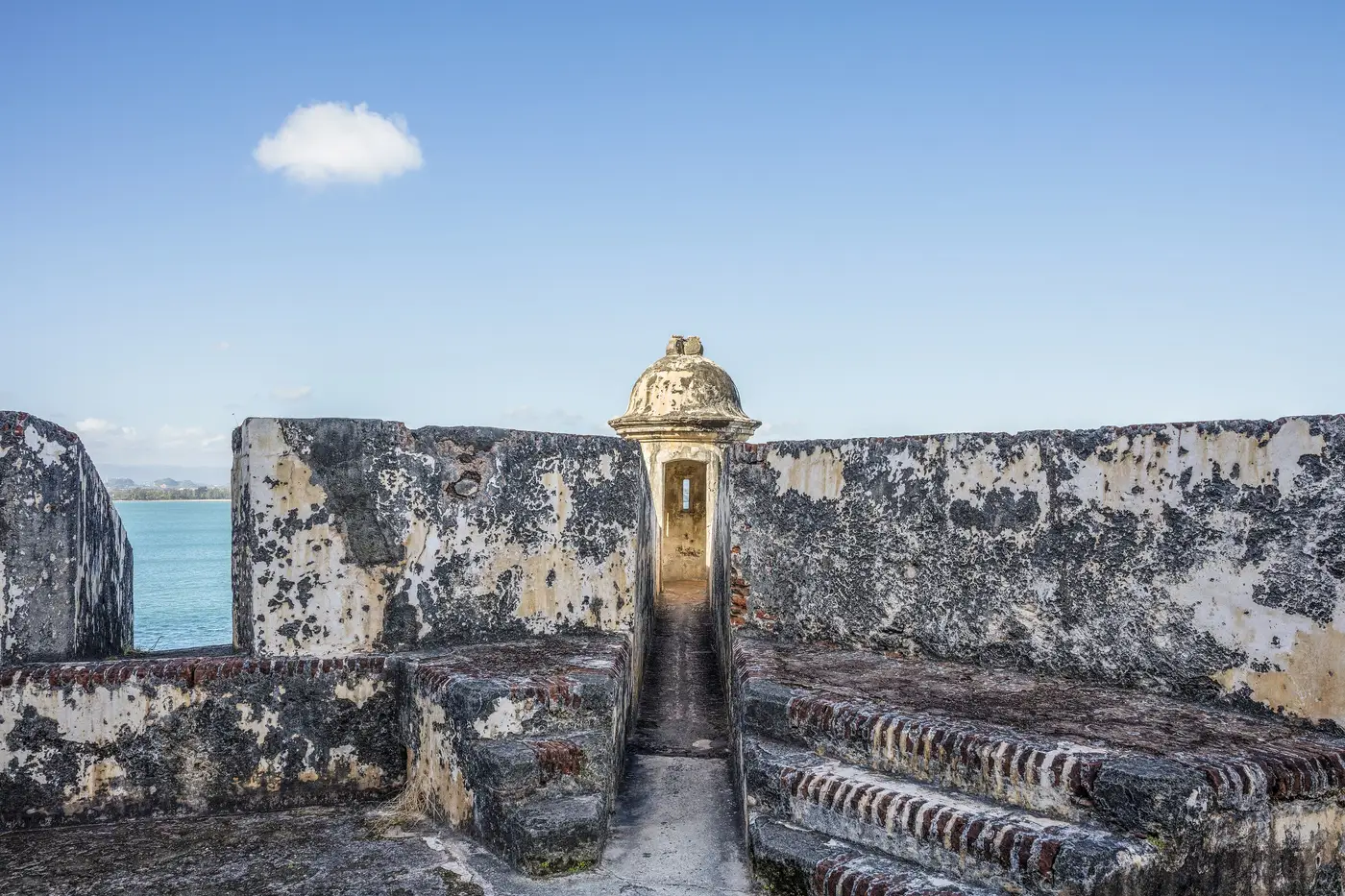
Puerto Rico is an unincorporated territory of the United States in the Caribbean, about 1,600 km southeast of Miami. The United States took it from Spain in 1898. Puerto Ricans have been US citizens since 1917 but cannot vote for president while living on the island. Puerto Rico has its own constitution, in force since 1952. In seven plebiscites, voters have been split on whether to become a state. In October 2026 the governor signed the island’s first formal petition asking Congress for admission as the 51st state.

- Capital
- San Juan
- founded 1521
- GDP per person
- $39,353
- 2024, World Bank
- Median household income
- $27,213
- 2024, Census ACS
- Poverty rate
- 40.5%
- 2024, Census ACS
- From Washington
- 2,500 km
- as the crow flies
 United States
Puerto Rico in 30 seconds
- The United States took Puerto Rico from Spain in 1898. Puerto Ricans became US citizens in 1917 but have no vote for president and no voting members of Congress.
- Puerto Rico adopted its own constitution in 1952, but the US Supreme Court ruled in 2016 that Congress remains the ultimate source of its power.
- In 2017 Puerto Rico filed the largest public bankruptcy in US history, about $73 billion. Hurricane Maria killed an estimated 2,975 people and wrecked the power grid the same year.
- Statehood won 58.61% in a November 2024 plebiscite. In October 2026 the governor signed a formal petition asking Congress for admission as the 51st state. Congress has not acted.
Is Puerto Rico a country or a state?
Neither. Puerto Rico is an unincorporated territory of the United States, officially called a commonwealth. The United States took it from Spain in the Treaty of Paris of December 10, 1898. In 1901, in a set of rulings called the Insular Cases, the Supreme Court created a new legal category: territories that belong to the United States but are not fully part of it. Only some parts of the Constitution apply automatically.
In 1950 Congress authorized Puerto Rico to write its own constitution. It took effect on July 25, 1952. The arrangement gave the island self-government, and in 1953 the United Nations removed Puerto Rico from its list of non-self-governing territories. But Congress kept its power over the territory. In 2016 the Supreme Court confirmed this in Puerto Rico v. Sanchez Valle, ruling 6 to 2 that Puerto Rico has no separate sovereignty and that Congress remains the ultimate source of its powers.
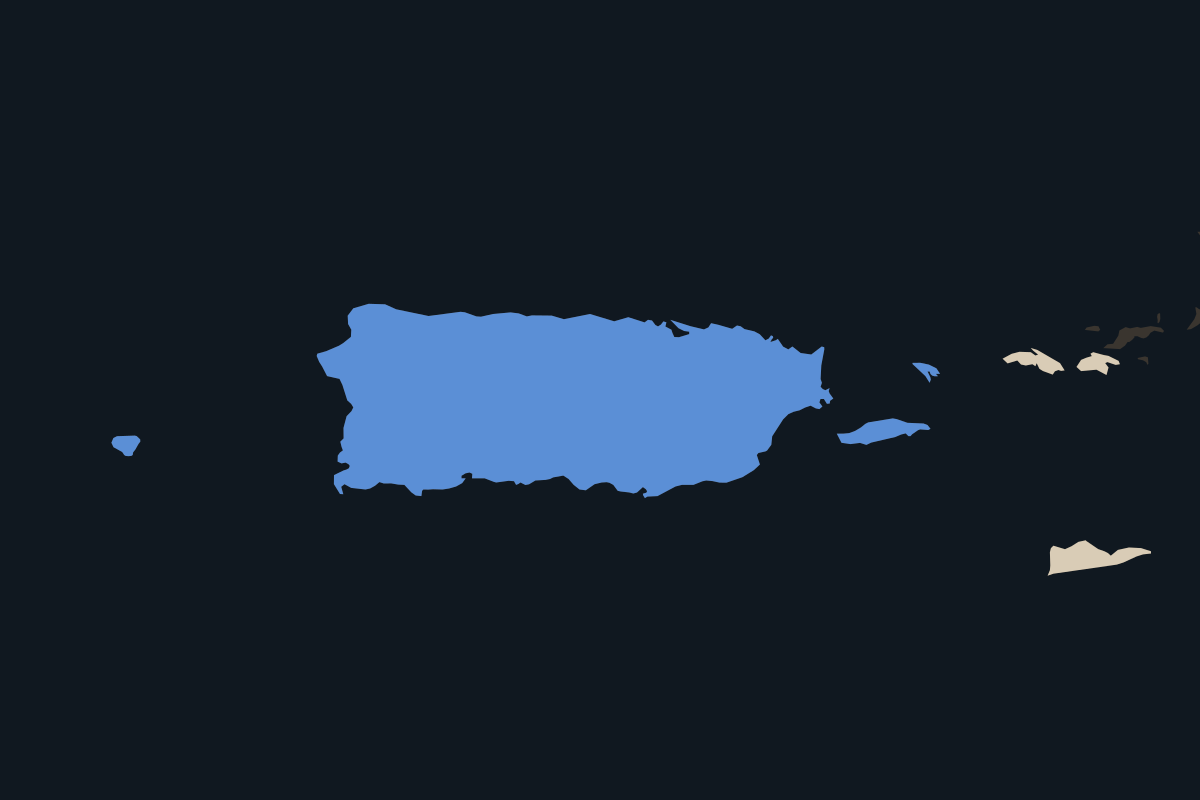 Puerto Rico
San Juan
Ponce
Mayagüez
Roosevelt Roads
Vieques
Culebra
US Virgin Islands
Atlantic Ocean
Caribbean Sea
 Puerto Rico
San Juan
Ponce
Roosevelt Roads
Vieques
Atlantic Ocean
Caribbean Sea
Can Puerto Ricans vote for president?
No. Puerto Ricans are US citizens. They have been since the Jones-Shafroth Act of March 2, 1917. They carry ordinary US passports. But residents of Puerto Rico cannot vote in the presidential election because the island has no electoral votes. They do vote in party presidential primaries. If a Puerto Rican moves to a state, they can register and vote there.
Puerto Rico sends one resident commissioner to the US House of Representatives. The commissioner can speak and sit on committees but cannot vote on final passage of bills. There are no senators. Residents pay Social Security and Medicare taxes but do not pay federal income tax on income earned in Puerto Rico.
What Puerto Ricans have and lack
- US citizenshipYes, since 1917. It rests on a federal law.
- US passportsYes. Ordinary US passports.
- Presidential voteNo. Puerto Rico has no electoral votes.
- Voting member of CongressNo. One resident commissioner with no floor vote.
- Federal income taxNo, on Puerto Rico-source income. Yes on US-source income.
- Military serviceYes. Puerto Ricans serve and are subject to the draft.
Does Puerto Rico want to be a US state?
Puerto Ricans are divided. Puerto Rico has held seven plebiscites on its status. None were binding. Statehood won the most recent vote in November 2024 with 58.61%, but the ballot did not include the option of keeping the current arrangement. A 2025 poll by the University of Michigan and the University of Puerto Rico that included the current status found a three-way split: 35% for the current commonwealth, 32% for statehood and 18% for independence.
In December 2022 the US House passed the Puerto Rico Status Act, 233 to 191, which would have offered a binding vote on statehood, independence or free association. The Senate never voted on it. In October 2026 Governor Jenniffer Gonzalez-Colon signed House Joint Resolution 391, the first formal petition by Puerto Rico's legislature asking Congress for admission as the 51st state. Only Congress can admit a new state.
Statehood's share in each plebiscite
What happened to Puerto Rico's debt?
In 2016 Congress passed the PROMESA Act and created a federal oversight board to manage Puerto Rico's finances. On May 3, 2017, the board filed Puerto Rico under Title III of PROMESA with about $73 billion in debt. It was the largest public bankruptcy in US history.
The central government's debt was cut by about 78%, from $34.3 billion to $7.4 billion, under a plan that took effect on March 15, 2022. But PREPA, the public power utility, is still in bankruptcy more than 9 years after filing. Bondholder claims against PREPA are about $8.5 billion. In June 2026 the oversight board offered $3 billion to bondholders that had not settled.
Hurricane Maria, a Category 4 storm, hit the island on September 20, 2017. An estimated 2,975 people died. The storm destroyed the power grid. Island-wide blackouts still happen. On April 16, 2025, about 1.4 million customers lost power. The Department of Energy extended grid emergency orders in November 2026.
Title III filing, May 2017
$73 billion
The largest US public bankruptcy
Puerto Rico's total public debt at filing was about $73 billion. The central government's share was cut by 78%. The power utility PREPA remains in bankruptcy with about $8.5 billion in claims.
Who runs Puerto Rico?
Governor Jenniffer Gonzalez-Colon has been in office since January 2, 2025. She belongs to the New Progressive Party, which supports statehood. Before becoming governor, she served as resident commissioner in Washington from 2017 to 2025, the first woman in that post. In 2008, at 32, she became the youngest person ever elected speaker of the Puerto Rico House.
The legislature has two chambers. The Senate has 28 seats, led by President Thomas Rivera Schatz of the New Progressive Party, who holds the post for a third time. The House has 53 seats, led by Speaker Carlos "Johnny" Mendez. The New Progressive Party holds majorities in both chambers. The resident commissioner in Washington is Pablo Jose Hernandez Rivera of the Popular Democratic Party, who took office on January 3, 2025. He is the grandson of former Governor Rafael Hernandez Colon.
The federal oversight board, chaired by Arthur J. Gonzalez, still certifies the island's budgets. President Trump tried to remove six board members in August 2025. A federal court ruled that three of them, including Gonzalez, were never properly removed.
Why is the US military back in Puerto Rico?
The US military has been using Puerto Rico as a staging ground for operations in the Caribbean, especially against Venezuela. Roosevelt Roads, a Navy base near Ceiba that closed in 2004 after about 60 years, was reactivated from September 2025. Ten F-35 fighter jets and MQ-9 Reaper drones arrived on September 4, 2025. Defense Secretary Hegseth visited on September 8.
On January 3, 2026, US forces captured Venezuela's leader, Nicolas Maduro, in Operation Absolute Resolve. Aircraft flew from Roosevelt Roads, including 12 F-22s, 14 F-35s and an AC-130J gunship. Puerto Rico's public safety secretary called the island the "center of gravity" for US policy in the Caribbean. The buildup includes about $79 million in work at Roosevelt Roads in the 2026 fiscal year. Fort Buchanan, the Army's base in Guaynabo, accounts for about $500 million in spending.
The Navy used the nearby island of Vieques for bombing practice from 1941 to 2003. By 2021 the cleanup had removed 32,000 bombs, 12,000 grenades and 1,300 rockets. It is still going on.
The military in Puerto Rico
- 1941The Navy begins using Vieques for bombing practice
- 1943Roosevelt Roads naval base opens near Ceiba
- 2003Navy bombing on Vieques ends after mass protests
- 2004Roosevelt Roads closes
- Sep 2025F-35s and drones arrive at Roosevelt Roads
- Nov 2025Marines land at Ponce; FAA restricts airspace around Ceiba
- Jan 2026Aircraft from Puerto Rico support the capture of Maduro
- 2026The governor says over 8,100 troops take part in exercises from May to August
Why does Puerto Rico matter?
Military position
Puerto Rico lies beside the Mona Passage and the eastern approaches to the Caribbean. Since 2025 the United States has rebuilt its military presence on the island, using it as a staging ground for operations against Venezuela. About 5,000 troops were based there as of October 2025.
Pharmaceuticals and the economy
Puerto Rico is a major US drug-manufacturing hub. Its GDP was $126 billion in 2024. But median household income is only $27,213, and the poverty rate is 40.5%. The island is still under a federal oversight board after the largest public bankruptcy in US history.
A shrinking island, a growing diaspora
Puerto Rico's population has fallen 17% from its 2004 peak to 3.18 million. Meanwhile, 6.1 million Puerto Ricans live in the 50 states and Washington, DC, nearly twice the island's population. Hurricane Maria in 2017 accelerated the outflow.
The status debate
Statehood won 58.61% in the 2024 plebiscite, and the governor has formally petitioned Congress for admission. But polls that include the current status show a three-way split. Only Congress can admit a new state, and it has never held a binding vote.
Questions about Puerto Rico
Are Puerto Ricans US citizens?
Yes. Puerto Ricans have been US citizens since the Jones-Shafroth Act of March 2, 1917. They carry ordinary US passports. Their citizenship rests on a federal law.
What currency does Puerto Rico use?
The US dollar. Puerto Rico uses the same currency as the 50 states.
How many people live in Puerto Rico?
About 3.18 million as of July 2025, according to the Census Bureau. The population peaked at about 3.83 million in 2004 and has fallen 17% since then. Another 6.1 million Puerto Ricans live in the 50 states and Washington, DC.
Do Puerto Ricans pay US taxes?
Partly. Residents of Puerto Rico pay Social Security and Medicare taxes. They do not pay federal income tax on income earned in Puerto Rico. They do pay federal income tax on income from sources in the 50 states. Puerto Rico has its own separate income tax.
Do you need a passport to go to Puerto Rico?
No. Puerto Rico is a US territory. US citizens travel there the same way they travel between states. No passport is needed.
Is Puerto Rico in NATO?
Only as part of the United States, which is a NATO member. Article 6 of the North Atlantic Treaty covers members' territory in Europe or North America and islands north of the Tropic of Cancer. Puerto Rico is south of that line, at about 18 degrees north. So it is commonly read as outside the area covered by NATO's mutual defense clause. No official NATO or US statement settles the question.
Other US territories
All territories → GuamAndersen Air Force Base and Naval Base Guam make it the westernmost US territory with major military bases.Self-governing
 US Virgin IslandsThe only place under the US flag where cars drive on the left, a habit kept from Danish colonial times.Self-governing
 American SamoaPeople born there are US nationals, not US citizens, the only such case among inhabited US territories.Self-governing
 Northern Mariana IslandsThe 1945 atomic bomb missions against Hiroshima and Nagasaki took off from Tinian, one of its islands.Self-governing
 US Minor Outlying IslandsNo permanent residents, only rotating military, contractor and wildlife staff; Midway gave its name to the 1942 battle.Run by an administrator