
Territory of the United States · Western Pacific
Guam
Self-governingUpdated November 11, 2026
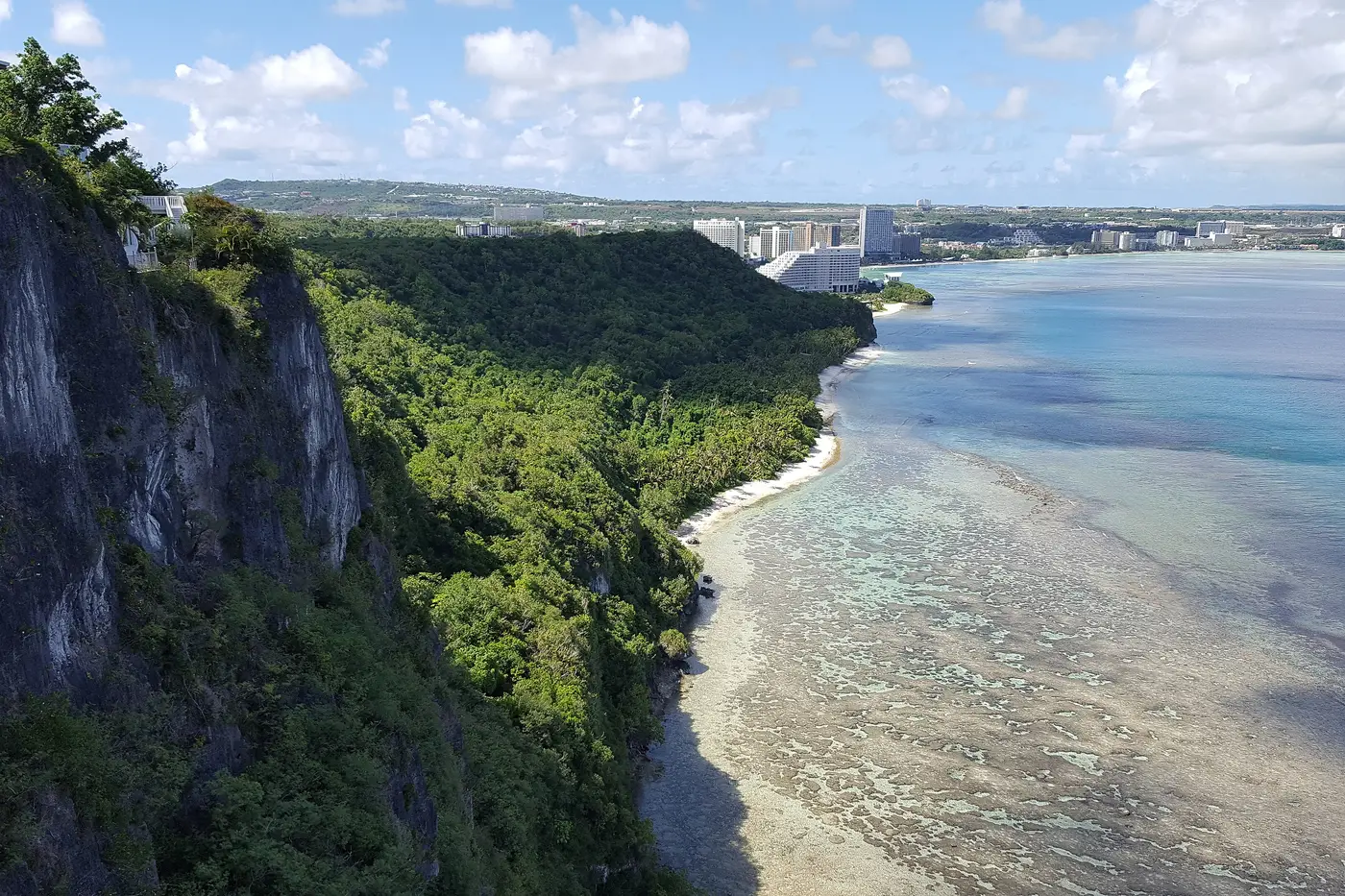
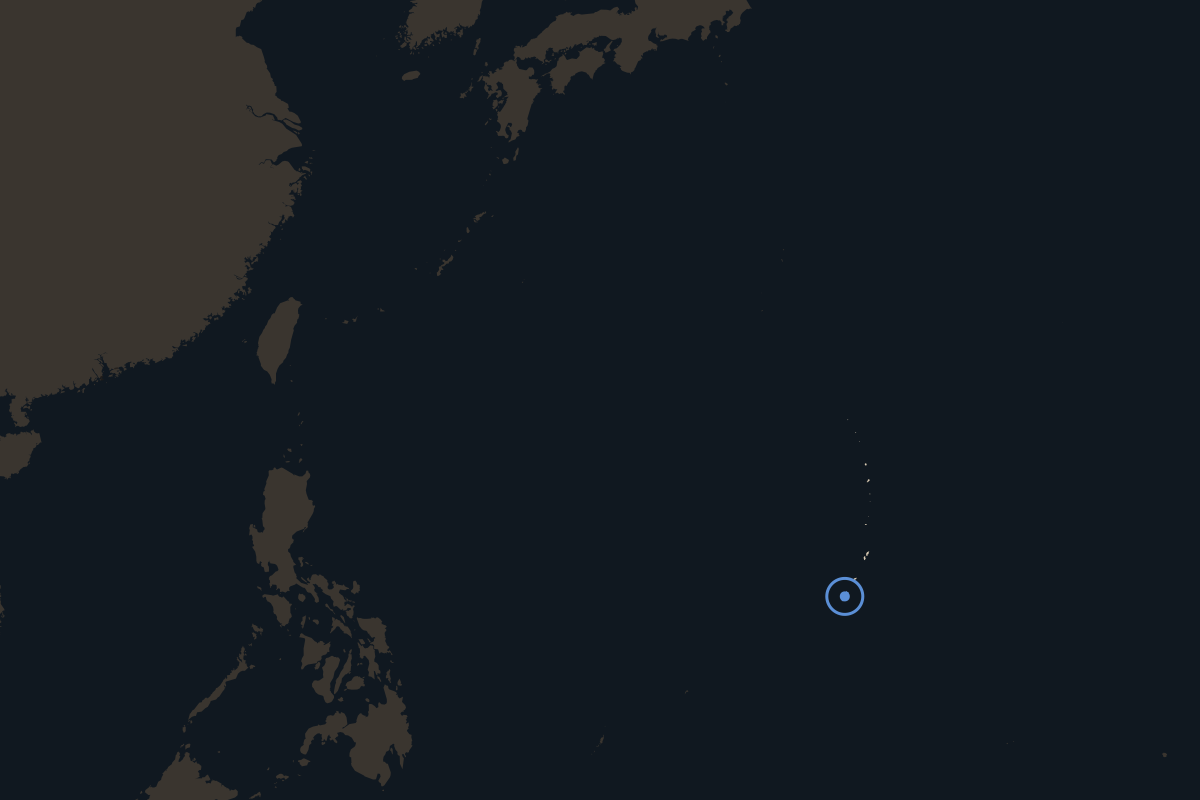
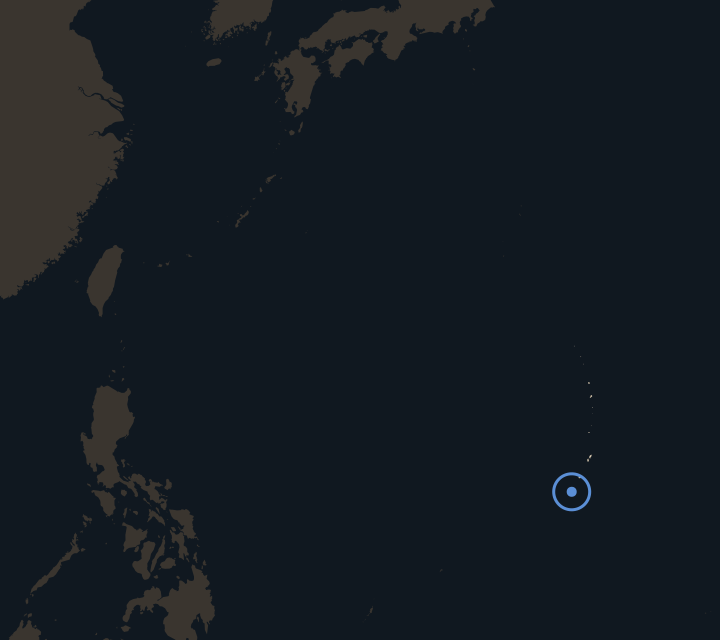
Guam is an unincorporated territory of the United States in the western Pacific, about 2,700 km from Taiwan. The United States took it from Spain in 1898. Japan occupied it from 1941 to 1944. The Organic Act of 1950 made it a civilian territory and granted its people US citizenship. Residents cannot vote for president. The Defense Department owns about 25% of the island. The United States is building a missile defense system there, and China's DF-26 missile can reach Guam.

- Capital
- Hagåtña
- population 943 (2020)
- GDP
- $6.91 billion
- 2022, the latest official year
- Visitors (2025)
- 782,840
- calendar year, still below pre-COVID levels
- Military land
- About 25%
- of the island, owned by the Defense Department
- From Washington
- 12,800 km
- as the crow flies
 United States
Guam in 30 seconds
- Guam is an unincorporated US territory. Its people are US citizens but cannot vote for president. They elect one non-voting delegate to the House of Representatives.
- The Defense Department owns about 25% of the island. Andersen Air Force Base hosts bombers, Naval Base Guam is home to fast-attack submarines, and a new Marine base is receiving troops from Okinawa.
- Japan occupied Guam from 1941 to 1944. Liberation Day, July 21, marks the 1944 American landing. Estimates of CHamoru deaths during the occupation range from about 1,000 to 2,000.
- A self-determination vote has been frozen since a 2019 court ruling struck down the rule limiting it to “Native Inhabitants of Guam”. Bills to reopen the question stalled in 2026.
Is Guam part of the United States?
Guam belongs to the United States but is not fully part of it. It is an unincorporated territory, the status named in the Organic Act of 1950. Only some parts of the US Constitution apply there. The federal government controls defense, foreign policy, currency, citizenship and immigration. Guam's elected government runs local laws, the local budget, local taxes and local courts.
People born on Guam are US citizens under a federal law passed by Congress. They carry ordinary US passports. They cannot vote for president. In 2024, Guam held a non-binding straw poll in which Kamala Harris received 49.46% and Donald Trump 46.22%. Guam elects one non-voting delegate to the House of Representatives. The delegate can vote in committee but not on the final passage of bills.
 Guam
Northern Mariana Islands
Taiwan
Okinawa
Manila
Tokyo
CHINA
JAPAN
PHILIPPINES
Philippine Sea
Pacific Ocean
 Guam
Northern Mariana Islands
Taiwan
Okinawa
Manila
Tokyo
CHINA
PHILIPPINES
Philippine Sea
Why does the US military need Guam?
Guam is the westernmost US territory with major bases. It sits inside the second island chain, about 2,700 km from Taiwan. The Defense Department owns about 25% of the island. Estimates of the number of troops on Guam range from about 9,000 to 17,000, depending on the source and what is counted.
The United States is also building a missile defense system on Guam. In December 2024, the system completed its first live intercept, firing an SM-3 Block IIA missile against a ballistic missile target. Stars and Stripes put the cost of the full system at about $8 billion in September 2026. China's DF-26 ballistic missile, which has a range of about 4,000 km, can reach Guam with conventional or nuclear warheads. Governor Lourdes Leon Guerrero said in September 2026: “There is no other place under the American flag where national strength and national risk meet so directly.”
The main US bases on Guam
- Andersen Air Force BaseHub for rotating bomber deployments, including B-52s and B-2s
- Naval Base GuamHome to fast-attack submarines at Apra Harbor
- Marine Corps Base Camp BlazActivated in 2023; about 4,000 Marines due from Okinawa, about 150 present in January 2026
- Guam Defense SystemMissile defense, about $8 billion; first live intercept in December 2024
Who runs Guam?
Governor Lourdes “Lou” Leon Guerrero, a Democrat, has led Guam since January 2019. She is Guam's first female governor, a former registered nurse and former president of Bank of Guam. She is term-limited.
On November 3, 2026, Republican Vicente “Tony” Ada won the governor's race with 51.45% of the vote, beating Democrat Therese Terlaje by 1,020 votes. Ada is the vice speaker of the outgoing Guam Legislature who has run his family business, V.P. Ada's Mortuary, since 1992. His running mate, EJ Calvo, is the head coach of the Guam national basketball team. They take office on January 4, 2027. All results are unofficial pending certification by the Guam Election Commission.
The Guam Legislature has 15 senators elected at large. The new legislature, elected on November 3, will have 8 Republicans and 7 Democrats, according to unofficial results. Democrat Alicia Limtiaco, a former US attorney, beat incumbent Republican James Moylan for the non-voting delegate seat, 51.00% to 48.84%.
Governor's race, November 3, 2026
51.45%
Vicente “Tony” Ada (Republican)
Ada beat Therese Terlaje (Democrat) by 1,020 votes. Turnout was 53.11%. It is the first Republican gubernatorial win since 2014. All results are unofficial.
What happened to Guam in World War II?
Japanese planes bombed Guam on December 8, 1941, hours after the attack on Pearl Harbor. Japanese troops invaded on December 10. The occupation lasted nearly three years. Japan renamed the island Omiya Jima and put the CHamoru people to forced labor. On July 10, 1944, about 18,000 people were marched into concentration camps. Massacres took place at Fena, Tinta, Faha and Yigo. Estimates of CHamoru deaths range from about 1,000 to 2,000, out of roughly 20,000 people.
US forces landed on July 21, 1944, now commemorated as Liberation Day. It is the island's biggest civic holiday. Organized Japanese resistance ended on August 10, 1944. The Organic Act of August 1, 1950, replaced Navy rule with a civilian government and granted US citizenship to the people of Guam.
From Magellan to the Organic Act
- 1521Magellan's expedition reaches the Marianas
- 1668Spain begins continuous colonial rule
- 1898The United States takes Guam during the Spanish-American War
- 1899Spain sells the rest of the Marianas to Germany, splitting them from Guam
- 1941Japan invades on December 10
- 1944US forces land on July 21, now Liberation Day
- 1950The Organic Act creates a civilian government and grants US citizenship
- 1970Guam elects its own governor for the first time
Can Guam vote on its political status?
No status vote is scheduled. Guam law created a Commission on Decolonization to educate voters on three options: statehood, free association and independence. A 2000 law limited the vote to “Native Inhabitants of Guam.” In 2019, the US Court of Appeals for the 9th Circuit ruled in Davis v. Guam that this limit was a racial classification barred by the 15th Amendment, even for a non-binding vote. Guam's government had argued that the limit was based on history: it covered people who became US citizens under the 1950 Organic Act and their descendants. The Supreme Court declined to hear the case in May 2020.
The plebiscite has been frozen since. Senator William Parkinson, a Democrat, introduced two bills, the first in December 2025. One would open the vote to all registered voters. The other would have asked voters on November 3, 2026, whether to hold a plebiscite in 2028. Parkinson said: “At some point, you either respect the people enough to let them speak, or you accept perpetual limbo.” Neither bill appears to have passed. The Commission on Decolonization opposed opening the vote to all voters. Any plebiscite would be non-binding. Only Congress can change Guam's status.
How does Guam make money?
Tourism is the largest private-sector industry. In calendar year 2025, Guam received 782,840 visitors, up from 79,389 in 2021 but still well below pre-COVID levels. South Korea is the biggest source and Japan the second. Japan made up about 35.8% of arrivals in fiscal year 2026. In September 2026, arrivals fell 30.9% year on year. The Guam Visitors Bureau blamed typhoons, airline seat cuts and higher fuel costs linked to the Iran conflict.
Federal and military spending is the other main source of income. Federal obligations in Guam totaled $4.9 billion in fiscal year 2025. The military buildup, including Camp Blaz and the missile defense system, is driving construction. Typhoon Mawar, a Category 4 storm, hit on May 24, 2023, and knocked out power across most of the island. Two super typhoons, Sinlaku in April and Bavi in July, caused damage on Guam in 2026.
Visitor arrivals by calendar year
Why does Guam matter?
Bombers and submarines
Andersen Air Force Base hosts rotating bomber deployments. Naval Base Guam is home to forward-deployed fast-attack submarines. Guam is the westernmost US territory with major military bases.
Missile defense
The United States is building an estimated $8 billion missile defense system on Guam. It completed its first live intercept in December 2024. China's DF-26 missile can reach the island.
Distance to Asia
Guam is about 2,700 km from Taiwan and 2,500 km from Tokyo. It sits inside the second island chain and is closer to Beijing than to Hawaii.
Tourism and local life
Tourism and federal spending drive the economy. Guam received 782,840 visitors in 2025 but is still recovering from COVID and from three major typhoons since 2023.
Questions about Guam
Are people born on Guam US citizens?
Yes. People born on Guam have been US citizens by birth since the Organic Act of 1950. Their citizenship rests on a federal law passed by Congress. They carry ordinary US passports.
Can Guam vote for president?
No. Guam holds a non-binding straw poll during presidential elections, but the result does not count. In 2024, Harris received 49.46% and Trump 46.22%. Guam has no electoral votes.
What currency does Guam use?
The US dollar. Guam uses the same currency as the 50 states.
Is Guam covered by NATO?
Not automatically. Article 6 of the NATO treaty limits the mutual defense clause to territory north of the Tropic of Cancer. Guam lies at about 13 degrees north, south of that line.
How many people live on Guam?
The 2020 Census counted 153,836 people. A 2024 government estimate puts the figure at about 167,000. CHamoru people make up about 33% of the population alone, and about 41% when counting people of mixed CHamoru ancestry. Filipinos are the second-largest group at about 29%.
What language do people speak on Guam?
English and CHamoru are both official languages. English is the main language of government and business. CHamoru is the indigenous language of the island.
Other US territories
All territories → Puerto RicoIts 3.2 million people are US citizens but cannot vote for president and have no voting seat in Congress.Self-governing
 US Virgin IslandsThe only place under the US flag where cars drive on the left, a habit kept from Danish colonial times.Self-governing
 American SamoaPeople born there are US nationals, not US citizens, the only such case among inhabited US territories.Self-governing
 Northern Mariana IslandsThe 1945 atomic bomb missions against Hiroshima and Nagasaki took off from Tinian, one of its islands.Self-governing
 US Minor Outlying IslandsNo permanent residents, only rotating military, contractor and wildlife staff; Midway gave its name to the 1942 battle.Run by an administrator