
Department of France · Caribbean
Guadeloupe
Part of the countryUpdated November 16, 2026
Guadeloupe is an overseas department and region of France in the eastern Caribbean. France colonized it in 1635 and made it a department in 1946. Residents are French citizens and EU citizens. They vote in all French elections and use the euro. Prices run 16% above mainland France. In 2009, a 44-day general strike over the cost of living closed businesses and blocked roads. In October 2026, new protests began over fuel prices and water shortages.
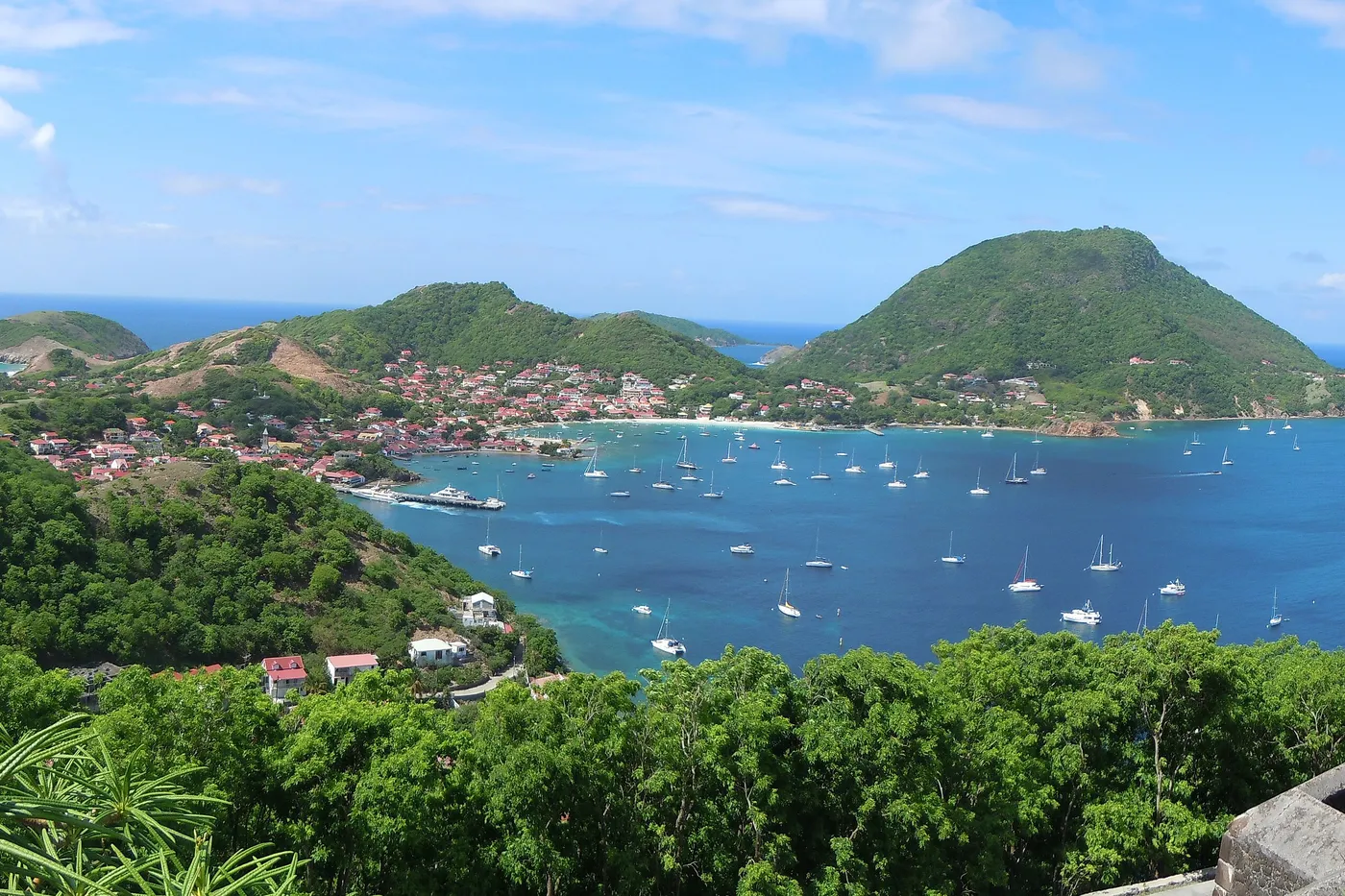

- Capital
- Basse-Terre
- population 9,417 (2023)
- GDP per person
- €29,500
- 2025, about 68% of the French average
- Unemployment
- 17%
- 2025, versus 8% in France overall
- Population
- 384,160
- January 1, 2023, declining
- From Paris
- 6,800 km
- as the crow flies
 France
Guadeloupe in 30 seconds
- Guadeloupe is a French overseas department and region. Its residents are French citizens and EU citizens. They vote in presidential, legislative and European elections and send 4 deputies and 3 senators to the French Parliament.
- Prices in Guadeloupe run 16% above mainland France, and food prices are 42% higher. A 44-day general strike in 2009 forced a wage deal. In October 2026, the Nou Las Palé collective blocked roads over fuel prices and water shortages. Separately, looting and riots broke out in Pointe-à-Pitre and Les Abymes, and 3 police officers were hit by gunfire.
- The pesticide chlordecone was used on banana plantations from 1972 to 1993. A 2026 study found it in the blood of 81.3% of adults. In June 2026, the French parliament recognized the State's share of responsibility, but the criminal case was dismissed in 2023, and an appeals court upheld the dismissal in June 2026.
- Elected officials voted in June 2025 to merge the department and region into a single authority with more autonomy. The French government has proposed a public consultation, but no date has been set.
Is Guadeloupe part of France?
Guadeloupe is a full department and region of France. French law applies automatically under Article 73 of the French Constitution. The French government controls defense, foreign affairs, justice, police and most taxes. A prefect represents the State in Basse-Terre.
Guadeloupe is also part of the European Union as an outermost region. It uses the euro. It has its own VAT rates (8.5% standard, 2.1% reduced) and a local import tax called the octroi de mer. It is not part of the Schengen area.
Residents are French citizens and EU citizens. They vote in presidential, legislative and European elections. Guadeloupe sends 4 deputies to the National Assembly and 3 senators to the Senate. The Regional Council has 41 seats and manages economic development, transport and EU funds. The Departmental Council has 42 seats and handles social welfare and roads.
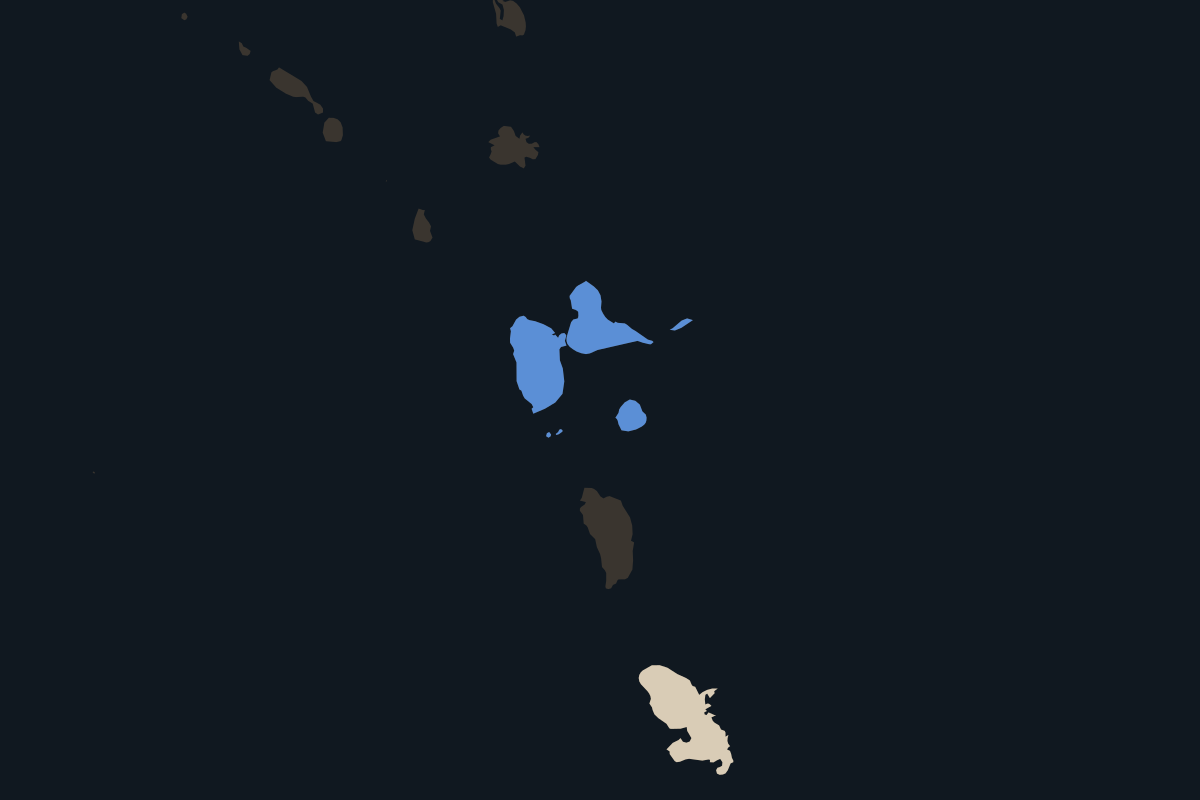 Guadeloupe
Basse-Terre
Pointe-à-Pitre
Marie-Galante
Dominica
Montserrat
Antigua
Martinique
Caribbean Sea
Atlantic Ocean
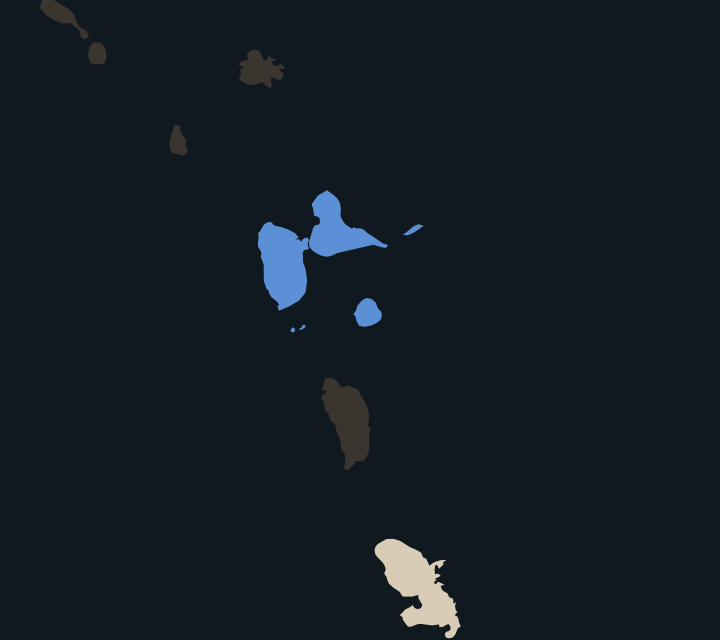 Guadeloupe
Basse-Terre
Pointe-à-Pitre
Marie-Galante
Dominica
Montserrat
Antigua
Martinique
Caribbean Sea
How did Guadeloupe become French?
The Kalinago people, who called the island Karukera, lived there when Columbus landed in November 1493. French colonists arrived on June 28, 1635, and fought the Kalinago, who were killed or driven to Dominica. A sugar economy built on enslaved Africans followed.
The French Revolution abolished slavery in 1794. In 1802, Napoleon's government sent troops to restore it. Louis Delgrès, an officer of African descent, refused to surrender. On May 28, 1802, he and about 300 men blew themselves up at Matouba rather than submit. Slavery was abolished for good on April 27, 1848, by a decree pushed through by Victor Schoelcher. May 27, the date abolition took effect in Guadeloupe, is now a public holiday.
Guadeloupe became a French department on March 19, 1946. That law made Guadeloupe a department like those in mainland France. Equal social rights came slowly: the minimum wage reached the mainland level only in 1996.
From the Kalinago to department status
- 1493Columbus lands on his second voyage
- 1635French colonists arrive and fight the Kalinago
- 1794The Revolution abolishes slavery
- 1802Napoleon restores slavery; Delgrès dies at Matouba
- 1848Final abolition of slavery (Schoelcher decree)
- 1946Guadeloupe becomes a French department
- 1967Police fire on protesters in Pointe-à-Pitre (Mé 67)
- 2009A 44-day general strike shuts the island down
Why did Guadeloupe go on strike in 2009?
The cost of living set it off. Prices in Guadeloupe run well above mainland France, and in early 2009 a coalition called the LKP (Liyannaj Kont Pwofitasyon, meaning "Alliance against profiteering") called a general strike. The LKP brought together about 50 unions, parties and associations. Its spokesman was Élie Domota, head of the UGTG union. The strike began on January 20, 2009. The LKP presented 146 demands.
Roads were blocked and businesses shut for 44 days. On the night of February 17-18, trade unionist Jacques Bino was shot dead in Pointe-à-Pitre. After weeks of negotiations, the LKP and several employer groups signed the "Jacques Bino" accord. It gave workers earning up to 1.4 times the minimum wage a raise of 200 euros a month. In the first year, the State paid 100 euros of it, local authorities 50 and employers 50. The main employers' group, MEDEF, initially refused to sign. The exit protocol was signed with the prefect on March 4, 2009.
The LKP blamed high markups on imported goods and wages that did not keep up with prices. The same grievances returned in October 2024 and again in October 2026, when the Nou Las Palé collective blocked roads over fuel prices and water shortages. The collective asks for diesel at 1.70 euros, a continuous water supply and help for struggling businesses. On October 14, 2026, the prefect, Thierry Devimeux, said he would not receive the collective because he considered it not representative. On the night of October 17-18, looting and clashes hit Pointe-à-Pitre and Les Abymes, and 3 police officers were hit by gunfire. On November 6, 2026, an Overseas Ministry envoy told the collective there would be no fuel price cut.
The 2009 LKP strike
44 days
General strike over the cost of living
The LKP coalition of about 50 groups shut Guadeloupe down from January 20 to March 4, 2009. The settlement gave low-wage workers a raise of €200 a month.
What is the chlordecone scandal?
The chlordecone scandal is the lasting contamination of Guadeloupe and Martinique by a banana pesticide. Chlordecone was used on banana plantations on both islands from 1972 to 1993. France banned it in 1990, but derogations allowed its use in the Antilles until 1993. It was meant to kill the banana weevil. The French government renewed provisional sale authorizations in 1974 and 1976, and courts later found those renewals to be faults. The chemical persists in soil and water for centuries.
A 2026 study by Santé publique France (Kannari 2) found chlordecone in the blood of 81.3% of adults in Guadeloupe, down from about 95% in the Kannari 1 study of 2013-2014. Of those tested, 14.3% were above the toxicological reference value. In January 2023, investigating judges dismissed the criminal case while calling it a "health scandal." The Paris Court of Appeal upheld that dismissal on June 22, 2026.
In June 2026, the French parliament unanimously passed a law (no. 2026-491, promulgated June 12) recognizing the State's share of responsibility. The law sets full compensation as a goal and requires a report on extending the pesticide victims' fund within one year. The national human-rights commission (CNCDH) says the law creates no binding obligation.
Chlordecone in the blood (Kannari 2, 2026)
81.3%
of adults in Guadeloupe tested positive
The Santé publique France study found 14.3% of adults above the toxicological reference value. The pesticide was used from 1972 to 1993.
How does Guadeloupe compare with mainland France?
Guadeloupe is poorer, more expensive and has far higher unemployment than mainland France. GDP per person was 29,500 euros in 2025, about 68% of the French average of 43,400 euros. Unemployment stood at 17%, more than twice the national rate of 8%. For people aged 15 to 29, it was 32%, against 15% nationally.
Prices are higher too. An INSEE survey in 2022 found overall prices 16% above mainland France, the largest gap among the five overseas departments. Food prices were 42% higher. The IEDOM reported a record 817 household over-indebtedness filings in 2025, up 23.4%.
The French government spent about 3.48 billion euros in Guadeloupe in 2024, roughly 9,000 euros per resident, not counting tax breaks or social security. A cost-of-living bill passed the Senate in October 2025 but has not reached the National Assembly floor.
GDP per person, 2025 (euros)
Does Guadeloupe want more autonomy?
Guadeloupe's Congress of elected officials voted for more autonomy in 2025, but voters have not yet been consulted. On June 17, 2025, the 19th Congress of elected officials voted by a large majority to merge the department and region into a single 60-member authority, give it power to adapt national rules and tax autonomy, and consult the population. Guy Losbar, president of the Departmental Council, leads this push under Article 74 of the Constitution, which allows more local power than the current Article 73. He argues that "80% of what we consume comes from outside" and says the people must have the final word.
Not everyone agrees. Two minority groups in the regional and departmental councils boycotted the June 2025 Congress and called the project unrealistic. Ary Chalus, president of the Regional Council, says there is "no consensus" and wants financial simulations first. Senator Victorin Lurel argues the reform is being forced through and that Article 74 would weaken the State's obligations. Business groups including the CCI and MEDEF reject the single authority and want Article 73 used to its full extent. A May 2025 Qualistat poll found about 3 in 4 residents in favor of merging the department and region.
The French government has proposed a public consultation on Article 74 by the end of 2026. In January 2026, Overseas Minister Naïma Moutchou said there would be "neither blocking nor suspension." But Deputy Max Mathiasin called the timetable "a bit rushed." No consultation date has been set. Voters rejected a similar but less ambitious proposal in a 2003 referendum, when 72.98% said no. A small pro-independence movement also exists. On October 24, 2026, 24 public figures, including Luc Reinette, called for a "Conseil national de la Guadeloupe" to negotiate with the State and seek reparations for slavery and colonization. It has no legal standing.
Why does Guadeloupe matter?
Cost of living
Prices run 16% above mainland France and food is 42% more expensive. Both the 2009 general strike and the 2026 Nou Las Palé protests blocked main roads.
France and the EU in the Caribbean
Guadeloupe is EU territory between Antigua, Montserrat and Dominica. It receives over 560 million euros in EU regional funds for 2021 to 2027. The French Navy exercises offshore.
Water crisis
About 58% of water produced is lost before reaching users. Rotating water cuts have lasted about 12 years. A new public operator, Archipel'Eau, starts on January 1, 2027. The regional audit court puts the cost of a full network upgrade at 1.2 billion euros.
Autonomy debate
Elected officials voted in 2025 for a single authority with more powers. The French government has proposed a public consultation but no date is set. President Emmanuel Macron has proposed working groups on the status of Guadeloupe, Martinique and French Guiana.
Questions about Guadeloupe
What currency does Guadeloupe use?
The euro. Guadeloupe is part of the eurozone as an EU outermost region. The IEDOM carries out central-bank functions on behalf of the Banque de France.
Do you need a passport to go to Guadeloupe?
It depends on where you are coming from. Guadeloupe is French territory but is not part of the Schengen area. EU citizens can enter with an ID card. Other travelers need a passport. Visa rules for Guadeloupe differ from those for mainland France, and a standard Schengen visa is not valid there.
What language do people speak in Guadeloupe?
French is the official language and is used in government, courts and schools. Guadeloupean Creole is widely spoken in daily life.
Is Guadeloupe on the UN decolonization list?
No. France's only listed territories are New Caledonia and French Polynesia. Guadeloupe is an overseas department and region where French law applies automatically, with possible adaptations under Article 73 of the Constitution.
How many people live in Guadeloupe?
The legal population was 384,160 on January 1, 2023. The number is falling by about 0.3% a year because young people leave for mainland France. Births still exceed deaths, but emigration more than offsets the natural increase.
What happened in Guadeloupe in May 1967?
On May 26-27, 1967, police and gendarmes fired on construction workers protesting in Pointe-à-Pitre. The official death toll was 8. In 1985, Overseas Minister Georges Lemoine cited 87 dead. A 2016 commission led by historian Benjamin Stora blamed the French State.
Other territories of France
All territories → French GuianaEurope's spaceport at Kourou launches Ariane rockets; over 95% of the land is Amazon rainforest.Part of the country
 MartiniqueThe banned pesticide chlordecone, used on banana farms until 1993, is found in the blood of 85.5% of adults.Part of the country
 RéunionFrance's most populous overseas region, home to Piton de la Fournaise, one of the world's most active volcanoes.Part of the country
 MayotteVoted to stay French when the rest of the Comoros chose independence; the Comoros still claim it.Part of the country
 French PolynesiaFrance carried out 193 nuclear tests at Moruroa and Fangataufa atolls from 1966 to 1996.Self-governing
 New CaledoniaVoted three times (2018-2021) to stay French, the third vote boycotted; riots in 2024 left 14 dead.Self-governing
 Saint Pierre and MiquelonThe last French remnant of New France, 25 km off the coast of Newfoundland, Canada.Self-governing
 Wallis and FutunaThree customary kings still reign inside the French Republic and are paid allowances by the French state.Run by an administrator