
Territory of France · Pacific
New Caledonia
Self-governingUpdated November 11, 2026
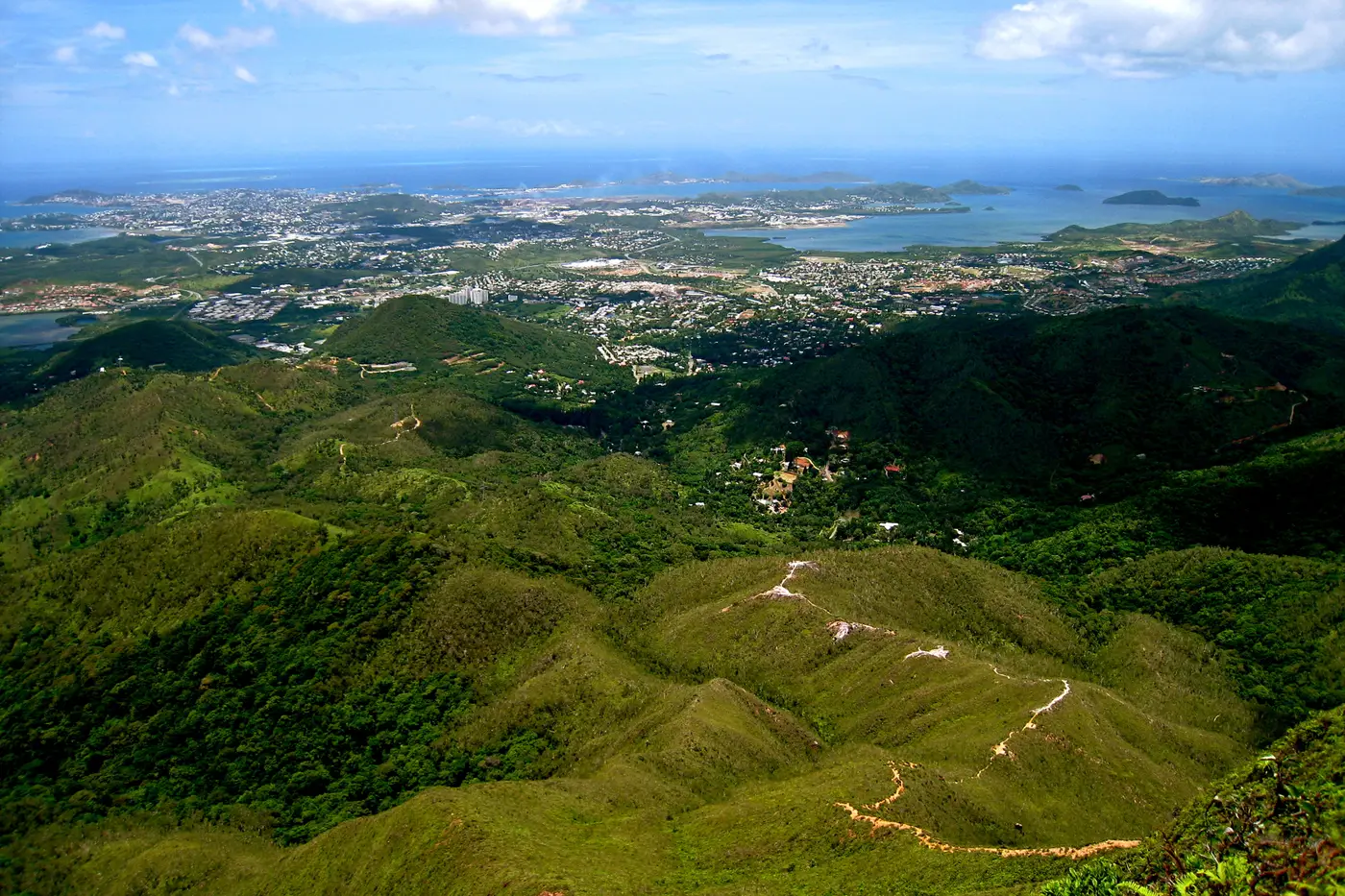
New Caledonia is a French territory in the South Pacific, about 1,200 km east of Australia. France annexed it in 1853. It has very wide self-government under a unique status in the French Constitution, but France keeps defense, justice and currency. The indigenous Kanak people made up 41.2% of the population in the 2019 census. Three independence referendums between 2018 and 2021 all returned a "no" vote, but the third was boycotted. Deadly riots broke out in May 2024 over voting rights. A proposed new status failed in the French Parliament in April 2026.

- Capital
- Nouméa
- 87,454 people (2025 census)
- Area
- 18,575 km²
- Grande Terre and smaller islands
- EEZ
- About 1.37 million km²
- all inside the Coral Sea Natural Park
- Nickel reserves
- 7.1 million tonnes
- about 5% of world reserves
- From Paris
- 16,700 km
- as the crow flies
 France
New Caledonia in 30 seconds
- France annexed New Caledonia in 1853. The French state, the Kanak independence movement and anti-independence leaders signed agreements in 1988 and 1998 that gave the territory wide self-government and promised up to three independence referendums.
- Independence lost all three votes: 56.67% voted "no" in 2018, 53.26% in 2020, and 96.50% in 2021 after a pro-independence boycott drove turnout down to 43.87%.
- Riots over voting rights in May 2024 killed 14 people and caused about 2.2 billion euros in damage. The territory's economy shrank by about 13.5% that year.
- All three nickel plants are in crisis. Indonesia now produces about 67% of the world's nickel, and New Caledonia's plants cannot compete.
Is New Caledonia part of France?
Yes. New Caledonia is French sovereign territory, but it is neither a department nor an overseas collectivity. It has a unique status under Title XIII of the French Constitution, added in July 1998 to put the Nouméa Accord of May 5, 1998, into effect.
The Matignon Accords of June 26, 1988, ended the violence of the 1980s between supporters and opponents of independence. They created three provinces and promised a self-determination vote. The Nouméa Accord replaced them in 1998. It transferred broad powers to New Caledonia step by step, including taxes, labor law, mining rules and the resources of its exclusive economic zone. France kept defense, justice, policing, currency and foreign affairs.
New Caledonia passes its own laws, called "lois du pays." A separate local citizenship determines who can vote in provincial elections. The UN still lists New Caledonia as a non-self-governing territory. It was re-listed in 1986 after a request from the South Pacific Forum.
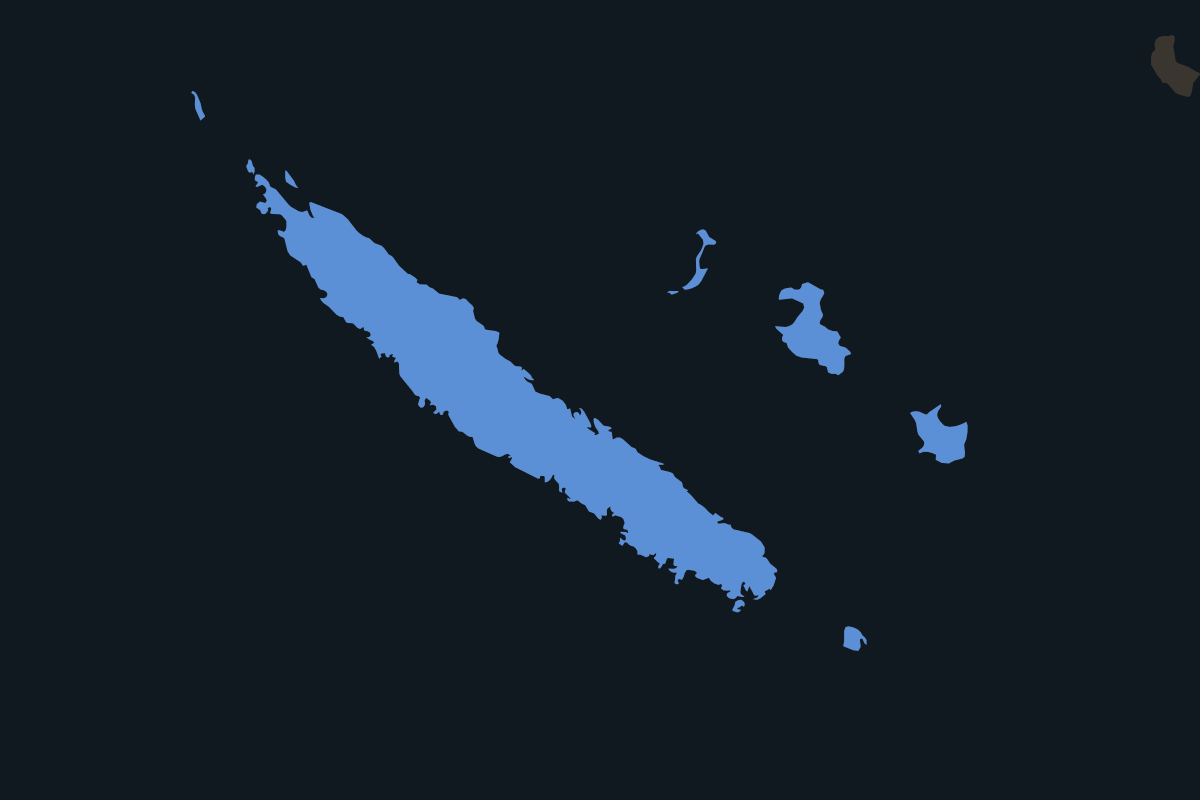 Grande Terre
Nouméa
Koniambo nickel plant
Prony Resources plant
Loyalty Islands
Isle of Pines
Coral Sea
Pacific Ocean
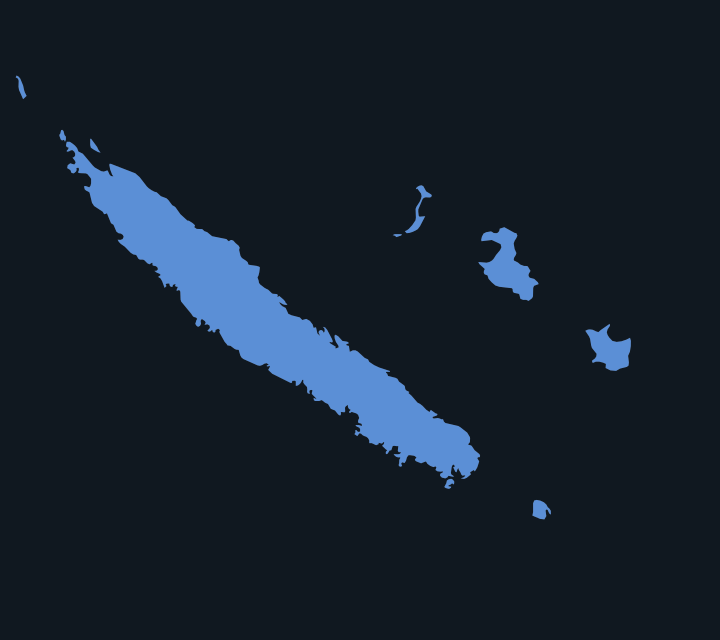 Nouméa
Koniambo nickel plant
Loyalty Islands
Isle of Pines
How did New Caledonia vote on independence?
New Caledonia voted against independence three times. The "no" side won each time. The margin narrowed from 2018 to 2020, and the pro-independence side boycotted the third vote.
In the first referendum on November 4, 2018, 56.67% voted against independence on a turnout of 81.01%. In the second on October 4, 2020, the "no" share fell to 53.26% on a higher turnout of 85.69%. The third referendum on December 12, 2021, returned 96.50% against independence, but turnout was only 43.87%. The pro-independence FLNKS had called for a boycott after France refused to postpone the vote. The FLNKS cited Kanak mourning customs following about 280 COVID deaths.
Pro-independence parties call the third result illegitimate. France treats all three results as legally valid. There is no legal route to a fourth referendum without a new constitutional framework.
"Yes" vote for independence in each referendum
What happened in the May 2024 riots?
Riots broke out on the night of May 13-14, 2024, while the French National Assembly was debating a constitutional bill to change the provincial electoral roll. The bill would have let residents of 10 years vote in provincial elections. The existing roll had been frozen since 1998 under the Nouméa Accord. Independence supporters saw the freeze as protection for the Kanak, who became a minority after French colonization. They said the bill would dilute the Kanak vote. Supporters of the bill said long-term residents should not be shut out of local elections. By May 2026, about 17% of residents were excluded from it, according to French Prime Minister Sébastien Lecornu.
The violence killed 14 people, including two gendarmes, according to the French government. UN human rights experts reported that at least six Kanak protesters had been shot dead. The French government says rioters fired on gendarmes 705 times. The riots caused about 262 billion CFP francs (about 2.2 billion euros) in damage. France declared a state of emergency from May 15 to May 28, 2024.
Prime Minister Michel Barnier withdrew the reform in October 2024. In May 2026, a narrower law added only people born in New Caledonia who were already on the general electoral rolls. Paris judges dismissed the case against 14 activists of the CCAT protest group, including its leader Christian Tein, on June 5, 2026. The prosecutor has appealed.
Damage from the May 2024 riots
€2.2 billion
About 262 billion CFP francs in losses
The New Caledonian government's estimate of the total cost. The territory's economy shrank by about 13.5% in 2024, the largest fall since 1962.
What is the Bougival agreement?
The Bougival accord is a political deal signed on July 12, 2025, by 18 delegates including representatives of the FLNKS. It proposed writing a "State of New Caledonia" into the French Constitution, with a Caledonian nationality alongside French nationality and the transfer of international relations to New Caledonia. It was not legally binding.
The FLNKS's delegates signed it, but the movement's congress voted to reject it in August 2025, calling it "an affront to the Kanak people." France tabled a constitutional bill in October 2025. Talks in Paris in January 2026 produced a supplementary deal, the Élysée-Oudinot accord, adding an economic package. Pro-France parties and the pro-independence UNI signed it. The FLNKS boycotted those talks.
On April 2, 2026, the National Assembly rejected the constitutional bill 190 to 107. Emmanuel Tjibaou, a pro-independence deputy for New Caledonia, said: "Today, Bougival is dead." The bill has not moved since. The Nouméa Accord framework remains in force by default. No new round of institutional talks has been confirmed.
From Bougival to the elections
- Jul 2025Bougival accord signed by 18 delegates
- Aug 2025FLNKS congress rejects the accord
- Oct 2025France tables a constitutional bill in the Senate
- Jan 2026Élysée-Oudinot accord signed; FLNKS boycotts the talks
- Feb 2026Senate adopts the bill
- Apr 2026National Assembly rejects the bill 190 to 107
- May 2026Narrower electoral roll reform becomes law
- Jun 2026Provincial elections held on June 28
Who lives in New Caledonia?
The 2025 census counted 264,596 people, down from 271,407 in 2019. It was the first population fall between two censuses since 1946. About 18,000 more people left than arrived over that period. The 2019 census found Kanak people were 41.2% of the population, Europeans 24.1%, and Wallisians and Futunians 8.3%. The 2025 ethnic breakdown has not been published yet.
Milakulo Tukumuli has been president of the government since July 31, 2026. He is the first head of government from the Wallisian and Futunian community. He holds a mathematics PhD from Aix-Marseille University and ran a house-building firm with his brothers before entering politics. Soon after taking office, he said: "On est en cessation de paiement" ("We can't pay our bills"). Virginie Ruffenach of Le Rassemblement has been president of the Congress since July 10, 2026. His party, Éveil Océanien, and the pro-France parties Les Loyalistes and Le Rassemblement together hold 28 of the 54 seats in the Congress. Pro-independence parties hold the other 26.
Population by community (2019 census)
Why does nickel matter to New Caledonia?
New Caledonia holds about 7.1 million tonnes of nickel reserves, roughly 5% of the world total. Nickel has historically made up most of the territory's exports. But all three of its nickel plants are in trouble.
The Koniambo plant in the north, owned by local company SMSP (51%) and Glencore (49%), went into care and maintenance in 2024. Glencore has been trying to sell its stake since February 2024. A Chinese firm, Lygend, submitted a bid in March 2026. The Prony Resources plant in the south lost its only bidder in September 2026, when the Emirati consortium NBM withdrew. Talks with NBM were moving forward again in November 2026, but no deal has been signed. The SLN smelter in Nouméa, majority-owned by France's Eramet, has lost money every year since 2012.
The main problem is Indonesia. Indonesia produced about 2.6 million tonnes of nickel in 2025, roughly 67% of the world total. New Caledonia produced about 140,000 tonnes. Its plants cannot compete on cost.
New Caledonia's nickel output in 2025
140,000 tonnes
About 3.6% of world production
Indonesia produced about 2.6 million tonnes in the same year, roughly 67% of the global total. New Caledonia ranked joint 4th with Canada.
Why does New Caledonia matter?
Nickel and cobalt
New Caledonia holds about 5% of the world's nickel reserves and is a major cobalt source. A Chinese bid for the Koniambo plant has raised the question of whether the French government could block a Chinese investor in the nickel sector.
France in the Pacific
France stations about 1,450 military personnel in New Caledonia. These forces support operations across the South Pacific and work with Australia and New Zealand. The French government presents its forces in New Caledonia as part of its role as an Indo-Pacific power.
A vast sea zone
New Caledonia's exclusive economic zone covers about 1.37 million km². The whole zone is inside the Coral Sea Natural Park. Vanuatu claims the Matthew and Hunter islets, which France administers as part of New Caledonia. About 350,000 km² of sea zone is at stake.
Interference accusations
The French government accuses Azerbaijan and the Baku Initiative Group, a group based in Azerbaijan, of encouraging unrest in New Caledonia. In October 2026, French Foreign Minister Jean-Noël Barrot denounced the group for holding conferences in Nouméa that call for revolt in France's overseas territories. Azerbaijan calls the accusations unfounded.
Questions about New Caledonia
Is New Caledonia a country?
No. New Caledonia is a French territory with very wide self-government, including its own laws, taxes and local citizenship. But France controls defense, justice and currency. The UN lists it as a non-self-governing territory still to be decolonized. Independence supporters want it to become a country. Voters rejected independence in three referendums, though the independence parties boycotted the third.
Do New Caledonians have French passports?
Yes. People in New Caledonia are French citizens and hold French passports. They are also European Union citizens, even though EU law does not apply in New Caledonia. A separate local citizenship determines who can vote in provincial elections.
Is New Caledonia in the European Union?
No. New Caledonia is an Overseas Country and Territory associated with the EU. EU law does not apply there, and it does not use the euro. It uses the CFP franc, which is pegged to the euro. Its people are still EU citizens because they hold French nationality.
What currency does New Caledonia use?
The CFP franc (XPF), issued by the IEOM. It is pegged to the euro at a fixed rate of 1 euro to 119.332 CFP francs. In 2022, prices in New Caledonia were about 31% higher than in mainland France, the highest of any French overseas territory.
What is the population of New Caledonia?
The 2025 census counted 264,596 people. That was a fall of about 6,800 from 2019, the first decline between two censuses since 1946. About 18,000 more people left than arrived over that period. Most residents live in or around Nouméa in the south.
What language do they speak in New Caledonia?
French is the official language. The Kanak people speak about 28 languages of their own, which are also recognized. French is the language of government, schools and daily life in Nouméa.
Other territories of France
All territories → French GuianaEurope's spaceport at Kourou launches Ariane rockets; over 95% of the land is Amazon rainforest.Part of the country
 GuadeloupeIn 2009 a 44-day general strike over the cost of living shut Guadeloupe down and spread to Martinique.Part of the country
 MartiniqueThe banned pesticide chlordecone, used on banana farms until 1993, is found in the blood of 85.5% of adults.Part of the country
 RéunionFrance's most populous overseas region, home to Piton de la Fournaise, one of the world's most active volcanoes.Part of the country
 MayotteVoted to stay French when the rest of the Comoros chose independence; the Comoros still claim it.Part of the country
 French PolynesiaFrance carried out 193 nuclear tests at Moruroa and Fangataufa atolls from 1966 to 1996.Self-governing
 Saint Pierre and MiquelonThe last French remnant of New France, 25 km off the coast of Newfoundland, Canada.Self-governing
 Wallis and FutunaThree customary kings still reign inside the French Republic and are paid allowances by the French state.Run by an administrator