
Territory of France · Caribbean
Martinique
Part of the countryUpdated November 16, 2026
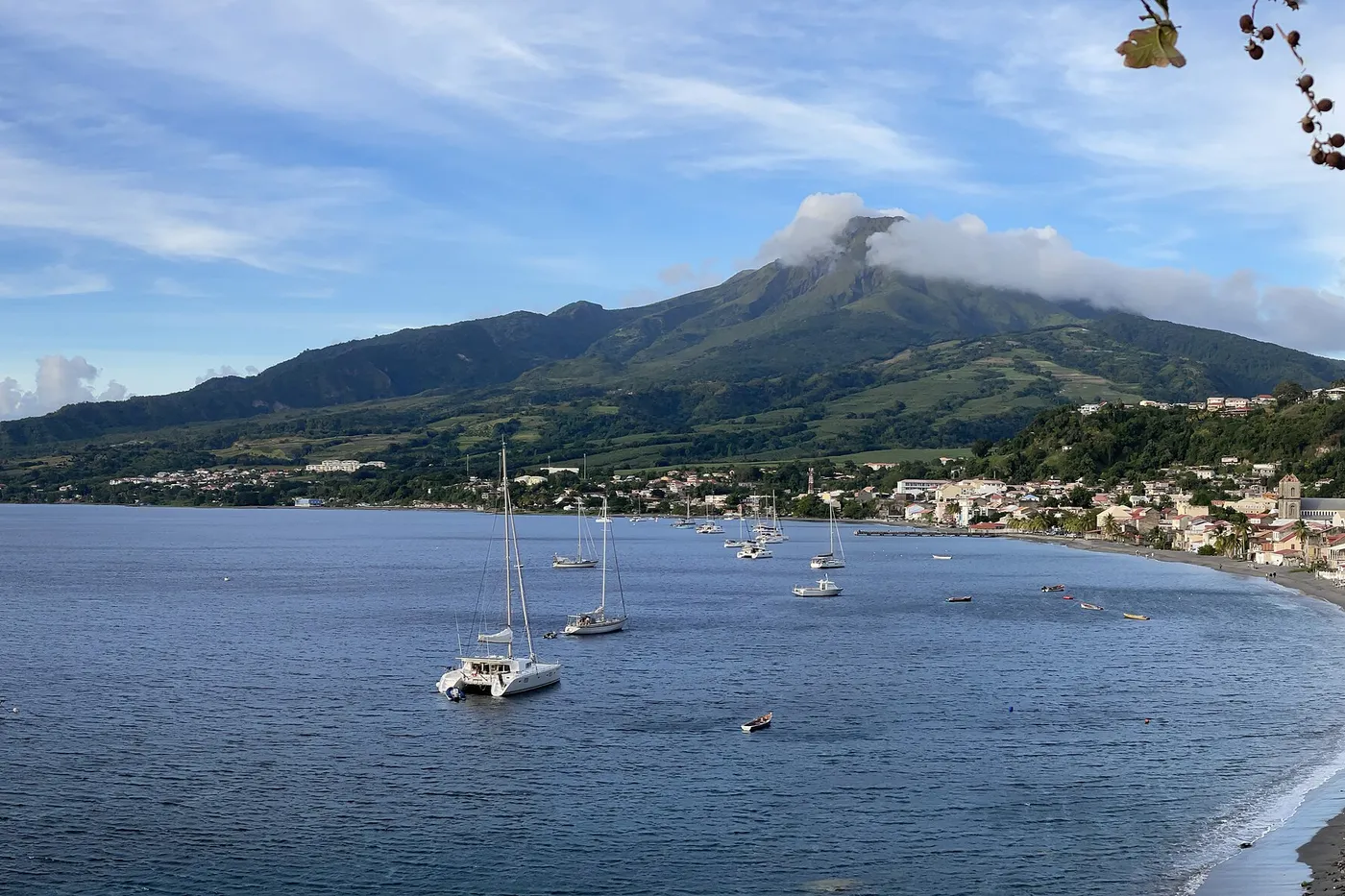
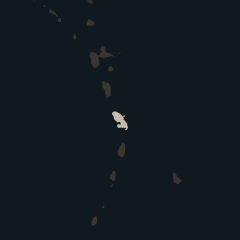
Martinique is a French overseas department and region in the eastern Caribbean. France colonized the island in 1635. It is fully part of the European Union and uses the euro. Its people are French citizens who vote in every French election. A single body, the Collectivité territoriale de Martinique, holds the powers of a department and a region. Food prices are about 40% higher than in mainland France. A 2026 study found the banned pesticide chlordecone in the blood of 85.5% of adults.
- Capital
- Fort-de-France
- population 75,506 (2023)
- GDP per person
- About €31,000
- 2025, about 71% of the French average
- Food prices
- +40%
- compared with mainland France (INSEE, 2022)
- Visitors (2024)
- 571,511
- stay-over tourists, the highest in 40 years
- From Paris
- 6,900 km
- as the crow flies
 France
Martinique in 30 seconds
- Martinique is a French overseas department and region governed by a single collectivity, the CTM. Its people are French and EU citizens. French law applies, with some local adaptations under Article 73 of the Constitution.
- Food prices are about 40% higher than in mainland France. In September 2024, the RPPRAC protest movement launched roadblocks and demonstrations. A protocol signed on October 16, 2024, aimed at a 20% cut in food prices across about 6,000 products.
- The pesticide chlordecone was used on banana farms until 1993. A 2026 study found it in the blood of 85.5% of the population. Investigating judges dismissed the criminal case in 2023. More than 500 civil parties are appealing to France's highest court. A 2026 law recognized the French government’s share of responsibility.
- Martinique’s elected officials voted unanimously in October 2025 for law-making power in some areas. On July 1, 2026, the French government and the CTM signed a framework accord on an autonomous normative power. Any reform must be put to a vote.
Is Martinique part of France?
Martinique is fully part of France. It is an overseas department and region governed by the Collectivité territoriale de Martinique, a single body that holds the powers of both a department and a region. French law applies under Article 73 of the Constitution. Martinique is part of the European Union as an outermost region and uses the euro.
Its people are French citizens. They vote in all French elections, including for president. Because of the time difference, they vote on the Saturday before mainland France. In the 2027 presidential election, Martinique votes on April 17 and May 1.
The executive is led by Serge Letchimy, an urban planner who succeeded Aimé Césaire as mayor of Fort-de-France in 2001. The Assembly of Martinique has 51 seats. The French government is represented by Prefect Étienne Desplanques, who took office in February 2025.
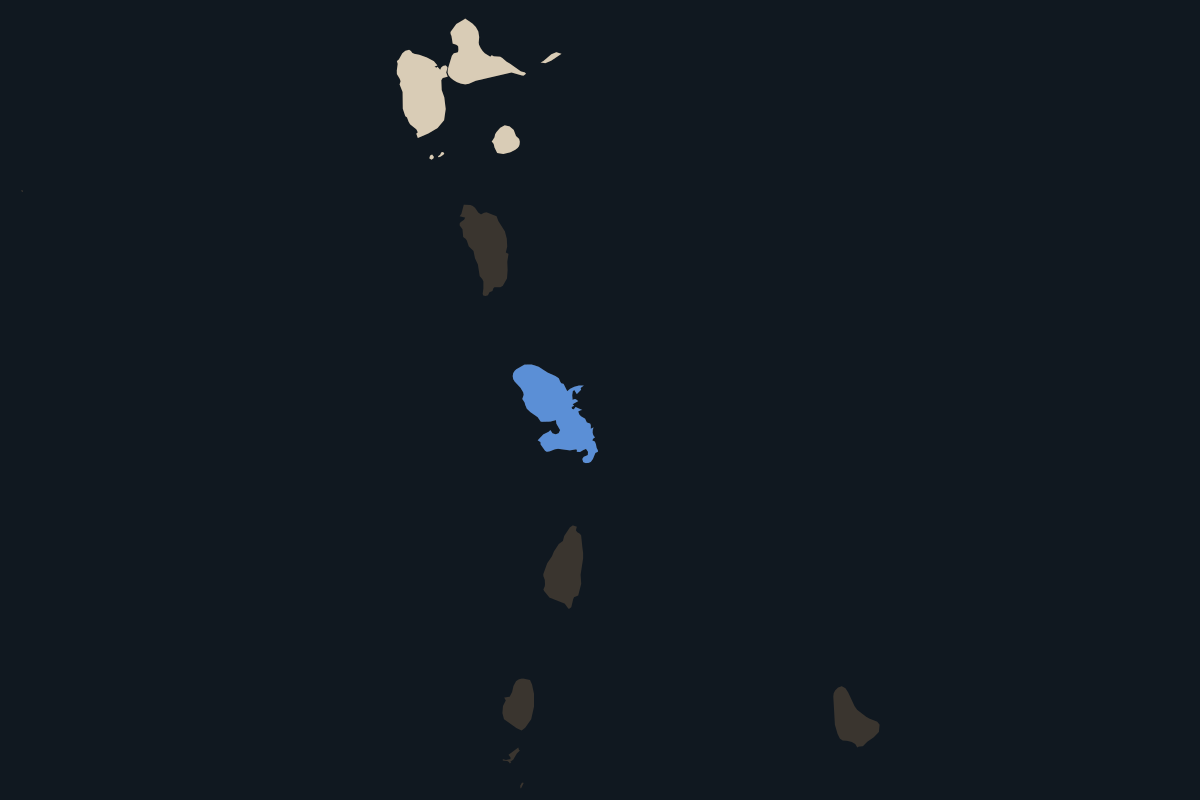 Martinique
Fort-de-France
Saint-Pierre
Dominica
Saint Lucia
Guadeloupe
Barbados
Caribbean Sea
Atlantic Ocean
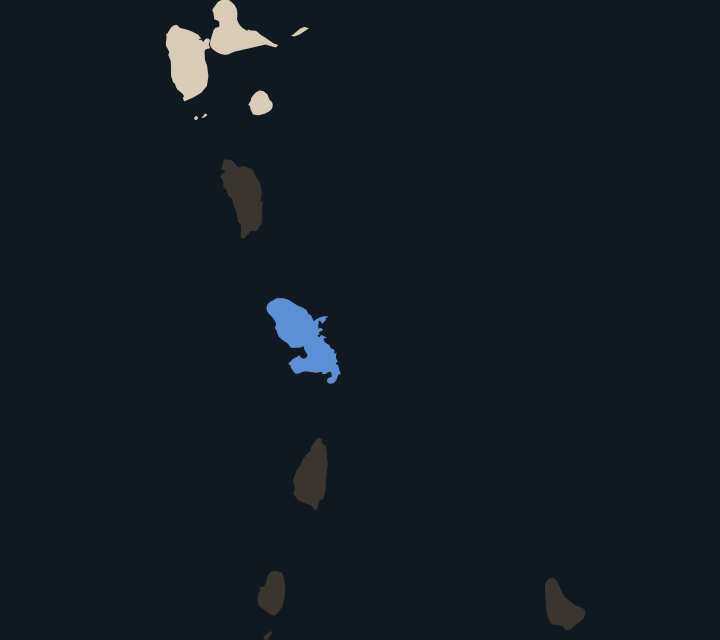 Martinique
Fort-de-France
Saint-Pierre
Dominica
Saint Lucia
Guadeloupe
Barbados
Caribbean Sea
Atlantic Ocean
Why did Martinique protest over food prices in 2024?
Protesters demanded lower prices. Food in Martinique costs about 40% more than in mainland France. Prices overall are about 14% higher. Protesters blame the market power of a few large retail groups. In February 2026, the Competition Authority found that shipping costs and taxes explain much of the gap. It found overall margins broadly comparable to mainland France but called for permanent monitoring of margins. The RPPRAC, a protest movement led by Rodrigue Petitot, began roadblocks and demonstrations in early September 2024. In September, the French government sent CRS riot police for the first time since December 1959, when three young people were killed during riots in Fort-de-France. Some protests turned violent. Gunfire wounded several police officers. On October 10, protesters briefly overran the airport tarmac and a police station was burned. At least one person was shot dead. The French government imposed an island-wide curfew.
On October 16, 2024, the French government, the CTM, retailers and shippers signed a protocol aiming at a 20% average cut in food prices across about 6,000 products. The RPPRAC did not sign. It wanted the cut to cover all food, not about 6,000 products. By January 2025, prices on covered products had fallen about 8%. By April 2026, the drop reached 11.3% on products exempt from both the local import tax and VAT. The protocol expires at the end of 2027.
Food prices vs. mainland France (2022)
+40%
The price gap that triggered the protests
Overall prices in Martinique are 14% above mainland France. Food is 40% higher. Communication services are 37% higher. By April 2026, prices had fallen about 11.3% on products exempt from both the local import tax and VAT under the October 2024 protocol.
What is the chlordecone scandal?
Chlordecone is an insecticide that was used on banana farms in the French Antilles from the 1970s until 1993, under exemptions after France banned it in 1990. It persists in soil and water for centuries. A study published on June 24, 2026, found chlordecone in the blood of 85.5% of Martinique's population. About 18.7% of people are above the health reference value. The first study, in 2013 to 2014, found chlordecone in 90% of participants and about 25% above that value. Exposure comes mainly from seafood.
A criminal investigation was opened between 2006 and 2008. In January 2023, two investigating judges dismissed the case, calling it a health scandal but finding most facts time-barred. On June 22, 2026, the Paris Court of Appeal confirmed the dismissal. More than 500 civil parties have appealed. Separately, a Paris administrative appeal court found in March 2025 that the French government was at fault for renewing sale authorizations in 1974 and 1976. It awarded damages for anxiety to 11 of about 1,300 claimants. The French government has appealed that ruling to the Conseil d'État. A law adopted on June 2, 2026, recognized the French government's share of responsibility. It did not create a dedicated compensation fund.
Chlordecone in the blood (Kannari 2, 2026)
85.5%
Share of Martinique's population with detectable chlordecone
The first study in 2013 to 2014 found chlordecone in 90% of participants. The updated 2026 study found 85.5%, with mean levels lower. About 18.7% of people are above the health reference value.
Does Martinique want more autonomy?
Martinique's elected officials want some law-making power for the island inside France. Independence-leaning parties remain a major force. Alfred Marie-Jeanne's MIM led the CTM from 2015 to 2021. His list won 35.3% in the 2021 runoff, against 37.7% for Serge Letchimy's list. In a referendum on January 10, 2010, voters rejected a switch to Article 74 of the Constitution, which would have given Martinique wide autonomy. The no vote was 79.3%. Two weeks later, on January 24, voters approved merging the department and region into a single collectivity under Article 73, by 68.3% on a turnout of 35.8%.
Since 2022, Martinique's leaders have sought law-making power while staying in the French Republic. On October 8, 2025, a congress of Martinique's elected officials voted unanimously for an autonomous normative power, meaning the ability to make laws in some non-sovereign areas. On July 1, 2026, Overseas Minister Naïma Moutchou and Serge Letchimy signed a framework accord. It opens talks on law-making power, progressive fiscal autonomy and transferred competences. Any reform must be put to a vote by Martinique's electors. No timetable has been set. Serge Letchimy says “what is at stake for us is not leaving the Republic.” Naïma Moutchou calls the accord “the start of a process” that Martinique's elected officials requested unanimously. Charles Larcher, head of the island's mayors' association, objects to the method and says there was no prior consultation.
Referendum on Article 74 autonomy, January 10, 2010
How did Martinique become French?
In September 1635, Pierre Belain d'Esnambuc landed with about 80 settlers and founded Fort Saint-Pierre. By 1660, the Kalinago who lived on the island had been expelled or killed. France built a sugar colony on enslaved labor. On May 22, 1848, the arrest of an enslaved man named Romain sparked an uprising in Saint-Pierre. Governor Rostoland proclaimed abolition the next day, before the Paris decree of April 27, 1848, arrived on June 4. May 22 is a public holiday.
On May 8, 1902, a pyroclastic flow from Mount Pelée destroyed Saint-Pierre and killed about 28,000 to 30,000 people. Fort-de-France became the island's main city. In 1946, Aimé Césaire, the poet and politician who co-founded the négritude movement, drove the law that made Martinique an overseas department. It passed unanimously. Césaire served as mayor of Fort-de-France from 1945 to 2001 and as a deputy from 1945 to 1993.
From colony to collectivity
- 1635Pierre Belain d'Esnambuc founds Fort Saint-Pierre with about 80 settlers
- 1763Joséphine, later Empress of the French, born at La Pagerie, Les Trois-Îlets
- 1848Uprising on May 22 forces abolition before the Paris decree arrives
- 1902Mount Pelée destroys Saint-Pierre; about 28,000 to 30,000 dead
- 1939Aimé Césaire publishes Cahier d’un retour au pays natal, a founding text of négritude
- 1946Departmentalization law passes unanimously; Martinique becomes an overseas department
- 2010Voters reject Article 74 autonomy but approve a single collectivity
- 2016The Collectivité territoriale de Martinique replaces the regional and departmental councils
- 2026Framework accord signed on law-making power and fiscal autonomy
How does Martinique compare with mainland France?
Martinique's GDP per person is about 71% of the French average. Unemployment was 12.5% at the end of 2025, compared with 7.9% for France as a whole. Food costs 40% more. The population has been falling since about 2008, losing roughly 25,400 people in the past decade. About 36% of residents are aged 60 or older, the highest share of any French region.
The regional audit court has warned about the CTM's finances. Its debt reached 977 million euros at the end of 2024 and is expected to pass 1 billion euros in 2026. The regional audit court found that the CTM's self-financing capacity was negative 38.3 million euros in 2024. It pays its suppliers after 131 days on average, against a 30-day legal limit. The 2026 budget is 1.519 billion euros.
GDP per person, 2025
Why does Martinique matter?
Chlordecone contamination
The pesticide chlordecone was used on banana farms until 1993. It persists for centuries in soil and water. A 2026 study found it in the blood of 85.5% of the population. The case is a test of how France handles environmental damage in its overseas territories.
Cost of living
Food prices are about 40% higher than in mainland France. The 2024 protests led to a price-cut protocol and the return of riot police for the first time since 1959. The RPPRAC relaunched roadblocks in October 2026.
Autonomy within France
Martinique's elected officials voted unanimously in 2025 for law-making power. The 2026 framework accord with the French government could set a precedent for other overseas departments. Corsica is holding separate autonomy talks with the French government.
Caribbean position
Martinique gives France an exclusive economic zone of about 47,640 km² in the Caribbean. The French Armed Forces in the Antilles are headquartered in Fort-de-France. The island sits on cocaine transit routes from South America.
Questions about Martinique
What currency does Martinique use?
The euro. Martinique is part of the European Union as an outermost region and uses the same currency as mainland France.
Do I need a passport to visit Martinique?
It depends on your nationality. EU citizens can enter with a national ID card. Most other visitors need a passport. Martinique is outside the Schengen area, and a standard Schengen visa does not cover it.
What language do people speak in Martinique?
French is the official language and the language of government and business. Martinican Creole is widely spoken in everyday life.
How many people live in Martinique?
The 2023 census counted 360,630 people. A provisional estimate puts the figure at 355,500 in January 2025. The population has been falling since about 2008, losing roughly 0.5% to 0.7% a year.
Is Martinique expensive?
Yes. Prices overall are about 14% higher than in mainland France. Food is about 40% higher. Fuel in November 2026 costs 2.15 euros per liter for unleaded and 2.24 euros per liter for diesel.
What is Mount Pelée?
Mount Pelée is an active volcano in northern Martinique. On May 8, 1902, it destroyed the city of Saint-Pierre and killed about 28,000 to 30,000 people. The volcano is on yellow alert. The volcano and its forests became part of a UNESCO World Heritage site in September 2023.
Other territories of France
All territories →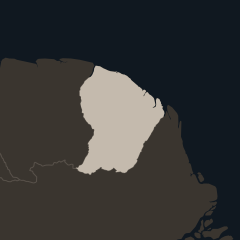 French GuianaEurope's spaceport at Kourou launches Ariane rockets; over 95% of the land is Amazon rainforest.Part of the country
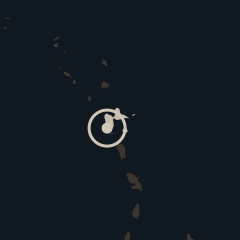 GuadeloupeIn 2009 a 44-day general strike over the cost of living shut Guadeloupe down and spread to Martinique.Part of the country
 RéunionFrance's most populous overseas region, home to Piton de la Fournaise, one of the world's most active volcanoes.Part of the country
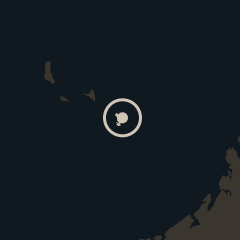 MayotteVoted to stay French when the rest of the Comoros chose independence; the Comoros still claim it.Part of the country
 French PolynesiaFrance carried out 193 nuclear tests at Moruroa and Fangataufa atolls from 1966 to 1996.Self-governing
 New CaledoniaVoted three times (2018-2021) to stay French, the third vote boycotted; riots in 2024 left 14 dead.Self-governing
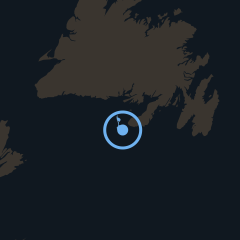 Saint Pierre and MiquelonThe last French remnant of New France, 25 km off the coast of Newfoundland, Canada.Self-governing
 Wallis and FutunaThree customary kings still reign inside the French Republic and are paid allowances by the French state.Run by an administrator