
Department of France · Indian Ocean
Réunion
Part of the countryUpdated November 11, 2026
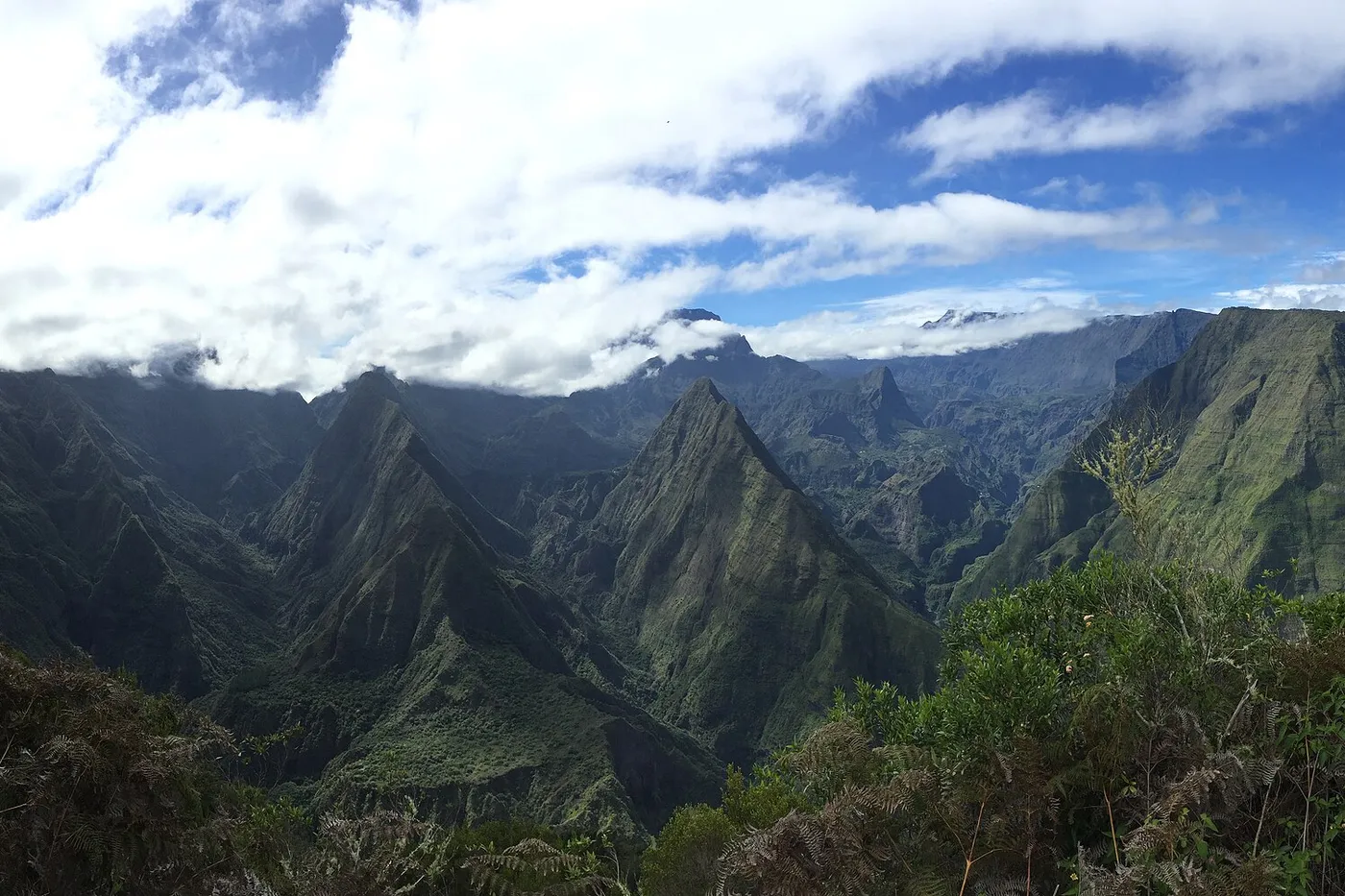
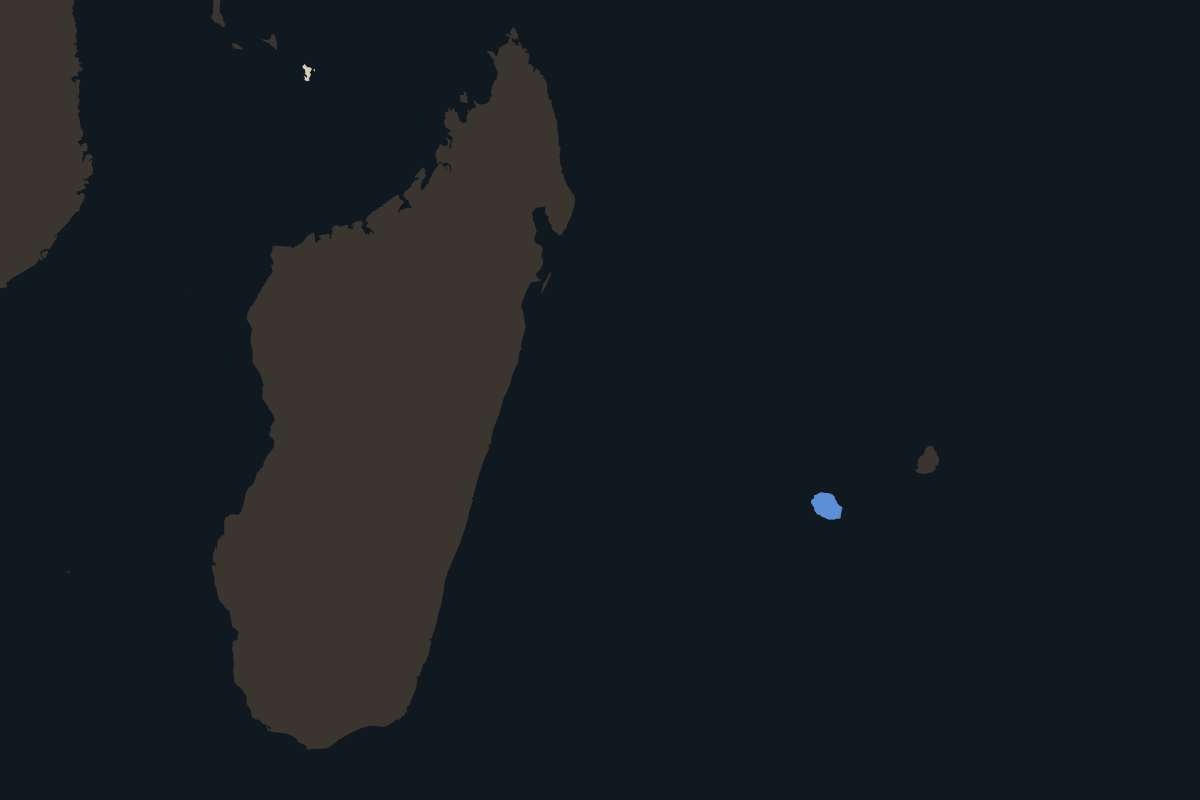
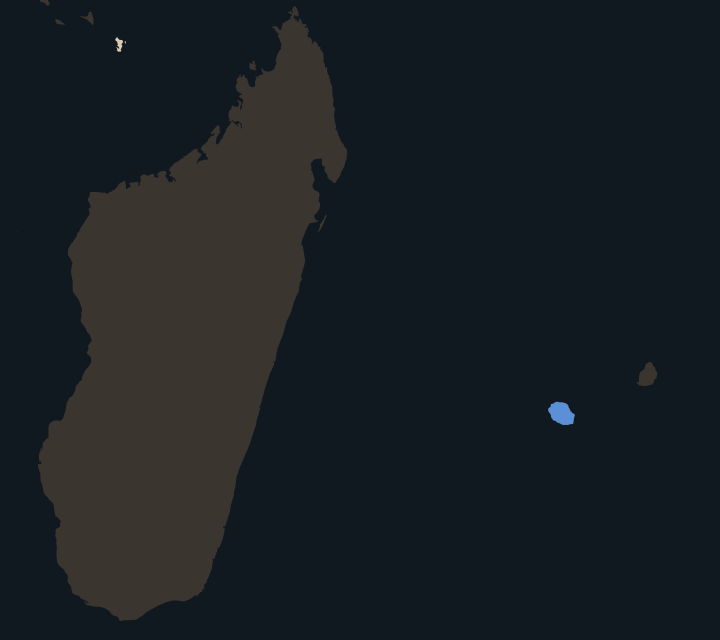
Réunion is an overseas department and region of France in the Indian Ocean, about 700 km east of Madagascar. France has governed it since the 1660s, apart from a British occupation from 1810 to 1815. It became a full department in 1946. Réunion is inside the European Union and uses the euro. About 911,000 people live there. In 2025, a chikungunya epidemic was linked to 45 deaths and Cyclone Garance killed 5.

- Capital
- Saint-Denis
- mayor: Ericka Bareigts (PS)
- GDP per person
- €28,300
- 2025, 65.4% of the French national level
- Poverty rate
- 36.4%
- 2023, vs. 15.9% in mainland France
- Sea zone (EEZ)
- 311,426 km²
- French government figure, January 2023
- From Paris
- 9,400 km
- as the crow flies
Réunion in 30 seconds
- Réunion is a French department and region under Article 73 of the constitution. French law applies by default. It is the only overseas department that cannot request local rule-making powers.
- The poverty rate is 36.4%, more than double mainland France's 15.9%. In 2022, food prices were 36.7% higher than on the mainland. Unemployment reached 19% in the second quarter of 2026.
- In 2025, Cyclone Garance killed 5 people and caused at least €379 million in damage. A chikungunya epidemic caused about 54,500 confirmed cases and was linked to 45 deaths, 22 of them directly caused by the virus.
- France's southern Indian Ocean command, with about 1,600 military personnel, is based on Réunion. The French Southern and Antarctic Lands, which include the Scattered Islands claimed by Madagascar, are administered from Saint-Pierre on Réunion.
Is Réunion part of France?
Yes. Réunion is a full department and region of France, with the same legal status as any department on the mainland. The law of March 19, 1946, ended its colonial status. It is governed under Article 73 of the French constitution, which means French laws apply automatically. Réunion is the only overseas department that cannot even request limited local rule-making powers. The other overseas departments can ask Parliament for that right.
Réunion is inside the European Union as an outermost region under Article 349 of the EU treaty. EU law applies, with some adaptations. The currency is the euro. Residents are French and EU citizens and hold ordinary French passports. Réunion elects 7 deputies to the National Assembly. France elects its members of the European Parliament on national lists, and 2 people from Réunion won seats in 2024.
Overseas collectivities like French Polynesia are different. They fall under Article 74, have their own statutes, can set their own taxes and in some cases write their own laws. Several are outside the EU. Réunion has none of those powers.
 Réunion
Saint-Denis
Mauritius
MADAGASCAR
Antananarivo
Mayotte
Comoros
Indian Ocean
 Réunion
Saint-Denis
Mauritius
MADAGASCAR
Antananarivo
Mayotte
Indian Ocean
How did Réunion become French?
Réunion had no native population. Portuguese sailors made the first recorded European sighting around 1507. France claimed the island in 1642 and sent settlers starting in 1665 through the French East India Company. Planters brought enslaved people from Africa and Madagascar. By 1848, about 62,000 enslaved people lived alongside about 35,000 free people.
On December 20, 1848, Commissioner Sarda Garriga abolished slavery under a decree from April 27, 1848. That date is now a public holiday called Fèt Kaf. Planters then brought in tens of thousands of indentured workers, mostly from South India, as well as from Africa, Madagascar and China. The law of March 19, 1946, made Réunion a department.
From 1962 to 1984, the French state transferred more than 2,000 children to rural mainland France in a program now known as the "children of the Creuse." On February 18, 2014, the National Assembly recognized the state's "moral responsibility" by a vote of 125 to 14. Parliament passed a reparation law unanimously, and it was enacted on June 29, 2026. The law creates a recognition commission, a national day of tribute and a lump-sum payment for survivors.
From settlement to reparation
- 1507Portuguese sailors make the first recorded European sighting
- 1665The French East India Company sends settlers; permanent colonization begins
- 1793The island is renamed La Réunion during the French Revolution
- 1810Britain invades and occupies the island until 1815
- 1848Slavery abolished on December 20; about 62,000 people freed
- 1946The law of March 19 makes Réunion a French department
- 1962-1984More than 2,000 children transferred to mainland France by the state
- 1982Decentralization: Réunion also becomes a region
- 2014The National Assembly recognizes the state's moral responsibility for the transferred children
- 2026Reparation law for the "children of the Creuse" enacted on June 29
How much poorer is Réunion than mainland France?
Réunion is much poorer. GDP per person was €28,300 in 2025, which is 65.4% of the French national level. The poverty rate was 36.4% in 2023, compared with 15.9% in mainland France. Unemployment reached 19% in the second quarter of 2026, up from about 16% in early 2025. Mainland France's rate was 8.3%.
Prices are higher than on the mainland, especially for food. Overall prices were 9% higher in 2022. Food prices were 36.7% higher, up from 24% higher in 2010. A mainland shopping basket bought in Réunion cost 46% more. A local tax on imports and some local products, the octroi de mer, is central to the cost-of-living debate. Regional Council President Huguette Bello has argued that prices must be studied before the tax is reformed.
The French state planned to spend €7.28 billion in Réunion in 2026, about €8,100 per person. Public administration consumption makes up about 43% of GDP. Imports totaled €7.1 billion in 2024, but exports were only €413 million. In September 2025, 5 unions rallied in Saint-Denis and Saint-Pierre against the high cost of living.
Unemployment rate
 Réunion (Q2 2026)19%
- Mainland France (Q2 2026)8.3%
How does Réunion vote?
Réunion mostly elects left-wing politicians, but Marine Le Pen won it in the 2022 presidential runoff. In the 2022 presidential runoff, Marine Le Pen won 59.57% in Réunion against Emmanuel Macron's 40.43%. Local politicians described the result as a protest vote against Macron.
In the 2024 legislative elections, 6 of Réunion's 7 deputies were re-elected from the left-wing New Popular Front. Joseph Rivière of the Rassemblement National took the 3rd constituency with 51.40%. He and Anchya Bamana of Mayotte, elected the same day, became the party's first deputies from overseas France.
Huguette Bello has led the Regional Council since July 2, 2021. She is a former teacher and Communist Party member who became the first woman from Réunion to sit in the French Parliament in 1997. She broke with the Communist Party in 2012 and founded her own party, Pour La Réunion. In July 2024, the Communist Party proposed her as the New Popular Front's choice for prime minister. She withdrew on July 14 because the Socialist Party would not back her. In the March 2026 municipal elections, Ericka Bareigts was re-elected mayor of Saint-Denis with 62.21% in the first round.
2022 presidential runoff in Réunion
Why does Réunion matter to France?
Réunion is the main base for France's armed forces in the southern Indian Ocean. The French Armed Forces in the Southern Indian Ocean Zone, known as FAZSOI, are based there with about 1,600 military personnel and over 300 civilians. Facilities include a naval base at Port-des-Galets and Air Base 181 at Saint-Denis. Port Réunion handled a record 6.09 million tonnes in 2025.
The French Southern and Antarctic Lands are administered from Saint-Pierre on Réunion. That separate territory covers Kerguelen, Crozet, Amsterdam, Saint-Paul, Adélie Land in Antarctica and the Scattered Islands. Madagascar claims four of the Scattered Islands: the Glorieuses, Juan de Nova, Europa and Bassas da India. France says they are French. France detached them by decree on April 1, 1960, just before Madagascar's independence. In April 2025, President Macron rejected Madagascar's request to transfer them and proposed joint management. Madagascar keeps the question on the UN General Assembly agenda.
Réunion's exclusive economic zone covers 311,426 km². The biggest export is fish from the southern ocean, mainly Patagonian toothfish caught in the Southern Lands' waters, worth €120 million in 2024. India has flown joint surveillance patrols from Réunion with France. Indian media described the patrols partly as a response to China's growing naval presence in the Indian Ocean.
Strategic assets based in or near Réunion
- FAZSOIAbout 1,600 military personnel; naval base at Port-des-Galets, Air Base 181 at Saint-Denis
- French Southern and Antarctic Lands (TAAF)Administered from Saint-Pierre; covers Kerguelen, Crozet and the Scattered Islands
- Scattered IslandsClaimed by Madagascar; France detached them in 1960; no agreement reached
- Exclusive economic zone311,426 km² around Réunion alone; Patagonian toothfish is the top export
Why does Réunion matter?
France in the Indian Ocean
FAZSOI, based on Réunion, has about 1,600 military personnel, a naval base and an air base. The French Southern and Antarctic Lands are administered from Saint-Pierre. India has flown joint patrols from the island. In October 2026, the Regional Council signed a cooperation agreement with Tianjin, China.
A large sea zone
Réunion's exclusive economic zone covers 311,426 km². Fish from the southern ocean, mainly Patagonian toothfish, is the biggest export, worth €120 million in 2024. The Scattered Islands, claimed by Madagascar, extend France's maritime reach further.
911,000 people and a high cost of living
The poverty rate is 36.4%, more than double the mainland's. Food prices were 36.7% higher in 2022. Unemployment reached 19% in mid-2026. The French state planned to spend €7.28 billion in Réunion in 2026, about €8,100 per person.
Questions about Réunion
Do people on Réunion have French passports?
Yes. Réunion is part of France, and its French citizens hold ordinary French passports. They are also EU citizens. They have the same rights as any French citizen on the mainland.
What currency does Réunion use?
The euro. Réunion uses the same currency as mainland France and the rest of the eurozone.
Is Réunion in the EU?
Yes. Réunion is inside the European Union as an outermost region under Article 349 of the EU treaty. EU law applies, with some adaptations for its remoteness and economic situation. It is not part of the Schengen area.
What language do people speak on Réunion?
French is the only official language. Réunion Creole is the everyday language of most people, but it has no official status. French is used in government, schools and business.
How many people live on Réunion?
About 911,000 as of January 1, 2026, according to a provisional INSEE estimate. The population has been growing steadily. There were 11,790 births in 2025.
Does Réunion have a volcano?
Yes. Piton de la Fournaise is one of the most active volcanoes in the world. It erupted in January and February 2026. During the February eruption, lava crossed the RN2 coastal road and reached the sea for the first time in about 20 years, building a new lava platform on the coast.
Other territories of France
All territories →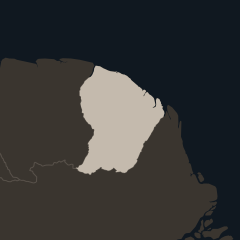 French GuianaEurope's spaceport at Kourou launches Ariane rockets; over 95% of the land is Amazon rainforest.Part of the country
 GuadeloupeIn 2009 a 44-day general strike over the cost of living shut Guadeloupe down and spread to Martinique.Part of the country
 MartiniqueThe banned pesticide chlordecone, used on banana farms until 1993, is found in the blood of 85.5% of adults.Part of the country
 MayotteVoted to stay French when the rest of the Comoros chose independence; the Comoros still claim it.Part of the country
 French PolynesiaFrance carried out 193 nuclear tests at Moruroa and Fangataufa atolls from 1966 to 1996.Self-governing
 New CaledoniaVoted three times (2018-2021) to stay French, the third vote boycotted; riots in 2024 left 14 dead.Self-governing
 Saint Pierre and MiquelonThe last French remnant of New France, 25 km off the coast of Newfoundland, Canada.Self-governing
 Wallis and FutunaThree customary kings still reign inside the French Republic and are paid allowances by the French state.Run by an administrator