How did North Korea get nuclear weapons?
North Korea built its bomb from a Soviet research reactor, a Pakistani black market, and sixty years of single-minded effort that cannot be reversed.
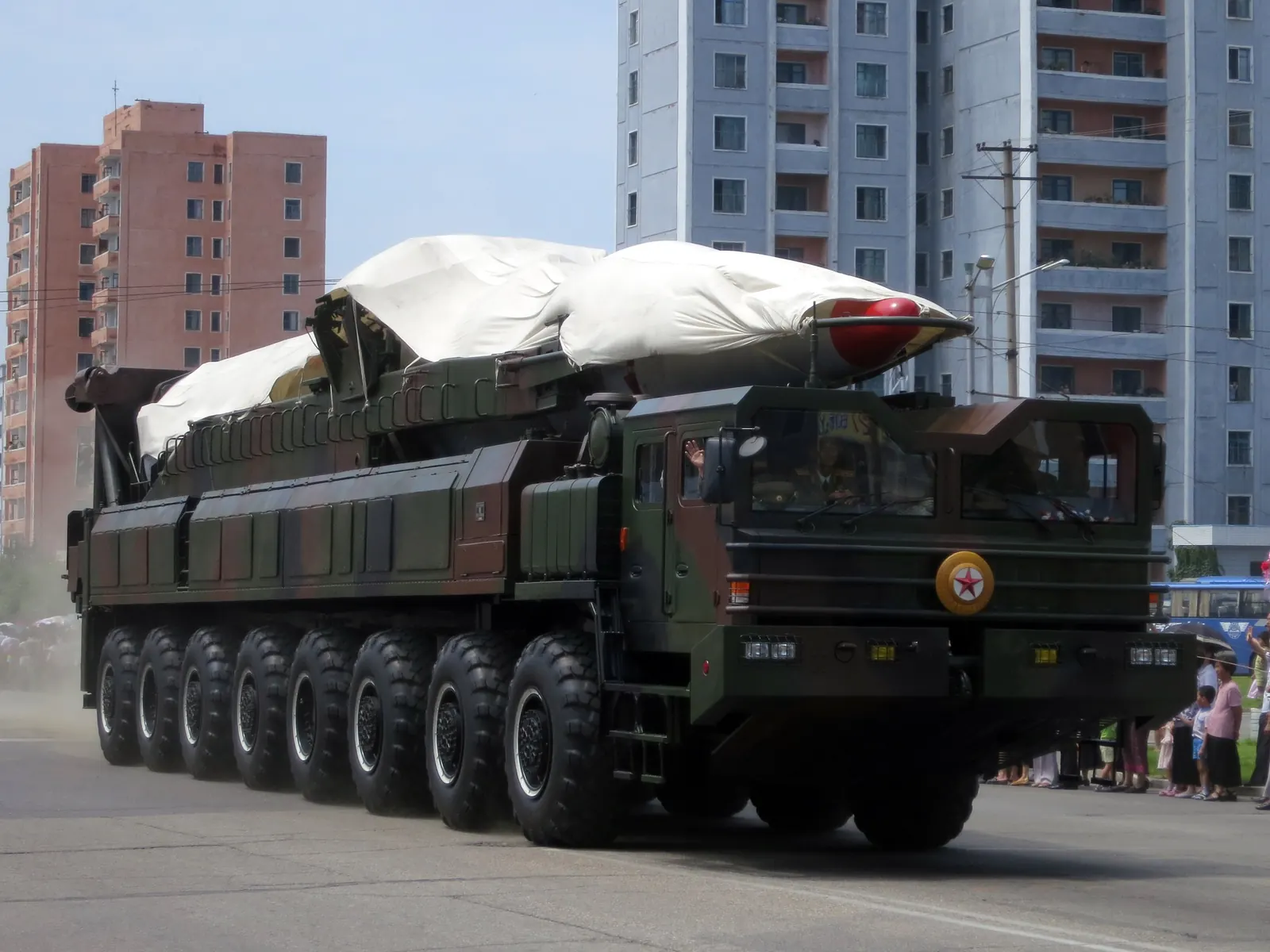
North Korea tested its first nuclear weapon on October 9, 2006, in a tunnel beneath Mount Mantap in the country's northeast. The explosion was small, less than a kiloton, roughly a fifteenth of the bomb that destroyed Hiroshima. Most analysts called it a partial failure. Nineteen years later, North Korea has an estimated 50 warheads and the missiles to deliver them to any city on Earth. The country has an economy smaller than Cambodia's and has been under international sanctions since the 1950s. It built a nuclear arsenal anyway, and the story starts with a single research reactor shipped from the Soviet Union in the early 1960s.
A reactor in a valley
In 1963, the Soviet Union agreed to build a small research reactor for North Korea at Yongbyon, a town in a narrow river valley about 100 kilometers north of Pyongyang. The IRT-2000 was rated at just 2 megawatts, far too small to produce weapons-grade material in useful quantities. But the Soviets also trained North Korean physicists at their research center in Dubna, outside Moscow. Those scientists came home with the skills to handle radioactive materials and, eventually, to separate plutonium from spent reactor fuel. By 1975, North Korean technicians had done exactly that, extracting a tiny amount of plutonium from fuel rods at Yongbyon. It was not enough for a weapon. It was enough to prove the chemistry worked.
Kim Il-sung, North Korea's founder, had lived through the Korean War, when American bombers destroyed nearly every major building in the country and the US openly considered using nuclear weapons on the peninsula. The lesson he drew was simple: a country with the bomb cannot be attacked the way North Korea was attacked in 1950. His son and grandson would act on that lesson for the next fifty years.
Through the 1980s, North Korea built its own 5-megawatt graphite-moderated reactor at Yongbyon, based on declassified British designs from the 1950s. Unlike the small Soviet research reactor, this one produced enough spent fuel to extract meaningful amounts of plutonium. By the late 1980s, American spy satellites had spotted what appeared to be a reprocessing facility at the site. The nuclear program was no longer a suspicion. It was confirmed.
The deal that bought a decade
By 1994, tensions had risen high enough that the Pentagon was drafting plans to bomb Yongbyon. Instead, the United States and North Korea signed the Agreed Framework. North Korea would freeze its plutonium program and keep international inspectors on site. In exchange, the US would provide 500,000 tons of heavy fuel oil per year and lead a consortium to build two light-water reactors, which produce energy but are far harder to use for making bombs.
For eight years the deal held. The Yongbyon reactor sat idle, the spent fuel rods stayed in their cooling pond under camera surveillance, and North Korea's plutonium path was frozen.
But the deal had a hole in it. In the late 1990s, Abdul Qadeer Khan, the Pakistani scientist who had built Pakistan's bomb, sold North Korea centrifuge designs, components, and a small number of complete centrifuges for enriching uranium. It was a barter deal: North Korea sent missile technology, including the No-dong ballistic missile, and Khan's network sent centrifuge blueprints in return. Pakistan's president Pervez Musharraf later confirmed that the transfers took place. Khan reportedly visited North Korea thirteen times. The arrangement gave Pyongyang a second path to a bomb, one the Agreed Framework had never covered.
In October 2002, American officials confronted North Korea with evidence of the secret enrichment program. The framework collapsed within weeks. The US cut off fuel oil. North Korea expelled the inspectors, restarted the Yongbyon reactor, and in January 2003 became the first country ever to withdraw from the Non-Proliferation Treaty. Three years later it tested its first bomb.
Six tests in eleven years
North Korea conducted six nuclear tests between 2006 and 2017, all of them underground at the Punggye-ri test site in the mountains near the Chinese border.
The first, in October 2006, produced a yield below one kiloton. The device probably did not fully detonate. The second, in May 2009, was more successful, with an estimated yield of roughly 2 to 6 kilotons. The third came in February 2013, at about 6 to 9 kilotons. The fourth, in January 2016, North Korea claimed was a hydrogen bomb; outside estimates put the yield at 7 to 10 kilotons, too small for a thermonuclear device. The fifth, in September 2016, reached an estimated 10 to 20 kilotons.
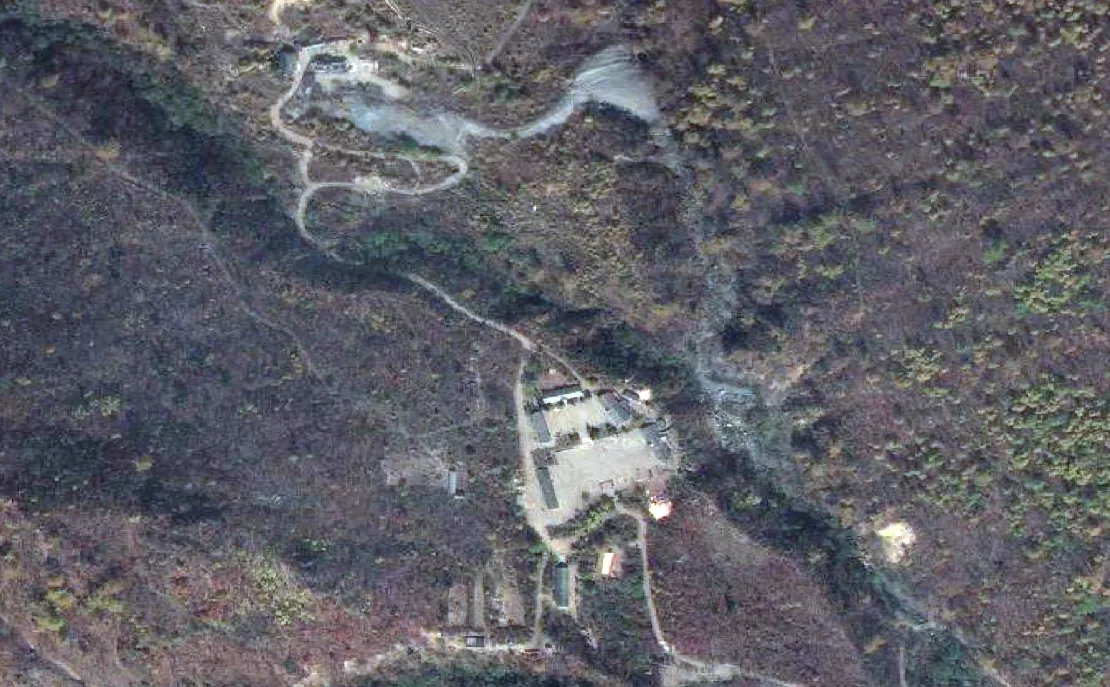
The sixth test, on September 3, 2017, was a different order of magnitude. Seismic stations measured a yield of roughly 100 to 250 kilotons, more than six times the Hiroshima bomb. This was almost certainly a thermonuclear weapon. In eleven years North Korea had gone from a partial fizzle to the most powerful device any country had tested in the twenty-first century.
The missile program advanced in parallel. By November 2017, North Korea had tested the Hwasong-15, an intercontinental ballistic missile that analysts assessed could reach the continental United States. The warhead and the delivery system were both in hand.
The weapon nobody can take back
North Korea's arsenal today is estimated at roughly 40 to 60 assembled warheads, with enough fissile material to build several more each year. The IAEA reported in 2026 that the Yongbyon reactor had been running at increased capacity, and satellite images show ongoing construction at the Punggye-ri site.
The Kim dynasty watched what happened to leaders who gave up their programs or never finished them. Libya's Muammar Gaddafi abandoned his nuclear effort in 2003 and was dead at the hands of NATO-backed rebels by 2011. Ukraine handed over the third-largest arsenal on Earth in exchange for a security promise that Russia broke twenty years later. North Korean officials have cited both cases by name when explaining why they will never disarm.
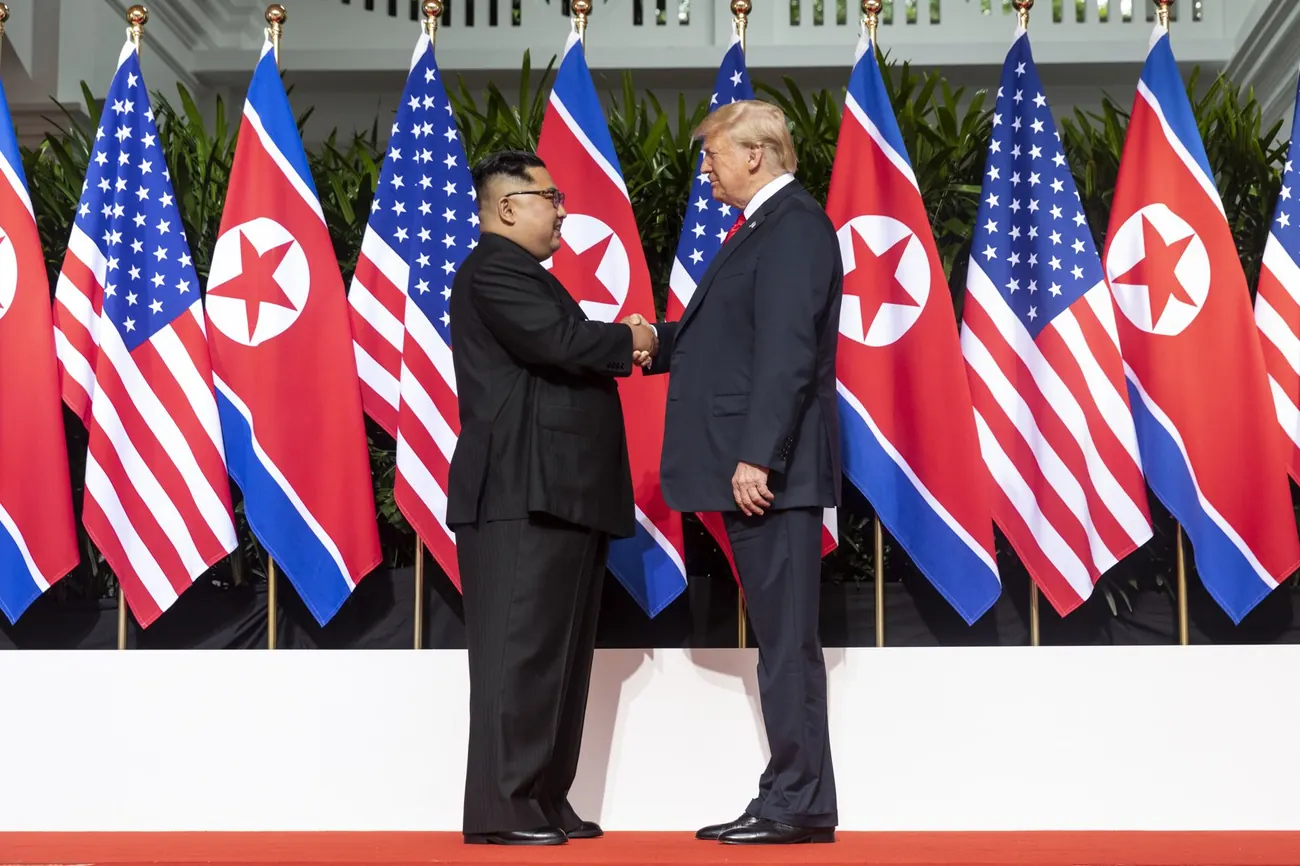
The 2018 summits with Donald Trump produced handshakes and photographs but no agreement and no reduction in the arsenal. Since 2022, North Korea has moved in the opposite direction, selling weapons and soldiers to Russia in exchange for satellite data and missile technology that accelerate the program further. Russia vetoed the UN panel that had been monitoring sanctions violations, and China continues to keep the regime alive because the alternative, a collapsed or American-allied Korea on its border, is worse from Beijing's perspective than a nuclear-armed neighbor.
The program that began with a single Soviet research reactor in the 1960s has produced exactly what three generations of the Kim family set out to build: a weapon that makes the country too dangerous to invade. North Korea is the poorest nuclear-armed state on Earth, and its arsenal is the reason the regime has survived every crisis of the last two decades. Every government now weighing whether to build a bomb, from Tehran to Seoul, is running the same calculation, and Pyongyang is the strongest argument that the answer is yes.
Test what you learned
5 questions on this article. About two minutes, no signup.
Orbis has a full course on this
The Korean Peninsula. 24 lessons, each ending with a quiz like this one.