Why are oil-rich countries often poor?
Venezuela has the world's largest oil reserves and an economy that shrank by three quarters. Nigeria exports billions in crude while half its people live in poverty.
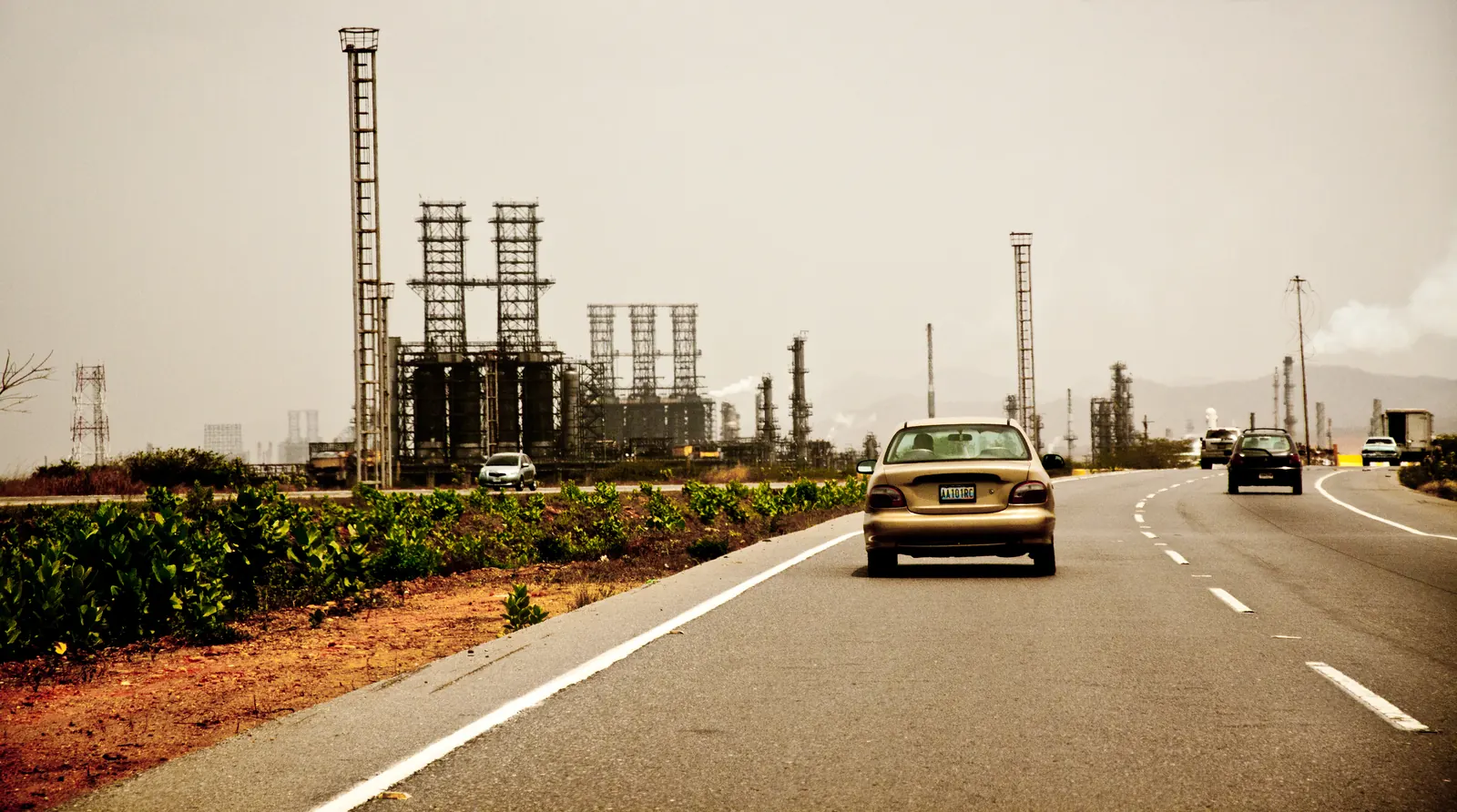
In 1975, Juan Pablo Pérez Alfonzo, the Venezuelan politician who helped found OPEC, looked at what oil money was doing to his country and called petroleum "the devil's excrement." Venezuela was one of the richest countries in Latin America at the time. Forty years later, its economy had shrunk by roughly three quarters, its oil production had collapsed, and millions of its people had fled. Venezuela sits on the largest proven oil reserves on earth. It is also one of the poorest countries in the Western Hemisphere.
Venezuela is not unusual. Nigeria has been exporting oil since the 1950s and still has a GDP per capita below $1,100. Equatorial Guinea's oil boom lifted its per-capita GDP to European levels on paper, but more than half its population lives in poverty. Angola, Iraq, Libya: the pattern repeats. Countries that discover large oil deposits tend to grow slower, govern worse, and fight more than countries that have none. Economists call this the resource curse.
How oil money breaks an economy
The first problem is economic. When a country starts exporting a valuable resource, money flows in. That pushes up the value of the currency, which makes everything else the country produces, its manufactured goods, its farm exports, more expensive on world markets. Those industries shrink. Workers leave factories and farms for the oil sector or the government jobs that oil revenue pays for. The country ends up dependent on a single export whose price it does not control.
The pattern was first identified in the Netherlands. In 1959, engineers discovered the Groningen gas field, one of the largest natural gas deposits in the world. Gas exports brought in foreign currency. The Dutch guilder rose. Dutch manufacturing became less competitive abroad and contracted. In 1977, The Economist magazine described the phenomenon and named it "Dutch disease."
Nigeria is a textbook case. Shell discovered oil in the Niger Delta in 1956. By the mid-1970s, oil accounted for over 90 percent of Nigeria's export earnings. Agriculture, which had made Nigeria one of the world's largest exporters of cocoa, groundnuts, and palm oil, collapsed. In the early 1960s, agriculture made up more than 60 percent of Nigeria's GDP. By the 1980s it was under 20 percent. The farmers did not disappear. They just got poorer, while the oil revenue flowed to whoever controlled the central government.
Why oil money breaks a government
The second problem is political, and it is worse than the economic one.
A government that collects taxes has to negotiate with its citizens. Taxpayers demand roads, schools, courts, and a say in how the money is spent. That bargain, taxes in exchange for services and representation, is the basic mechanism that built functioning governments across Europe and North America over centuries.
Oil removes the bargain. A government sitting on oil revenue does not need to tax its people, so it does not need to listen to them. It can buy loyalty instead: cheap fuel, government jobs handed out as patronage, and a large security apparatus to keep everyone else quiet. The state becomes the biggest prize in the country, because whoever runs it controls the oil money. Elections become winner-take-all fights over that prize. Coups become rational. Corruption becomes structural, not incidental, because the money comes from the ground, not from productive work that requires skilled people and functioning institutions.
This is what political scientists call a "rentier state," a government that lives on rents from a natural resource rather than on wealth its citizens create. Saudi Arabia has no income tax. Neither does Kuwait, Qatar, or the UAE. Those countries have used their oil wealth more effectively than Nigeria or Venezuela, in part because they started with smaller populations and in part because their ruling families built sovereign wealth funds early. But the political structure is the same: the government distributes, and the population receives. When the money is generous, the arrangement holds. When oil prices crash, it cracks.
Venezuela: the clearest example
Venezuela's story is the resource curse at full speed. Oil was discovered in the Maracaibo Basin in the 1910s, and by the 1950s Venezuela was the world's largest oil exporter. The revenue built highways, universities, and a middle class. It also built an economy in which nothing else mattered.
When Hugo Chávez took power in 1999, oil accounted for about 80 percent of Venezuela's export earnings. He used the boom of the 2000s to fund massive social spending, importing food and medicine rather than building domestic production. When prices collapsed in 2014, from over $100 a barrel to under $30, the system came apart. The state oil company, PDVSA, had been starved of reinvestment for years. Chávez and his successor Nicolás Maduro had redirected its revenue to social programs and patronage. Production fell every year. By 2020 it was below 500,000 barrels a day, a level not seen since the 1940s.
GDP shrank by roughly 75 percent between 2013 and 2020. Inflation hit 130,000 percent in 2018. More than 7 million Venezuelans left the country, one of the largest refugee crises in the Western Hemisphere. A country that once had the highest per-capita income in Latin America could not keep the lights on.
Why Norway and Botswana escaped
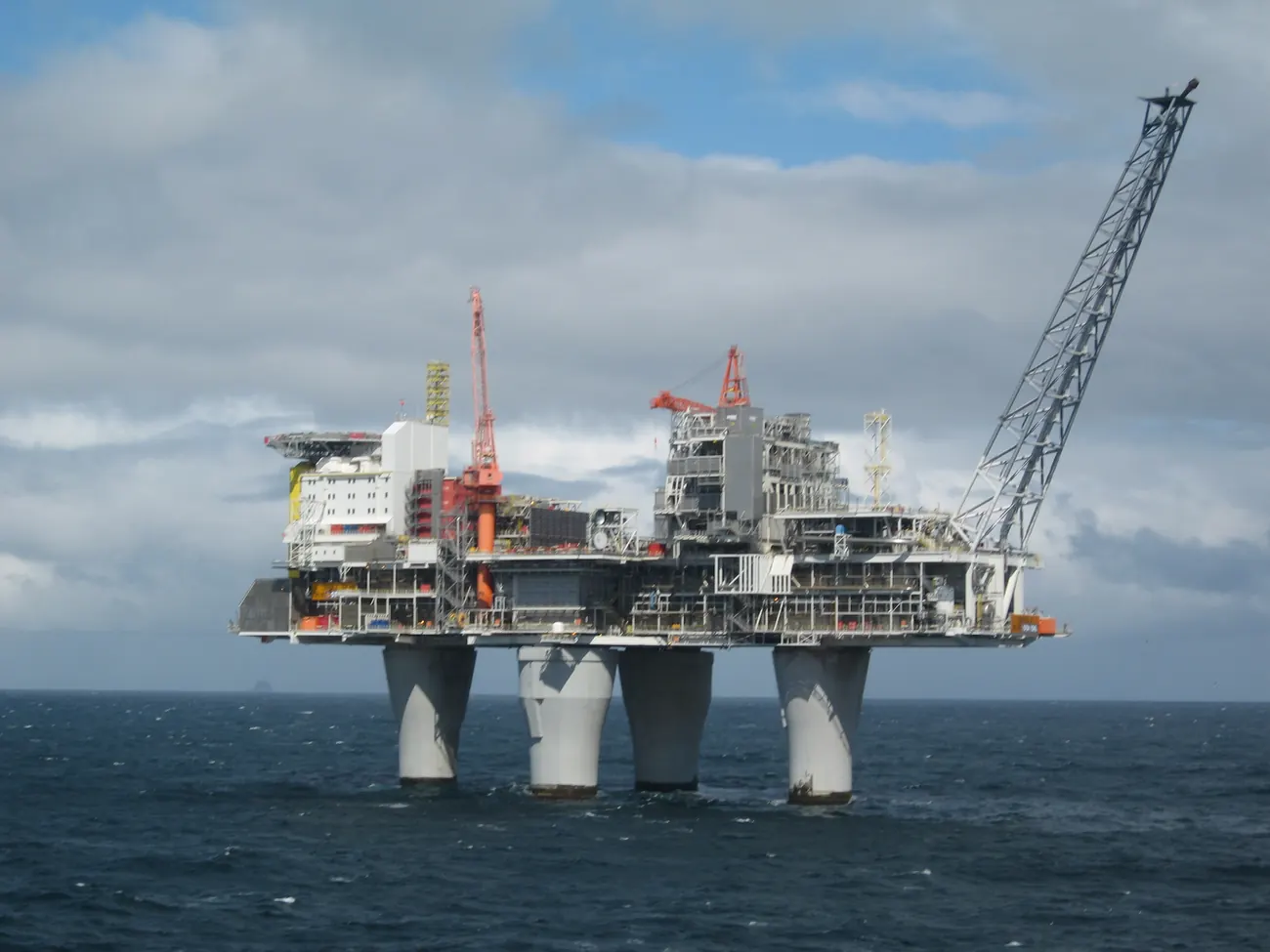
If oil always caused poverty, Norway would be poor. It is not. Norway discovered oil in the North Sea in 1969, thirteen years after Nigeria found its deposits. The difference is what happened next.
Norway already had functioning courts, a working tax system, and a parliament with a long tradition of holding its government to rules. Before oil money arrived in large amounts, Norway set up the machinery to manage it. In 1990, the parliament created what is now the Government Pension Fund Global, which invests oil revenue entirely outside Norway. The government allows itself to spend only about 3 percent of the fund's value each year, roughly the expected long-term return. By mid-2026, the fund was worth about $2.3 trillion and owned roughly 1.5 percent of every publicly listed company on earth.
Botswana tells a similar story with diamonds. When large deposits were found in the late 1960s, Botswana was one of the poorest countries in Africa. Its leaders chose to manage the revenue through transparent institutions rather than hand it out as patronage. Botswana became one of the fastest-growing economies in the world for three decades.
The resource does not determine the outcome. What matters is the quality of the institutions a country has before the money arrives.
The trap that is hard to escape
The cruel part of the resource curse is that it is self-reinforcing. Oil money weakens institutions. Weak institutions make it harder to manage oil money well. A government that depends on oil has no reason to invest in education, build a tax system, or diversify the economy, because the money comes from the ground regardless. When a reformer does take power, the entire political class has an incentive to stop them, because reform means losing access to the revenue.
Saudi Arabia's Vision 2030 is the most ambitious attempt to break the cycle. The kingdom has spent hundreds of billions of dollars building an entertainment sector, a tourism industry, and the NEOM megaproject. But the Saudi government still earns roughly 60 percent of its revenue from oil. Diversification is a generational project, not a policy announcement.
The curse also makes countries vulnerable to outsiders. Any government that can shift the price of oil has a direct lever on a petro-state's budget. When the Soviet Union depended on oil exports to fund its government, the price collapse of the 1980s helped bring it down. When Russia weaponized its gas exports to Europe after 2022, Europe's scramble to find alternatives eventually cut Russia's leverage and its revenue.
The next resource curse
The same two mechanisms now apply to a new set of resources. The shift away from fossil fuels is raising demand for lithium, cobalt, copper, and rare earth metals. The Democratic Republic of Congo produces about 70 percent of the world's cobalt. Chile and Australia dominate lithium. Whether these countries follow Norway's path or Nigeria's depends on the same variable it always has: the strength of the institutions they have now. The resource is different. The economics and the politics work the same way. Oil was supposed to be a blessing. For most of the countries that found it, it was exactly what Pérez Alfonzo said it was.
Test what you learned
5 questions on this article. About two minutes, no signup.
Orbis has a full course on this
The Age of Oil. 22 lessons, each ending with a quiz like this one.