Why is Kaliningrad part of Russia?
Kaliningrad was a German city for nearly 700 years. In 1945, the Soviet Union took it, expelled the population, and never gave it back.
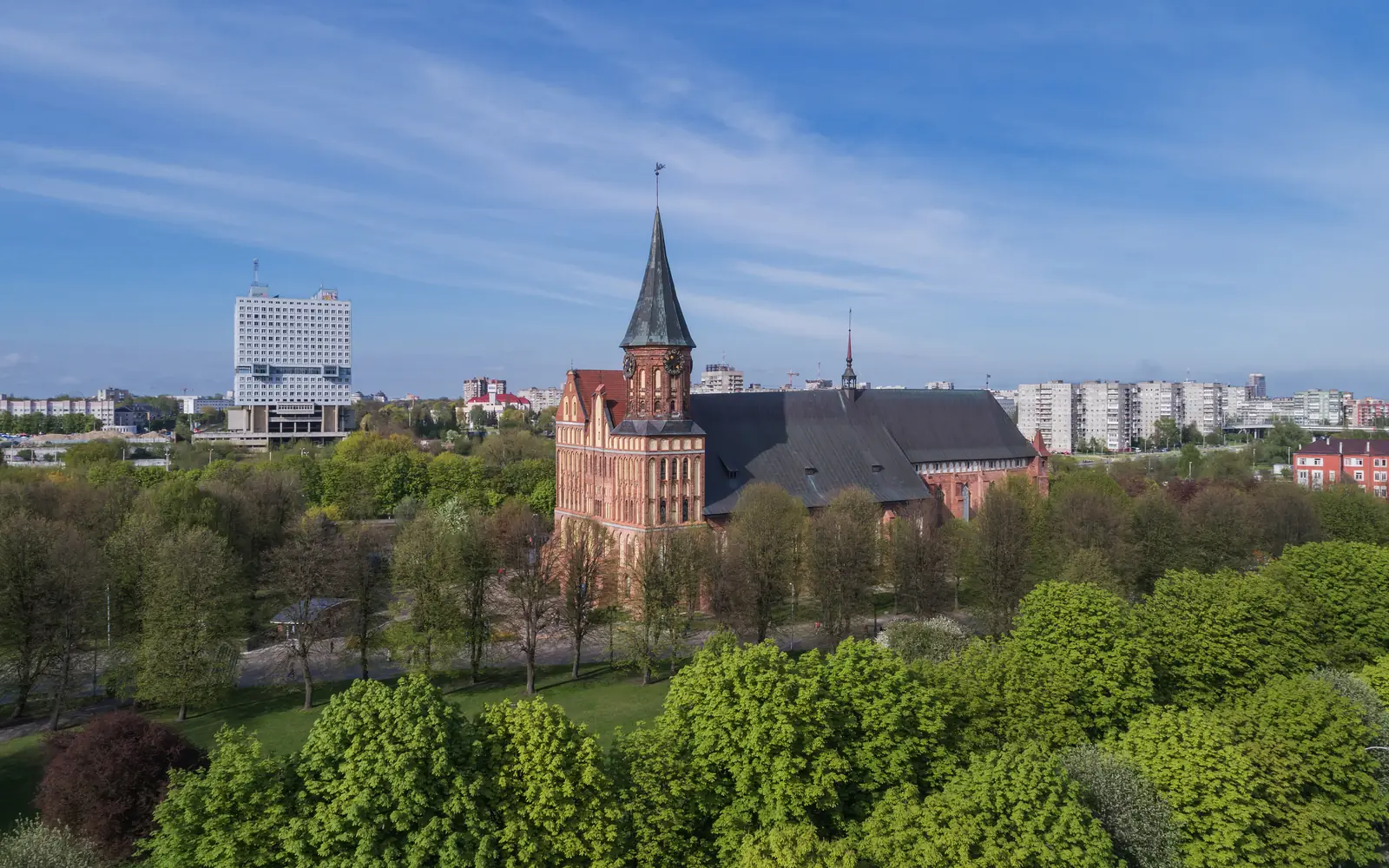
Kaliningrad is a Russian city on the Baltic Sea, wedged between Poland and Lithuania, with no land connection to the rest of Russia. To drive there from Moscow, you cross Belarus and Lithuania. Even flights pass through foreign airspace. The city is closer to Berlin than to Moscow. Until 1945, it was called Königsberg, and it had been German for nearly seven hundred years. Immanuel Kant was born there, spent his entire life there, and is buried at its cathedral. Then the Soviet Union took it, expelled every German who lived there, shipped in Russian settlers, and renamed it. Eighty years later, it is one of the most heavily armed pieces of land in Europe.
Seven centuries of Königsberg
The Teutonic Knights, a German crusading order, founded Königsberg in 1255 on the shore of the Baltic. They named it after King Otakar II of Bohemia, who had joined their campaign against the pagan Old Prussians. The city became the capital of the Teutonic Order's state, then of the Duchy of Prussia, then part of the Kingdom of Prussia, and finally part of the German Empire that Bismarck unified in 1871. It grew into one of the Baltic's major commercial ports, a member of the Hanseatic trading league.
Königsberg was where Prussian kings were crowned. On January 18, 1701, Frederick I placed the crown on his own head in the city's castle church, establishing the Kingdom of Prussia. The philosopher Immanuel Kant was born there in 1724, the son of a harness maker. He taught at the University of Königsberg for decades, wrote the works that reshaped European philosophy, and never lived anywhere else. By 1939, Königsberg had roughly 370,000 residents. East Prussia, the province around it, held about 2.5 million. Nearly all of them were German.
Stalin's price
East Prussia was the staging ground for Germany's 1941 invasion of the Soviet Union. Hundreds of thousands of troops crossed from there into Lithuania on the first day of the attack. Four years and 27 million Soviet dead later, Stalin intended to make sure it could never happen again.
He wanted northern East Prussia for two declared reasons: the Soviet Union needed an ice-free port on the Baltic, and its wartime losses entitled it to territorial compensation. He had first raised the claim with Roosevelt and Churchill at the Tehran Conference in 1943, and neither objected.
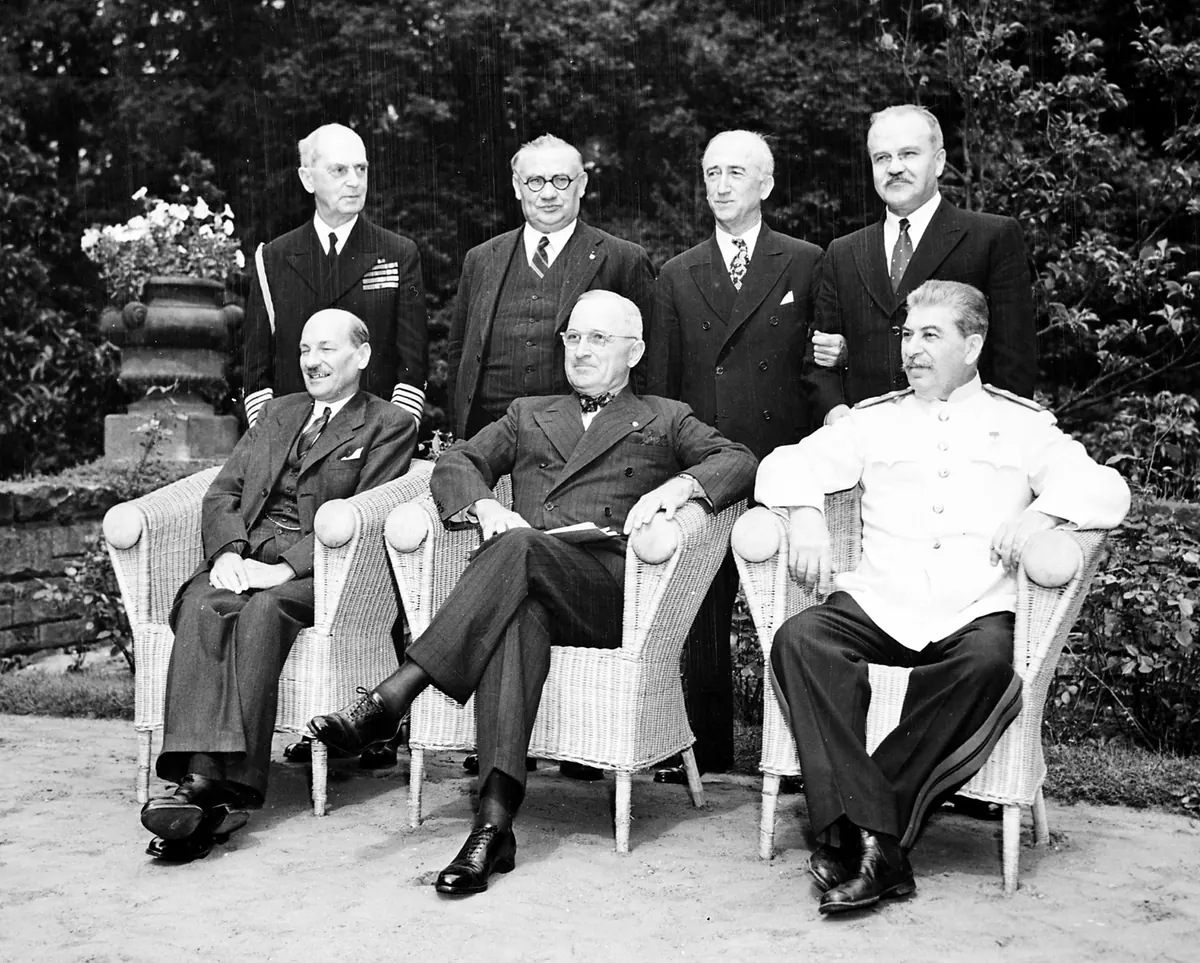
At the Potsdam Conference in July 1945, the Allied leaders divided East Prussia. The southern two-thirds went to Poland. The northern third, including Königsberg, went to the Soviet Union. The agreement called the arrangement "provisional," pending "the final determination of territorial questions at the peace settlement." That peace settlement was never held.
The Soviet government treated the transfer as permanent from the start. On April 7, 1946, Moscow created the Kaliningrad Oblast as a region of the Russian republic. Three months later it renamed the city after Mikhail Kalinin, the recently deceased chairman of the Presidium of the Supreme Soviet. Kalinin had no connection to the city. He was chosen because he had just died and a Soviet city needed his name.
A city emptied and refilled
In August 1944, the Royal Air Force bombed Königsberg twice, destroying much of the medieval city center. In April 1945, the Soviet army besieged what remained. The battle lasted four days. By the time the city fell, large parts of it were rubble.
Most of East Prussia's 2.5 million civilians had already fled west ahead of the Soviet advance in early 1945. The largest single disaster of the evacuation came at sea: on January 30, 1945, a Soviet submarine torpedoed the MV Wilhelm Gustloff, a passenger liner packed with refugees and wounded soldiers. An estimated 9,000 people died, six times the death toll of the Titanic and the deadliest maritime disaster in history.
When the fighting ended, Soviet authorities counted roughly 193,000 Germans still in the northern zone. For two years they lived under military occupation, with scarce food and forced labor. In October 1947, Moscow ordered their expulsion. By mid-1948, over 100,000 had been loaded onto trains and sent to the Soviet occupation zone of Germany. The rest had died or left on their own.
Soviet settlers replaced them. By 1948, roughly 400,000 had arrived, mostly ethnic Russians. They moved into German houses, worked in German factories, and walked streets that had been renamed in Russian. The German past was systematically erased: churches were demolished or converted, the ruined castle was dynamited in the 1960s, and German inscriptions were chiseled off buildings. Königsberg ceased to exist in everything but geography.
Why Germany never asked for it back
When the Soviet Union collapsed in 1991, Kaliningrad became an exclave, a piece of Russia cut off from the mainland by newly independent Lithuania and Belarus. For a moment, the question of its future seemed open. But Germany had already closed the door.
In September 1990, as part of the agreement that enabled German reunification, West Germany, East Germany, and the four wartime powers signed the Two Plus Four Treaty in Moscow. Germany's borders were fixed as those of West and East Germany combined. Berlin explicitly renounced any claim to the former eastern territories, including Kaliningrad. No serious German political movement to reclaim it has emerged since. By 1991, the German population had been gone for over forty years. There was nothing left to reclaim except the name, and even that had been erased.
Russia's forward base
Today Kaliningrad has roughly one million residents and the most concentrated military presence on Russia's western border. The Baltic Fleet is headquartered at the port of Baltiysk. Nuclear-capable Iskander-M missiles sit in the oblast, with a range of about 500 kilometers, enough to reach Warsaw and Berlin. S-400 air defense batteries cover much of the southeastern Baltic.
The territory's location creates a problem for NATO. Between Kaliningrad and Belarus runs the Suwałki Gap, a 65-kilometer-wide corridor of Polish and Lithuanian territory that is the only land link between the three Baltic states and the rest of the alliance. If Russia and Belarus closed it in a war, Estonia, Latvia, and Lithuania would be cut off by land. The territory's economy depends on a Special Economic Zone established to attract investment despite the exclave's isolation. Since 2022, EU sanctions have disrupted that model, and cargo that once moved by rail through Lithuania has shifted partly to slower, more expensive sea routes.
The tension surfaced in June 2022, four months after Russia's invasion of Ukraine. Lithuania blocked rail transit of EU-sanctioned goods through its territory to Kaliningrad. Russia called the move "unprecedented" and "hostile." The EU later clarified its guidance, and some transit resumed. But the dispute showed how quickly Kaliningrad's geography turns into a crisis: a Russian exclave surrounded by NATO members, dependent on transit through a country it considers an adversary, armed with missiles that can reach every capital in the region.
Kaliningrad exists because of decisions made in the summer of 1945, when the men who won the war divided its spoils. The provisional arrangement at Potsdam became permanent when nobody held the peace conference that was supposed to finalize it, and became irreversible when Germany signed away its claim in 1990. The philosopher who wrote "Perpetual Peace" is buried in a cathedral that now sits between two armies.
Test what you learned
5 questions on this article. About two minutes, no signup.
Orbis has a full course on this
Russia: Empire to Superpower. 38 lessons, each ending with a quiz like this one.