Why is the dollar the world's reserve currency?
The dollar became the world's reserve currency at a conference in 1944 and nearly lost the job in 1971. Here is how it held on, and why no rival has come close to replacing it.
About 58 percent of the world's official currency reserves are held in US dollars. The dollar is on one side of 89 percent of all foreign-exchange trades. Roughly half of all international trade is invoiced in dollars, including a great deal of trade that never touches the United States. America makes up about a quarter of the world's economic output, but its currency runs most of the rest.
This did not happen gradually. It happened at a hotel in New Hampshire in 1944, nearly fell apart in 1971, and was saved by a deal with Saudi Arabia in 1974. The dollar is the world's reserve currency today because of those three moments and the inertia that followed them.
The hotel in New Hampshire
In July 1944, delegates from 44 countries gathered at the Mount Washington Hotel in Bretton Woods, New Hampshire. The Second World War was still being fought, but the Allies were winning and they needed to decide how the postwar economy would work.
The basic problem was straightforward. International trade needs a currency that everyone trusts enough to use as a reference point. Before the First World War, that role belonged to the British pound, backed by the gold standard and by the sheer size of the British Empire's trade. Two world wars burned through Britain's gold reserves and its global position. By 1944, the United States held roughly two-thirds of the world's monetary gold and produced about half of global industrial output. The dollar was the obvious choice.
The British delegation was led by John Maynard Keynes, probably the most famous economist alive. Keynes was 60, in poor health, and still working at a pace that alarmed his doctors. He proposed a neutral international currency called the "bancor" that no single country would control. The American delegation, led by a Treasury official named Harry Dexter White, wanted the dollar at the center. White was intense, blunt, and had spent years preparing for this moment. He had also, as the FBI would later allege, been passing information to Soviet intelligence, though he denied it until his death in 1948. America had the gold and the factories. America won the argument.
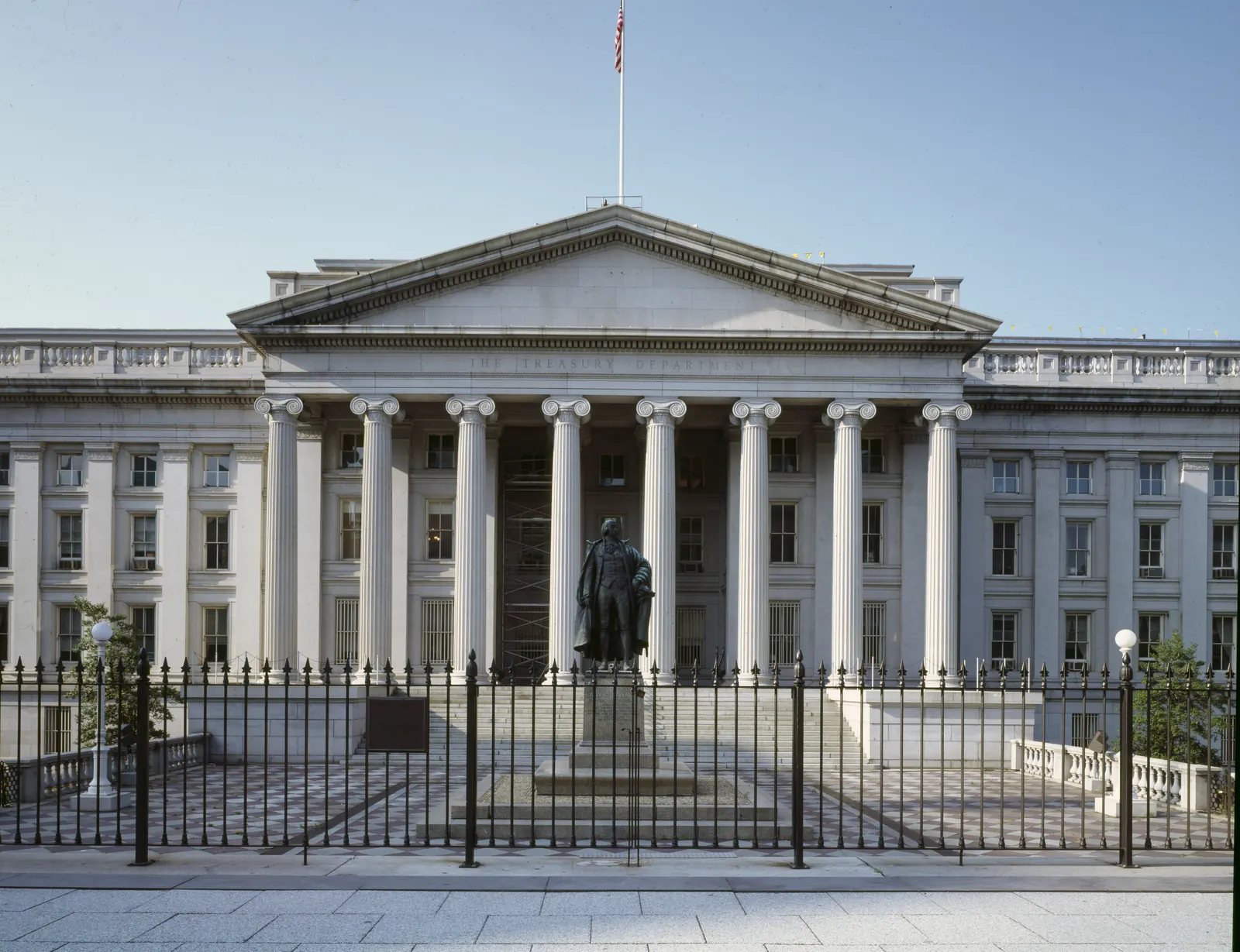
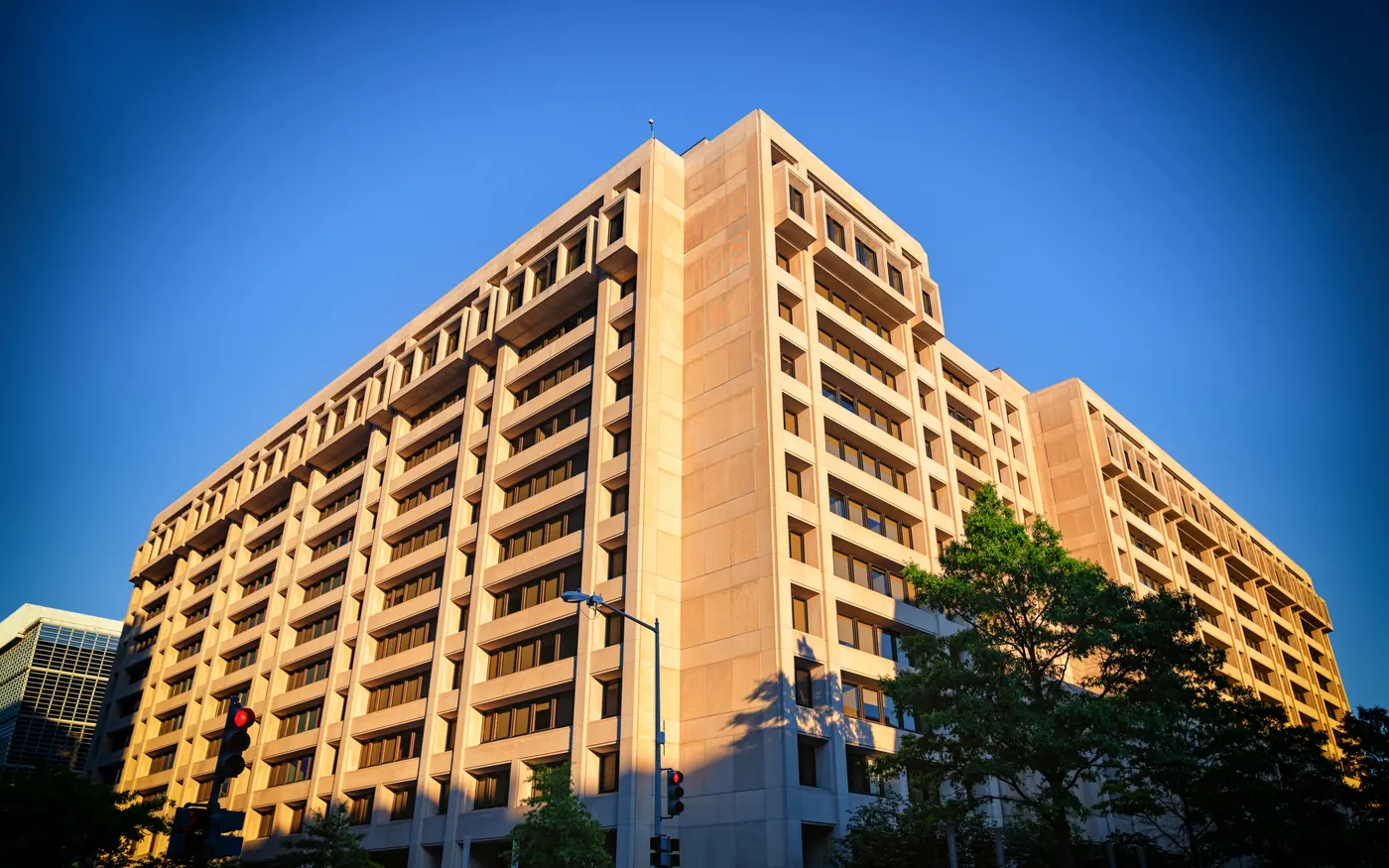
The delegates agreed to a system in which every member country would peg its currency to the dollar, and the dollar would be convertible to gold at a fixed rate of $35 an ounce. Any central bank that held dollars could, in theory, exchange them for gold at the US Treasury. The conference also created the International Monetary Fund and the World Bank to manage the new order. The result was called the Bretton Woods system, and it made the dollar the center of global finance. Keynes collapsed from exhaustion during the conference and died less than two years later.
When the gold ran out
For a quarter century, the system worked. The United States spent billions rebuilding Western Europe and Japan through the Marshall Plan, and the world filled up with dollars. Every dollar that left the country was, in principle, as good as gold.
The problem was that the more dollars America sent abroad, the less gold it had to back them. By the late 1960s, foreign central banks held far more dollars than the United States had gold to cover. Some of them started asking for their gold. France, under President Charles de Gaulle, was the most aggressive. De Gaulle publicly declared that the dollar's special status gave America an "exorbitant privilege," the ability to pay its bills by printing money that everyone else had to accept. He ordered the Banque de France to convert its dollar reserves into gold and sent French navy ships across the Atlantic to collect the metal from the Federal Reserve Bank of New York.
By August 1971, the pressure was unbearable. On August 15, President Richard Nixon went on television and announced that the United States would no longer convert dollars to gold. The announcement was written largely by a Treasury official named Paul Volcker, a man so tall at six feet seven that he had to duck through most doorways in Washington. Volcker would later become chairman of the Federal Reserve. Nixon's team timed the broadcast for a Sunday evening to prevent a market panic before Monday's open. The event became known as the Nixon shock.
The gold link was gone. The fixed exchange rates unraveled over the next two years. And the dollar should, by any reasonable prediction, have lost its special status. It was now backed by the US government's promise and nothing else.
Oil priced in dollars
The dollar did not lose its status, for two reasons. The first was inertia. The world's contracts, debts, and pricing benchmarks were already in dollars, and changing all of them at once was not practical.
The second reason was oil. In 1973, the Arab oil-producing states imposed an embargo on the United States and its allies for supporting Israel in the Yom Kippur War. Oil prices quadrupled. The world economy went into crisis. In 1974, US Treasury Secretary William Simon flew to Jeddah and struck a deal with the Saudi government. Saudi Arabia would price all of its oil exports in dollars and invest its surplus oil revenue in US Treasury bonds. In return, the United States would provide military protection and arms sales. The deal was kept secret at Saudi Arabia's insistence. Its details only became fully public decades later. Other OPEC members followed Saudi Arabia's lead.
The effect was enormous. Every country on earth that bought oil now needed dollars to pay for it. And because oil is the most traded commodity in the world, the demand for dollars became permanent. The arrangement, later called the petrodollar system, did not just replace the gold link. In some ways it was more powerful, because every growing economy needs more energy, and more energy means more dollars.
Why nothing has replaced it
Today, the dollar's dominance rests less on any single arrangement and more on a network effect. Oil, copper, and wheat are priced in dollars. Contracts are written in dollars because the benchmarks are in dollars. Banks hold dollars because the contracts demand them. The Federal Reserve can lend dollars to other central banks in a crisis through swap lines, which makes the dollar the currency that everyone runs to when things go wrong. The SWIFT messaging system that connects the world's banks runs overwhelmingly in dollars.
Switching any single piece of this is pointless unless every other piece switches at the same time. A country that convinced its oil suppliers to accept euros would still need dollars for copper, for loans, and for settlements with every other trading partner. So it keeps its dollars. Everyone else does the same calculation. The result is a currency that holds its position partly because everyone expects it to hold its position.
China has built its own payment system, CIPS, and has pushed to settle more trade in yuan. But the yuan still makes up only about 3 percent of global payments, and Beijing will not let money flow freely in and out of China. That is the basic requirement for a reserve currency, and the Chinese government will not meet it, because doing so would expose its financial system to exactly the kind of crisis that wrecked its neighbors in 1997. No other candidate is even that close. The euro is used in about 20 percent of global reserves, but no single European government stands behind it, and the eurozone has spent the last fifteen years lurching between debt crises.
How long it lasts
The dollar became the world's reserve currency because the United States had the most gold in 1944, survived the loss of that gold in 1971 because oil replaced it, and has held on since then because the cost of switching to anything else is higher than the cost of staying. No single country or institution planned this outcome. It is the product of a conference 82 years ago, a crisis 55 years ago, and a deal with Saudi Arabia 52 years ago, all reinforced by decades of accumulated habit.
Whether the dollar keeps this position is a separate question. Central banks are buying gold at the fastest pace since the 1950s. China is building payment systems that bypass the dollar. The United States carries a national debt above $36 trillion and has shown it will freeze foreign reserves when it suits its foreign policy. But for now, the dollar is used because it is used, and that circular logic is exactly what makes it so hard to replace.
Test what you learned
6 questions on this article. About two minutes, no signup.
Orbis has a full course on this
Bretton Woods and the Petrodollar. 18 lessons, each ending with a quiz like this one.