Why was Korea divided?
Korea was one country for more than a thousand years. Two American officers, a map, and five years of Cold War politics cut it in half.
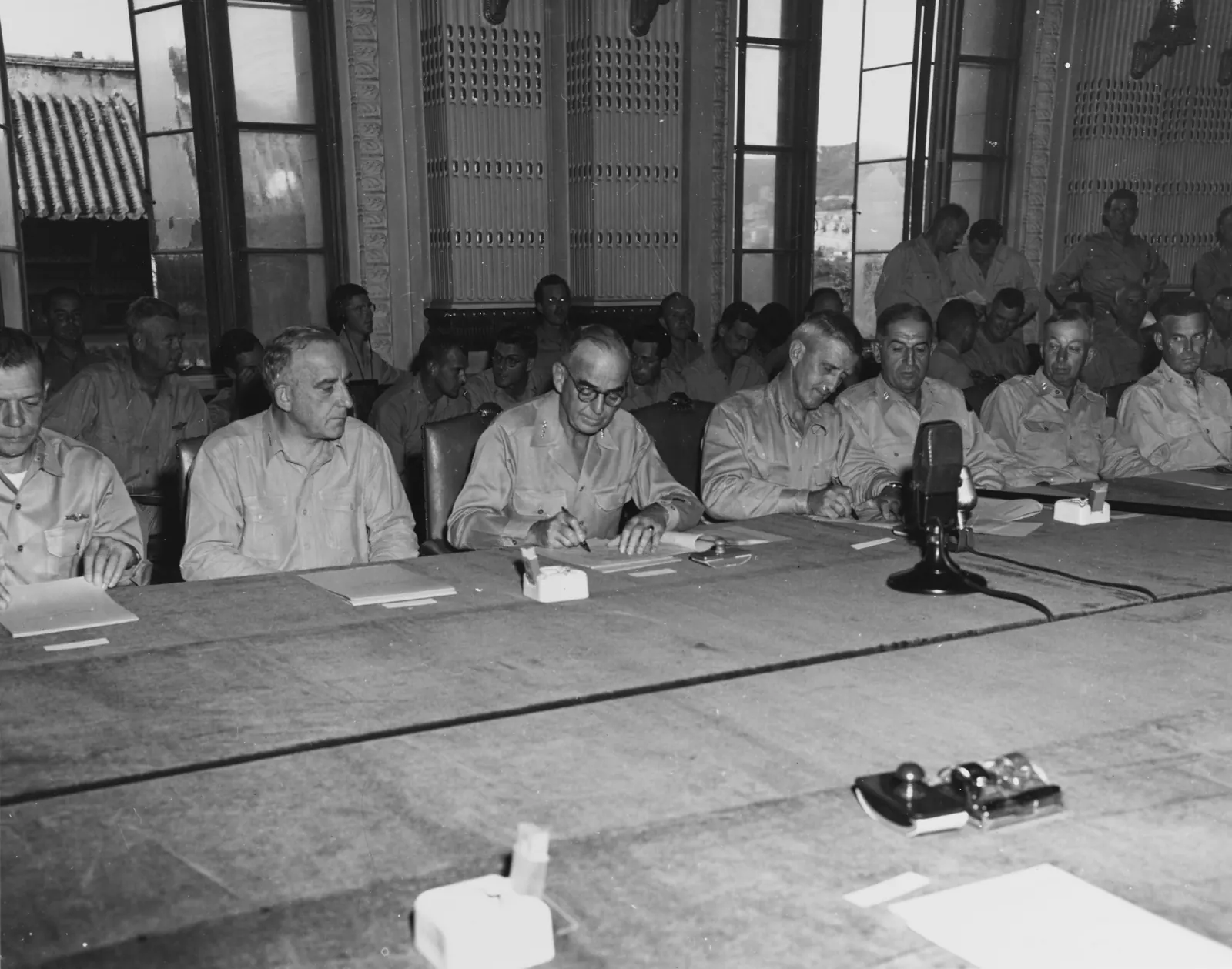
Korea had been a single country, more or less, since the seventh century. It had its own language, its own writing system, and a court culture older than most of the kingdoms that eventually colonized it. By 1945, Koreans had endured 35 years of Japanese occupation that banned their language in schools, forced millions into wartime labor, and conscripted Korean women into sexual slavery for the Imperial Army. When Japan surrendered on August 15, 1945, Koreans expected independence. What they got instead was a line on a map, drawn by two junior American officers in a room in Washington, that split their country in two. Eighty years later, the line is still there.
Two officers, one map, thirty minutes
The line happened because the United States was afraid of being late. Soviet troops had entered the war against Japan on August 8, 1945, and were already pouring into northern Korea. American forces were hundreds of miles away, on Okinawa. If no one drew a boundary, the Red Army would occupy the entire peninsula by the time any American soldier set foot on it.
On the night of August 10, 1945, two Army colonels, Dean Rusk and Charles Bonesteel, were given a simple assignment: find a line that would divide Korea into American and Soviet occupation zones. They had no Korea experts in the room, no detailed maps of the country's provinces or population, and almost no time. Working from a National Geographic map of Asia, they picked the 38th parallel because it cut Korea roughly in half and, more importantly, kept Seoul, the capital, in the American zone.
The choice had no logic beyond convenience. The 38th parallel ran through rice paddies and villages, splitting communities and even individual farms. It had no military significance, no geographic basis, and no connection to anything Korean. Rusk later admitted he would have moved the line further north if he thought the Soviets would accept it. They accepted the 38th parallel without objection, and on August 15, General Douglas MacArthur's General Order No. 1 made it official: Japanese forces north of the line would surrender to the Soviet Union, and those south of it to the United States.
The line was supposed to last a few months.
Two zones, two countries
What happened next was a pattern that played out across the postwar world. Each occupying power built a government in its own image.
In the north, the Soviet Union installed Kim Il-sung, a 33-year-old Korean guerrilla who had spent the war fighting the Japanese from bases in Manchuria and the Soviet Far East. The Soviets organized land reform, nationalized industry, and built a one-party state modeled on their own. By early 1946, northern Korea already had a functioning communist government, even if it was not yet called one.
In the south, Lieutenant General John Hodge arrived with his troops on September 8, 1945, and immediately created a problem. He kept the Japanese colonial administration running for weeks after the surrender, because he did not trust the Korean committees that had organized in the power vacuum. When he finally replaced the Japanese, he filled many positions with Koreans who had collaborated with the colonial government. The Americans backed Syngman Rhee, a 70-year-old nationalist who had spent most of the past four decades in exile in the United States. Rhee was fiercely anti-communist, authoritarian by instinct, and almost entirely disconnected from the Korean political movements that had grown under Japanese rule.
The trusteeship that never worked
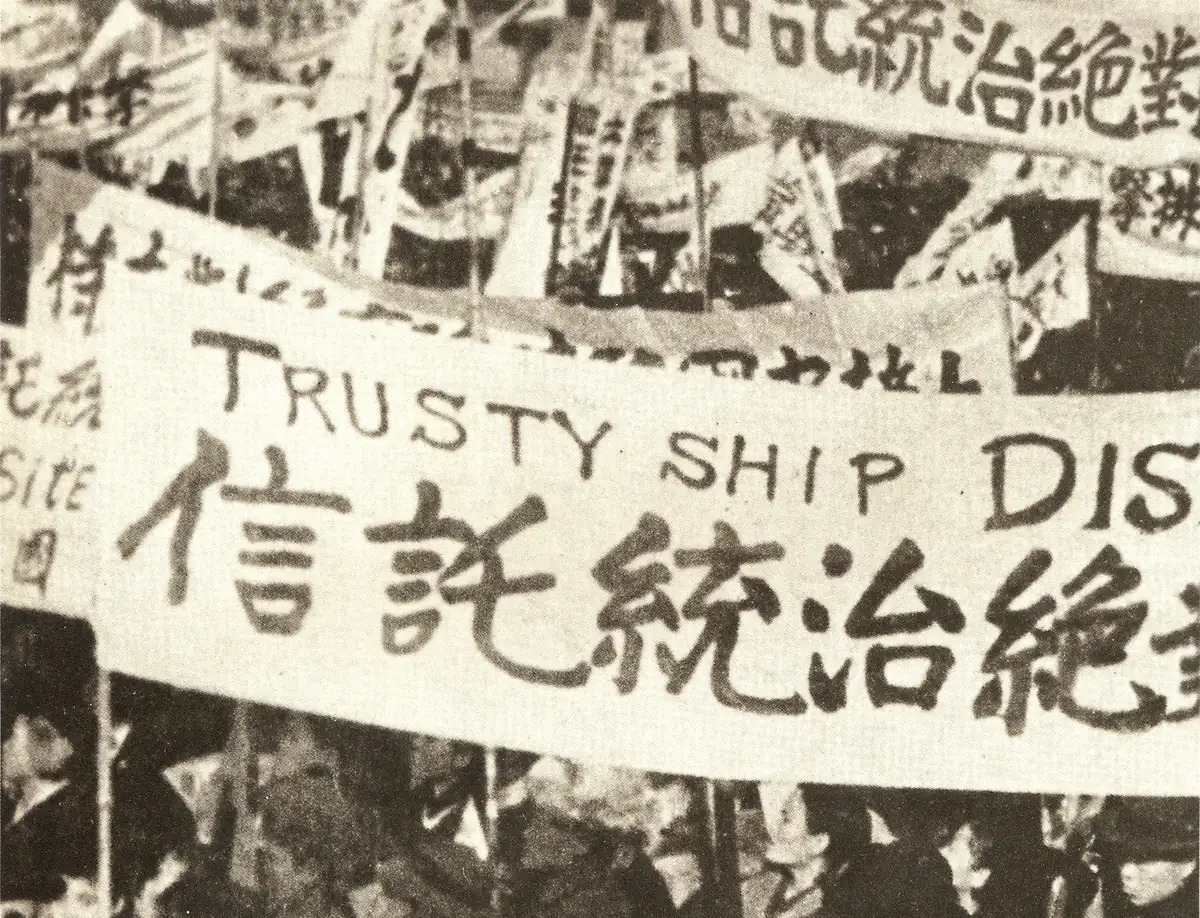
In December 1945, the United States, the Soviet Union, and Britain met in Moscow and agreed to a plan: a joint commission would form a provisional Korean government, which would then govern the whole peninsula under a five-year trusteeship until full independence. Koreans across both zones erupted in protest. They had been a colony for 35 years, and the idea of another five years under foreign oversight, even temporary, was unbearable.
The joint commission met in 1946 and again in 1947, and accomplished nothing. The Soviets insisted that any Korean political groups opposed to the trusteeship should be excluded from the provisional government, which would have eliminated almost every major political movement in the south. The Americans refused. By late 1947, the trusteeship plan was dead.
The United States took the question to the newly formed United Nations. The General Assembly created a temporary commission to oversee elections across all of Korea. The Soviet Union refused to let the commission into the north. So in May 1948, UN-supervised elections were held only in the south. Rhee won, and on August 15, 1948, exactly three years after Japan's surrender, the Republic of Korea was proclaimed in Seoul. Three weeks later, Kim Il-sung proclaimed the Democratic People's Republic of Korea in Pyongyang. Each government claimed to be the legitimate ruler of the entire peninsula. Neither recognized the other.
The temporary occupation line was now an international border between two hostile states.
The war that made it permanent
On June 25, 1950, North Korean forces crossed the 38th parallel with Soviet tanks and roughly 75,000 troops. The invasion nearly succeeded. Seoul fell in three days, and within weeks the South Korean army had been pushed into a tiny perimeter around the southeastern port of Busan. The United States, fighting under a UN mandate, sent troops that landed at Inchon in September, retook Seoul, and then pushed north, past the 38th parallel, nearly to the Chinese border at the Yalu River.
That brought China into the war. In October 1950, hundreds of thousands of Chinese soldiers poured across the Yalu and drove the UN forces back south in one of the longest retreats in American military history. By the spring of 1951, the front had stabilized almost exactly where the war began: the 38th parallel.
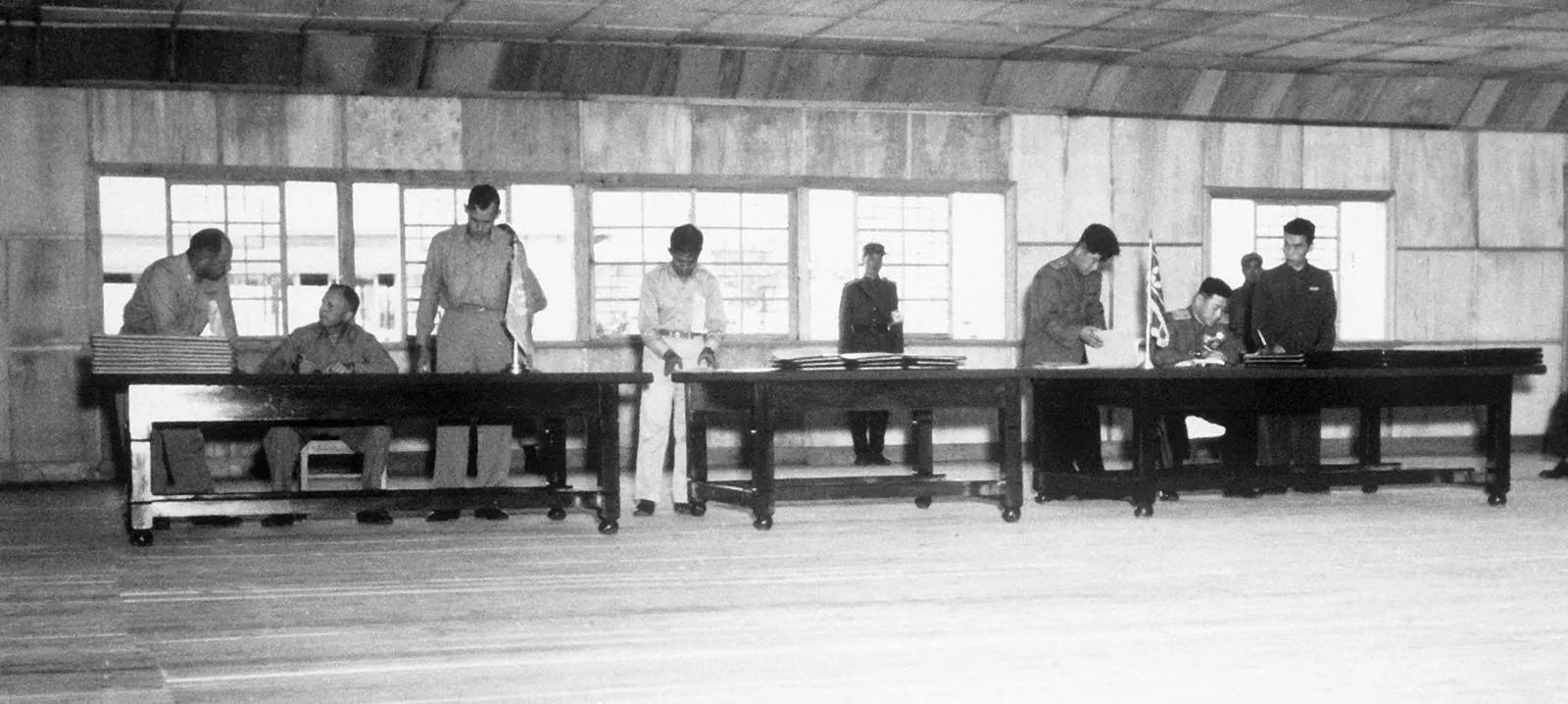
Two more years of fighting killed roughly two million Korean civilians, destroyed most of the peninsula's cities, and moved the front line barely at all. The armistice signed on July 27, 1953, did not end the war. It froze it. The new border, the demilitarized zone, follows the front line of 1953 rather than the 38th parallel, but the difference is a few miles in most places. No peace treaty has ever been signed.
A temporary line, still there
The division that two colonels drew in thirty minutes has now lasted 80 years. North Korea has built nuclear weapons, built a surveillance state with no equivalent on Earth, and kept the Kim dynasty in power across three generations. South Korea has become the world's 14th-largest economy, a democracy, and a global cultural force. The gap between the two sides is so vast that reunification has become almost unimaginable.
None of it was inevitable. Korea was not divided by ancient ethnic or religious differences, or by geography, or by a civil war that preceded the occupation. It was divided because two empires needed a line, two junior officers picked one in a hurry, and the Cold War that followed made it permanent before anyone could undo it. The 38th parallel is the clearest case in modern history of a temporary military decision becoming a permanent fact on the ground, outlasting the Cold War, the Soviet Union, and every plan anyone has made to erase it.
Test what you learned
5 questions on this article. About two minutes, no signup.
Orbis has a full course on this
The Korean Peninsula. 24 lessons, each ending with a quiz like this one.