
Flashpoint · East Asia
China and Taiwan
Tense since 1949, no fighting since 1979Updated October 31, 2026
China claims Taiwan as its territory. It says it seeks peaceful reunification but has never ruled out using force. Taiwan governs itself as the Republic of China, with its own elected president, military and currency. China stopped shelling Taiwan's island of Kinmen in 1979, and the two sides have not fought since. In December 2025 China's military rehearsed a blockade of Taiwan. The United States sells Taiwan weapons, but a $14 billion package has been on hold since May 2026.
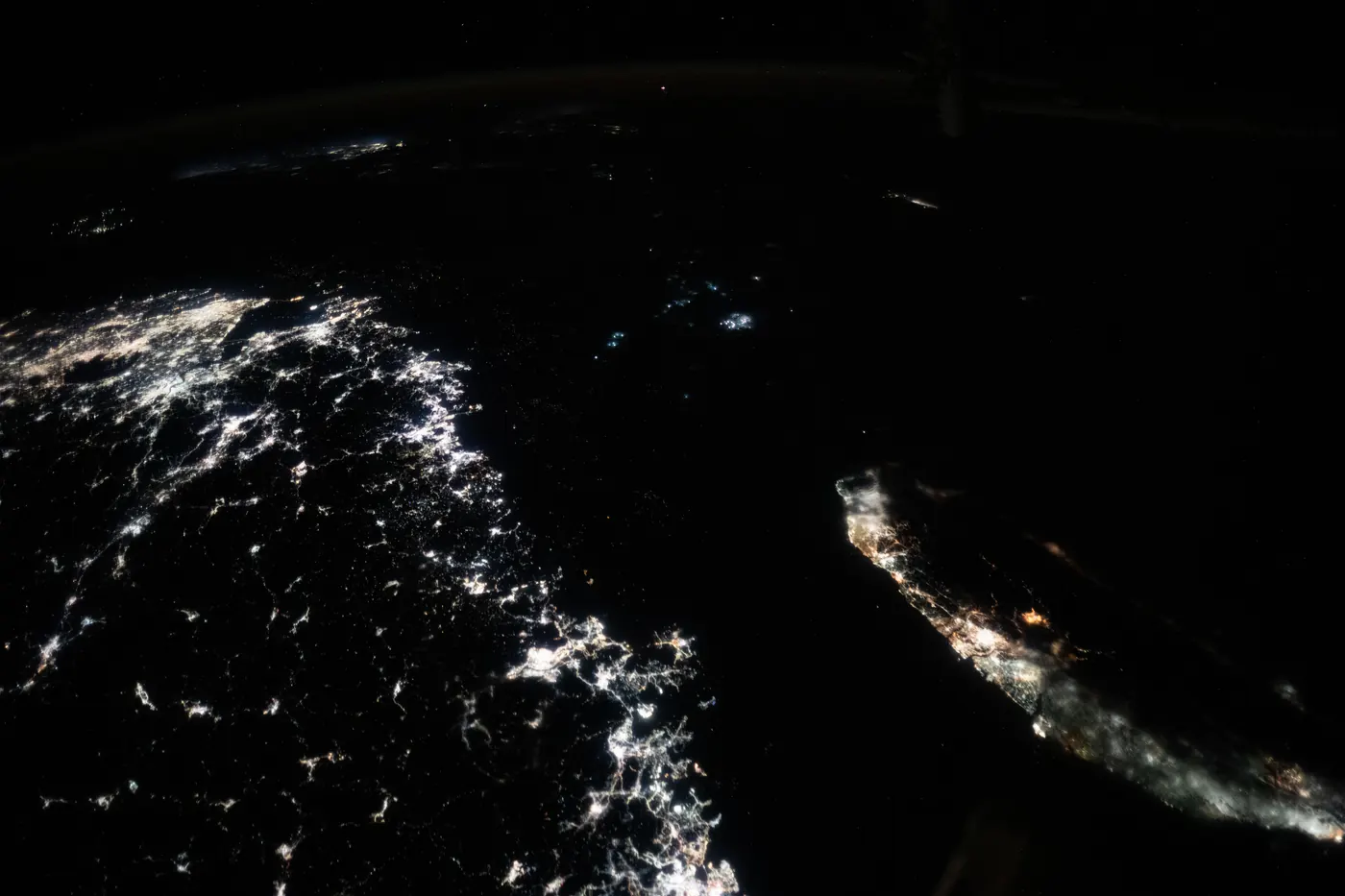
- Status
- Self-governed
- China claims Taiwan as a province
- Chinese aircraft, 2025
- 3,764
- in Taiwan's air defense zone, a record
- US arms on hold
- $14 billion
- paused since May 2026
- Recognize Taiwan
- 12 countries
- down from 22 in 2016
- TSMC share
- 69.9%
- of global contract chipmaking, 2025
Who backs whom over Taiwan?
The two sides and the countries that arm or diplomatically support them.
 United StatesApproved $11.1 billion of arms in December 2025 under the 1979 Taiwan Relations Act. A $14 billion package has been on hold since May 2026.
 JapanPM Takaichi said in November 2025 that a Chinese attack on Taiwan could lead Japan to use force. Japan sells Taiwan no weapons.
Self-governed island
 Taiwan (Republic of China)
Led by President Lai Ching-te since May 2024. The opposition Kuomintang (KMT), which favors talks with Beijing, controls the legislature with its allies. Has 170,600 active troops and about $29.7 billion of US weapons on order.
Claimant
 People's Republic of China
Says Taiwan is a province of China and seeks "peaceful reunification." Its 2005 Anti-Secession Law says the state shall use "non-peaceful means" if Taiwan moves to secede. Has 2,035,000 active troops and about 620 nuclear warheads.
 RussiaSays Taiwan is part of China and opposes its independence, most recently in a joint statement on May 20, 2026. Has not said it would help China militarily.
Where is the flashpoint?
The Taiwan Strait, the islands Taiwan holds near China's coast, and the waters where Chinese ships patrol.
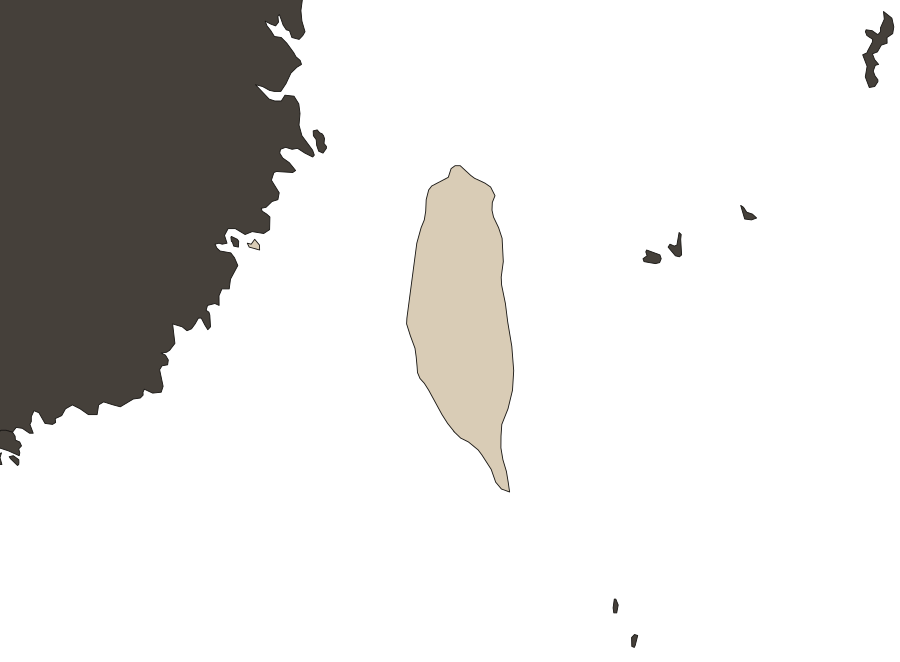
- TaipeiTaiwanTaiwan's capital and seat of government, with about 2.5 million people.
- KinmenTaiwanHeld by Taiwan, about 10 km from the Chinese city of Xiamen. China shelled it from 1958 to 1979. China began regular coast guard patrols here in February 2024, after two Chinese fishermen died fleeing Taiwan's coast guard. Its ships have entered Taiwan's restricted waters 117 times since then, Taiwan's coast guard says. China does not recognize those waters.
- MatsuTaiwanHeld by Taiwan, off the Chinese city of Fuzhou. Its closest island is about 9 km from China's coast.
- PenghuTaiwanIslands in the strait about 50 km off Taiwan's west coast, governed by Taiwan as Penghu County. Home to Taiwanese air and naval bases.
- Median lineAn unofficial line down the middle of the strait, drawn by a US general in 1955. China says there is no such line. Chinese military aircraft now cross it routinely.
- FujianChinaThe Chinese province facing Taiwan across the strait. In the December 2025 drill, China fired rockets toward Taiwan from Pingtan and Shishi on its coast.
- Pratas IslandTaiwanHeld by Taiwan, more than 400 km southwest of Kaohsiung. Chinese coast guard ships have repeatedly entered its restricted waters. Taiwan's coast guard confronted one there in June 2026.
- East of TaiwanChina's coast guard has patrolled these waters since June 1, 2026, with about two ships a month, at least 30 nautical miles off the coast. China calls the patrols law enforcement. Taiwan says China has no rights here.
Why does China want Taiwan?
China's Qing dynasty ceded Taiwan to Japan in 1895, after losing a war. Japan ruled the island for 50 years. When Japan lost World War II in 1945, the Republic of China took over Taiwan. In 1949 the Republic of China's Nationalist government lost the civil war on the mainland to China's Communist Party and retreated to Taiwan. For decades both governments claimed to rule all of China.
Most countries at first recognized the government in Taipei. In 1971 the UN gave China's seat to the People's Republic, in Resolution 2758. China says the resolution settled that Taiwan is part of China. The United States and Taiwan say it does not mention Taiwan and did not decide its status. The United States switched its recognition to Beijing in 1979. Today 12 countries recognize Taiwan, down from 22 when Tsai Ing-wen became Taiwan's president in 2016.
China's government says Taiwan has belonged to China since ancient times. It cites the 1943 Cairo Declaration, in which the leaders of the United States, Britain and China said Taiwan would be returned to China. China says reunification is inevitable. In 2022 President Xi Jinping said China would strive for peaceful reunification "with the greatest sincerity and the utmost effort," but "will never promise to renounce the use of force." China's Anti-Secession Law of 2005 says the state shall use "non-peaceful means" if Taiwan moves to secede or if peaceful reunification becomes impossible. Military analysts also point to Taiwan's position in the middle of the chain of islands, from Japan to the Philippines, that separates China's coast from the open Pacific.
Taiwan's President Lai Ching-te says the Republic of China and the People's Republic of China "are not subordinate to each other." The People's Republic has never ruled Taiwan. Lai's government says only Taiwan's 23 million people can decide its future. China cut off official contact with Taiwan's government in 2016, after President Tsai declined to accept the "1992 Consensus." China and Taiwan's main opposition party, the Kuomintang (KMT), say both sides agreed in 1992 that there is one China. The KMT adds that each side may interpret what "China" means. Tsai's and Lai's Democratic Progressive Party (DPP) says no such consensus was reached. China's government calls Lai a "separatist."
The KMT favors talks with Beijing. Its chair, Cheng Li-wun, met Xi in Beijing on April 10, 2026. It was the first meeting of the two parties' leaders in almost a decade.
How the dispute developed
- 1895China's Qing dynasty cedes Taiwan to Japan after losing a war.
- 1945After Japan's defeat in World War II, the Republic of China takes over Taiwan.
- 1949Chiang Kai-shek's government retreats to Taiwan after losing China's civil war.
- 1955A US general draws the median line down the strait to keep the two sides apart.
- 1958China shells Kinmen for 44 days, then on alternate days until 1979.
- 1971The UN gives China's seat to the People's Republic in Resolution 2758.
- 1979The US switches recognition to Beijing and passes the Taiwan Relations Act.
- 1995After Taiwan's President Lee Teng-hui visits the US, China fires missiles into the sea near Taiwan. It fires more in 1996, before Taiwan's first direct presidential election. The US sends two carrier groups.
- 2005China passes the Anti-Secession Law.
- 2015Taiwan's President Ma Ying-jeou of the KMT meets Xi Jinping in Singapore, the first meeting of the two sides' leaders since 1949.
- 2016China cuts off official contact after President Tsai Ing-wen declines to accept the 1992 Consensus.
- 2022After US House Speaker Nancy Pelosi visits Taiwan, China fires missiles over the island.
- 2024Lai Ching-te becomes president. Three days later China holds the Joint Sword-2024A drills, which it calls punishment for "separatist acts."
- Dec 2025The US approves $11.1 billion of arms for Taiwan. Less than two weeks later, China's Justice Mission drill rehearses a blockade of the island.
- 2026Xi Jinping meets the KMT's leader in April. In May the US puts a $14 billion arms package for Taiwan on hold.
What military drills has China held around Taiwan?
China's People's Liberation Army (PLA) has held six large exercises around Taiwan since August 2022. The first followed a visit to Taiwan by US House Speaker Nancy Pelosi. The May 2024 drill came three days after Lai took office. China had called his inauguration speech a "confession of independence." Its military called the drill "strong punishment" for the "separatist acts" of "Taiwan independence" forces. The April 2025 drill, Strait Thunder-2025A, followed Lai's description of China as a "foreign hostile force" in March. Taiwan's government says the drills are intimidation.
The largest was Justice Mission, on December 29 and 30, 2025. It came less than two weeks after the United States approved $11.1 billion of arms for Taiwan. China's Eastern Theater Command called it a "serious warning" to "Taiwan independence" separatist forces and "external interference forces." China declared eight zones around Taiwan closed to ships and aircraft. On December 30 it fired 27 rockets into the sea north and south of the island. Taiwan's defense ministry said 10 of them landed inside its contiguous zone, within 24 nautical miles of its coast, the closest ever. China's Eastern Theater Command said the drill practiced blockade operations. Taiwan's port authority said shipping was not affected.
In 2025 a record 3,764 Chinese military aircraft entered Taiwan's air defense identification zone, 22% more than in 2024, according to the CSIS China Power Project. In 2026 China had held no large exercise around Taiwan as of October 31. From January to September 2026, Taiwan counted about 2,030 Chinese military aircraft sorties around the island, less than half as many as in the same months of 2025, by the count of the Taiwan Security Monitor at George Mason University. About seven Chinese navy ships were near Taiwan on an average day, within the range of 2025.
China has used its coast guard more. Since June 1, 2026, Chinese coast guard ships have patrolled the waters east of Taiwan. China began the patrols after Japan and the Philippines announced talks on their sea border, and it calls them law enforcement. Taiwan's Mainland Affairs Council says China has no rights in those waters. Near Kinmen, China began regular coast guard patrols in February 2024. That month two Chinese fishermen died when their speedboat capsized while fleeing Taiwan's coast guard. China blamed Taiwan for the deaths. Taiwan's coast guard said the boat had entered its restricted waters and overturned while evading inspection. Chinese coast guard ships have entered the restricted waters around Kinmen 117 times since then, Taiwan's coast guard said in June 2026. China does not recognize those waters.
Chinese aircraft near Taiwan
3,764
A record year in 2025
Chinese military aircraft that entered Taiwan's air defense identification zone in 2025, 22% more than in 2024.
Why is Taiwan so important to the world?
Taiwan Semiconductor Manufacturing Company (TSMC) had 69.9% of the world's contract chipmaking revenue in 2025, according to TrendForce. It makes most of the world's most advanced chips, which go into phones, AI data centers and weapons. TSMC began making 2nm chips in Taiwan at the end of 2025.
A Chinese blockade or invasion of Taiwan would cut off most of the world's supply of advanced chips. The United States has tried to reduce that risk. In July 2026 TSMC raised its planned investment in Arizona to $265 billion. Since 2022 the US has also restricted exports of advanced chipmaking machines to China.
Taiwan also matters for shipping. About $2.45 trillion of goods passed through the Taiwan Strait in 2022, more than a fifth of the world's maritime trade.
Global foundry market share, 2025
What would happen if China invaded Taiwan?
To invade, China would have to move hundreds of thousands of troops across 130 to 180 km of open water and supply them on the other side. Analysts say only a few of Taiwan's beaches are suitable for a landing. CSIS, a Washington think tank, ran a war game of a Chinese invasion 24 times in 2023. In most runs the invasion failed. That result depended on Taiwan resisting and on US forces joining the fight quickly from bases in Japan. The United States, Taiwan and Japan lost dozens of ships, hundreds of aircraft and tens of thousands of troops. In the base case about 10,000 Chinese troops were killed, and China lost 155 combat aircraft and 138 major ships.
Many analysts see a blockade as more likely. China could declare closed zones around Taiwan and use its navy, coast guard and air force to stop ships and planes from reaching the island. Taiwan imports about 97% of its energy. China rehearsed a blockade of Taiwan in the Justice Mission drill of December 2025.
China could also try to take Taiwan's outer islands first. Kinmen sits about 10 km from the Chinese city of Xiamen and about 190 km from Taiwan. A move on Kinmen would test whether the United States and Japan would respond.
Three scenarios analysts discuss
- BlockadeClosed zones around Taiwan's ports and sea lanes. Rehearsed in Justice Mission, December 2025.
- Full invasionAn amphibious landing on Taiwan across 130 to 180 km of open water.
- Outer island seizureTaking Kinmen or Matsu, a few kilometers off China's coast.
Can China and Taiwan settle the dispute peacefully?
China offers Taiwan "one country, two systems," the formula it used for Hong Kong. China says Taiwan could keep its own social system and a high degree of autonomy. Taiwan's government rejects the offer. Polls in Taiwan found large majorities against it after China imposed a national security law on Hong Kong in 2020. Surveys by National Chengchi University in Taipei have long found that most people in Taiwan want to keep the status quo in some form. In its June 2026 survey, 7.6% wanted unification with China, at once or eventually, and 26.2% wanted independence, at once or eventually.
China's government does not talk to Lai's government, but it talks to the opposition. When Xi Jinping met KMT chair Cheng Li-wun in April 2026, he said he was willing to work with all parties in Taiwan to build peaceful relations. Taiwan holds local elections on November 28, 2026.
The United States follows a policy called "strategic ambiguity." The Taiwan Relations Act commits it to provide Taiwan with defensive arms. It does not commit the United States to fight for Taiwan. China says US arms sales go against the three joint communiqués the two countries signed between 1972 and 1982. In December 2025 it sanctioned 20 US defense companies and 10 of their executives over the latest sales. After meeting Xi in Beijing in May 2026, President Trump called a $14 billion arms package for Taiwan "a very good negotiating chip" and said he was "not looking to have somebody go independent." The package has been on hold since. At a summit in Washington on September 24, 2026, Xi asked Trump to "oppose" Taiwan independence, according to China's Xinhua news agency. The White House did not announce any change in US policy.
Questions about the Taiwan Strait
Is Taiwan a country?
Taiwan governs itself as the Republic of China, with its own president, parliament, military and currency. China says Taiwan is one of its provinces. Only 12 countries recognize Taiwan, and it is not a member of the United Nations. The United States and many other countries keep unofficial ties with Taiwan. They "acknowledge" or "take note of" China's position without endorsing it. Many others go further. In January 2025 the Lowy Institute, an Australian think tank, counted 119 countries that endorse China's "one-China principle," under which Taiwan is part of the People's Republic.
Will China invade Taiwan?
China says it seeks peaceful reunification and has not set a deadline. Its Anti-Secession Law says it will use force if Taiwan moves to secede. In 2023 the director of the CIA said Xi Jinping had told the PLA to be ready to invade by 2027, but that this did not mean Xi had decided to invade. Many analysts see a blockade or the seizure of an outer island as more likely than a full invasion.
Would the US defend Taiwan?
The United States has not said. The Taiwan Relations Act of 1979 commits it to provide Taiwan with defensive weapons. It does not commit US forces to fight. President Biden said at least four times that US forces would defend Taiwan. Each time, the White House said US policy had not changed. In May 2026 President Trump said he did not want "to travel 9,500 miles to fight a war."
Why does Taiwan matter for chips?
TSMC, a Taiwanese company, had 69.9% of the world's contract chipmaking revenue in 2025. It makes most of the world's most advanced chips for phones, AI servers and weapons. A war or blockade would cut off most of the world's supply.
How many countries recognize Taiwan?
Twelve: the Holy See, Eswatini, Paraguay, Guatemala, Belize, Haiti, Saint Kitts and Nevis, Saint Lucia, Saint Vincent and the Grenadines, the Marshall Islands, Palau and Tuvalu.
What did Japan's prime minister say about Taiwan?
On November 7, 2025, Prime Minister Sanae Takaichi told Japan's parliament that a Chinese attack on Taiwan could be a "survival-threatening situation" for Japan. Under Japanese law, that would allow Japan's military to use force alongside an ally. China called the remarks "blatant interference in China's internal affairs." It demanded she retract them, summoned Japan's ambassador, told its citizens to avoid Japan and halted imports of Japanese seafood. In January 2026 China banned exports of dual-use goods to Japanese military users. Japan's government said its position on Taiwan had not changed. In October 2026 China still demanded that Takaichi retract.
More on the Taiwan Strait
 Country profileTaiwan: allies, enemies and economy
 Country profileChina: allies, enemies and economy
 ChokepointTaiwan Strait
 RivalryUnited States vs China
 RivalryChina vs Japan
 ArticleWhat would a Chinese invasion of Taiwan look like?
 ArticleWhy does Taiwan make the world's most advanced chips?
 ArticleWhy is Taiwan called the Republic of China?
 QuizChina and Taiwan