
Flashpoint · Caribbean
The United States and Venezuela
Boat strikes since September 2025Updated November 1, 2026
The United States captured President Nicolás Maduro in Caracas on January 3, 2026, and flew him to New York to face drug trafficking charges. His vice president, Delcy Rodríguez, governs as acting president and works with Washington, which controls the sale of Venezuela's oil. US strikes on boats it says carry drugs have killed at least 243 people in the Caribbean and the eastern Pacific since September 2025. Venezuela also claims nearly three-quarters of Guyana, and the International Court of Justice is expected to rule by early 2027.
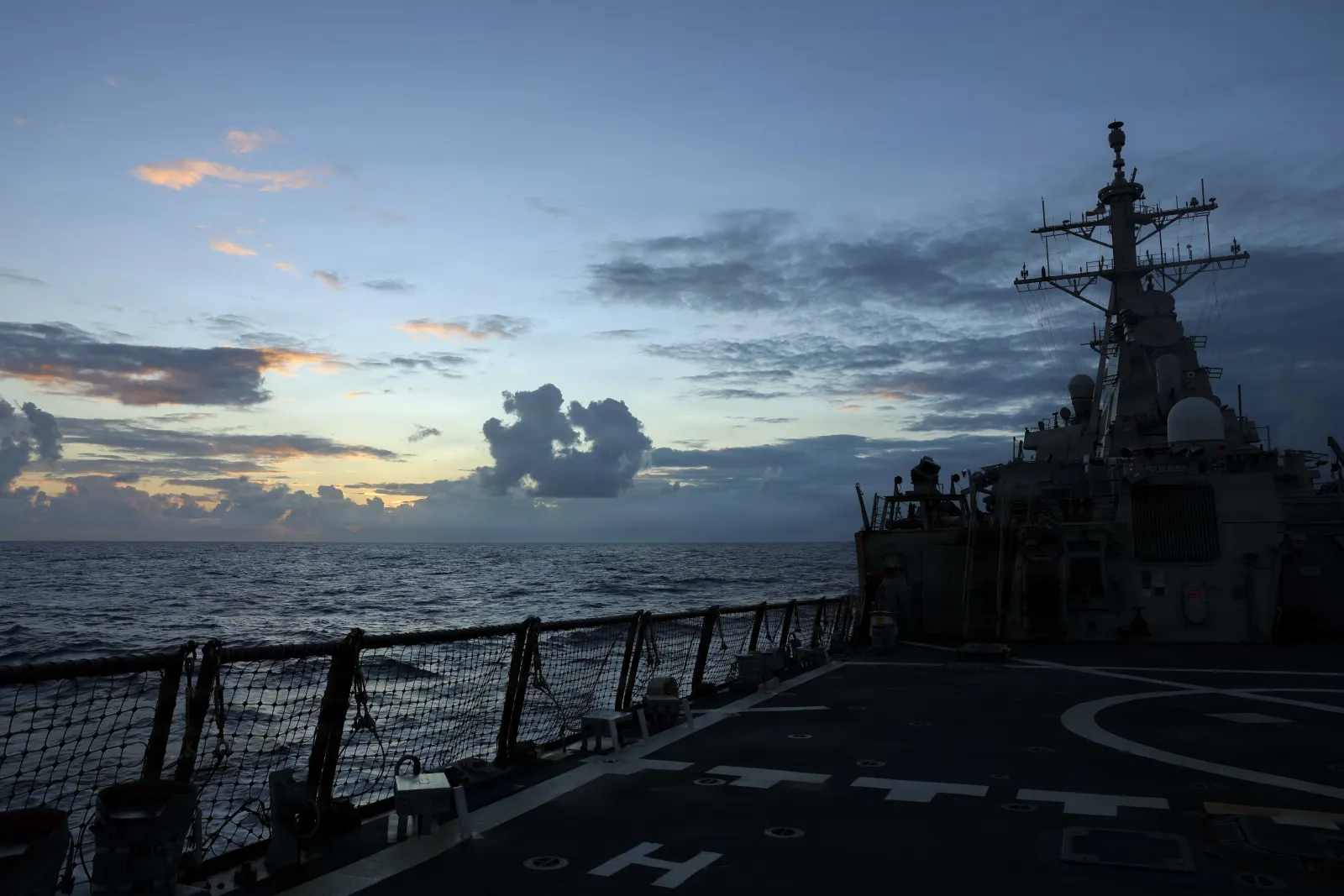
- Maduro captured
- Jan 3, 2026
- trial in New York set for June 2027
- Boat strikes
- 69
- at least 243 killed by Oct 27, 2026 (WOLA)
- Oil exports
- 1.08M b/d
- September 2026; the US controls the sales
- ICJ ruling due
- By early 2027
- on Venezuela's claim to Essequibo
Who backs whom between the US and Venezuela?
The United States, Venezuela's government under Rodríguez, and the countries around them. Since January the two governments have worked together, and Venezuela's old backers have lost ground.
 Trinidad and TobagoPM Persad-Bissessar backs the boat strikes; hosted a US radar from November 2025 to March 2026
 GuyanaRelies on the US against Venezuela's Essequibo claim; ExxonMobil and Chevron own 75% of its main oil block
 ColombiaPresident Abelardo de la Espriella refuses direct talks with Rodríguez; the US pledged $1 billion in security aid in August 2026
United States
 United States government
Captured Maduro, controls Venezuela's oil sales through US Treasury accounts and keeps a naval force in the Caribbean. After the raid President Trump said the US would "run the country" until a transition.
Venezuela
 Venezuelan government
Delcy Rodríguez has governed as acting president since January 5, 2026. Her government first called the raid an illegal kidnapping, then began working with Washington. Interior Minister Diosdado Cabello controls the police and intelligence services.
 RussiaCondemned the raid and welcomed Rodríguez as interim leader. Foreign Minister Lavrov said in February that Russian oil companies were forced out.
 ChinaCondemned the raid. In September 2026 it demanded protection of its oil interests after fields went to a US-backed operator.
 CubaSaid 32 of its personnel died in the raid. Venezuelan oil shipments to Cuba stopped and Cuban advisers left.
 IranCondemned the raid as a violation of Venezuela's sovereignty
 Qatar · Mediated a 2023 US-Venezuela prisoner swap. After the raid it helped seek proof that Maduro was alive, and its prime minister visited Caracas in February 2026.
 Brazil · President Lula condemned the raid but talks to Rodríguez. He said in September 2026 that in her place he would call elections.
Confirmed
Where are the US strikes and the Essequibo dispute?
The Caribbean and the eastern Pacific, where the US strikes boats, and the Essequibo region that Venezuela claims from Guyana.
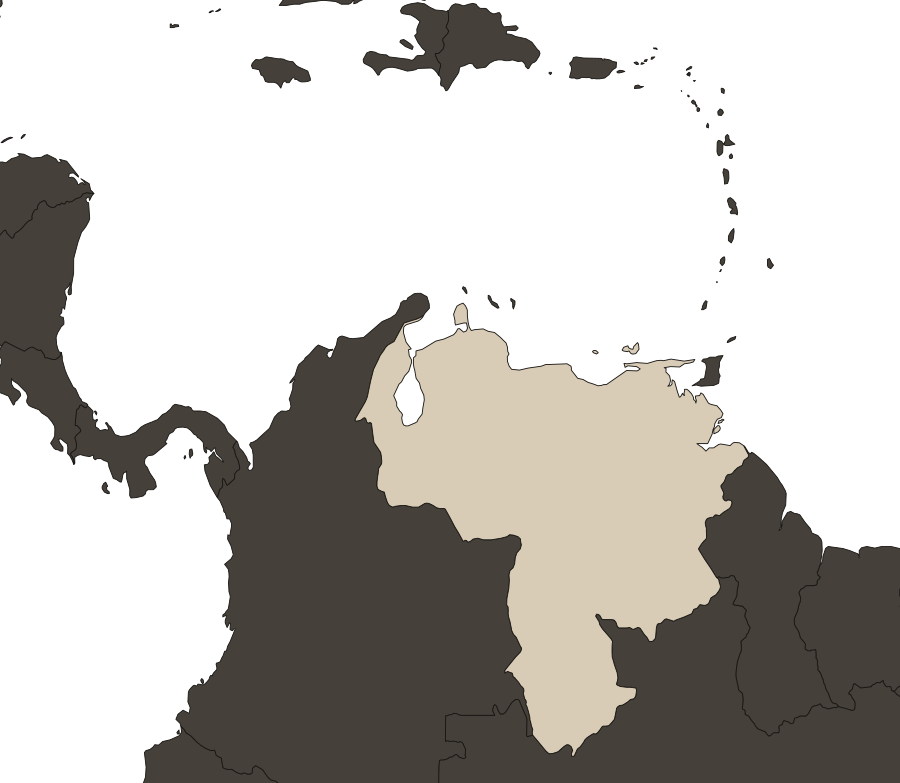
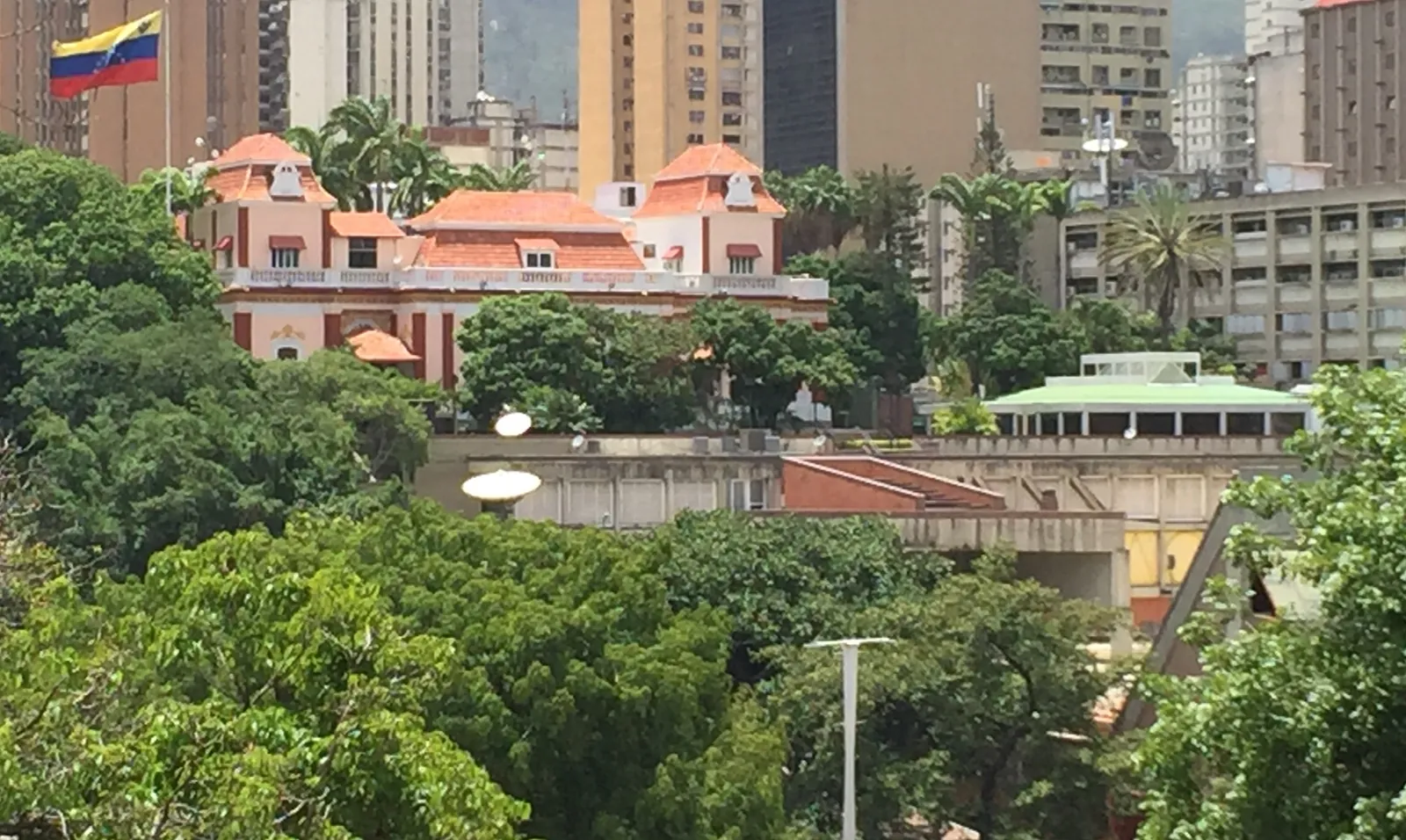
- CaracasVenezuelaUS forces captured Maduro here on January 3, 2026. Rodríguez now governs from the Miraflores Palace.
- Caribbean strike zoneUnited StatesThe first strikes, from September 2025, hit boats off Venezuela's coast. WOLA counts 21 attacks in the Caribbean.
- Eastern PacificUnited StatesMost of the strikes have hit boats in the eastern Pacific: 46 attacks by WOLA's count, including the latest on October 27, 2026.
- Puerto RicoUnited StatesThe main US staging area for the 2025 build-up. F-35 jets, MQ-9 Reaper drones and Navy ships operated from the island.
- Trinidad and TobagoUnited StatesAbout 11 km from Venezuela. PM Persad-Bissessar backs the strikes. A US radar stood at Tobago's airport from November 2025 to March 2026.
- José oil terminalVenezuelaVenezuela's main oil export terminal. Since January 2026 the money from the oil sold here goes to US Treasury accounts.
- EssequiboAbout 159,500 sq km held by Guyana and claimed by Venezuela. The ICJ ruling is expected between November 2026 and early 2027.
Why did the US capture Maduro?
Nicolás Maduro became president of Venezuela in 2013, after the death of Hugo Chávez. Under his rule the economy shrank by about 80%, and nearly 8 million Venezuelans left the country. His government blamed US sanctions for much of the collapse.
In 2018 Maduro won a new term in an election that the opposition and most Western governments called rigged. In the July 2024 election, tally sheets collected by opposition volunteers showed Edmundo González beating him by roughly two to one. The electoral council declared Maduro the winner without publishing results by polling station. The Supreme Tribunal of Justice certified his win. The Carter Center, which observed the vote, said it could not be considered democratic. González went into exile in Spain.
The United States indicted Maduro for narco-terrorism in 2020. It accused him of working with a network of officials it calls the Cartel de los Soles to move cocaine into the United States. The US designated the Cartel de los Soles a terrorist organization in November 2025, and the reward for Maduro's arrest reached $50 million. On January 3, 2026, about 150 US aircraft struck targets across Caracas while Delta Force operators and CIA officers captured Maduro and his wife, Cilia Flores. The Trump administration called it a law enforcement operation to arrest an indicted man. Venezuela's government called it an illegal kidnapping. UN Secretary-General António Guterres called it a "dangerous precedent" and said international law had not been respected. Russia, China, Iran and Cuba condemned the raid. Venezuelan exiles celebrated in Doral, Florida, and in Madrid. Venezuela's defense ministry counted 83 dead, including 47 Venezuelan soldiers and 32 Cuban personnel. Interior Minister Diosdado Cabello had said about 100 people died, some of them civilians.
Maduro and Flores pleaded not guilty in New York. Their lawyers argue that Maduro has immunity as a head of state. Prosecutors answer that the United States stopped recognizing him as president in 2019. The trial is set for June 1, 2027. Judge Alvin Hellerstein, who set that date, died on October 28, 2026, and the case passed to Judge Analisa Torres.
How the crisis built
- 2013Maduro succeeds Hugo Chávez.
- 2018Maduro wins a vote most Western governments call rigged.
- 2019The US recognizes opposition leader Juan Guaidó as president and sanctions Venezuela's oil company.
- 2020The US indicts Maduro for narco-terrorism.
- Jul 2024Maduro is declared the winner. The opposition's tally shows he lost.
- Sep 2025The US begins striking boats in the Caribbean.
- Jan 3, 2026US forces capture Maduro in Caracas and fly him to New York.
- Jan 5, 2026Delcy Rodríguez is sworn in as acting president.
- Mar 2026The US reopens its embassy in Caracas.
- Apr 2026The US lifts sanctions on Rodríguez.
- Oct 25, 2026Opposition leader María Corina Machado returns to Venezuela.
Who runs Venezuela now?
Acting President Delcy Rodríguez runs Venezuela. Within a day of the raid, Venezuela's Supreme Tribunal of Justice declared Maduro in "forced absence" and ordered her to take over. Her brother Jorge Rodríguez, president of the National Assembly, swore her in on January 5.
Rodríguez was born in Caracas in 1969. Her father, a socialist leader, was tortured to death in the custody of Venezuela's political police in 1976, when she was seven. Hugo Chávez later honored him as a revolutionary martyr. She was Maduro's foreign minister and then his vice president.
She began working with Washington within weeks of taking office. In February she met Laura Dogu, the top US diplomat in Caracas. The US reopened its embassy on March 30 and lifted sanctions on Rodríguez in April. She met President Trump in New York on September 22, 2026. She has promised elections but set no date. At the UN in September she said "the Venezuelan people will determine the best time" to hold them. On October 29 she said Venezuela's "political horizon is not measured by a date on the calendar." She has kept Venezuela's claim to Essequibo.
Interior Minister Diosdado Cabello controls the police and the intelligence services, and his influence reaches the armed pro-government groups called colectivos. He is named in the same New York indictment as Maduro. Rodríguez's government passed an amnesty law in February 2026 and has freed hundreds of political prisoners. Foro Penal, a Venezuelan rights group, still counted 322 political prisoners on October 5. The UN human rights office said in March 2026 that "structures that have sustained persecution for years have not been dismantled."
Oil revenue
$13 billion+
Venezuelan oil sold under US control
An executive order of January 9, 2026 put Venezuela's oil revenue in US Treasury accounts. By July, Trump said more than $13 billion of oil had been sold.
What are the US boat strikes near Venezuela?
Since September 2025, the US military has struck boats that it says carry drugs for groups it designates as terrorist organizations. The campaign is part of Operation Southern Spear. The Washington Office on Latin America (WOLA), which tracks the strikes, counts 69 attacks and at least 243 people killed by October 27, 2026. Of those attacks, 46 were in the eastern Pacific and 21 in the Caribbean.
The first strike, announced on September 2, 2025, killed 11 people on a boat that had left Venezuela. By late 2025 about 15,000 US troops were in the Caribbean, with Navy destroyers, F-35 jets and MQ-9 Reaper drones. In late December 2025 a US drone struck a dock on Venezuela's coast that the US said was used to load drug boats. The strikes went on after Maduro's capture, at a slower pace. The latest, on October 27, 2026, killed five people in the eastern Pacific, US Southern Command said.
The Trump administration says the strikes are lawful. It told Congress in October 2025 that the United States is in an armed conflict with drug cartels, and US Southern Command calls the people killed "narco-terrorists." Officials say the strikes keep drugs from reaching Americans. Defense Secretary Pete Hegseth said some trafficking bosses had stopped their operations. Trinidad and Tobago's Prime Minister Kamla Persad-Bissessar has backed the strikes from the first one.
Critics call the strikes illegal killings. The UN Special Rapporteur on counterterrorism, Ben Saul, reported in September 2026 that 68 attacks had killed at least 223 people by August. He found reasonable grounds to believe the killings were crimes against humanity. Relatives of some of the dead say they were fishermen. The families of two Trinidadian men killed on October 14, 2025 sued the US government in federal court in January 2026. The UK suspended sharing intelligence on suspected drug boats with the US in November 2025. Congress has not authorized military force against drug traffickers.
US boat strikes by sea, September 2025 to October 27, 2026
What is the Essequibo dispute?
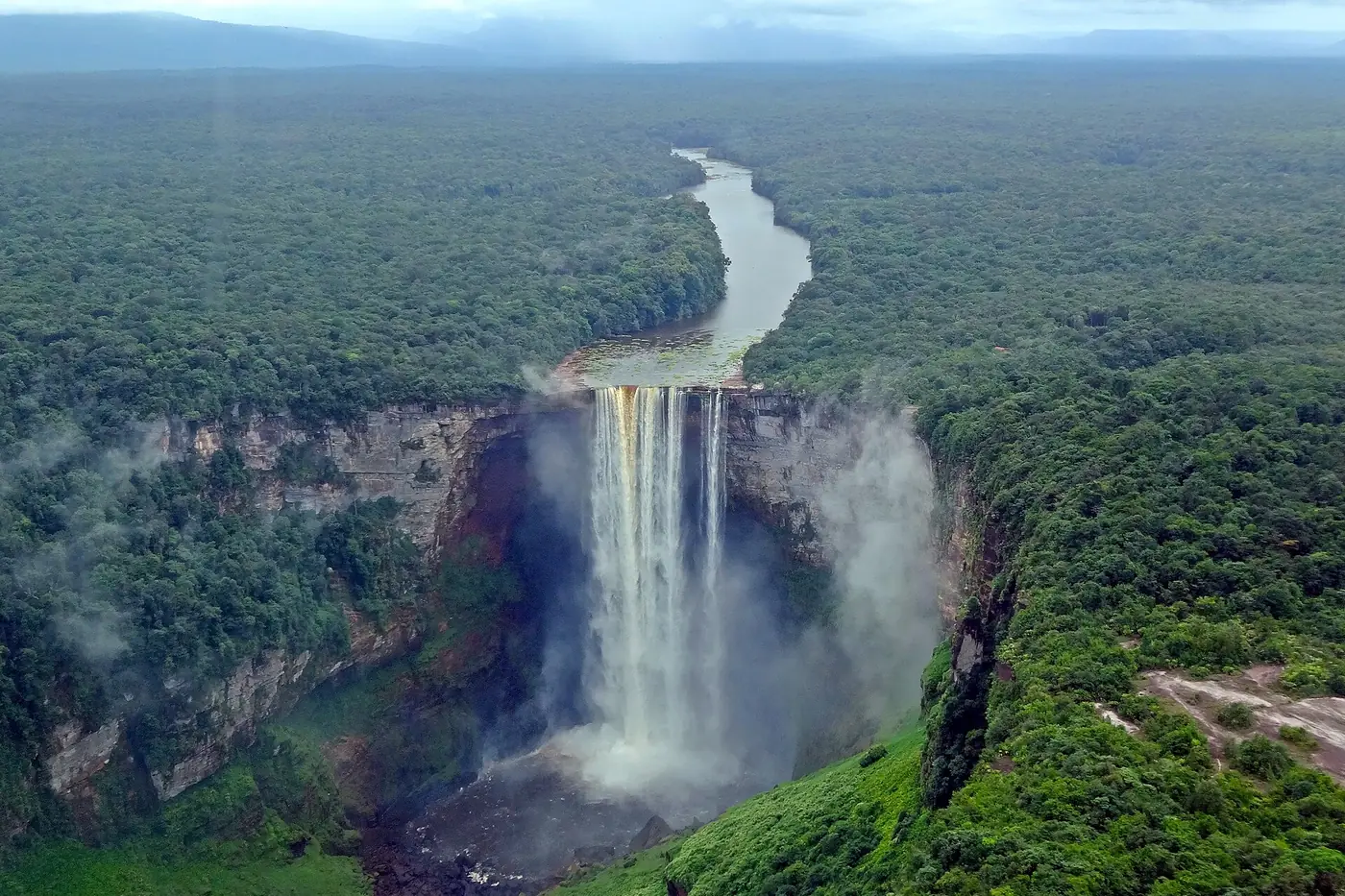
Venezuela claims Essequibo, about 159,500 sq km of land west of the Essequibo River. That is nearly three-quarters of Guyana. Guyana has governed it since independence in 1966. About 170,000 people live there.
An international tribunal gave the area to British Guiana in 1899, and Venezuela accepted the border for decades. In 1962 Venezuela declared the award void. Venezuela says Spain's colony reached the Essequibo River and that it inherited that line at independence. It says the award was a political deal and that the 1966 Geneva Agreement requires a negotiated settlement. Guyana says the award is a full and final settlement. In 2018 the UN Secretary-General sent the case to the International Court of Justice. Hearings ended in May 2026. The court has not set a date for its ruling. Guyana's government expects it between November 2026 and early 2027.
Rodríguez told the court in May that Venezuela has "no legal way of recognizing a decision resulting from this process." At the UN General Assembly in September 2026, she restated Venezuela's "historic rights" and asked Guyana to return to talks. Guyana's President Irfaan Ali urged Venezuela to respect the court's decision. In 2025 the court ordered Venezuela not to elect a "governor" for Essequibo. Venezuela held the vote anyway, with all ballots cast on its own side of the border.
ExxonMobil and Chevron own 75% of Guyana's main oil block, and China's CNOOC owns 25%. Guyana pumped about 891,000 barrels a day in January to August 2026. Venezuela's sea claim overlaps part of the offshore oil area. In March 2025 a Venezuelan navy boat approached an ExxonMobil production ship in Guyana's waters. US Secretary of State Marco Rubio warned in Georgetown that an attack "would not end well" for Venezuela's government.
Where does Venezuela's opposition stand?
María Corina Machado, the opposition's leader, won the 2025 Nobel Peace Prize while in hiding inside Venezuela. She left the country in December 2025 with American help to accept the prize. In January 2026 she gave her Nobel medal to President Trump at the White House. On October 25, 2026, she announced that she was back in Venezuela after more than 10 months abroad. Secretary of State Marco Rubio credited US-backed talks for her return.
Edmundo González, the opposition's candidate in July 2024, lives in exile in Madrid. He welcomed Machado's return and said he would follow very soon. On October 22, Machado's movement held nationwide protests demanding an election in 2027 and the release of political prisoners. Machado backs July 24, 2027 as the date for a presidential election. US Senator Bernie Moreno first proposed that date.
Rodríguez's government holds US-backed talks with a different opposition group. Jorge Rodríguez leads the government side. Dinorah Figuera, who heads a faction of the National Assembly elected in 2015, leads the other. Machado is not part of the talks. Axios reported in October that the US wants a new Supreme Court by late 2026 and a new electoral council in early 2027 before a vote. No election date has been set.
Questions about US-Venezuela tensions
Why did the US capture Maduro?
The US indicted Maduro for narco-terrorism in 2020, accusing him of helping Venezuelan drug networks move cocaine into the United States. The opposition's tally sheets showed he lost the July 2024 election, but he stayed in office. US forces captured him in Caracas on January 3, 2026, and flew him to New York for trial. Venezuela's government called the raid an illegal kidnapping.
Who runs Venezuela now?
Delcy Rodríguez, Maduro's former vice president, governs as acting president and works with the US. Interior Minister Diosdado Cabello controls the police and intelligence services. The US controls the sale of Venezuela's oil through accounts at the US Treasury.
How many people have the boat strikes killed?
At least 243 people by October 27, 2026, in 69 attacks in the Caribbean and the eastern Pacific, by the count of the Washington Office on Latin America. The US says the dead were "narco-terrorists." A UN Special Rapporteur reported in September 2026 that the killings may be crimes against humanity.
Will Venezuela take Essequibo?
Analysts say the US role in Venezuela makes an attack unlikely. The ICJ is expected to rule on the land border by early 2027. Venezuela says it will not recognize the ruling. In March 2025 a Venezuelan navy boat approached an oil production ship in Guyana's waters.
When is Venezuela's next election?
No date has been set. Opposition leader María Corina Machado backs July 24, 2027. Acting President Delcy Rodríguez promises elections without a date. The US wants a new Supreme Court and electoral council first.
Is Maduro still in jail?
Yes. Maduro and his wife, Cilia Flores, are held at the Metropolitan Detention Center in Brooklyn. Both pleaded not guilty and argue that Maduro has immunity as a head of state. Prosecutors say he has none, because the US stopped recognizing him as president in 2019. The trial is set for June 1, 2027. Judge Analisa Torres took over the case after Judge Alvin Hellerstein died on October 28, 2026.
More on US-Venezuela tensions
 Country profileVenezuela: allies, enemies and economy
 Country profileGuyana: allies, enemies and economy
 Country profileUnited States: allies, enemies and economy
 Disputed territoryEssequibo
 Country profileTrinidad and Tobago: allies, enemies and economy
 Country profileColombia: allies, enemies and economy
 Country profileCuba: allies, enemies and economy
 Civil warMexico's cartel war
 ArticleWho runs Venezuela after Maduro's capture?