Iran-backed militia · Iraq · Iran’s network
Kataib Hezbollah and the PMF
Paused attacks, refuses to disarmUpdated November 19, 2026
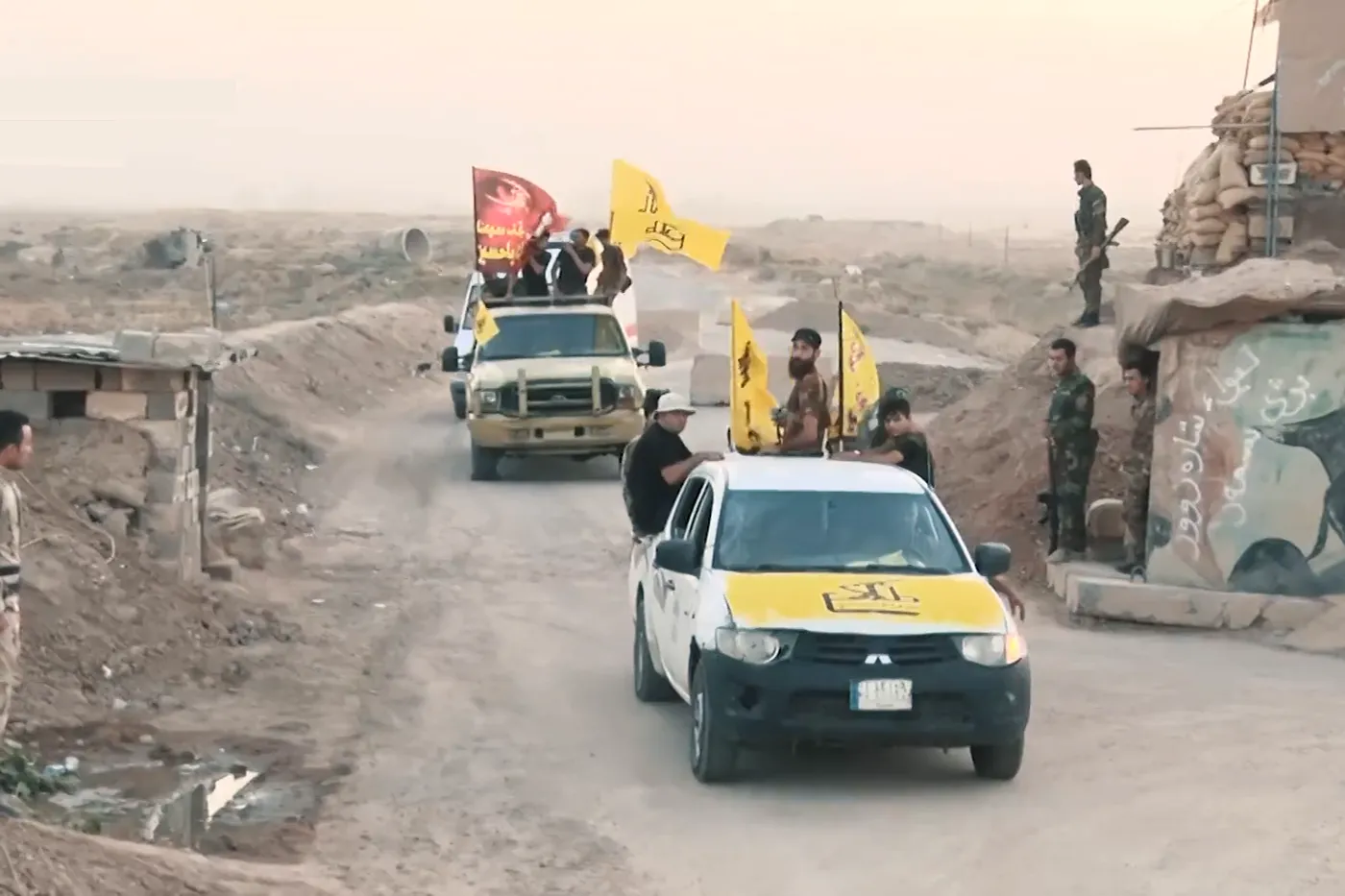
Kataib Hezbollah is an Iraqi Shia militia founded after the 2003 US invasion. It operates inside the Popular Mobilization Forces, a state body with about 200,000 to 238,000 people on its payroll. The US Treasury says Iran's IRGC provides it with weapons, funding and training. Iran says the groups make their own decisions. Iraq's government pays the PMF more than $2.6 billion a year. Kataib Hezbollah holds a closed zone at Jurf al-Sakhar, south of Baghdad, and has PMF bases across northern, central and western Iraq. It fields drones, rockets and explosively formed penetrators. A 2018 report said Iran sent ballistic missiles to Iraqi groups. Neither government confirmed it.
- Leader
- Ahmad al-Hamidawi
- secretary-general; $10m US bounty
- KH fighters
- About 10,000
- estimates range from 1,000 to 30,000
- PMF payroll
- 200,000-238,000
- state-funded; includes many factions
- Main backer
 Iran
- US Treasury says IRGC funds and arms KH
- Founded
- 2003-2007
- from IRGC-linked cells after the US invasion
Who funds Kataib Hezbollah and the PMF?
State money, Iranian support and smuggling networks.
- From abroad
- Iran (IRGC-Quds Force)The US Treasury says the IRGC provides training, weapons, funding, intelligence and logistics. Iran says resistance groups make their own decisions.
- At home
- Iraqi state budgetIraq pays the PMF more than $2.6 billion a year, the US Treasury said in September 2026. Kataib Hezbollah's Brigades 45, 46 and 47 draw salaries from it.
- Oil smugglingThe US Treasury sanctioned KH-linked figures in May 2026 for siphoning oil from fields in Basra and Maysan. A deputy oil minister was sanctioned for diverting oil to a smuggling network and to Asaib Ahl al-Haq.
- Alleged fuel theft at Jurf al-SakharAn Iraqi Interior Ministry intelligence report found pipeline tapping and two small refineries in the closed zone. Satellite images showed 105 tanker sightings at four sites between 2021 and 2026.
- Contracts and border crossingsPrime Minister Ali al-Zaidi canceled contracts at Mosul airport over links to armed groups. Sources say the contracts gave Kataib Hezbollah significant revenue.
- Hawala and cash transfersThe US Treasury sanctioned a Dubai-based hawala firm, Shams and Bahr, in September 2026 for moving millions of dollars from Iraq to Iran. Treasury also says KH leaders moved bags of US currency on Fly Baghdad flights.
KH
Kata'ib Hizballah
The money pays for a militia of about 10,000 fighters, drone and missile operations, and a network of businesses. The US Treasury sanctioned the Muhandis General Company, the PMF's economic arm, in October 2025. Treasury says Abu Fadak controls the company, that it diverts money from government contracts and that it played a central role in weapons supply.
No credible estimate of Kataib Hezbollah's total budget is public.
ConfirmedReported, denied
Where does Kataib Hezbollah operate?
It holds a closed zone south of Baghdad and has PMF bases across northern, central and western Iraq. Iraq's government is sovereign everywhere, but the Jurf al-Sakhar zone has been off-limits to outsiders since 2014.
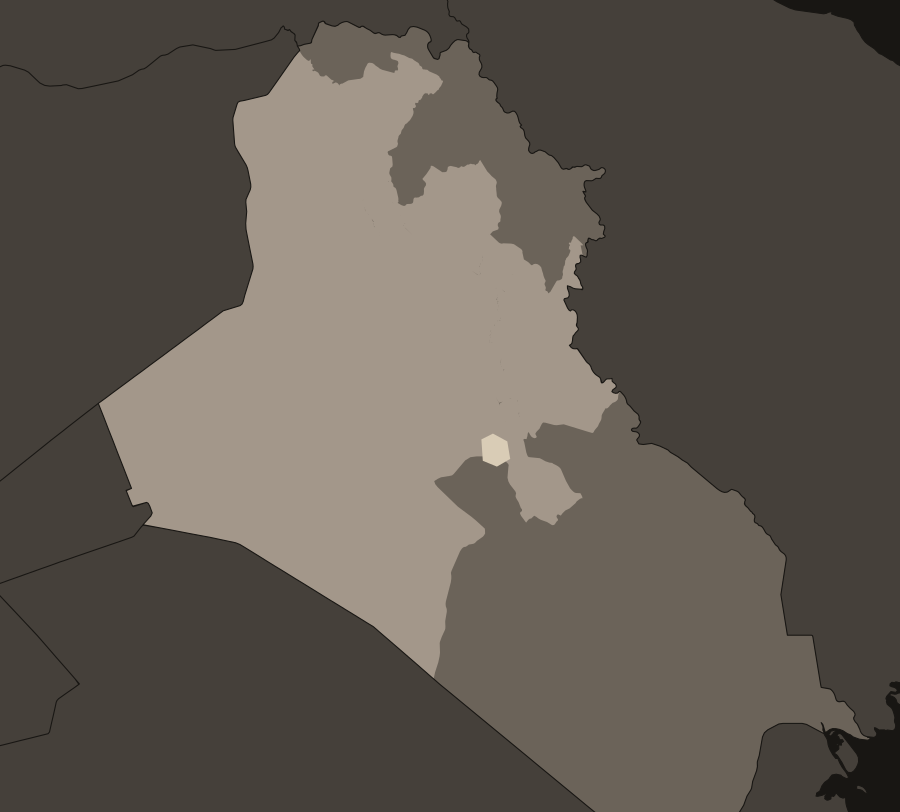
Jurf al-Sakhar, a closed zonePMF bases (struck in 2026)Rest of IraqWhole provinces are shaded. The PMF bases are state bases; Iraq’s government is sovereign everywhere. The Jurf al-Sakhar zone is drawn approximately.
- Jurf al-SakharClosed zoneKataib Hezbollah has held this farming area in Babil province since Iraqi forces and militias retook it from the Islamic State in late 2014. Thousands of displaced Sunni residents have not been allowed to return. An Iraqi Interior Ministry intelligence report found fuel-theft sites and small refineries inside the zone. The area was struck during the 2026 war.
- BaghdadCapitalKataib Hezbollah has its headquarters in Baghdad. On December 31, 2019, KH-led militiamen stormed the US Embassy compound in the Green Zone. During the 2026 war, drones hit the embassy on March 17 and 18. A US strike in the city killed KH commander Abu Baqir al-Saadi on February 7, 2024.
- Al-QaimSyrian borderThe PMF runs a border sector here, opposite Syria's Albu Kamal. A strike on a PMF base at nearby Akashat on March 12, 2026, killed at least 35 fighters. Iraqi factions pulled back from Syria in December 2024 after the fall of the Assad government.
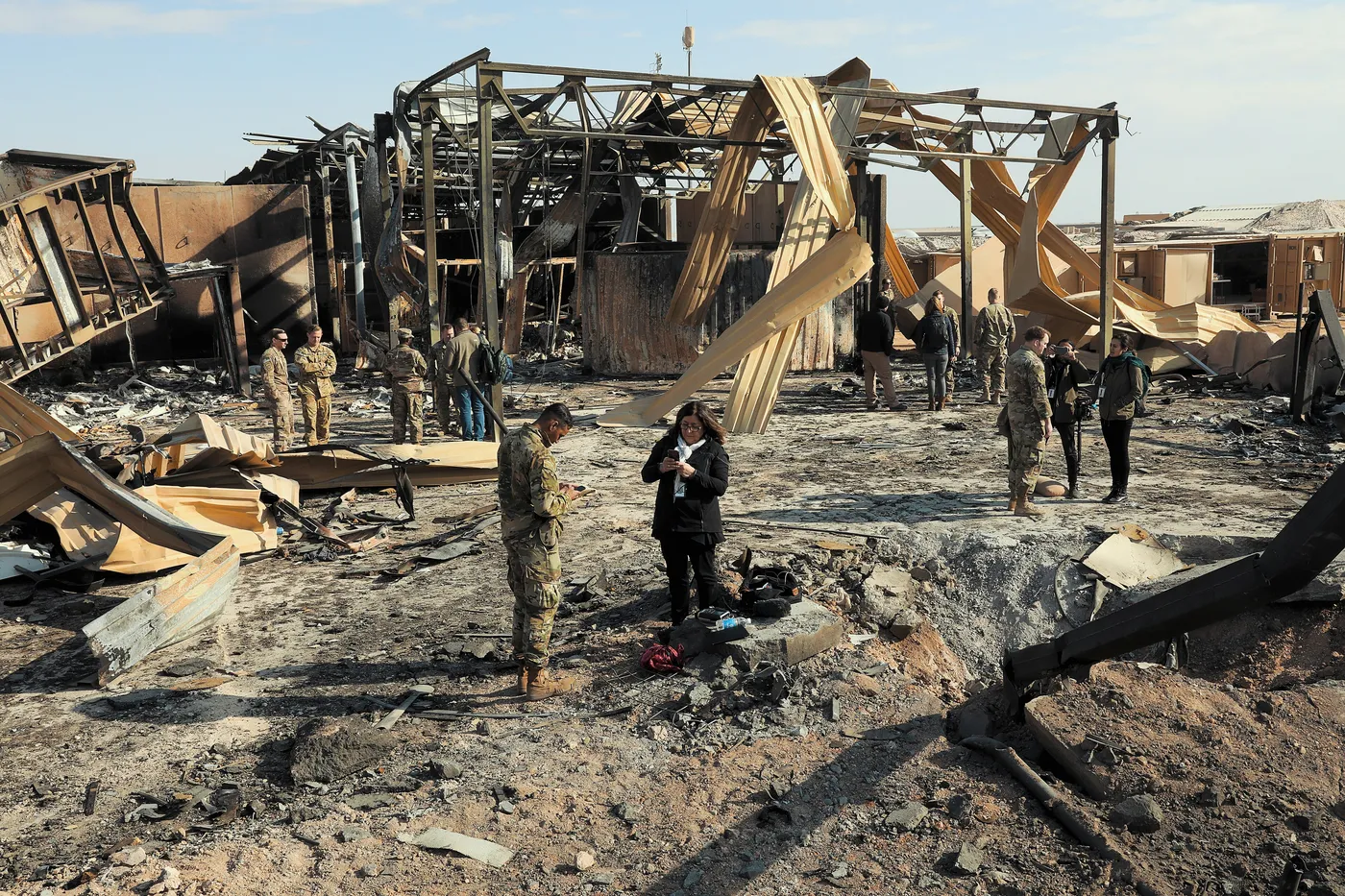
- Ain al-AsadFormer US baseThis air base in Anbar province was a frequent target of rocket and drone attacks in 2023 and 2024. Iraq's military took full control on January 17, 2026, when the US handed it over as part of the withdrawal from federal Iraq.
- ErbilUS exitThe last US troops left Iraq from the Erbil air base on September 30, 2026, ending Operation Inherent Resolve in Iraq. The US consulate remains open. The base was a drone target during the 2026 war.
- Tower 22JordanA one-way drone attack on this outpost near the Jordan-Syria border on January 28, 2024, killed 3 US soldiers and wounded 47. The Pentagon said the attack had Kataib Hezbollah's "footprints." The White House blamed the Islamic Resistance in Iraq.
- KirkukPMF baseA PMF headquarters near Kirkuk's airport was struck on March 28, 2026, during the 2026 war.
- SinjarYazidi unitsYazidi PMF units, including the Lalish Battalion and Sinjar Forces, are based here. The PMF maintains an office in the town.
What weapons does Kataib Hezbollah have?
Iranian-designed drones and missiles, plus rockets, mortars and anti-armor weapons used against US forces since 2007.
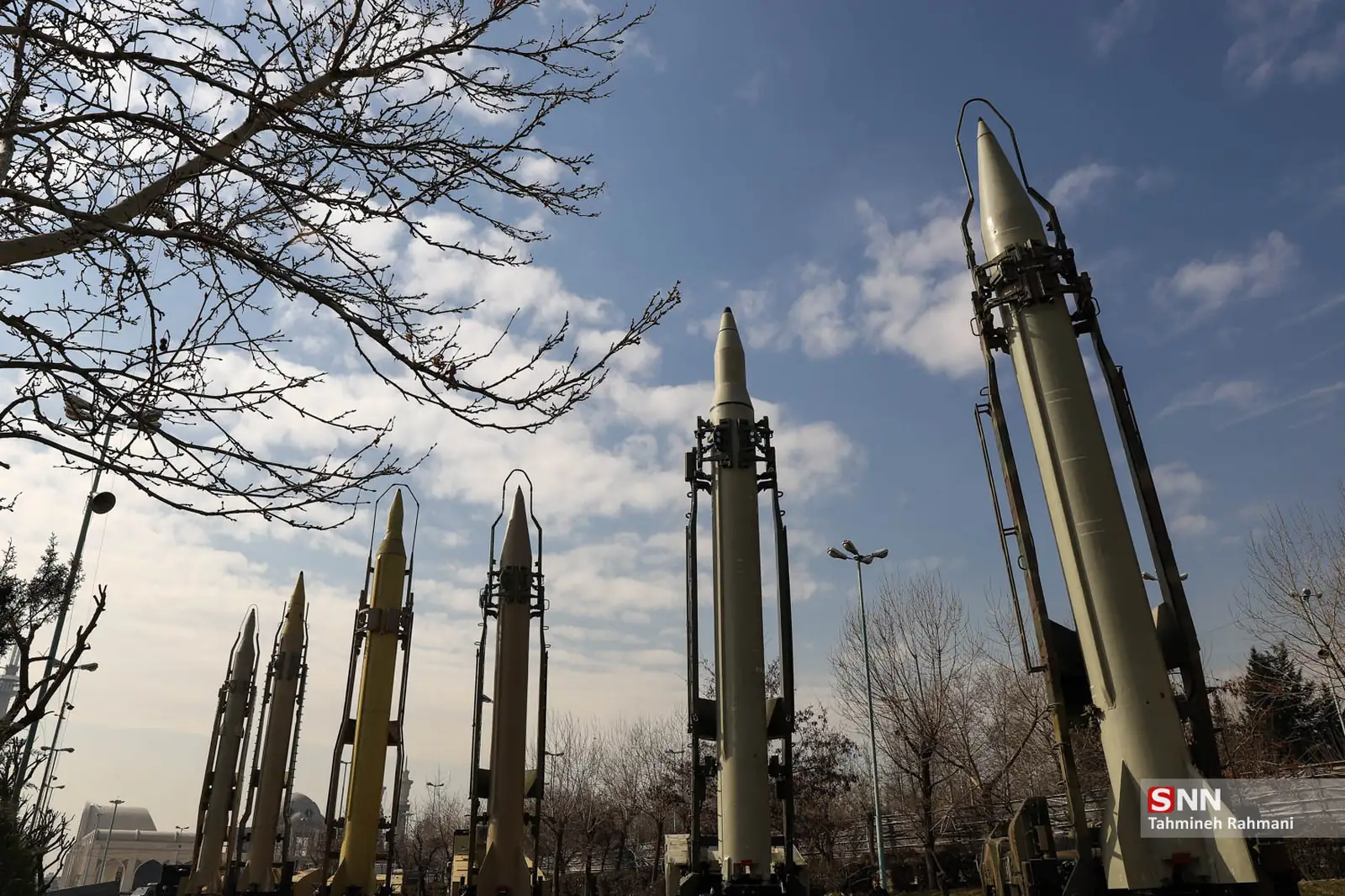
A 2018 report said Iran transferred a few dozen of these missiles to Iraqi groups. Neither Iran nor Iraq confirmed it.
Distances from Baghdad. Ranges are the longest reported for each kind of weapon.
One-way attack drones
Mohajer-6, Sahab/Sammad-type · Iranian design
A drone attack on Tower 22 in Jordan on January 28, 2024, killed 3 US soldiers. The Pentagon said the attack had Kataib Hezbollah's "footprints." In 2026, drones launched from Iraq hit US bases, the US Embassy and Saudi energy sites. Saudi Arabia blamed Iran-backed militias for a September attack on its East-West pipeline. The Islamic Resistance in Iraq denied it.
Rockets and IRAMs
Improvised rocket-assisted mortars · Locally built
Used against US forces from 2007 onward. The US Treasury links Kataib Hezbollah to an IRAM attack on a US base near Rustamiya on February 19, 2008.
EFPs and RPG-29s
Explosively formed penetrators, RPG-29 · Not stated in official sources
Used against US armored vehicles in 2007 and 2008. An RPG-29 hit a US tank on May 13, 2008. The US Treasury says Lebanese Hezbollah trained KH members in Iran to build and plant IEDs.
Small arms
Standard infantry weapons · Various
No reliable public inventory of Kataib Hezbollah's weapons exists.
- Attacks on US forces
- 600+
- attempted by all Iran-aligned groups, Feb-Apr 2026 (CENTCOM)
- Strikes on PMF sites
- 165+
- by mid-2026, killing 100+ fighters
- US soldiers killed
- 3
- at Tower 22, Jordan, January 28, 2024
Is Kataib Hezbollah a terrorist group?
The United States has listed Kataib Hezbollah since 2009. The EU, the UK and the UN have not. The PMF itself is a state body and is not listed. The US lists six Iraqi factions as Foreign Terrorist Organizations.
 United StatesForeign Terrorist Organization since July 2009
 United Arab EmiratesListed as "Hizbollah Brigades in Iraq" since November 15, 2014
 European UnionNot listed
 United KingdomNot listed
- UN Security CouncilNot listed
 RussiaNot listed
 ChinaNot listed
What are the Popular Mobilization Forces?
The Popular Mobilization Forces, known as al-Hashd al-Shaabi, are a collection of mostly Shia militias that formed after the Islamic State took Mosul in June 2014. Grand Ayatollah Ali al-Sistani issued a fatwa on June 13, 2014, calling on Iraqis to volunteer to fight. Tens of thousands joined. In 2016, Law No. 40 made the PMF a legal part of Iraq's armed forces.
The PMF has 67 to 70 or more brigades and between 200,000 and 238,000 people on its payroll, according to budget documents and reporting by Kurdistan24. The Washington Institute notes that payroll numbers may be higher than the number of real fighters. Iraq pays the PMF more than $2.6 billion a year.
Several of the PMF's strongest factions take direction from Iran's IRGC-Quds Force, according to the US Treasury. These factions claimed attacks under a shared banner, the Islamic Resistance in Iraq, starting in October 2023. The Islamic Resistance in Iraq is a shared name for claiming attacks. It has no forces of its own. Militia-linked political parties won more than 50 seats in Iraq's November 2025 parliamentary election.
The main bodies
- Popular Mobilization Forces (PMF)State body; 67-70+ brigades; Chairman Falih al-Fayyadh (Ata party, 10 seats). Not US-listed as terrorist; Fayyadh sanctioned under Global Magnitsky
- Kataib HezbollahSecretary-General Ahmad al-Hamidawi; Brigades 45, 46, 47; Huquq party (6 seats). US Foreign Terrorist Organization since 2009
 Asaib Ahl al-HaqSecretary-General Qais al-Khazali; Sadiqoun party (26-27 seats). US Foreign Terrorist Organization since 2020
- Badr OrganizationSecretary-General Hadi al-Amiri; largest share of brigades; 18 seats; Transport and Water Resources ministries. Not US-listed
- Harakat al-NujabaSecretary-General Akram al-Kaabi; 12th Brigade. US Foreign Terrorist Organization since 2025
- Kataib Sayyid al-ShuhadaCommander Abu Ala al-Walai; Muntasirun (4 seats, inside State of Law). US Foreign Terrorist Organization since 2025
Who leads Kataib Hezbollah?
Ahmad al-Hamidawi, known as Abu Hussein, is the secretary-general of Kataib Hezbollah. The State Department designated him in February 2020, and in April 2026 the State Department offered up to $10 million for information about him. He was trained by the IRGC, the State Department says. In July 2021 the group's Shura Council voted for a successor, but Hamidawi refused to step down, according to the Washington Institute.
The PMF's chief of staff is Abd al-Aziz al-Muhammadawi, known as Abu Fadak. He is a former senior Kataib Hezbollah commander who succeeded the group's founder in the PMF post. The State Department designated him in January 2021. The US Treasury says he controls the Muhandis General Company, the PMF's economic arm.
The group's founder, Abu Mahdi al-Muhandis, was killed alongside Iran's Qasem Soleimani in a US strike at Baghdad airport on January 3, 2020. Muhandis was born in Basra in 1953, held Iraqi and Iranian citizenship, and had been convicted in absentia in Kuwait over embassy bombings in the 1980s.
The leadership
- Secretary-GeneralAhmad al-Hamidawi. The US offers $10 million for information about him. On October 1, 2026, he said "the resistance has won this round" after the last US troops left Iraq.
- PMF Chief of StaffAbu Fadak al-Muhammadawi. Former senior KH commander. The US Treasury says he controls the Muhandis General Company, the PMF's economic arm.
- PMF ChairmanFalih al-Fayyadh. Longtime PMF chairman and former national security adviser. Sanctioned by the US in January 2021 over the crackdown on 2019 protesters. Leads the Ata party (10 seats).
- Founder (killed 2020)Abu Mahdi al-Muhandis. Founded KH from IRGC-linked cells after the 2003 invasion. Killed alongside Qasem Soleimani on January 3, 2020, at Baghdad airport.
- Spokesman (killed 2026)Abu Ali al-Askari. KH's spokesman and security chief. Killed in a strike in Baghdad on March 14, 2026.
What did Iraq's militias do in the 2026 Iran war?
When the United States and Israel struck Iran on February 28, 2026, killing Supreme Leader Ali Khamenei, Iraq's Iran-backed factions joined the fight. Kataib Hezbollah had warned on January 26 of "total war" if Iran was attacked. On February 28, Kataib Hezbollah, Harakat al-Nujaba and Kataib Sayyid al-Shuhada announced military operations.
The factions attacked US bases and the US Embassy in Baghdad with drones, rockets and missiles. CENTCOM counted more than 600 attempted attacks on US personnel and facilities in Iraq between February and April 2026. On March 31, US journalist Shelly Kittleson was kidnapped in Baghdad. US and Iraqi officials blamed Kataib Hezbollah. The group freed her on April 7. Reports said detained members were released in exchange.
The United States also struck the factions. Strikes hit PMF sites, including Jurf al-Sakhar, from February 28. Several Kataib Hezbollah commanders were killed, including Abu Hassan al-Fariji in an unclaimed strike on March 4 and spokesman Abu Ali al-Askari on March 14. A US-Iran ceasefire took effect on April 8. It collapsed on July 8. On July 28 and 29, the United States and Saudi Arabia struck PMF sites across Iraq. The PMF said 20 fighters were killed and 32 wounded. Kurdistan24 counted more than 165 airstrikes on PMF sites in 2026 by the end of July, killing more than 100 fighters.
The 2026 war in Iraq
- Jan 26, 2026Kataib Hezbollah warns of "total war" if Iran is attacked.
- Feb 28, 2026The US and Israel strike Iran. Iraqi factions announce military operations. Strikes hit PMF sites.
- Mar 4, 2026KH commander Abu Hassan al-Fariji is killed in a strike in Babil province.
- Mar 14, 2026KH spokesman Abu Ali al-Askari is killed in a strike in Baghdad.
- Mar 19, 2026KH pauses attacks on the US Embassy on conditions.
- Mar 31, 2026US journalist Shelly Kittleson is kidnapped in Baghdad. US and Iraqi officials blame KH, which frees her on April 7.
- Apr 8, 2026A US-Iran ceasefire takes effect.
- Jul 8, 2026The ceasefire collapses.
- Jul 28, 2026After drone attacks on US forces and Saudi energy sites, the United States and Saudi Arabia strike PMF sites across Iraq. The PMF says 20 are killed.
- Oct 1, 2026KH halts operations and claims victory after the last US troops leave.
Did the militias push US troops out of Iraq?
The last US troops left Iraq on September 30, 2026, when they withdrew from the air base in Erbil. The US had already handed over Ain al-Asad air base in Anbar province on January 17, 2026. Operation Inherent Resolve, the anti-Islamic State mission, moved its headquarters to Jordan. The US Embassy in Baghdad and the consulate in Erbil remain open.
Kataib Hezbollah's secretary-general, Ahmad al-Hamidawi, said on October 1 that "the resistance has won this round." He announced a halt to military operations but said the group was not bound by any disarmament timetable. He also kept an exception for "targeting hostile aircraft."
Iraq and the United States agreed on the withdrawal schedule in September 2024. Under that agreement, the coalition mission in federal Iraq would end by September 2025 and in the Kurdistan Region by September 2026. The last troops left on that schedule. Kataib Hezbollah calls the exit a victory for the factions.
Last day
September 30, 2026
The day the last US troops left Iraq
US forces withdrew from Erbil, ending Operation Inherent Resolve in Iraq. The US had left Ain al-Asad in January. The embassy and consulate remain open.
Will Iraq disarm its militias?
Prime Minister Ali al-Zaidi, who took office on May 14, 2026, has set a deadline of June 30, 2027, for armed factions to bring their weapons under state control. He calls their arms "weapons outside state authority" and has said the force of law may be used against them.
The factions are split. Asaib Ahl al-Haq said on June 2, 2026, that it would put its weapons under state control and cut ties with the PMF. Kataib al-Imam Ali also said it would hand its weapons to the state. Muqtada al-Sadr dissolved his Saraya al-Salam militia on May 27. But Kataib Hezbollah and Harakat al-Nujaba refuse. Hamidawi said the group is "not bound by any timetable." He calls its arms "weapons of the resistance" and says the group's aim is to "deter every aggressor." Nujaba's leader, Akram al-Kaabi, called the pause in attacks "the calm before the storm."
In November 2026, security sources warned of a possible armed clash between the government and Kataib Hezbollah. Zaidi rejected a deal that would have traded KH weapons for government posts. He ordered an inquiry into fuel smuggling in the Jurf al-Sakhar zone on November 11. On November 16 Zaidi ordered the armed forces into the zone and set a November 20 deadline for Kataib Hezbollah to leave. The group denies the smuggling and said it would not leave. A Rusafa court issued an arrest warrant for Hamidawi's son. Iraq's Integrity Commission opened a probe into contracts that channel money to armed groups.
Who will disarm?
- Asaib Ahl al-HaqSaid on June 2, 2026 it would put weapons under state control and cut ties with the PMF
- Kataib al-Imam AliAlso said it would hand weapons to the state
- Saraya al-Salam (Sadr)Dissolved by Muqtada al-Sadr on May 27, 2026
- Kataib HezbollahRefuses. Says it is "not bound by any timetable"
- Harakat al-NujabaRefuses. Its leader called the pause "the calm before the storm"
How did Kataib Hezbollah start?
Kataib Hezbollah grew out of pro-Iran cells that formed after the US invasion of Iraq in 2003. The Washington Institute says it coalesced from IRGC-Quds Force "special groups" between 2005 and 2007. Its first members came from the Badr Organization. Its founder, Abu Mahdi al-Muhandis, was an Iraqi with Iranian citizenship who had long ties to the IRGC.
The group fought US forces with explosively formed penetrators, improvised rocket-assisted mortars and RPG-29s. The US Treasury says the IRGC-Quds Force funded the group and Lebanese Hezbollah trained its members inside Iran. The United States designated Kataib Hezbollah as a Foreign Terrorist Organization on July 2, 2009.
The fight against the Islamic State transformed the group. Its fighters helped break the Islamic State's siege of the Shia Turkmen town of Amerli in 2014 and fought in the 2015 battle for Tikrit. Human Rights Watch documented militia abuses in Sunni villages around Amerli afterward. After Ayatollah Sistani's fatwa in June 2014, Kataib Hezbollah's units became PMF Brigades 45, 46 and 47, with state salaries and legal standing under Law No. 40 of 2016. Muhandis became the PMF's deputy chief, giving the group influence over the entire force. After his killing in January 2020, pushing US forces out of Iraq became the group's main stated cause. In September 2025, Israeli-Russian researcher Elizabeth Tsurkov was freed after 903 days in captivity in Iraq. Israel and Tsurkov said Kataib Hezbollah held her.
How Kataib Hezbollah grew
- 2003Pro-Iran cells form after the US invasion. Muhandis builds the group from Badr Organization members.
- 2007KH uses EFPs and IRAMs against US forces. The US Treasury says Lebanese Hezbollah trained its members in Iran.
- Jul 2009The United States designates KH as a Foreign Terrorist Organization.
- Jun 2014Sistani's fatwa creates the PMF. KH's units become state-funded Brigades 45, 46 and 47.
- Late 2014Iraqi forces and militias, including KH, retake Jurf al-Sakhar from the Islamic State. The area is closed to outsiders.
- 2016Law No. 40 makes the PMF a legal part of Iraq's armed forces.
- Dec 2019KH-led militiamen storm the US Embassy compound in Baghdad's Green Zone.
- Jan 2020A US strike at Baghdad airport kills Muhandis and Iran's Qasem Soleimani.
- Jan 2024A drone attack on Tower 22 in Jordan kills 3 US soldiers. The Pentagon says it has KH's "footprints."
- 2026KH fights in the Iran war, loses commanders to US strikes, then claims victory when US troops leave Iraq.
Questions about Kataib Hezbollah
Is Kataib Hezbollah part of the Iraqi government?
Not directly, but it operates inside a state body. Kataib Hezbollah's fighters serve in PMF Brigades 45, 46 and 47, which draw state salaries. Its political wing, Huquq, won 6 of 329 seats in the November 2025 parliamentary election. The US Treasury calls it "the most influential faction" in the PMF.
How many fighters does Kataib Hezbollah have?
About 10,000, according to the most consistent estimates. The US State Department gives a range of 1,000 to 30,000. The 30,000 figure is the group's own claim from December 2014. The broader PMF has 200,000 to 238,000 people on its payroll, though the real number of fighters may be lower.
Is Kataib Hezbollah the same as Lebanese Hezbollah?
No. Kataib Hezbollah is an Iraqi group. Its name means "Battalions of the Party of God" in Arabic. It has ties to Lebanese Hezbollah, and the US Treasury says Lebanese Hezbollah helped train its members. But they are separate organizations in different countries.
Did Kataib Hezbollah attack the US Embassy in Baghdad?
Yes. On December 31, 2019, militiamen led by Kataib Hezbollah stormed the US Embassy compound in Baghdad's Green Zone. Two days earlier, US strikes on five KH sites in Iraq and Syria had killed 25 fighters, by the PMF's count. The US said those strikes answered a December 27 rocket attack on the K-1 base near Kirkuk that killed a US contractor. Kataib Hezbollah denied carrying out that attack. During the 2026 war, drones hit the embassy on March 17 and 18, 2026.
What happened at Tower 22?
On January 28, 2024, a one-way drone hit Tower 22, a US outpost near the Jordan-Syria border. Three US soldiers were killed and 47 were wounded. The Pentagon said the attack had Kataib Hezbollah's "footprints." The White House blamed the Islamic Resistance in Iraq, a banner used by several factions including KH.
What is the Jurf al-Sakhar zone?
Jurf al-Sakhar is a farming area in Babil province, about an hour south of Baghdad. Kataib Hezbollah and allied forces retook it from the Islamic State in late 2014 and closed it to outsiders. Thousands of displaced Sunni residents have not been allowed to return. In November 2026, Prime Minister Zaidi ordered an inquiry into fuel smuggling there. On November 16 he ordered the armed forces into the zone and set a November 20 deadline for Kataib Hezbollah to leave. The group denies the smuggling and said it would not leave.