
Country profile · Arabian Peninsula
 Bahrain
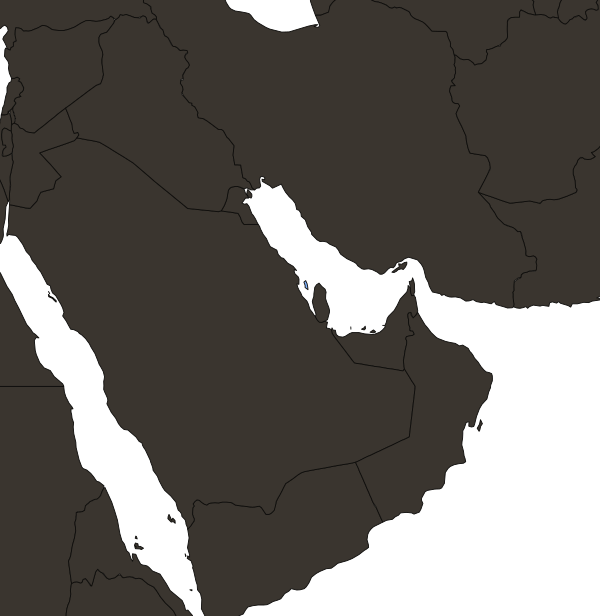
Bahrain is an island kingdom in the Persian Gulf, linked to Saudi Arabia by a causeway. About 1.6 million people live there, and fewer than half are citizens. A Sunni royal family rules citizens who are mostly Shia. Bahrain hosts the US Navy's Fifth Fleet, and since February 28, 2026, Iran has struck it with missiles and drones.
Where Bahrain ranks
All rankings →Which alliances is Bahrain in?
All alliances →Who runs Bahrain?
King Hamad bin Isa Al Khalifa was born on January 28, 1950. He became emir on March 6, 1999, when his father died, and declared himself king on February 14, 2002, under a new constitution. The Al Khalifa family has ruled Bahrain since 1783. His eldest son, Crown Prince Salman bin Hamad, has also been prime minister since November 2020. Most citizens are Shia Muslims, an estimated 55 to 62%, but there is no official count. The royal family and most of the elite are Sunni. In 2011 mostly Shia protesters camped at the Pearl Roundabout from February 14. Saudi and Emirati troops entered on March 14 to back a crackdown. An independent inquiry found 35 deaths and systematic torture. Courts dissolved the main Shia opposition group, Al-Wefaq, in 2016. A 2018 law bars its members from running for parliament. Parliament has 40 elected and 40 appointed members. A royal order on April 29, 2026 extended parliament's term by a year, citing the war.
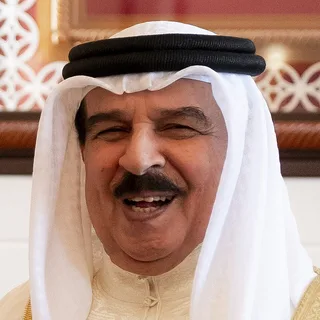
Photo (May 2025): US Department of Homeland Security, Tia Dufour, Wikimedia Commons, public domain (cropped)
Who are Bahrain's allies and rivals?
The US Navy has been in Bahrain since 1948. The Fifth Fleet has been headquartered at Naval Support Activity Bahrain since 1995. Bahrain became a major non-NATO ally of the United States in 2002 and signed a security pact with it in 2023. Britain joined the pact in 2025 and opened its own naval base in Bahrain in 2018. Saudi Arabia is Bahrain's closest neighbor. The King Fahd Causeway has linked them since 1986, and the two split the oil from the Abu Saafa field. In 2018 Saudi Arabia, the UAE and Kuwait gave Bahrain a $10 billion support package. Bahrain signed the Abraham Accords with Israel in 2020, the second Gulf state to do so. Relations cooled over Gaza, but Israel sent a new ambassador in August 2025. Bahrain cut ties with Iran in 2016 and has accused it of backing Shia militants since the 1980s. Bahrain refuses to meet Iran in any group until ties are restored. A 2001 world court ruling settled its island dispute with Qatar, and relations with Qatar were restored in 2023.
Allies and partners
 United StatesFifth Fleet base; security pact since 2023
 Saudi ArabiaCauseway since 1986; shares Abu Saafa oil field
 United KingdomNaval base since 2018; joined the security pact
 United Arab Emirates$5.4 billion currency swap during the 2026 war
Rivals
 IranNo ties since 2016; missiles and drones since 2026
- Saraya al-AshtarShia militant group; the US calls it Iran-backed
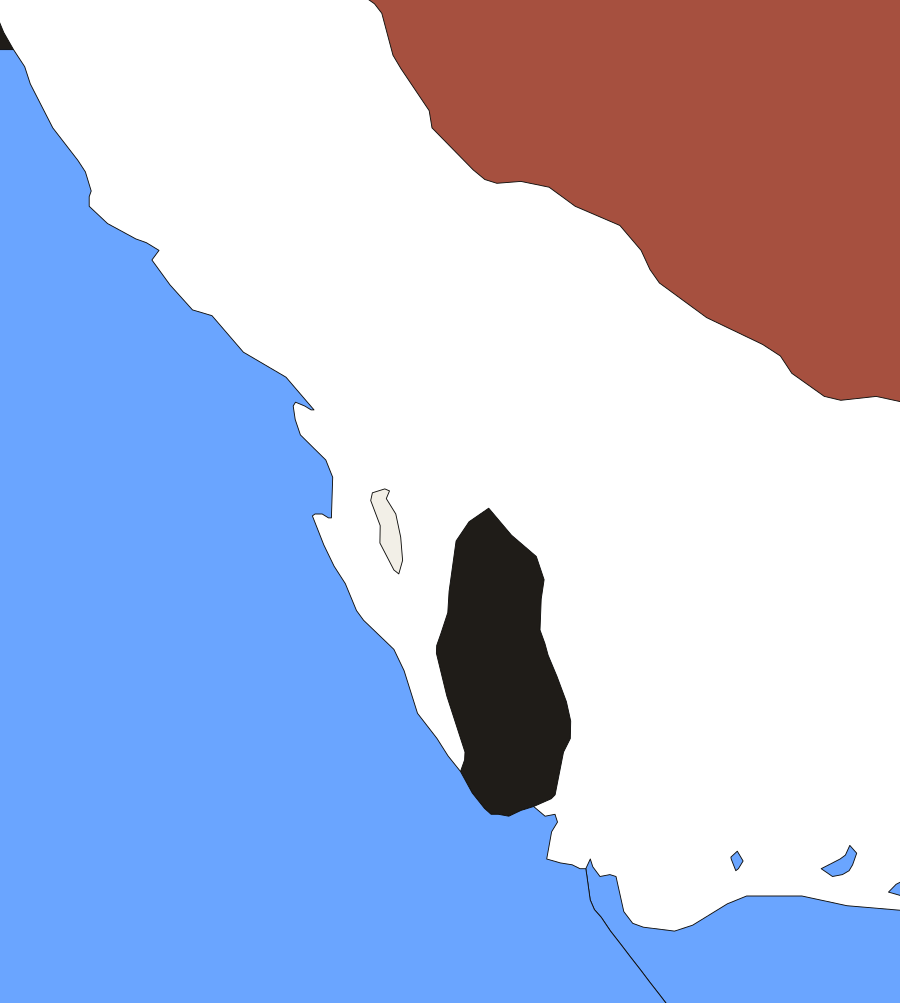
- NSA Bahrain Fifth Fleet headquarters. Iranian missiles and drones hit it on February 28, 2026, causing about $400 million of damage.
- Abu Saafa oil field Offshore field run by Saudi Aramco. Bahrain gets half, about 150,000 barrels a day, roughly 80% of its crude.
- Hawar Islands Claimed by Qatar. The world court gave them to Bahrain in 2001.
- Bahrain
- Partner
- Rival
Who does Bahrain trade with?
Bahrain's customs figures leave out oil. They show exports of $12.45 billion in 2024 and imports of $15.62 billion (UN Comtrade). Aluminum made up 39% of those exports. Bahrain was the world's sixth largest aluminum producer in 2025, with 1.62 million tonnes from the Alba smelter. Australia and Brazil supply alumina and iron ore. Saudi Arabia bought 23.0% of the recorded exports and the UAE 13.7% (chart). China supplied 14.3% of imports. Bahrain was the first place on the Arab side of the Gulf to find oil, in 1932, but it has much less than its neighbors. In 2025 it pumped about 176,000 barrels of crude a day. About 80% of that came from Abu Saafa, the offshore field it shares with Saudi Arabia. Oil paid for 48% of government revenue in 2025. Banking and insurance are the largest part of the rest of the economy, 17.6% in 2025. Banks began moving to Manama from Beirut after Lebanon's civil war began in 1975.
Sells to
Share of Bahrain's exports
- Saudi Arabia23.0%
- United Arab Emirates13.7%
- United States8.8%
 Netherlands4.4%
 India3.4%
Buys from
Share of Bahrain's imports
 China14.3%
 Australia9.6%
 Brazil8.5%
- United Arab Emirates7.6%
- Saudi Arabia6.4%
Goods, 2024, as reported by Bahrain. Bahrain's figures leave out oil. UN Comtrade.
Why is Bahrain so deep in debt?
Bahrain's government has spent more than it earns every year since 2009. A plan to balance the budget by 2022, later moved to 2024, failed. Government debt is about one and a half times the size of the economy, by far the highest share in the Gulf (chart). The IMF expects it to reach about 163% of GDP in 2026. Bahrain depends on its richer neighbors. Saudi Arabia, the UAE and Kuwait gave a $10 billion package in 2018. The UAE signed a currency swap worth about $5.4 billion in April 2026. Bahrain brought in a 5% sales tax in 2019 and doubled it to 10% in 2022. In December 2025 it announced a 10% tax on large local companies from 2027, higher fuel and utility prices, and higher fees for foreign workers. All three rating agencies rate Bahrain's debt as junk. Fitch cut it to B in February 2026. Moody's changed its outlook to negative in April because of the war.
Government debt in the Gulf, share of GDP, 2025
Full ranking →- Bahrain147.6%
 Qatar41.4%
 Oman35.8%
- United Arab Emirates34.3%
- Saudi Arabia31.7%
 Kuwait14.6%
IMF World Economic Outlook, April 2026
What has the Iran war done to Bahrain?
The United States and Israel attacked Iran on February 28, 2026. The same day Iranian missiles and drones hit NSA Bahrain and buildings in Manama and Muharraq. The strikes damaged the Fifth Fleet headquarters, barracks and warehouses, about $400 million of damage. In September the head of the US Navy said it would not go back there anytime soon. Iran also hit Bapco's Sitra refinery, which declared force majeure on March 9, the Alba aluminum smelter and fuel tanks near the airport. At least two people were killed. By April 13 Bahrain said it had shot down 194 missiles and 523 drones. Its airspace was closed for about six weeks. A ceasefire in April and a truce in June both broke down, and Iran fired again in July and September. Ships still could not move freely through the Strait of Hormuz in October. Bahrain has arrested more than 600 people since March and stripped at least 69 people of Iranian descent of citizenship. The IMF expects its economy to shrink by 11.3% in 2026.