
Resource · Critical mineral
Gallium and germanium
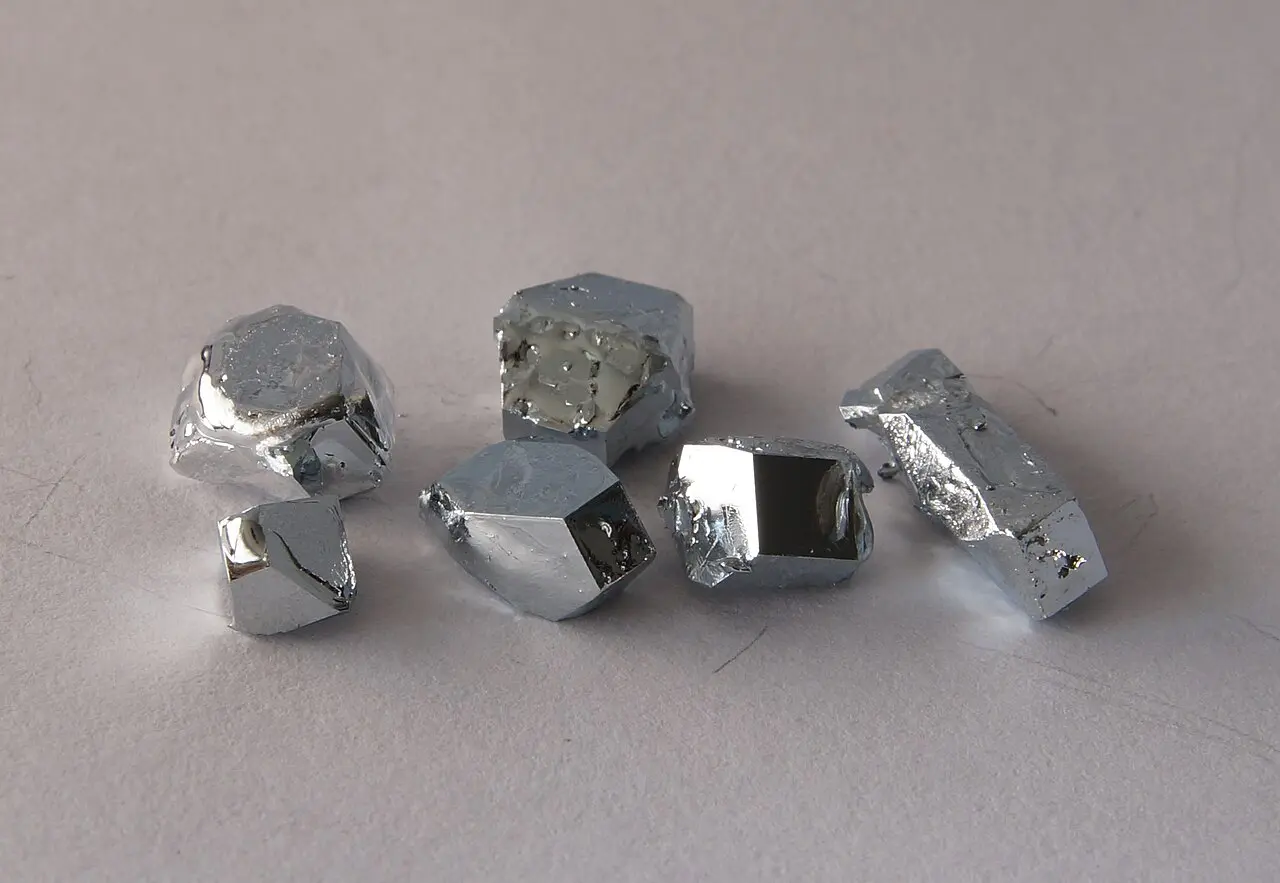
Nobody mines gallium or germanium. Gallium is recovered as a by-product of refining bauxite into alumina, and germanium comes from zinc ores and coal ash. China made 99% of the world's primary gallium in 2025, about 900 tonnes, and about 82% of refined germanium. Both go into chips, radar and infrared optics. China has restricted their export since August 2023.
- Made in 2025
- about 900 t
- of primary gallium, worldwide (US Geological Survey estimate)
- Largest producer
 99%
- about 900 tonnes of primary gallium, 2025
- Refined germanium
- 82%
- China's share in 2023, of about 243 tonnes
- Into chips
- 73%
- of the gallium used in the US goes into integrated circuits
- US ban paused until
- Nov 27, 2026
- China's December 2024 export ban on gallium and germanium to the US
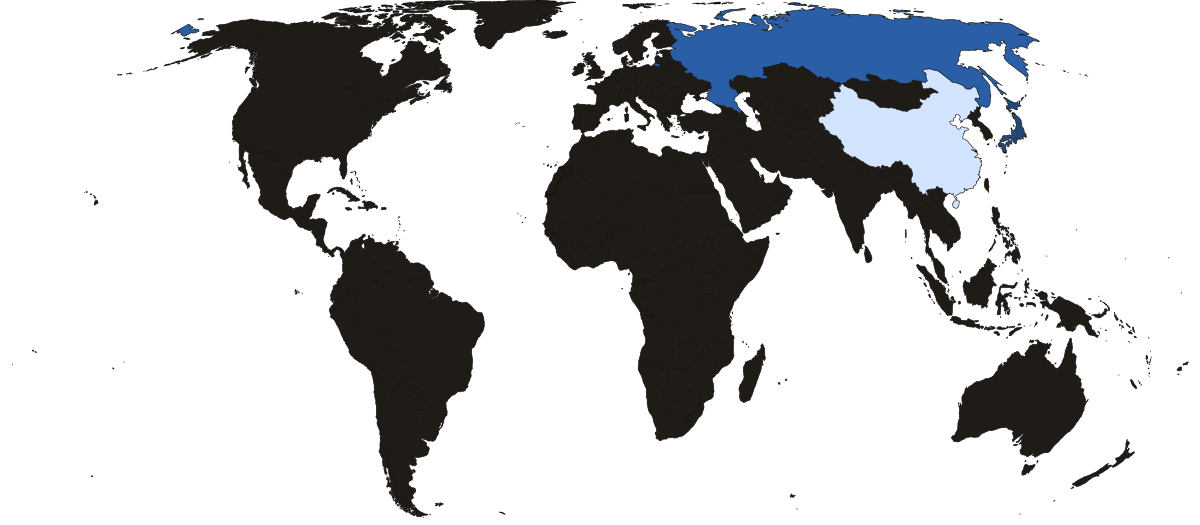
Which countries produce the most gallium?
China produced about 900 tonnes of primary gallium in 2025, 99% of the world total. Russia made about 6 tonnes and Japan about 3 tonnes. The US Geological Survey lists no other producer. The United States has not made primary gallium since 1987.
China ran at about 56% of its 1,600-tonne annual capacity in 2025. Germany, Hungary and Kazakhstan stopped making primary gallium between 2013 and 2016, after China's growing output led to years of low prices. New projects have been announced in Australia, Canada, Greece, Kazakhstan and South Korea.


- Under 0.5%
- 0.5%–1%
- 1%–10%
- 10%–50%
- Over 50%
- No production
What are gallium and germanium used for?
Gallium goes into semiconductors (about 61% of world demand in 2025) and neodymium magnets (about 36%). Gallium arsenide and gallium nitride chips are used in military radar, 5G base stations, LEDs and fast chargers. In the United States, integrated circuits account for 73% of gallium consumption.
Germanium goes into fiber-optic cables (about 26% of world consumption), infrared optics such as thermal sights and night vision (22%), and catalysts for PET plastic (20%). Satellite solar cells use about 10%. In many defense systems, no substitute exists for gallium arsenide and gallium nitride chips.
What the world's gallium goes into
Share of gallium used worldwide, 2025
- Semiconductors: chips and LEDs61%
- Magnets (added to neodymium magnets)36%
- Other, including solar cells3%
Germanium
- 26%of germanium goes into fiber-optic cables
- 22%into infrared optics, such as thermal sights and night vision
- 20%into catalysts for PET plastic
- 10%into solar cells, mostly for satellites
Why does China make almost all the gallium?
China makes 99% of the world's gallium because it refines 62% of the world's alumina and recovers gallium at its refineries. Bauxite contains about 50 parts per million of gallium, which is recovered from the liquid inside alumina refineries. China mines 20% of the world's bauxite (Guinea mines 34%), but it imported a record 200.5 million tonnes in 2025, three quarters of it from Guinea.
Most alumina refineries outside China do not recover gallium, and the few that did stopped after prices fell. Less than 10% of the gallium in mined ore is recovered. The IEA says supply outside China could be much higher if more of it were recovered.
From bauxite to gallium
China's share at each step, 2025
China 20% Guinea 34%
 Australia 22%China 20%China 62%Australia 11%
 Brazil 7.3%China 99%
What are China's export controls on gallium and germanium?
On July 3, 2023, China's Ministry of Commerce announced that exporters would need a license for gallium and germanium from August 1, 2023. On December 3, 2024, a day after new US chip controls, China banned their export to the United States, along with antimony and superhard materials. After the Trump-Xi meeting in Busan, China suspended that ban on November 9, 2025, until November 27, 2026. Licenses are still required everywhere. No notice had extended the suspension by November 5, 2026.
In January 2026, China also banned dual-use exports for Japan's military. In 2026, the IEA said European gallium prices were five times Chinese domestic prices.
The price of germanium in Europe
Germanium metal, US dollars a kilogram, yearly average
Where does germanium come from?
China refined about 82% of the world's 243 tonnes of germanium in 2023, Canada about 11% and Russia about 3%. Germanium is recovered from zinc-processing residues and lignite coal ash. The US Geological Survey does not publish country production figures.
Outside China, Teck recovers germanium from zinc concentrate at its smelter in Trail, British Columbia, and Umicore in Belgium processes mostly recycled material. A new plant in Lubumbashi, in the Democratic Republic of the Congo, shipped its first germanium concentrate in October 2024, for Umicore. It can make 30 tonnes a year. Korea Zinc plans trial operations at a 10-tonne plant in South Korea in 2027.
Who refines germanium
Share of refined germanium, 2023 (including recycled)

History
Why is there gallium in plutonium bombs?
Gallium keeps plutonium in a soft, stable form that can be shaped into a bomb core. Pure plutonium is brittle and changes its volume by about 25% as it heats. In December 1944, metallurgists at Los Alamos found that aluminum stabilized it. But aluminum gave off neutrons that could set off a bomb too early. In April 1945, the team tried gallium, the element below aluminum in the periodic table. Gallium worked and gave off almost no neutrons. The metallurgy chief, Cyril Stanley Smith, later said: "we simply followed hunch, not science."
The gallium alloy went into the Trinity bomb, tested on July 16, 1945, and into Fat Man, dropped on Nagasaki on August 9. Klaus Fuchs, a German-born British physicist at Los Alamos, passed the plutonium bomb design to the Soviet Union. Spies also reported the use of gallium. The Soviets copied the design and tested their first bomb on August 29, 1949. Nuclear weapon cores still use gallium.

Other resources
All 33 resources →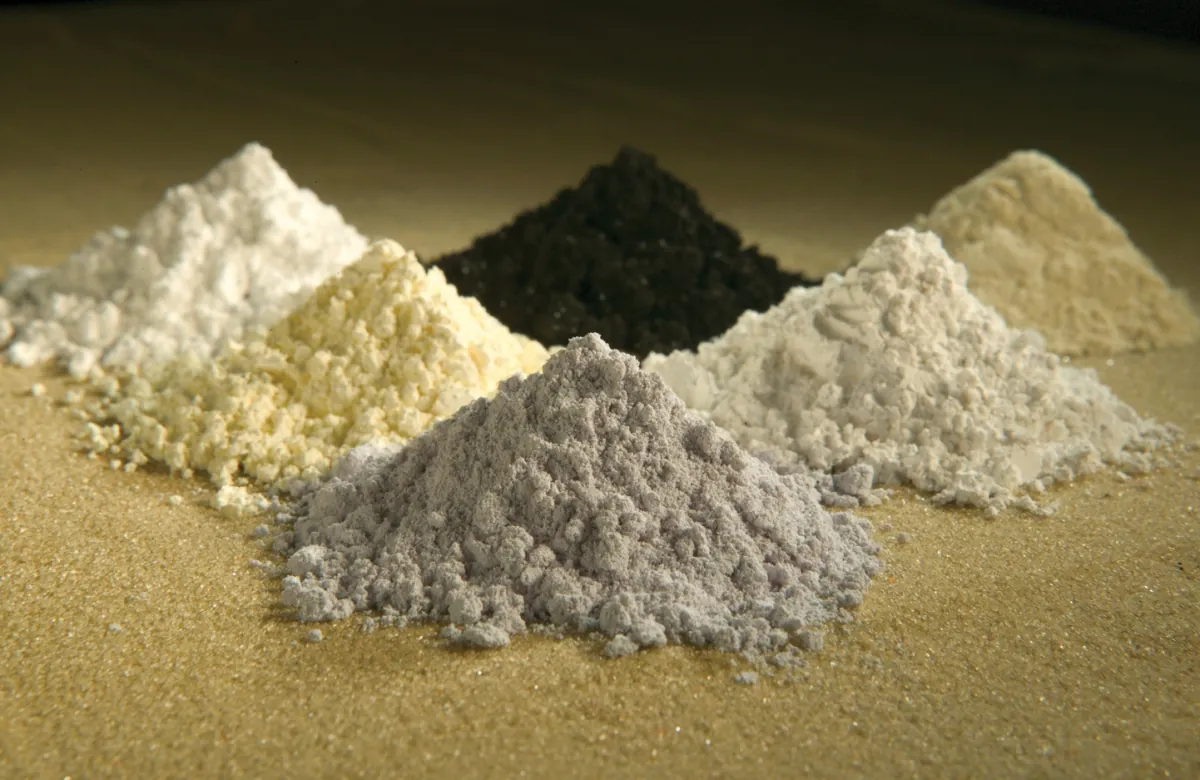 China 69%
Critical mineral
Rare earths
China mines 69% of rare earths, refines 85% and makes 94% of the magnets.
 China 36%
Critical mineral
Antimony
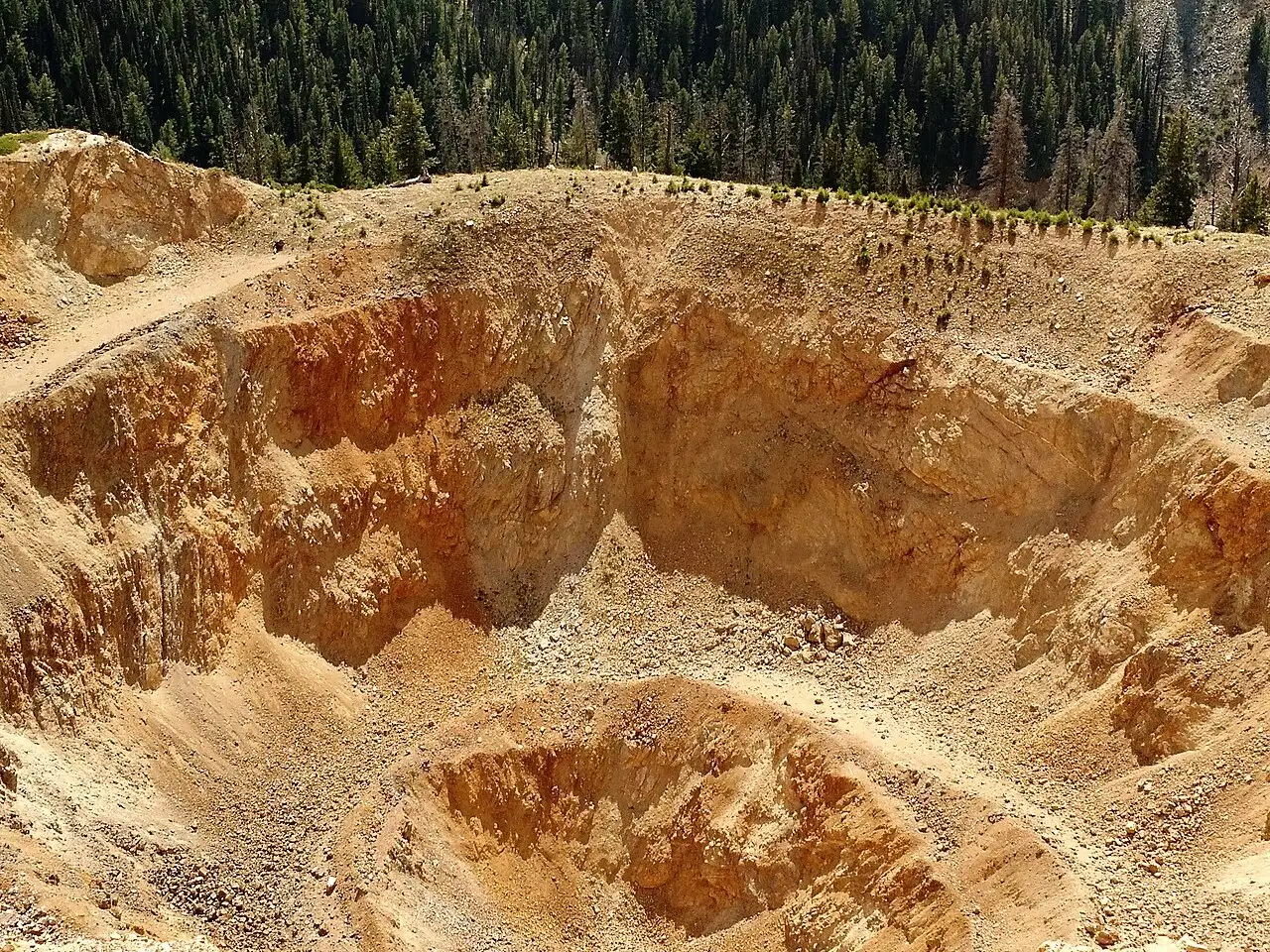
China mines a third of the world's antimony and smelts most of the rest.
 China 79%
Critical mineral
Tungsten
The metal with the highest melting point, used in ammunition and cutting tools. China mines 79% and controls processing.