Why did Japan surrender in WW2?
Japan surrendered six days after Hiroshima, but the atomic bombs were not the only reason. The Soviet invasion of Manchuria may have mattered just as much.
At noon on August 15, 1945, the people of Japan heard their emperor's voice for the first time. The recording was scratchy, the language was formal court Japanese that most listeners could barely follow, and Emperor Hirohito never used the word "surrender." He said the war situation had developed "not necessarily to Japan's advantage" and asked his subjects to "endure the unendurable." When the four-minute broadcast ended, crowds stood in the streets and wept. The war that had killed roughly three million Japanese was over.
The standard version of the story is simple: the United States dropped two atomic bombs, and Japan surrendered. The fuller picture is more interesting. Between Hiroshima on August 6 and the emperor's broadcast on August 15, six days of argument, deadlock, and an attempted military coup decided the outcome. The bombs were only part of what ended the war.
Japan was already losing before the bombs
By the summer of 1945, Japan's military position was hopeless. The Imperial Navy barely existed. American submarines had sunk most of Japan's merchant fleet, cutting off the oil, food, and raw materials the home islands depended on. The American bombing campaign under General Curtis LeMay had firebombed 66 Japanese cities. On the night of March 9, 1945, B-29 bombers dropped incendiary bombs on Tokyo that killed roughly 100,000 people and burned 16 square miles of the city, the deadliest single air raid in history. Japan still had about two million soldiers on the home islands, but they had little fuel, limited ammunition, and no air cover.
The Battle of Okinawa, which ended in June, showed both sides what an invasion would cost. Roughly 12,000 Americans and 110,000 Japanese soldiers died, along with perhaps 100,000 Okinawan civilians caught in the fighting. Kamikaze attacks off Okinawa sank or damaged more than 300 American ships. American planners estimated that invading Kyushu, the southernmost main island, could cost hundreds of thousands of American casualties. Nobody on either side wanted that fight.
Why Japan kept fighting anyway
Japan's leaders could not agree on how to stop. The war was run by the Supreme War Council, a six-member body known as the Big Six, which ruled by consensus. By the spring of 1945, the council was split down the middle. Prime Minister Kantarō Suzuki, Foreign Minister Shigenori Tōgō, and Navy Minister Mitsumasa Yonai believed Japan had to find a way out. Army Minister Korechika Anami, Army Chief of Staff Yoshijirō Umezu, and Navy Chief of Staff Soemu Toyoda wanted to fight on. Nothing could happen unless all six agreed, and all six never did.
Suzuki was 77 years old and still carried bullets in his body from the February 26, 1936 military uprising, when young officers had shot him and left him for dead. He had taken the job knowing the war had to end, but he could not say so publicly. The army faction believed that if Japan could make an American invasion costly enough, the Allies would offer better terms than the unconditional surrender they had demanded at the Potsdam Conference.
The peace faction had its own plan, and it was built on a mistake. Japan and the Soviet Union had a neutrality pact, and since the spring of 1945, Foreign Minister Tōgō had been trying to get Stalin to mediate a negotiated peace. Ambassador Naotake Satō in Moscow pushed the request for weeks. The Soviets stalled. Satō, who could see what was coming, cabled Tōgō that his proposals were "pretty little phrases devoid of all connection with reality." He was right. At the Yalta Conference in February 1945, Stalin had already promised Roosevelt and Churchill that the Soviet Union would enter the war against Japan within three months of Germany's surrender.
Six days between Hiroshima and surrender
On August 6, a B-29 named the Enola Gay dropped a uranium bomb on Hiroshima. The blast killed roughly 80,000 people that day. By the end of the year the toll reached around 140,000. It was the first use of a nuclear weapon in war.
The Japanese leadership did not call an emergency meeting. It took the government most of a day just to confirm what had happened. President Truman announced the bomb publicly from Washington before Tokyo fully understood the scale of the destruction.
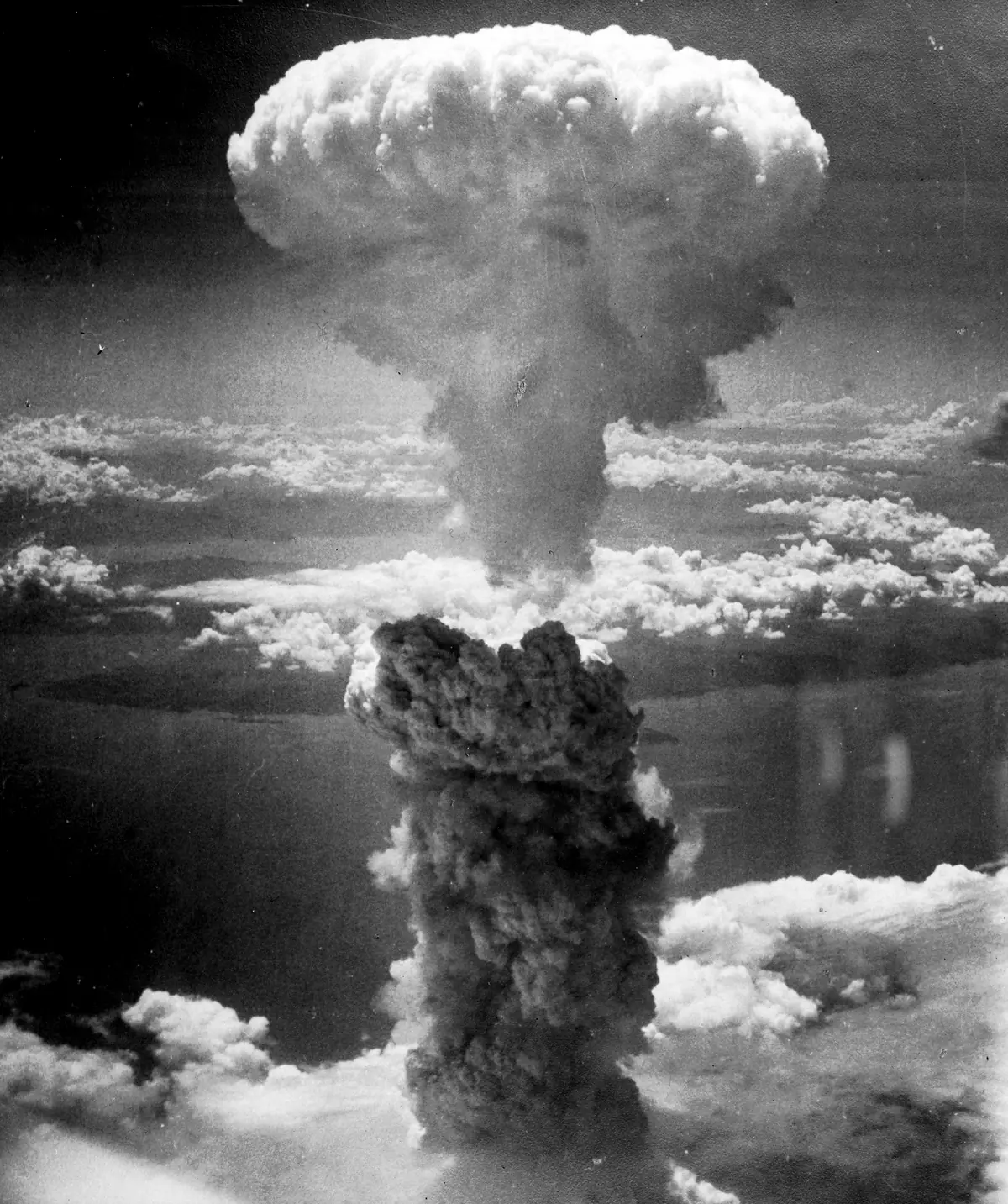
Then, on August 9, two things happened within hours of each other. The Soviet Union invaded Manchuria with over 1.5 million troops, overrunning the Kwantung Army, Japan's largest remaining force, in a matter of days. And the United States dropped a second atomic bomb, this time on Nagasaki, killing roughly 40,000 people instantly.
The Soviet invasion did something the atomic bombs alone had not: it eliminated Japan's last diplomatic option. The entire strategy of the peace faction, using Moscow as a mediator, collapsed in a single morning. The Soviets were not going to negotiate. They were going to take Manchuria, Korea, and possibly Hokkaido.
That evening, the Big Six met and deadlocked again, 3-3. Anami, Umezu, and Toyoda argued that Japan should keep fighting unless the Allies guaranteed four conditions, including no occupation of the home islands. The peace faction would accept one condition: keeping the emperor. Neither side would budge.
The emperor speaks
For the first time in the war, Prime Minister Suzuki asked Hirohito to break the tie. This was almost without precedent. The emperor was supposed to ratify decisions, not make them. At around 2 a.m. on August 10, Hirohito told the council he agreed with the peace faction. Japan would accept the Potsdam Declaration if the position of the emperor was preserved.
The Allies replied on August 12 with a formula that was deliberately ambiguous: the emperor's authority would be "subject to" the Supreme Commander of the Allied Powers. The war faction read this as the end of the imperial institution. The peace faction read it as survival. The council deadlocked again. On August 14, Suzuki asked the emperor to decide a second time. Hirohito did.
That night, a group of young army officers launched a coup. Major Kenji Hatanaka and his conspirators killed the commander of the Imperial Guard, forged orders in his name, and occupied the palace grounds. They searched for the recording of the emperor's surrender broadcast, which palace staff had hidden. They did not find it. By dawn, the Eastern Army commander, General Shizuichi Tanaka, had talked the rebels into standing down. Hatanaka shot himself on the palace grounds that morning. War Minister Anami, who had opposed surrender to the end but refused to support the coup against his emperor, committed ritual suicide before the broadcast aired. He left a note: "With my death, I humbly apologize to the Emperor for the great crime."
At noon on August 15, the recording played over the radio. Most Japanese had never heard Hirohito's voice, and many could not understand his formal language. But the meaning was clear enough. The war was over.
What actually ended the war
The debate over what mattered more, the atomic bombs or the Soviet invasion, has lasted eighty years. The traditional account gives the bombs all the credit. The revisionist case points out that Japan's leaders had already watched 66 cities burn without surrendering, and that the destruction of one more, even by a new kind of weapon, did not automatically change the military calculation. What changed the calculation, in this view, was the Soviet invasion, because it destroyed the last path to a negotiated peace and raised the threat of a communist occupation of northern Japan.
The most honest answer is probably that both mattered, and that neither alone would have been enough. The bombs gave the peace faction an argument that even the army could not dismiss: a weapon that destroyed a city with a single plane made the planned defense of the beaches irrelevant. The Soviet invasion proved that no outside power was coming to help. And it took Hirohito himself, breaking every rule of how Japanese government worked, to turn those facts into a decision.
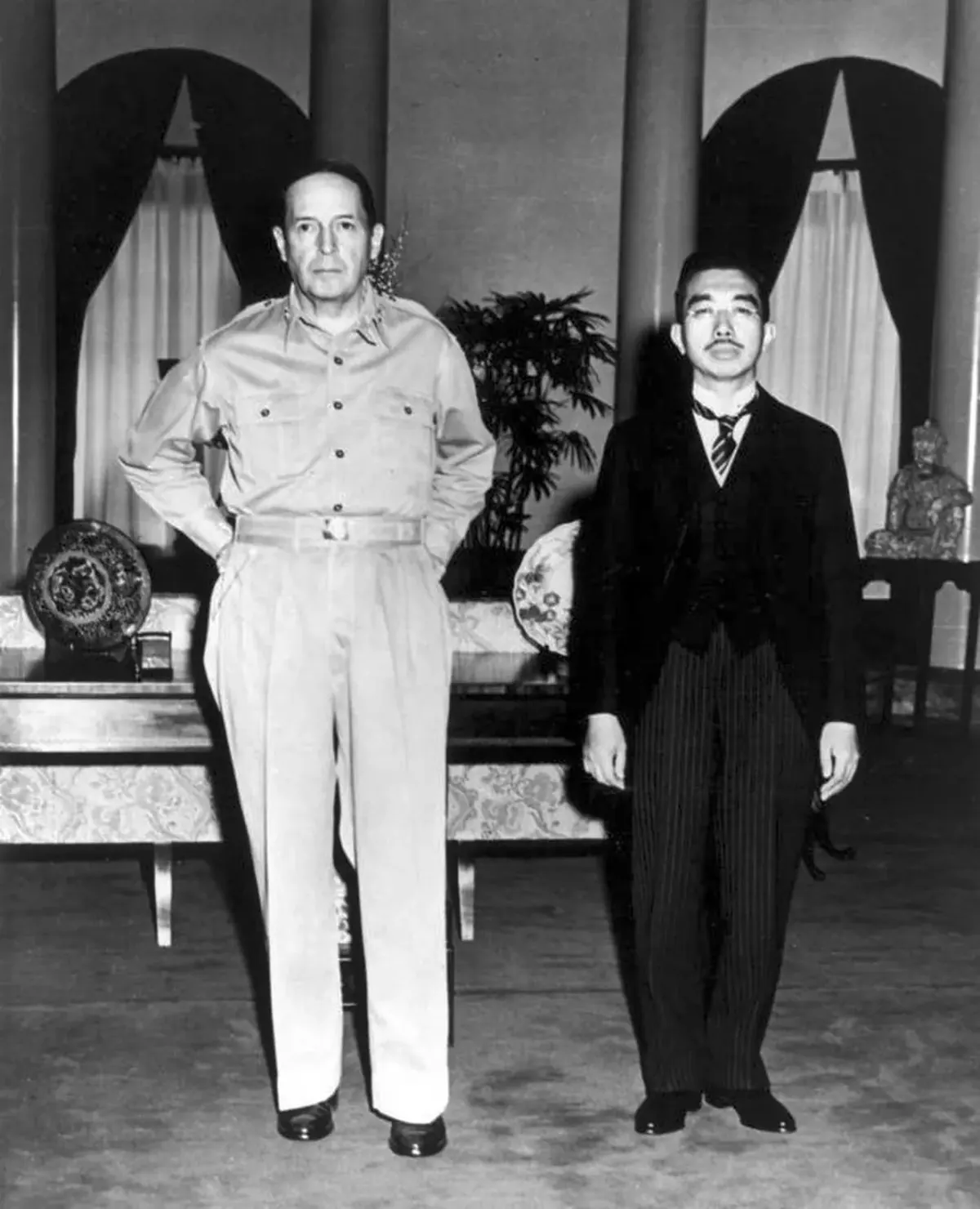
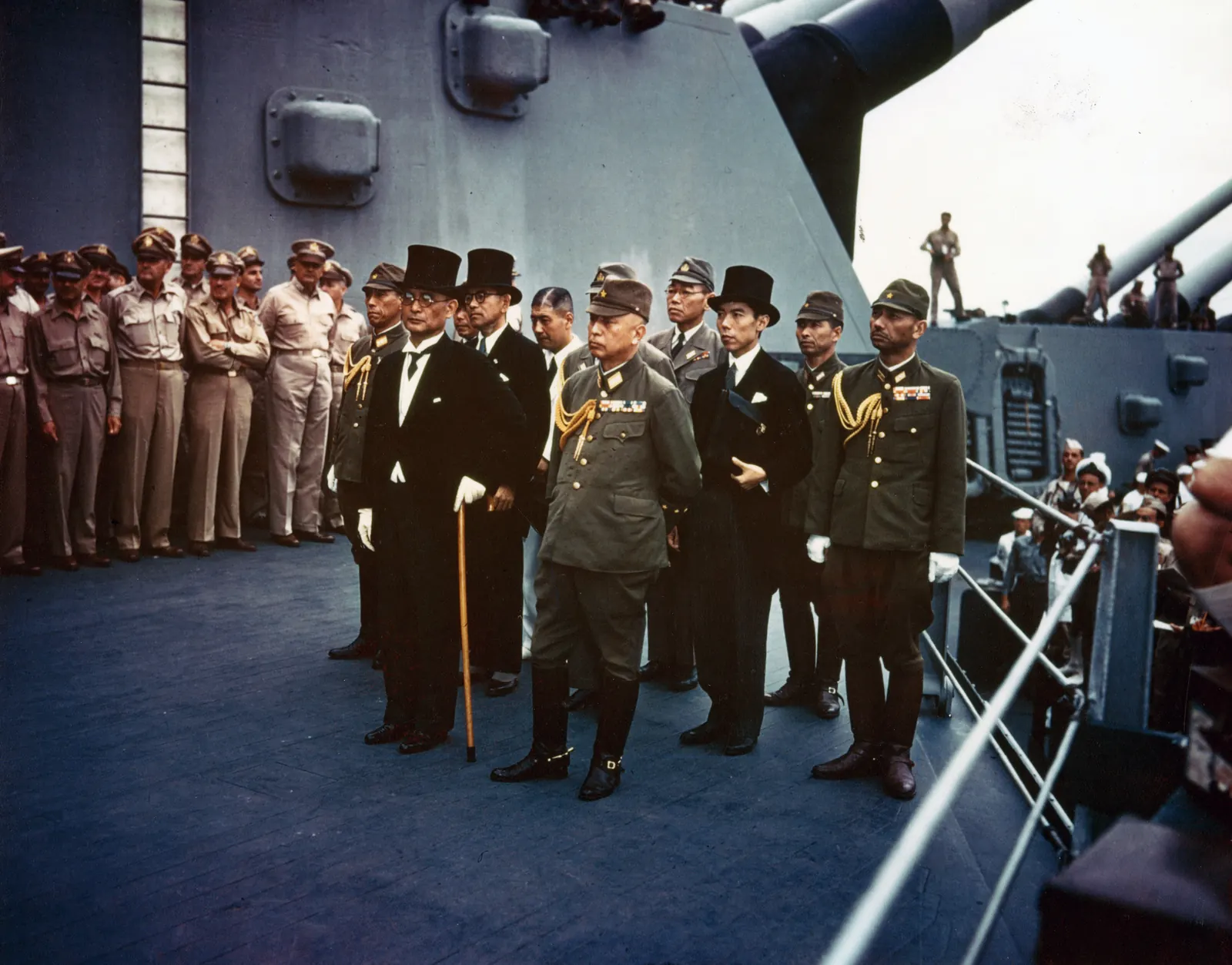
Japan signed the formal surrender on the deck of the USS Missouri in Tokyo Bay on September 2, 1945. General Douglas MacArthur presided. The war that began with Japan's attack on Pearl Harbor four years earlier was over. The occupation that followed lasted seven years and remade the country. The emperor kept his throne, as the peace faction had demanded, but he lost his divinity, his army, and his empire. Japan adopted a constitution that renounced war and has not fought one since. Every August, the mayors of Hiroshima and Nagasaki read peace declarations asking the world to abolish nuclear weapons. Eighty years later, nine countries still have them.
Test what you learned
5 questions on this article. About two minutes, no signup.
Orbis teaches the history behind the news
Orbis covers Pearl Harbor, the Pacific War, and the atomic age in five-minute lessons.