
Ranking · Economy
Foreign exchange reserves by country
China held $3.43 trillion in foreign exchange reserves (excluding gold) at the end of 2025, about 2.7 times second-place Japan at $1.25 trillion. Switzerland was third with $929.6 billion. Including gold, the United States jumps from 13th to 2nd. The United States holds 8,133 tonnes of gold, worth over $1 trillion at end-2025 market prices.
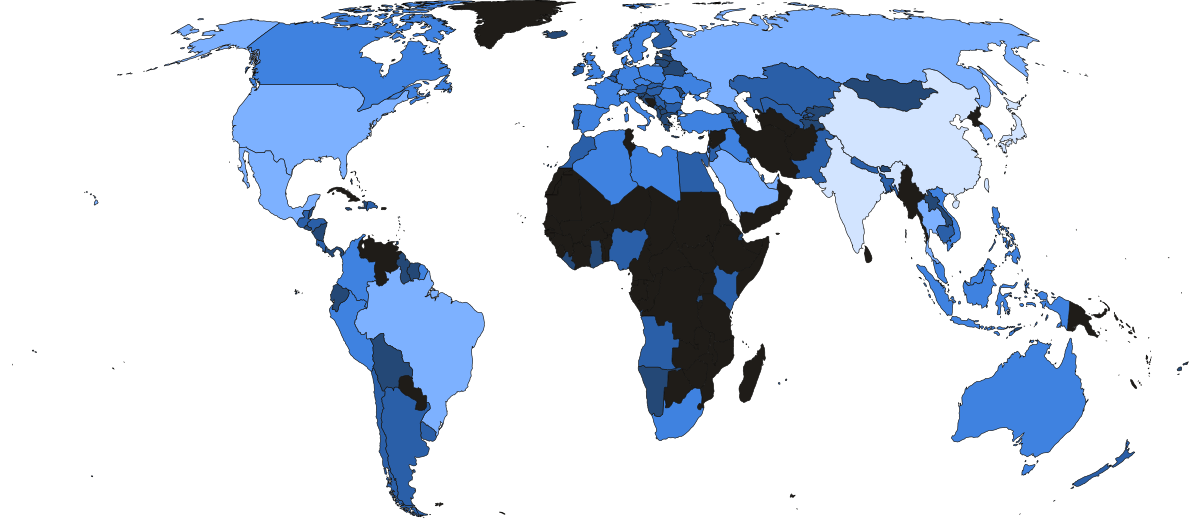
- Under $10bn
- $10bn–$50bn
- $50bn–$200bn
- $200bn–$500bn
- Over $500bn
- Not in this ranking
- Under $10bn
- $10bn–$50bn
- $50bn–$200bn
- $200bn–$500bn
- Over $500bn
- Not in this ranking
- Under 3
- 3–6
- 6–9
- 9–12
- Over 12
- Not in this ranking
| # | Country | Reserves | Reserves | Months |
|---|---|---|---|---|
| 1 |  China China |
$3.42tn | $3.75tn | 11.9 |
| 2 |  Japan Japan |
$1.25tn | $1.37tn | 14.0 |
| 3 |  Switzerland Switzerland |
$930bn | $1.08tn | 13.1 |
| 4 |  Taiwan Taiwan |
$603bn | · | · |
| 5 |  India India |
$576bn | $700bn | 7.9 |
| 6 |  Saudi Arabia Saudi Arabia |
$460bn | $505bn | 15.6 |
| 7 |  Russia Russia |
$428bn | $755bn | · |
| 8 |  South Korea South Korea |
$422bn | $437bn | 6.5 |
| 9 |  Singapore Singapore |
$405bn | $432bn | 4.4 |
| 10 |  Brazil Brazil |
$334bn | $359bn | 8.4 |
| 11 |  United Arab Emirates United Arab Emirates |
$282bn | $292bn | 5.2 |
| 12 |  Thailand Thailand |
$249bn | $282bn | 8.1 |
| 13 |  United States United States |
$243bn | $1.39tn | 2.8 |
| 14 |  Mexico Mexico |
$239bn | $256bn | 3.7 |
| 15 |  Israel Israel |
$230bn | $230bn | 14.4 |
| 16 |  Poland Poland |
$195bn | $272bn | 5.9 |
| 17 |  United Kingdom United Kingdom |
$171bn | $214bn | 1.4 |
| 18 |  Czechia Czechia |
$166bn | $176bn | 7.6 |
| 19 |  Indonesia Indonesia |
$145bn | $157bn | 5.5 |
| 20 |  Canada Canada |
$126bn | $126bn | 1.6 |
| 21 |  Malaysia Malaysia |
$120bn | $126bn | 4.3 |
| 22 |  Denmark Denmark |
$118bn | $128bn | 4.9 |
| 23 |  Germany Germany |
$102bn | $572bn | 3.1 |
| 24 |  Philippines Philippines |
$92.3bn | $111bn | 7.3 |
| 25 |  Italy Italy |
$89.7bn | $434bn | 5.7 |
| 26 |  Spain Spain |
$89.0bn | $129bn | 2.0 |
| 27 |  France France |
$86.0bn | $428bn | 3.4 |
| 28 |  Vietnam Vietnam |
$85.6bn | $85.6bn | 2.1 |
| 29 |  Peru Peru |
$85.5bn | $90.4bn | 10.4 |
| 30 |  Norway Norway |
$85.5bn | $85.5bn | 4.4 |
| 31 |  Libya Libya |
$84.1bn | $105bn | · |
| 32 |  Romania Romania |
$76.1bn | $90.7bn | 5.5 |
| 33 |  Iraq Iraq |
$73.9bn | $98.5bn | 11.6 |
| 34 |  Turkey Turkey |
$71.6bn | $186bn | 5.1 |
| 35 |  Colombia Colombia |
$65.2bn | $65.8bn | 7.3 |
| 36 |  Australia Australia |
$62.1bn | $72.6bn | 1.6 |
| 37 |  South Africa South Africa |
$58.4bn | $76.0bn | 6.2 |
| 38 |  Sweden Sweden |
$56.5bn | $74.2bn | 2.2 |
| 39 |  Ukraine Ukraine |
$53.4bn | $57.3bn | 5.8 |
| 40 |  Algeria Algeria |
$52.5bn | $76.8bn | 11.6 |
| 41 |  Chile Chile |
$49.4bn | $49.5bn | 4.2 |
| 42 |  Morocco Morocco |
$45.4bn | $48.5bn | 5.9 |
| 43 |  Hungary Hungary |
$43.6bn | $59.1bn | 3.5 |
| 44 |  Nigeria Nigeria |
$43.0bn | $46.0bn | 7.1 |
| 45 |  Bulgaria Bulgaria |
$41.1bn | $47.1bn | 7.2 |
| 46 |  Kuwait Kuwait |
$40.6bn | $51.7bn | 8.4 |
| 47 |  Qatar Qatar |
$39.7bn | $55.9bn | 7.5 |
| 48 |  Argentina Argentina |
$32.3bn | $41.0bn | 4.0 |
| 49 |  Netherlands Netherlands |
$32.0bn | $118bn | 1.0 |
| 50 |  Guatemala Guatemala |
$30.9bn | $32.8bn | 9.3 |
| 51 |  Egypt Egypt |
$30.7bn | $48.9bn | 4.4 |
| 52 |  New Zealand New Zealand |
$28.1bn | $28.1bn | 3.9 |
| 53 |  Serbia Serbia |
$26.8bn | $34.1bn | 6.2 |
| 54 |  Bangladesh Bangladesh |
$26.6bn | $28.6bn | 3.9 |
| 55 |  Belgium Belgium |
$24.5bn | $56.4bn | 1.0 |
| 56 |  Nepal Nepal |
$20.0bn | $21.1bn | 15.5 |
| 57 |  Cambodia Cambodia |
$19.9bn | $27.5bn | 7.9 |
| 58 |  Uruguay Uruguay |
$19.0bn | $19.0bn | 8.6 |
| 59 |  Kazakhstan Kazakhstan |
$18.2bn | $66.1bn | 7.4 |
| 60 |  Pakistan Pakistan |
$17.4bn | $26.5bn | 3.8 |
| 61 |  Costa Rica Costa Rica |
$17.1bn | $17.1bn | 4.7 |
| 62 |  Jordan Jordan |
$16.3bn | $26.6bn | · |
| 63 |  Finland Finland |
$16.3bn | $22.5bn | 1.6 |
| 64 |  Portugal Portugal |
$15.1bn | $68.8bn | 4.7 |
| 65 |  Dominican Republic Dominican Republic |
$14.7bn | $14.8bn | 4.0 |
| 66 |  Austria Austria |
$14.1bn | $53.4bn | 1.8 |
| 67 |  Slovakia Slovakia |
$13.7bn | $18.2bn | 1.5 |
| 68 |  Azerbaijan Azerbaijan |
$13.6bn | $13.6bn | 5.0 |
| 69 |  Angola Angola |
$13.5bn | $13.5bn | 5.3 |
| 70 |  Kenya Kenya |
$12.4bn | $12.4bn | 4.6 |
| 71 |  Ireland Ireland |
$12.0bn | $13.7bn | 0.1 |
| 72 |  Uzbekistan Uzbekistan |
$11.2bn | $66.0bn | 13.6 |
| 73 |  Honduras Honduras |
$10.1bn | $10.2bn | 5.3 |
| 74 |  Ghana Ghana |
$9.5bn | $12.1bn | 3.8 |
| 75 |  Mauritius Mauritius |
$8.6bn | $10.3bn | · |
| 76 |  Nicaragua Nicaragua |
$8.3bn | $8.3bn | · |
| 77 |  Albania Albania |
$8.1bn | $8.6bn | 7.2 |
| 78 |  Greece Greece |
$7.9bn | $24.1bn | 2.0 |
| 79 |  Iceland Iceland |
$7.5bn | $7.7bn | 5.3 |
| 80 |  Belarus Belarus |
$6.9bn | $14.5bn | 3.0 |
| 81 |  Jamaica Jamaica |
$6.3bn | $6.3bn | 7.1 |
| 82 |  Lithuania Lithuania |
$6.2bn | $7.1bn | 1.2 |
| 83 |  Panama Panama |
$6.2bn | $6.2bn | 1.7 |
| 84 |  Ecuador Ecuador |
$6.1bn | $9.8bn | 2.8 |
| 85 |  Moldova Moldova |
$6.0bn | $6.0bn | 5.4 |
| 86 |  Mongolia Mongolia |
$5.9bn | $7.0bn | 4.2 |
| 87 |  Latvia Latvia |
$5.2bn | $6.1bn | 2.0 |
| 88 |  Georgia Georgia |
$5.2bn | $6.2bn | 3.0 |
| 89 |  Trinidad and Tobago Trinidad and Tobago |
$5.1bn | $5.4bn | 5.5 |
| 90 |  Armenia Armenia |
$5.1bn | $5.1bn | 3.3 |
| 91 |  Brunei Brunei |
$4.8bn | $5.5bn | 7.9 |
| 92 |  North Macedonia North Macedonia |
$4.8bn | $5.8bn | 4.6 |
| 93 |  Bahrain Bahrain |
$4.6bn | $5.3bn | 1.4 |
| 94 |  El Salvador El Salvador |
$4.6bn | $4.8bn | 2.4 |
| 95 |  Tajikistan Tajikistan |
$4.3bn | $4.3bn | 5.7 |
| 96 |  Croatia Croatia |
$4.2bn | $4.2bn | 0.8 |
| 97 |  Laos Laos |
$3.7bn | $3.7bn | 3.4 |
| 98 |  Haiti Haiti |
$3.1bn | $3.4bn | · |
| 99 |  Namibia Namibia |
$3.1bn | $3.1bn | · |
| 100 |  Slovenia Slovenia |
$3.0bn | $3.5bn | 0.7 |
| 101 |  Bahamas Bahamas |
$2.8bn | $2.8bn | · |
| 102 |  Luxembourg Luxembourg |
$2.7bn | $3.1bn | 0.1 |
| 103 |  Estonia Estonia |
$2.4bn | $2.4bn | 0.7 |
| 104 |  Montenegro Montenegro |
$2.2bn | $2.2bn | 3.9 |
| 105 |  Kyrgyzstan Kyrgyzstan |
$2.2bn | $8.6bn | · |
| 106 |  Rwanda Rwanda |
$2.0bn | $2.0bn | · |
| 107 |  Palestine Palestine |
$1.8bn | $1.8bn | 2.3 |
| 108 |  Fiji Fiji |
$1.7bn | $1.7bn | · |
| 109 |  Kosovo Kosovo |
$1.5bn | $1.5bn | 1.8 |
| 110 |  Malta Malta |
$1.5bn | $1.5bn | · |
| 111 |  Suriname Suriname |
$1.4bn | $1.6bn | 3.3 |
| 112 |  Guyana Guyana |
$1.4bn | $1.4bn | · |
| 113 |  Cape Verde Cape Verde |
$1.3bn | $1.3bn | 8.7 |
| 114 |  Bhutan Bhutan |
$1.2bn | $1.2bn | · |
| 115 |  Cyprus Cyprus |
$1000m | $2.9bn | 0.5 |
| 116 |  Maldives Maldives |
$985m | $985m | 1.9 |
| 117 |  San Marino San Marino |
$861m | $861m | · |
| 118 |  Timor-Leste Timor-Leste |
$806m | $806m | 5.8 |
| 119 |  Djibouti Djibouti |
$656m | $656m | · |
| 120 |  Samoa Samoa |
$593m | $598m | 12.4 |
| 121 |  Bolivia Bolivia |
$580m | $580m | 0.5 |
| 122 |  Belize Belize |
$559m | $559m | 3.5 |
| 123 |  Saint Lucia Saint Lucia |
$447m | $447m | 3.0 |
| 124 |  Tonga Tonga |
$413m | $413m | 11.0 |
| 125 |  Grenada Grenada |
$408m | $408m | 4.4 |
| 126 |  Comoros Comoros |
$407m | $409m | · |
| 127 |  Antigua and Barbuda Antigua and Barbuda |
$379m | $379m | 3.0 |
| 128 |  Liberia Liberia |
$339m | $339m | · |
| 129 |  Saint Kitts and Nevis Saint Kitts and Nevis |
$282m | $282m | 4.4 |
| 130 |  Saint Vincent and the Grenadines Saint Vincent and the Grenadines |
$281m | $281m | 4.7 |
| 131 |  Dominica Dominica |
$165m | $165m | 3.9 |
| # | Country | Reserves | Reserves | Months |
|---|---|---|---|---|
| 1 | China |
$3.75tn | $3.42tn | 11.9 |
| 2 | United States |
$1.39tn | $243bn | 2.8 |
| 3 | Japan |
$1.37tn | $1.25tn | 14.0 |
| 4 | Switzerland |
$1.08tn | $930bn | 13.1 |
| 5 | Russia |
$755bn | $428bn | · |
| 6 | India |
$700bn | $576bn | 7.9 |
| 7 | Germany |
$572bn | $102bn | 3.1 |
| 8 | Saudi Arabia |
$505bn | $460bn | 15.6 |
| 9 | South Korea |
$437bn | $422bn | 6.5 |
| 10 | Italy |
$434bn | $89.7bn | 5.7 |
| 11 | Singapore |
$432bn | $405bn | 4.4 |
| 12 | France |
$428bn | $86.0bn | 3.4 |
| 13 | Brazil |
$359bn | $334bn | 8.4 |
| 14 | United Arab Emirates |
$292bn | $282bn | 5.2 |
| 15 | Thailand |
$282bn | $249bn | 8.1 |
| 16 | Poland |
$272bn | $195bn | 5.9 |
| 17 | Mexico |
$256bn | $239bn | 3.7 |
| 18 | Israel |
$230bn | $230bn | 14.4 |
| 19 | United Kingdom |
$214bn | $171bn | 1.4 |
| 20 | Turkey |
$186bn | $71.6bn | 5.1 |
| 21 | Czechia |
$176bn | $166bn | 7.6 |
| 22 | Indonesia |
$157bn | $145bn | 5.5 |
| 23 | Spain |
$129bn | $89.0bn | 2.0 |
| 24 | Denmark |
$128bn | $118bn | 4.9 |
| 25 | Canada |
$126bn | $126bn | 1.6 |
| 26 | Malaysia |
$126bn | $120bn | 4.3 |
| 27 | Netherlands |
$118bn | $32.0bn | 1.0 |
| 28 | Philippines |
$111bn | $92.3bn | 7.3 |
| 29 | Libya |
$105bn | $84.1bn | · |
| 30 | Iraq |
$98.5bn | $73.9bn | 11.6 |
| 31 | Romania |
$90.7bn | $76.1bn | 5.5 |
| 32 | Peru |
$90.4bn | $85.5bn | 10.4 |
| 33 | Vietnam |
$85.6bn | $85.6bn | 2.1 |
| 34 | Norway |
$85.5bn | $85.5bn | 4.4 |
| 35 | Algeria |
$76.8bn | $52.5bn | 11.6 |
| 36 | South Africa |
$76.0bn | $58.4bn | 6.2 |
| 37 | Sweden |
$74.2bn | $56.5bn | 2.2 |
| 38 | Australia |
$72.6bn | $62.1bn | 1.6 |
| 39 | Portugal |
$68.8bn | $15.1bn | 4.7 |
| 40 | Kazakhstan |
$66.1bn | $18.2bn | 7.4 |
| 41 | Uzbekistan |
$66.0bn | $11.2bn | 13.6 |
| 42 | Colombia |
$65.8bn | $65.2bn | 7.3 |
| 43 | Hungary |
$59.1bn | $43.6bn | 3.5 |
| 44 | Ukraine |
$57.3bn | $53.4bn | 5.8 |
| 45 | Belgium |
$56.4bn | $24.5bn | 1.0 |
| 46 | Qatar |
$55.9bn | $39.7bn | 7.5 |
| 47 | Austria |
$53.4bn | $14.1bn | 1.8 |
| 48 | Kuwait |
$51.7bn | $40.6bn | 8.4 |
| 49 | Chile |
$49.5bn | $49.4bn | 4.2 |
| 50 | Egypt |
$48.9bn | $30.7bn | 4.4 |
| 51 | Morocco |
$48.5bn | $45.4bn | 5.9 |
| 52 | Bulgaria |
$47.1bn | $41.1bn | 7.2 |
| 53 | Nigeria |
$46.0bn | $43.0bn | 7.1 |
| 54 | Argentina |
$41.0bn | $32.3bn | 4.0 |
| 55 | Serbia |
$34.1bn | $26.8bn | 6.2 |
| 56 | Guatemala |
$32.8bn | $30.9bn | 9.3 |
| 57 | Bangladesh |
$28.6bn | $26.6bn | 3.9 |
| 58 | New Zealand |
$28.1bn | $28.1bn | 3.9 |
| 59 | Cambodia |
$27.5bn | $19.9bn | 7.9 |
| 60 | Jordan |
$26.6bn | $16.3bn | · |
| 61 | Pakistan |
$26.5bn | $17.4bn | 3.8 |
| 62 | Greece |
$24.1bn | $7.9bn | 2.0 |
| 63 | Finland |
$22.5bn | $16.3bn | 1.6 |
| 64 | Nepal |
$21.1bn | $20.0bn | 15.5 |
| 65 | Uruguay |
$19.0bn | $19.0bn | 8.6 |
| 66 | Slovakia |
$18.2bn | $13.7bn | 1.5 |
| 67 | Costa Rica |
$17.1bn | $17.1bn | 4.7 |
| 68 | Dominican Republic |
$14.8bn | $14.7bn | 4.0 |
| 69 | Belarus |
$14.5bn | $6.9bn | 3.0 |
| 70 | Ireland |
$13.7bn | $12.0bn | 0.1 |
| 71 | Azerbaijan |
$13.6bn | $13.6bn | 5.0 |
| 72 | Angola |
$13.5bn | $13.5bn | 5.3 |
| 73 | Kenya |
$12.4bn | $12.4bn | 4.6 |
| 74 | Ghana |
$12.1bn | $9.5bn | 3.8 |
| 75 | Mauritius |
$10.3bn | $8.6bn | · |
| 76 | Honduras |
$10.2bn | $10.1bn | 5.3 |
| 77 | Ecuador |
$9.8bn | $6.1bn | 2.8 |
| 78 | Kyrgyzstan |
$8.6bn | $2.2bn | · |
| 79 | Albania |
$8.6bn | $8.1bn | 7.2 |
| 80 | Nicaragua |
$8.3bn | $8.3bn | · |
| 81 | Iceland |
$7.7bn | $7.5bn | 5.3 |
| 82 | Lithuania |
$7.1bn | $6.2bn | 1.2 |
| 83 | Mongolia |
$7.0bn | $5.9bn | 4.2 |
| 84 | Jamaica |
$6.3bn | $6.3bn | 7.1 |
| 85 | Panama |
$6.2bn | $6.2bn | 1.7 |
| 86 | Georgia |
$6.2bn | $5.2bn | 3.0 |
| 87 | Latvia |
$6.1bn | $5.2bn | 2.0 |
| 88 | Moldova |
$6.0bn | $6.0bn | 5.4 |
| 89 | North Macedonia |
$5.8bn | $4.8bn | 4.6 |
| 90 | Brunei |
$5.5bn | $4.8bn | 7.9 |
| 91 | Trinidad and Tobago |
$5.4bn | $5.1bn | 5.5 |
| 92 | Bahrain |
$5.3bn | $4.6bn | 1.4 |
| 93 | Armenia |
$5.1bn | $5.1bn | 3.3 |
| 94 | El Salvador |
$4.8bn | $4.6bn | 2.4 |
| 95 | Tajikistan |
$4.3bn | $4.3bn | 5.7 |
| 96 | Croatia |
$4.2bn | $4.2bn | 0.8 |
| 97 | Laos |
$3.7bn | $3.7bn | 3.4 |
| 98 | Slovenia |
$3.5bn | $3.0bn | 0.7 |
| 99 | Haiti |
$3.4bn | $3.1bn | · |
| 100 | Namibia |
$3.1bn | $3.1bn | · |
| 101 | Luxembourg |
$3.1bn | $2.7bn | 0.1 |
| 102 | Cyprus |
$2.9bn | $1000m | 0.5 |
| 103 | Bahamas |
$2.8bn | $2.8bn | · |
| 104 | Estonia |
$2.4bn | $2.4bn | 0.7 |
| 105 | Montenegro |
$2.2bn | $2.2bn | 3.9 |
| 106 | Rwanda |
$2.0bn | $2.0bn | · |
| 107 | Palestine |
$1.8bn | $1.8bn | 2.3 |
| 108 | Fiji |
$1.7bn | $1.7bn | · |
| 109 | Suriname |
$1.6bn | $1.4bn | 3.3 |
| 110 | Malta |
$1.5bn | $1.5bn | · |
| 111 | Kosovo |
$1.5bn | $1.5bn | 1.8 |
| 112 | Guyana |
$1.4bn | $1.4bn | · |
| 113 | Cape Verde |
$1.3bn | $1.3bn | 8.7 |
| 114 | Bhutan |
$1.2bn | $1.2bn | · |
| 115 | Maldives |
$985m | $985m | 1.9 |
| 116 | San Marino |
$861m | $861m | · |
| 117 | Timor-Leste |
$806m | $806m | 5.8 |
| 118 | Djibouti |
$656m | $656m | · |
| 119 | Samoa |
$598m | $593m | 12.4 |
| 120 | Bolivia |
$580m | $580m | 0.5 |
| 121 | Belize |
$559m | $559m | 3.5 |
| 122 | Saint Lucia |
$447m | $447m | 3.0 |
| 123 | Tonga |
$413m | $413m | 11.0 |
| 124 | Comoros |
$409m | $407m | · |
| 125 | Grenada |
$408m | $408m | 4.4 |
| 126 | Antigua and Barbuda |
$379m | $379m | 3.0 |
| 127 | Liberia |
$339m | $339m | · |
| 128 | Saint Kitts and Nevis |
$282m | $282m | 4.4 |
| 129 | Saint Vincent and the Grenadines |
$281m | $281m | 4.7 |
| 130 | Dominica |
$165m | $165m | 3.9 |
| # | Country | Months | Reserves | Reserves |
|---|---|---|---|---|
| 1 | Saudi Arabia |
15.6 | $460bn | $505bn |
| 2 | Nepal |
15.5 | $20.0bn | $21.1bn |
| 3 | Israel |
14.4 | $230bn | $230bn |
| 4 | Japan |
14.0 | $1.25tn | $1.37tn |
| 5 | Uzbekistan |
13.6 | $11.2bn | $66.0bn |
| 6 | Switzerland |
13.1 | $930bn | $1.08tn |
| 7 | Samoa |
12.4 | $593m | $598m |
| 8 | China |
11.9 | $3.42tn | $3.75tn |
| 9 | Iraq |
11.6 | $73.9bn | $98.5bn |
| 10 | Algeria |
11.6 | $52.5bn | $76.8bn |
| 11 | Tonga |
11.0 | $413m | $413m |
| 12 | Peru |
10.4 | $85.5bn | $90.4bn |
| 13 | Guatemala |
9.3 | $30.9bn | $32.8bn |
| 14 | Cape Verde |
8.7 | $1.3bn | $1.3bn |
| 15 | Uruguay |
8.6 | $19.0bn | $19.0bn |
| 16 | Brazil |
8.4 | $334bn | $359bn |
| 17 | Kuwait |
8.4 | $40.6bn | $51.7bn |
| 18 | Thailand |
8.1 | $249bn | $282bn |
| 19 | India |
7.9 | $576bn | $700bn |
| 20 | Cambodia |
7.9 | $19.9bn | $27.5bn |
| 21 | Brunei |
7.9 | $4.8bn | $5.5bn |
| 22 | Czechia |
7.6 | $166bn | $176bn |
| 23 | Qatar |
7.5 | $39.7bn | $55.9bn |
| 24 | Kazakhstan |
7.4 | $18.2bn | $66.1bn |
| 25 | Philippines |
7.3 | $92.3bn | $111bn |
| 26 | Colombia |
7.3 | $65.2bn | $65.8bn |
| 27 | Bulgaria |
7.2 | $41.1bn | $47.1bn |
| 28 | Albania |
7.2 | $8.1bn | $8.6bn |
| 29 | Nigeria |
7.1 | $43.0bn | $46.0bn |
| 30 | Jamaica |
7.1 | $6.3bn | $6.3bn |
| 31 | South Korea |
6.5 | $422bn | $437bn |
| 32 | South Africa |
6.2 | $58.4bn | $76.0bn |
| 33 | Serbia |
6.2 | $26.8bn | $34.1bn |
| 34 | Poland |
5.9 | $195bn | $272bn |
| 35 | Morocco |
5.9 | $45.4bn | $48.5bn |
| 36 | Ukraine |
5.8 | $53.4bn | $57.3bn |
| 37 | Timor-Leste |
5.8 | $806m | $806m |
| 38 | Italy |
5.7 | $89.7bn | $434bn |
| 39 | Tajikistan |
5.7 | $4.3bn | $4.3bn |
| 40 | Indonesia |
5.5 | $145bn | $157bn |
| 41 | Romania |
5.5 | $76.1bn | $90.7bn |
| 42 | Trinidad and Tobago |
5.5 | $5.1bn | $5.4bn |
| 43 | Moldova |
5.4 | $6.0bn | $6.0bn |
| 44 | Angola |
5.3 | $13.5bn | $13.5bn |
| 45 | Honduras |
5.3 | $10.1bn | $10.2bn |
| 46 | Iceland |
5.3 | $7.5bn | $7.7bn |
| 47 | United Arab Emirates |
5.2 | $282bn | $292bn |
| 48 | Turkey |
5.1 | $71.6bn | $186bn |
| 49 | Azerbaijan |
5.0 | $13.6bn | $13.6bn |
| 50 | Denmark |
4.9 | $118bn | $128bn |
| 51 | Costa Rica |
4.7 | $17.1bn | $17.1bn |
| 52 | Portugal |
4.7 | $15.1bn | $68.8bn |
| 53 | Saint Vincent and the Grenadines |
4.7 | $281m | $281m |
| 54 | Kenya |
4.6 | $12.4bn | $12.4bn |
| 55 | North Macedonia |
4.6 | $4.8bn | $5.8bn |
| 56 | Singapore |
4.4 | $405bn | $432bn |
| 57 | Norway |
4.4 | $85.5bn | $85.5bn |
| 58 | Egypt |
4.4 | $30.7bn | $48.9bn |
| 59 | Grenada |
4.4 | $408m | $408m |
| 60 | Saint Kitts and Nevis |
4.4 | $282m | $282m |
| 61 | Malaysia |
4.3 | $120bn | $126bn |
| 62 | Chile |
4.2 | $49.4bn | $49.5bn |
| 63 | Mongolia |
4.2 | $5.9bn | $7.0bn |
| 64 | Argentina |
4.0 | $32.3bn | $41.0bn |
| 65 | Dominican Republic |
4.0 | $14.7bn | $14.8bn |
| 66 | New Zealand |
3.9 | $28.1bn | $28.1bn |
| 67 | Bangladesh |
3.9 | $26.6bn | $28.6bn |
| 68 | Montenegro |
3.9 | $2.2bn | $2.2bn |
| 69 | Dominica |
3.9 | $165m | $165m |
| 70 | Pakistan |
3.8 | $17.4bn | $26.5bn |
| 71 | Ghana |
3.8 | $9.5bn | $12.1bn |
| 72 | Mexico |
3.7 | $239bn | $256bn |
| 73 | Hungary |
3.5 | $43.6bn | $59.1bn |
| 74 | Belize |
3.5 | $559m | $559m |
| 75 | France |
3.4 | $86.0bn | $428bn |
| 76 | Laos |
3.4 | $3.7bn | $3.7bn |
| 77 | Armenia |
3.3 | $5.1bn | $5.1bn |
| 78 | Suriname |
3.3 | $1.4bn | $1.6bn |
| 79 | Germany |
3.1 | $102bn | $572bn |
| 80 | Belarus |
3.0 | $6.9bn | $14.5bn |
| 81 | Georgia |
3.0 | $5.2bn | $6.2bn |
| 82 | Saint Lucia |
3.0 | $447m | $447m |
| 83 | Antigua and Barbuda |
3.0 | $379m | $379m |
| 84 | United States |
2.8 | $243bn | $1.39tn |
| 85 | Ecuador |
2.8 | $6.1bn | $9.8bn |
| 86 | El Salvador |
2.4 | $4.6bn | $4.8bn |
| 87 | Palestine |
2.3 | $1.8bn | $1.8bn |
| 88 | Sweden |
2.2 | $56.5bn | $74.2bn |
| 89 | Vietnam |
2.1 | $85.6bn | $85.6bn |
| 90 | Spain |
2.0 | $89.0bn | $129bn |
| 91 | Greece |
2.0 | $7.9bn | $24.1bn |
| 92 | Latvia |
2.0 | $5.2bn | $6.1bn |
| 93 | Maldives |
1.9 | $985m | $985m |
| 94 | Austria |
1.8 | $14.1bn | $53.4bn |
| 95 | Kosovo |
1.8 | $1.5bn | $1.5bn |
| 96 | Panama |
1.7 | $6.2bn | $6.2bn |
| 97 | Canada |
1.6 | $126bn | $126bn |
| 98 | Australia |
1.6 | $62.1bn | $72.6bn |
| 99 | Finland |
1.6 | $16.3bn | $22.5bn |
| 100 | Slovakia |
1.5 | $13.7bn | $18.2bn |
| 101 | United Kingdom |
1.4 | $171bn | $214bn |
| 102 | Bahrain |
1.4 | $4.6bn | $5.3bn |
| 103 | Lithuania |
1.2 | $6.2bn | $7.1bn |
| 104 | Netherlands |
1.0 | $32.0bn | $118bn |
| 105 | Belgium |
1.0 | $24.5bn | $56.4bn |
| 106 | Croatia |
0.8 | $4.2bn | $4.2bn |
| 107 | Slovenia |
0.7 | $3.0bn | $3.5bn |
| 108 | Estonia |
0.7 | $2.4bn | $2.4bn |
| 109 | Cyprus |
0.5 | $1000m | $2.9bn |
| 110 | Bolivia |
0.5 | $580m | $580m |
| 111 | Ireland |
0.1 | $12.0bn | $13.7bn |
| 112 | Luxembourg |
0.1 | $2.7bn | $3.1bn |
Why they rank where they do
-
China
China ran a record $1.189 trillion goods trade surplus in 2025. Gold was only about 9% of China's official reserves at the end of 2025, against a 27% average for central banks worldwide.
-
Japan
Japan spent a record ¥15.4 trillion (about $96 billion) buying yen in July and August 2026, after the yen fell to its weakest since 1986. Japan's reserves were $1.178 trillion at the end of September 2026.
-
Switzerland
The Swiss National Bank's reserves come from buying foreign currency to hold down the franc. The SNB bought a net CHF 5.2 billion of foreign currency in 2025. The SNB also holds 1,040 tonnes of gold.
-
Taiwan
At end-September 2026, foreign investors held $1.93 trillion in Taiwanese securities and NT dollar deposits, equal to 321% of Taiwan's reserves. Taiwan's central bank intervenes to smooth volatile capital flows.
-
India
The Reserve Bank of India opened a special dollar swap facility in June 2026 that brought in $72.85 billion by August 21. India's reserves hit a record $740.8 billion in the week to August 28, 2026.
-
Saudi Arabia
Saudi Arabia's reserves are almost entirely foreign currency. At the end of August 2026 Saudi Arabia held $487.31 billion in reserve assets, of which only $433 million was gold.
-
Russia
The EU has kept about €210 billion of Russia's central bank assets frozen since February 2022. Russia still counts them in its reserves. Gold was 41.2% of Russia's reserves on October 1, 2026.
-
United States
Most of the $243.3 billion in US non-gold reserves are IMF assets such as SDRs. The US Treasury values the 8,133 tonnes of US gold at $42.2222 an ounce, so official US figures show only about $253 billion.
-
Israel
Israel's reserves were equal to 39.4% of GDP at the end of 2025. The Bank of Israel bought about $1.8 billion in May and June 2026, its first currency intervention in years.
-
Poland
Poland was the largest official buyer of gold in 2025, at about 100 tonnes. The National Bank of Poland held 632 tonnes at the end of June 2026 and has a 700-tonne target.
-
Iraq
Iraq's foreign currency reserves fell from about $106 billion before the Iran war to about $80 billion by late August 2026, as oil exports at one point fell 90%. Iraq devalued the dinar on October 7, 2026.
-
Nepal
Nepal received a record $16.19 billion in remittances in fiscal year 2025/26 (to mid-July 2026), up 28.1% in dollar terms. Nepal's reserves rose 29.8% to $25.31 billion over the same year.
-
Uzbekistan
Gold made up 90.2% of Uzbekistan's reserves on October 1, 2026. The reserves peaked at a record $77.08 billion on March 1, 2026 and fell to $66.59 billion by October 1 as the gold price dropped.
Which country has the largest foreign exchange reserves?
China, by a wide margin. China's reserves excluding gold were $3.43 trillion at the end of 2025, about 2.7 times Japan's $1.25 trillion. China's record goods trade surplus of $1.189 trillion in 2025 brings in foreign currency. If Hong Kong were counted separately, Hong Kong's $427.9 billion would rank 8th, between Russia and South Korea. By China's own measure, which leaves out gold, SDRs and the IMF position, China's reserves were $3.40 trillion at the end of September 2026, up from $3.36 trillion at the end of 2025.
- China$3.42tn
- Japan$1.25tn
- Switzerland$930bn
- Taiwan$603bn
- India$576bn
- Saudi Arabia$460bn
- Russia$428bn
- South Korea$422bn
- Singapore$405bn
- Brazil$334bn
How does gold change the reserve rankings?
Gold rose 65% in 2025 and ended the year just under $4,310 an ounce. The United States holds 8,133 tonnes of gold, so the United States moves from 13th to 2nd when gold is counted. Germany is 7th with gold, and Italy, which holds most of its reserves in gold, is 10th. Neither is in the top 20 without gold. The European Central Bank says gold reached 27% of all official reserves at the end of 2025, more than the euro (15%) or US Treasuries (22%). The main reason was the rise in the gold price.
- China$3.42tn
- Japan$1.25tn
- Switzerland$930bn
- Taiwan$603bn
- India$576bn
- Saudi Arabia$460bn
- Russia$428bn
- South Korea$422bn
- Singapore$405bn
- Brazil$334bn
- China$3.75tn
- United States$1.39tn
- Japan$1.37tn
- Switzerland$1.08tn
- Russia$755bn
- India$700bn
- Germany$572bn
- Saudi Arabia$505bn
- South Korea$437bn
- Italy$434bn
Moves up the ranking
Which countries have enough reserves to cover their imports?
Saudi Arabia leads at 15.6 months of imports, followed by Nepal at 15.5 and Israel at 14.4. China (11.9 months) and Japan (14.0) are also well covered. The traditional rule of thumb is three months of imports, but the IMF says such simple rules have limited relevance today. Nepal's central bank puts Nepal's cover at 19.6 months, using its own fiscal year and import figures. Iraq's 11.6 months is out of date. Iraq's reserves fell from about $106 billion to about $80 billion after the Iran war began in late February 2026 and cut Iraq's oil exports.
- Saudi Arabia15.6
- Nepal15.5
- Israel14.4
- Japan14.0
- Uzbekistan13.6
- Switzerland13.1
- Samoa12.4
- China11.9
- Iraq11.6
- Algeria11.6
What currencies are foreign exchange reserves held in?
In the second quarter of 2026, the dollar made up 56.70% of world foreign exchange reserves of $13.22 trillion, according to the IMF's COFER data. The euro was second at 20.60%, then the yen at 4.96% and the renminbi at 2.11%. Gold is not part of these figures. Central banks bought about 850 tonnes of gold in 2025, down from over 1,000 tonnes a year in 2022 to 2024. Poland was the largest buyer in 2025, with about 100 tonnes. For some countries gold is most of the reserves: it was 90.2% of Uzbekistan's reserves on October 1, 2026.
- China$3.75tn
- United States$1.39tn
- Japan$1.37tn
- Switzerland$1.08tn
- Russia$755bn
- India$700bn
- Germany$572bn
- Saudi Arabia$505bn
- South Korea$437bn
- Italy$434bn
Read more
-
 Blog
Is de-dollarization really happening in 2026?
The dollar's reserve share keeps sliding and central banks are hoarding gold. But real de-dollarization looks nothing like the headlines promise.
Blog
Is de-dollarization really happening in 2026?
The dollar's reserve share keeps sliding and central banks are hoarding gold. But real de-dollarization looks nothing like the headlines promise.
-
 Blog
What happens when a country gets cut off from SWIFT
SWIFT handles 60 million bank messages a day. When a country is cut off, its money doesn't vanish. It just can't tell anyone to move it.
Blog
What happens when a country gets cut off from SWIFT
SWIFT handles 60 million bank messages a day. When a country is cut off, its money doesn't vanish. It just can't tell anyone to move it.

