What caused the Opium Wars?
Britain wanted Chinese tea and had nothing to sell back. Its fix was opium. When China destroyed the supply, two wars broke the empire open.
In 1840, Britain went to war with the largest country on earth. The cause was not a border dispute or a threat to British citizens. It was a thousand tons of opium that Chinese officials had seized and destroyed. The British government treated the drug as British property, sent the Royal Navy halfway around the world, and won. Twenty years later, it did it again.
The story behind the Opium Wars is simpler than most accounts of empire. Britain had a trade deficit with China and found a way to fix it with narcotics. When China tried to stop the trade, Britain sent warships. The wars that followed cost China its territory, its sovereignty, and the beginning of a century of foreign domination.
How tea created a drug trade
By the late 1700s, Britain had a problem. The country was addicted to Chinese tea, and so were its colonies. Britain was also importing Chinese silk and porcelain in large quantities. The trouble was that China wanted almost nothing Britain made in return. The only payment China would accept was silver, and silver was draining out of Britain year after year.
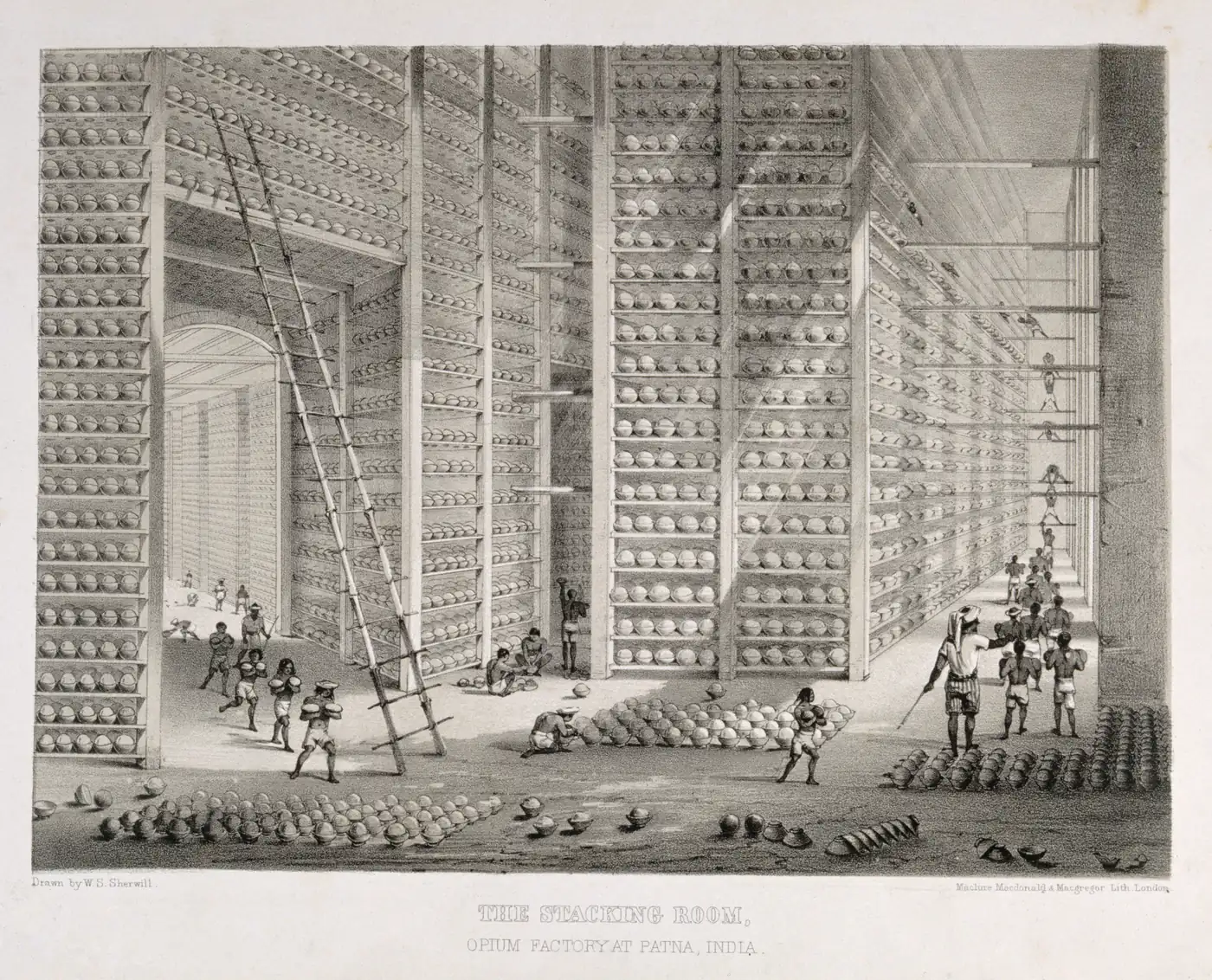
The East India Company found a fix. The Company controlled most of India, including Bengal, where opium poppies grew well. It organized the harvest into an industrial operation. Workers in government-run factories at Patna and Ghazipur processed raw opium into balls, packed them into wooden chests, and sent them to Calcutta. There the Company auctioned them to private traders who shipped them to the Chinese port of Canton. The Company kept its hands officially clean: it grew the opium and sold it at auction. The smuggling into China was someone else's problem.
By the 1830s, tens of thousands of chests of opium were entering China every year. An estimated two million Chinese were addicted, from dockworkers to officials in the imperial court. The flow of silver reversed. Instead of running into China to pay for tea, it was now running out of China to pay for opium. The Qing government was losing both its people and its treasury. Britain had solved its trade deficit. The cost was borne entirely by China.
The man who tried to stop it
In late 1838, the Daoguang Emperor decided to act. He sent Lin Zexu, one of the most respected officials in the empire, to the port of Canton with orders to end the opium trade. Lin was a scholar-official who had risen through China's examination system on ability and had a reputation for being impossible to bribe. He had already cracked down on opium in his previous posts and shown it could be done.
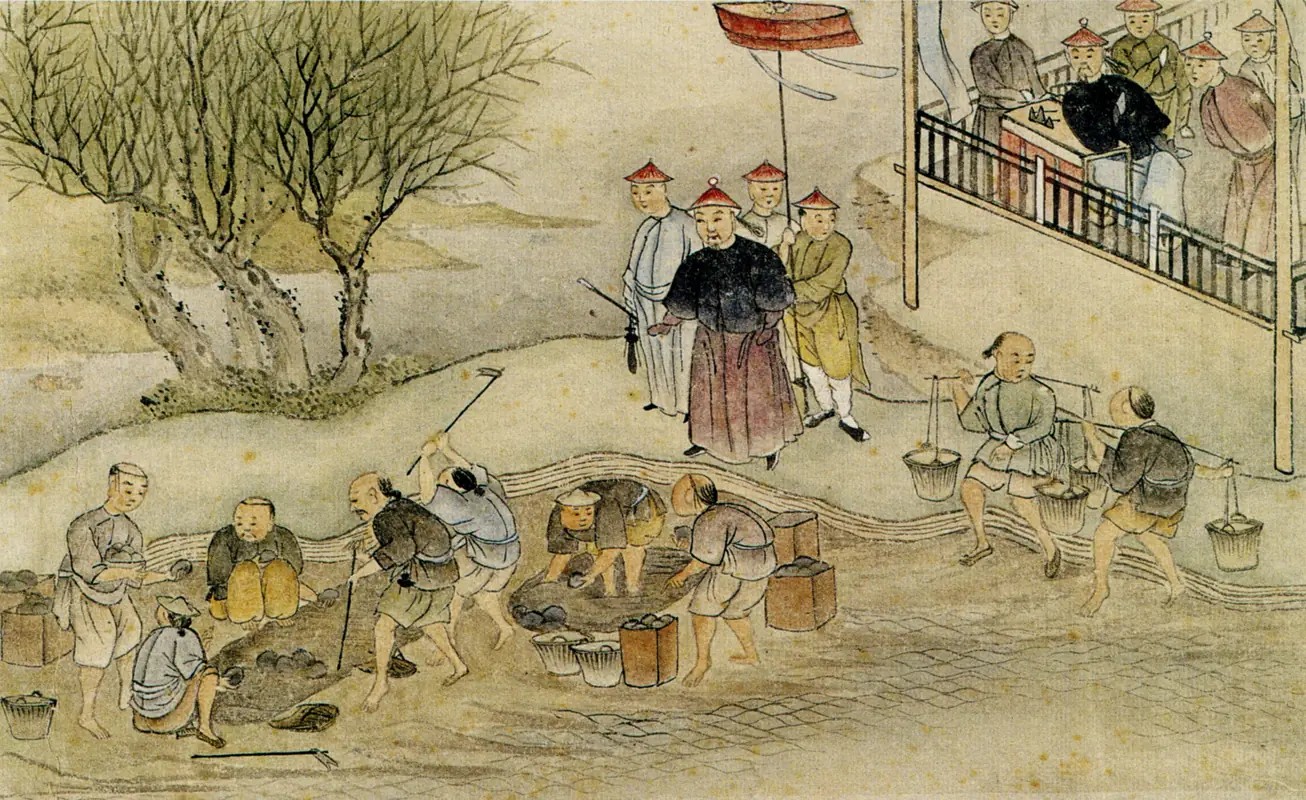
Lin arrived in March 1839 and moved fast. He blockaded the foreign trading houses, confined the merchants inside, and refused to release them until they surrendered their opium. They handed over roughly 20,000 chests, more than a thousand tons of raw opium. Starting on June 3, Lin had workers at Humen dissolve the drug in trenches of lime and salt water and flush it into the sea. The process took 23 days. He invited foreign observers to watch, to prove none of it was being stolen.
Lin also wrote a letter to Queen Victoria. He asked how a country that restricted opium at home could justify selling it to Chinese people. It was a fair question. The letter was never delivered. Lord Palmerston, the British foreign secretary, refused to receive the messenger.
Britain's response was not diplomatic. The government treated the destruction of the opium as an attack on British property. That framing was deliberate: Charles Elliot, the British trade superintendent in Canton, had told the merchants to hand over the opium and then declared it Crown property after the fact. A dispute between smugglers and Chinese law enforcement had become a dispute between governments.
A war China could not win
The First Opium War lasted from 1839 to 1842, and it was never a contest. The Royal Navy sent iron-hulled steamships that could sail upriver against the current and carried guns that outranged anything the Qing possessed. The steamer Nemesis, one of the first iron warships used in combat, destroyed entire fleets of wooden Chinese war junks in single engagements. Chinese soldiers fought bravely and in greater numbers, but they were organized for a different kind of warfare. They had no answer for steam power and modern artillery.
The war ended with the Treaty of Nanking in 1842, the first of what the Chinese call the unequal treaties. China ceded Hong Kong Island to Britain outright. It opened five ports to foreign trade, including Shanghai. It paid an indemnity of 21 million silver dollars. A follow-up treaty in 1843 added extraterritoriality: foreigners in China would be tried under their own countries' laws, not Chinese law. China had tried to enforce its own drug laws inside its own borders. The price was territory and sovereignty.
The second war and the burning of a palace
In 1856, Britain launched a second war. France joined. The stated reasons were minor: Chinese officials had boarded a British-registered ship called the Arrow, and a French missionary had been killed in the interior. The real aim was to force China further open, with permanent foreign embassies in Beijing and more ports under foreign control.
Anglo-French troops pushed deep into northern China. In October 1860, they reached Beijing and burned the Old Summer Palace, a vast complex of gardens, pavilions, and imperial art collections that the Qing emperors had built over more than a century. Lord Elgin ordered it destroyed as punishment after Qing officials seized members of a British and French delegation under a flag of truce and several of them died from torture. The fire lasted three days.
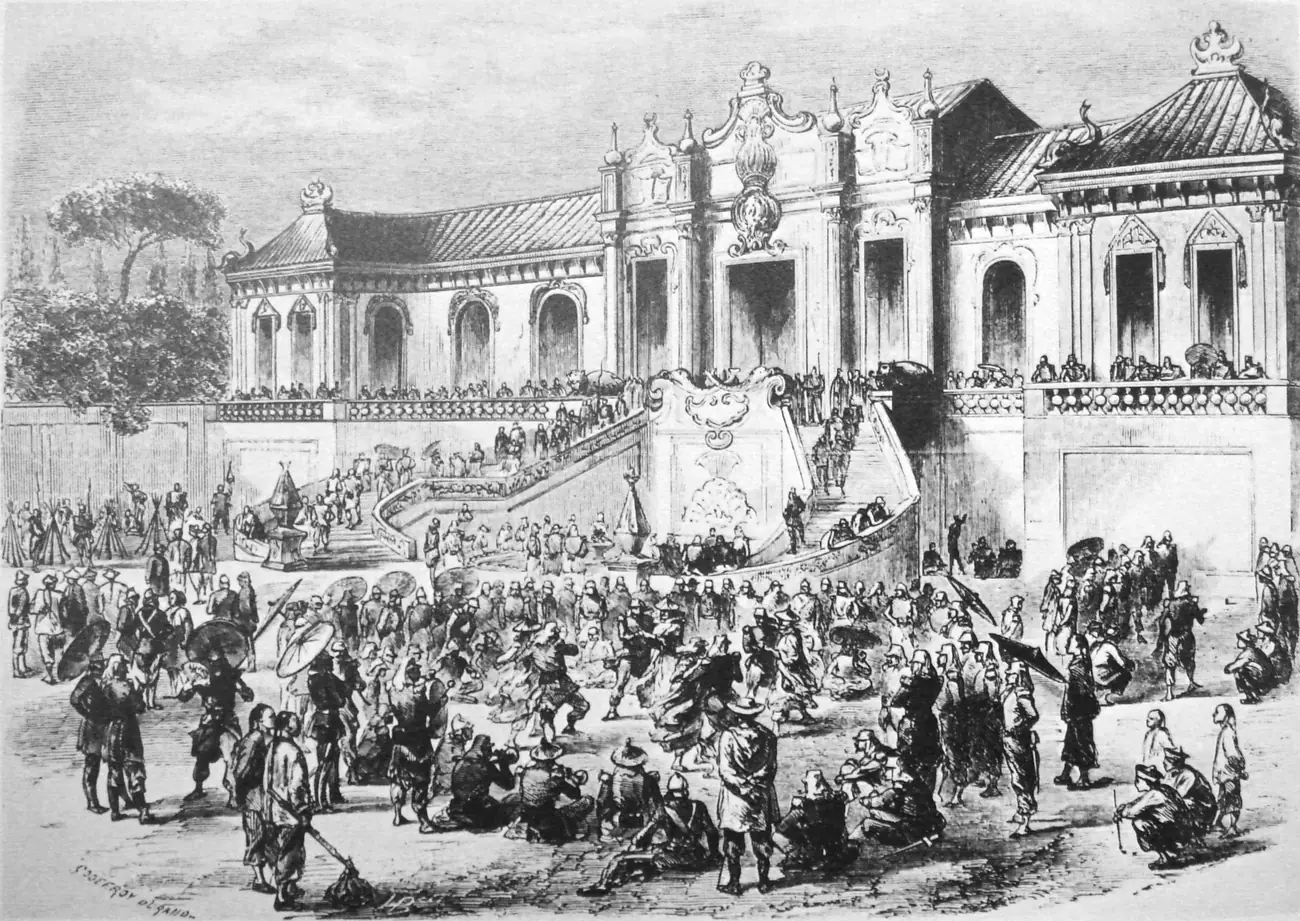
The treaties that ended the second war legalized the opium trade outright. They opened more Chinese ports, allowed foreign missionaries to travel freely through the interior, and gave Britain the southern tip of Kowloon, expanding its hold on the harbor it had seized in 1842.
Why the Opium Wars still shape China
The wars began what the Chinese call the century of humiliation: roughly a hundred years when foreign powers carved up Chinese territory, controlled its customs revenue, and treated its sovereignty as something they could override with gunboats. The pattern the Opium Wars set repeated for sixty years. Japan took Taiwan in 1895. Russia, Germany, and France claimed spheres of influence along the coast. After the Boxer Rebellion in 1900, eight foreign armies occupied Beijing and imposed an indemnity of 450 million taels of silver on the Chinese people.
The Communist Party built its legitimacy on ending that era. When Britain returned Hong Kong to China in 1997, 155 years after the Treaty of Nanking, Beijing treated the ceremony as the closing of an open wound. Under Xi Jinping, the "great rejuvenation of the Chinese nation" is defined as the reversal of everything the Opium Wars began. The ruins of the Old Summer Palace still stand in northwest Beijing, fenced off and labeled a patriotic education base. They are kept unrepaired on purpose: a reminder of what happened when China was too weak to say no.
Test what you learned
5 questions on this article. About two minutes, no signup.
Orbis has a full course on this
China: The Fall of the Middle Kingdom. 29 lessons, each ending with a quiz like this one.