Why did the Roman Republic fall?
Rome governed itself for five centuries. Then, in a single hundred-year stretch, its own success destroyed the system. Four forces killed it.
In 133 BC the Roman Republic was the most powerful state on Earth. It had destroyed Carthage in the Punic Wars, conquered Greece, and controlled the entire Mediterranean. Its constitution had survived for nearly four centuries. No king, no tyrant, no foreign invasion had broken it. Within a hundred years it would be gone, replaced by the rule of one man, and the forces that killed it all came from inside.
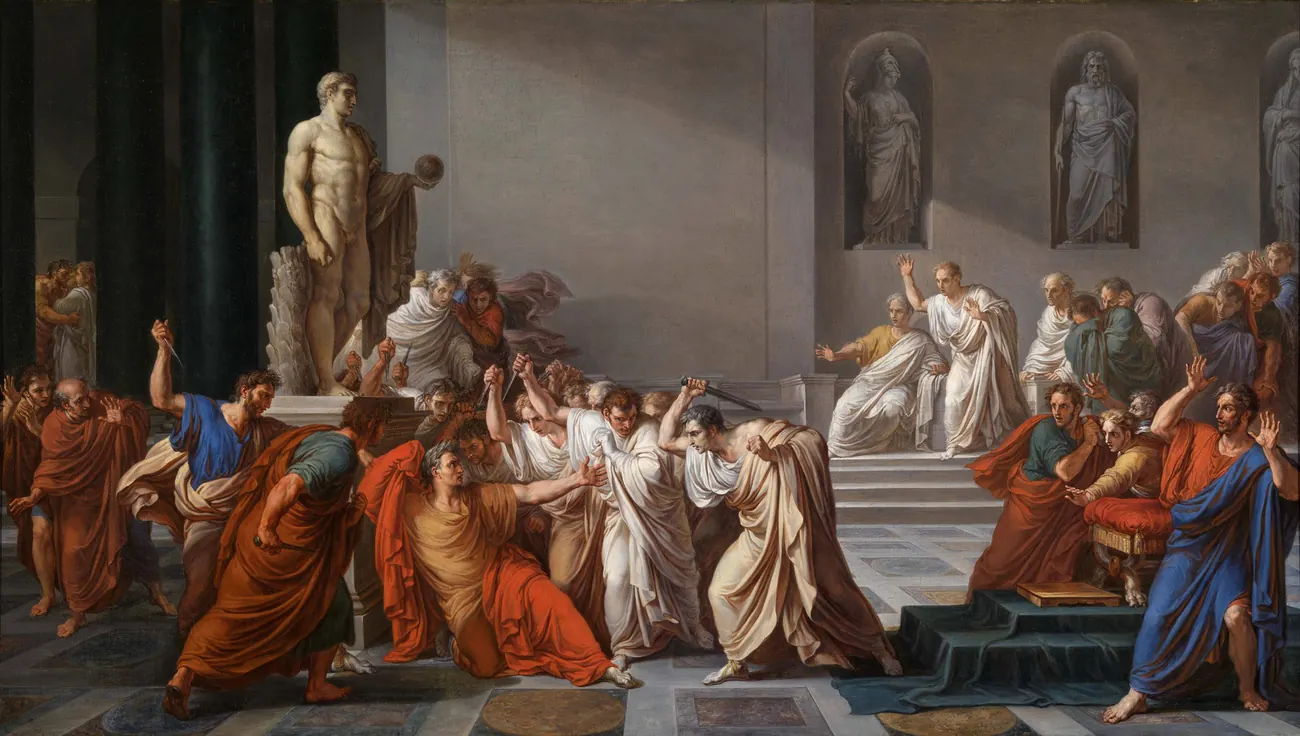
The standard version of the story blames Julius Caesar. He crossed the Rubicon, made himself dictator, and ended the Republic. But sixty senators stabbed Caesar to death on the Ides of March in 44 BC, and the Republic did not come back. Within two years, three men had divided the Roman world between them and launched mass killings that made Caesar look moderate. The problem was not one ambitious general. The problem was a system that had been breaking for a century before Caesar was born.
The wealth that broke the system
Rome's conquests of the second century BC made a small elite spectacularly rich. Generals and senators bought vast estates worked by enslaved people captured in war. The small farmers who had been the Republic's backbone could not compete with slave labor. They lost their land and flooded into Rome, landless and angry.
Two brothers tried to fix it. In 133 BC Tiberius Gracchus proposed redistributing public land that wealthy senators had taken illegally. The Roman Senate did not debate his proposal. A mob of senators led by Scipio Nasica cornered him on the Capitoline Hill and beat him to death, along with about 300 of his supporters. It was the first political killing in Rome in centuries. Twelve years later his brother Gaius pushed further reforms: subsidized grain, new roads, broader citizenship. When the Senate moved against him, Gaius had a servant kill him rather than be captured. The Senate's forces then killed roughly 3,000 of his supporters.
The land problem was not solved. It became permanent. Rome now had a large, desperate urban population that any ambitious politician could mobilize. The Gracchi had shown that the system could not process reform. Their killers had shown that violence worked.
Armies that belonged to generals
In 107 BC a general named Gaius Marius solved a military problem and created a political catastrophe. Rome needed more soldiers than its old system of propertied citizen-farmers could provide. Marius opened the legions to the landless poor, equipped them at state expense, and built the best professional army in the ancient world.
The problem was what happened after. The Senate refused to create a pension for veterans. No state land grants, no retirement fund. Soldiers who served for twenty years depended entirely on their commander's political influence to get them land when they were done. Loyalty shifted from Rome to the general who could deliver.
This meant every successful commander now had a private army. Sulla's veterans got land because Sulla seized Rome by force in 88 BC, the first Roman general in five centuries to march his own legions against his own city. Pompey's veterans waited years because the Senate blocked his land bill out of spite. Caesar's legions followed him across the Rubicon in 49 BC because they trusted Caesar to reward them, not the Senate. The Republic had outsourced its military to men who had every reason to use it for themselves.
A constitution that could block everything and fix nothing
The Roman constitution was built to prevent tyranny. Tribunes could veto the Senate. The Senate could block magistrates. Two consuls checked each other. Every office had a term limit. The system had worked brilliantly for centuries because everyone accepted the unwritten rules that kept it moving.
By the first century BC those rules were gone. The conservative faction in the Senate, led by men like Cato the Younger, blocked every compromise with powerful generals, even reasonable ones. When Pompey, who had just conquered the eastern Mediterranean for Rome, asked for land for his veterans, the Senate stonewalled him for years. The result: Pompey made a private deal with Caesar and Crassus in 60 BC, the First Triumvirate, and the three of them ran the Republic from outside its institutions.
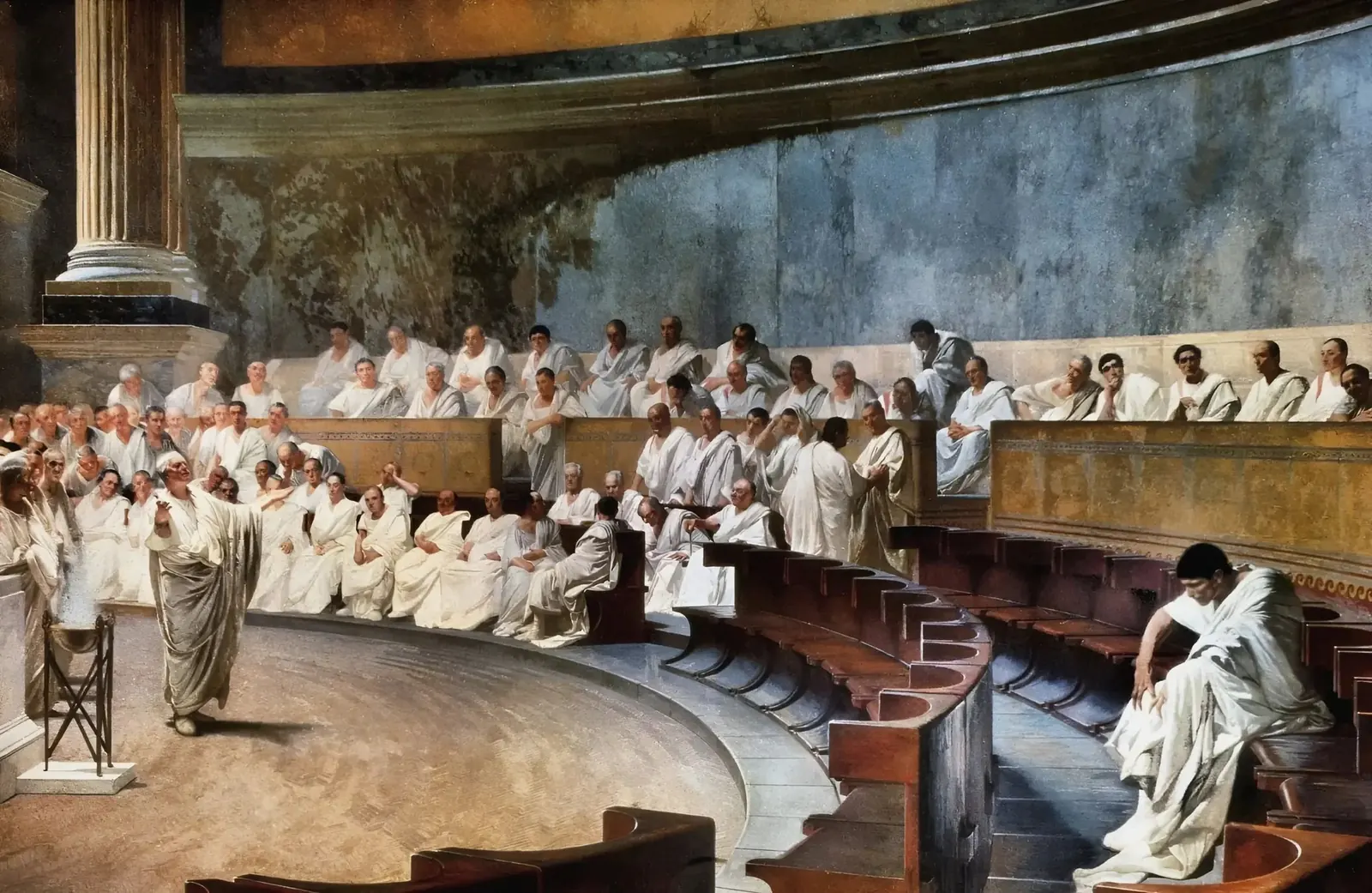
Cicero, the Republic's greatest orator and its most determined defender, saw what was happening. He wrote that the ancient customs on which the Roman state was founded were "buried in oblivion so deep that they are not only no longer practised, but are no longer known." The forms of republican government kept running. The Senate met. Consuls were elected. Trials were held. But the institutions no longer produced governance. They produced gridlock, and gridlock pushed ambitious men to go around them.
The escalation nobody could stop
The deepest cause was violence. Before 133 BC, Roman politics had been competitive but not lethal. After the murder of Tiberius Gracchus, each act of violence made the next one easier.
The timeline is striking. 133 BC: senators kill Tiberius Gracchus. 121 BC: the Senate authorizes killing Gaius Gracchus and 3,000 supporters. 88 BC: Sulla marches on Rome. 82 BC: Sulla publishes proscription lists that legalize the murder of political enemies and the seizure of their property; the ancient sources record roughly 90 senators and 2,600 equestrians killed. 63 BC: Cicero executes citizens without trial. 49 BC: Caesar crosses the Rubicon. 44 BC: senators assassinate Caesar. 43 BC: the Second Triumvirate publishes new proscription lists. Cicero, who had spent his life trying to save the Republic with law, is among the dead. His head and hands are nailed to the speaker's platform in the Forum where he had given his greatest speeches.
Every step made sense to the people who took it. The Senate killed the Gracchi to block reform. Sulla marched on Rome because his command had been taken away illegally. Caesar crossed the Rubicon because his enemies would have destroyed him if he laid down his army. Brutus killed Caesar because Caesar had made himself dictator for life. At each step, the actor was responding to conditions that the previous actors had created. At no step could anyone restore what had been lost.
Why a 2,000-year-old collapse still gets studied
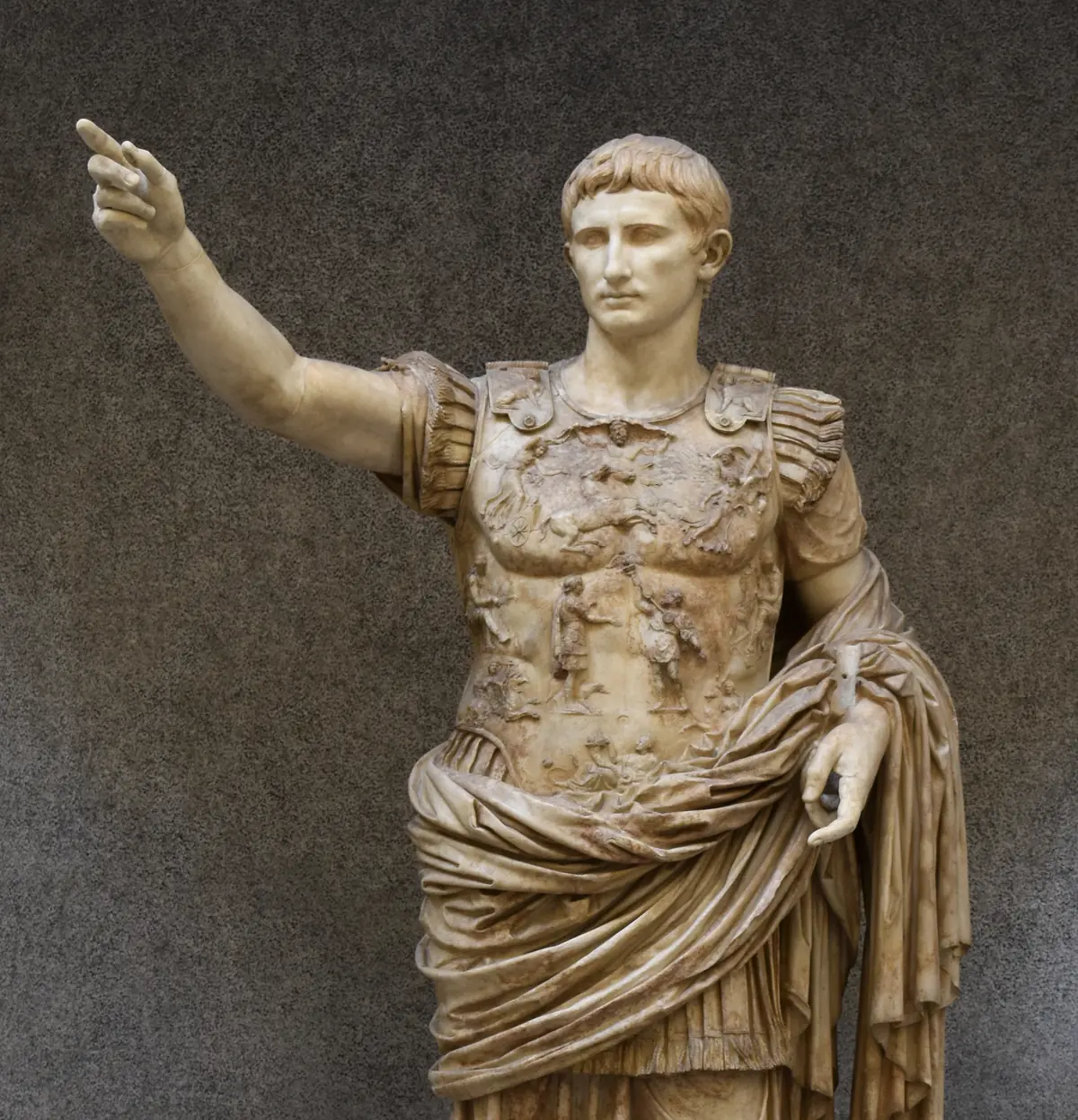
In 27 BC Augustus stood before the Senate and offered to give up his powers. The Senate, on cue, begged him to keep them. He accepted the title princeps, first citizen, and ruled for another forty years. The Republic's institutions kept running. They had simply stopped meaning anything.
The American founders studied this collapse in detail. They named their legislature the Senate and their hill the Capitol because they were deliberately trying to avoid Rome's mistakes. Madison cited the Roman Senate in the Federalist Papers. John Adams spent years reading Cicero. The constitution they wrote, with its separated powers and term limits, was a direct response to what happened between 133 and 27 BC.
The pattern has repeated since. The Weimar Republic died from institutional paralysis and normalized street violence. Hungary under Viktor Orbán has hollowed out democratic institutions while keeping their forms. Venezuela under Chávez and Maduro dismantled the opposition through legal mechanisms until the courts and legislature existed in name only. In each case the same Roman ingredients are visible: concentrated wealth producing political instability, private armed power beyond state control, institutions that can veto but not govern, and the slow acceptance that the rules everyone once followed no longer apply.
Rome's Republic did not fall because one ambitious man seized power. It fell because a century of rational, individually defensible decisions, each responding to the last, destroyed the norms that made self-governance possible. Caesar did not kill the Republic. He inherited its corpse.
Test what you learned
5 questions on this article. About two minutes, no signup.
Orbis has a full course on this
Rome: From Republic to Empire. 37 lessons, each ending with a quiz like this one.