Why did the Soviet Union invade Afghanistan?
In 1979 the Soviet Union sent 100,000 soldiers into Afghanistan to save a communist government. The war killed 15,000 of them and helped end the USSR itself.
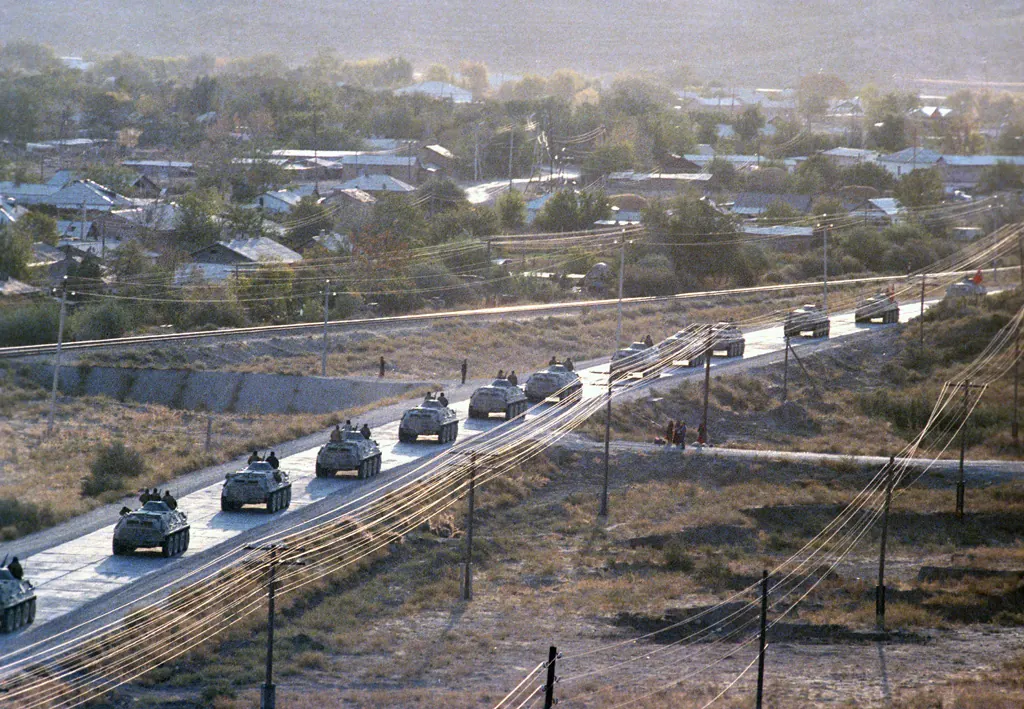
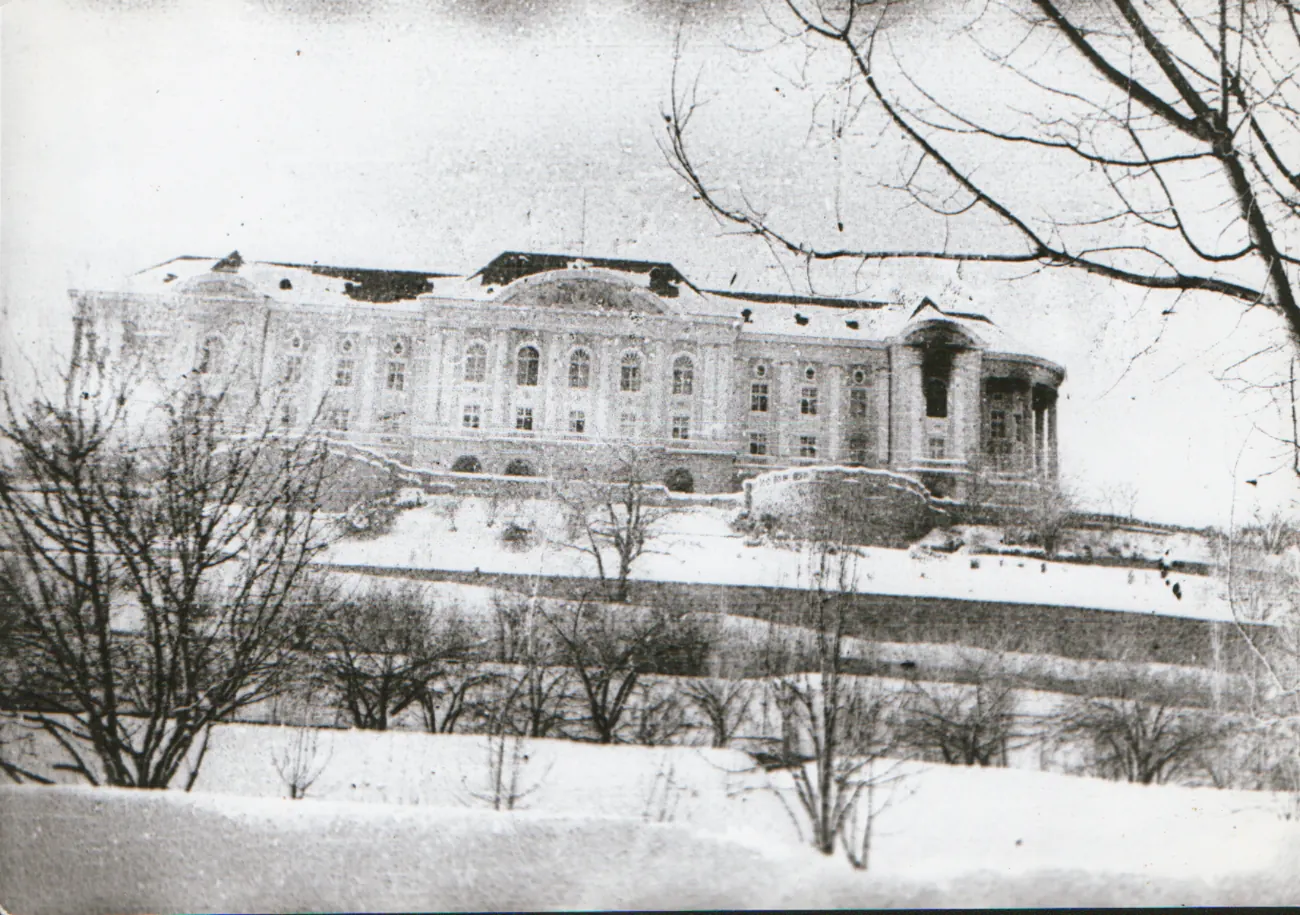
On the evening of December 27, 1979, Soviet special forces stormed the Tajbeg Palace in Kabul and killed the president of Afghanistan. The president, Hafizullah Amin, was supposed to be a Soviet ally. He had taken power in a communist coup the year before. Moscow had armed his government, trained his officers, and propped up his treasury. Now Soviet commandos were shooting their way through his palace guard to replace him with someone more obedient. By morning Amin was dead, a new president was on a plane from Moscow, and the Soviet 40th Army was rolling across the border. It was the beginning of a war that would last ten years, kill roughly 15,000 Soviet soldiers and between one and two million Afghans, and become one of the forces that brought the Soviet Union itself to an end.
The question is why Moscow did it. Afghanistan was not a NATO member. It had no oil, no nuclear weapons, and no strategic resources worth fighting over. The Soviet leadership itself had rejected a military intervention just months earlier. What changed, and why did three men in the Kremlin overrule their own judgment?
A communist coup that nobody asked for
The story starts not in Moscow but in Kabul. In April 1978, Afghan military officers loyal to the People's Democratic Party of Afghanistan, the country's small communist party, overthrew President Mohammed Daoud Khan in a bloody coup called the Saur Revolution. The Soviets had not planned or ordered it. They were as surprised as anyone.
The new government, led by Nur Muhammad Taraki, immediately set about remaking Afghanistan along Marxist lines. It launched forced land redistribution, banned bride prices, ordered girls to attend school, and arrested anyone who resisted. In a country where most of the population was rural, tribal, and deeply religious, these reforms provoked armed revolts in province after province. The government responded with mass arrests and executions. Within a year the countryside was in open rebellion.
The PDPA was also tearing itself apart. The party had two rival factions, Khalq and Parcham, that hated each other almost as much as they hated the old regime. Taraki's deputy, Hafizullah Amin, was the more ruthless of the two. Amin had studied at Columbia University's Teachers College in New York in the late 1950s, where he joined a socialist student club and came back to Afghanistan a committed Marxist. He was also ambitious. In September 1979, Amin overthrew Taraki. In October, Amin had him suffocated with a pillow. Moscow now had a client state run by a man it did not trust, losing a war it could not afford to lose.
Why Moscow cared about a country with nothing
Afghanistan had no oil and no industrial economy. But it shared a 2,400-kilometer border with the Soviet Union, and in Cold War logic that was enough. The Brezhnev Doctrine, announced after the Soviet invasion of Czechoslovakia in 1968, held that no country could leave the communist bloc once it had entered. A socialist government that fell to an insurgency would be a crack in the wall, and the Kremlin feared what might follow on the other side.
There were also specific fears about the neighborhood. Iran had just gone through its Islamic revolution in early 1979, and the Soviet leadership worried that Islamic radicalism would spread north into the Muslim-majority Soviet republics of Uzbekistan, Tajikistan, and Turkmenistan. If Afghanistan's communist government collapsed and was replaced by an Islamist one, Moscow believed it would face a hostile religious movement on its own doorstep.
And there was the American angle. The Carter administration had been expanding ties with Pakistan and China, both of which bordered Afghanistan. Soviet intelligence reported, with varying degrees of accuracy, that Washington was already making contacts with the Afghan rebels. Losing Afghanistan would mean losing a buffer state and gaining an American-aligned neighbor. In a decade defined by the fear of falling dominoes, even a country with nothing looked like a domino worth catching.
Three men made the call
The Soviet Politburo had actually rejected military intervention in March 1979, when the Afghan government first asked for Soviet troops. The military's own chief of staff warned that the army would face a guerrilla war it could not win. For months, Moscow sent advisers, weapons, and money, but not soldiers.
What changed was Amin. After he killed Taraki in September, the KGB began reporting that Amin was unreliable, possibly even in contact with the Americans. (Amin's years at Columbia in New York did not help his case.) Three men drove the decision: Yuri Andropov, the head of the KGB; Dmitry Ustinov, the defense minister; and Andrei Gromyko, the foreign minister. They controlled the information that reached General Secretary Leonid Brezhnev, who was 73, in poor health, and increasingly detached from daily decisions.
On December 12, 1979, the Politburo approved a resolution titled "Concerning the Situation in A." The plan was simple: send in the army, kill Amin, install Babrak Karmal (the leader of the PDPA's other faction, who had been living in exile in Moscow), stabilize the government, and leave. Soviet leaders believed the operation would take weeks. They were wrong by about a decade.
How weeks became ten years
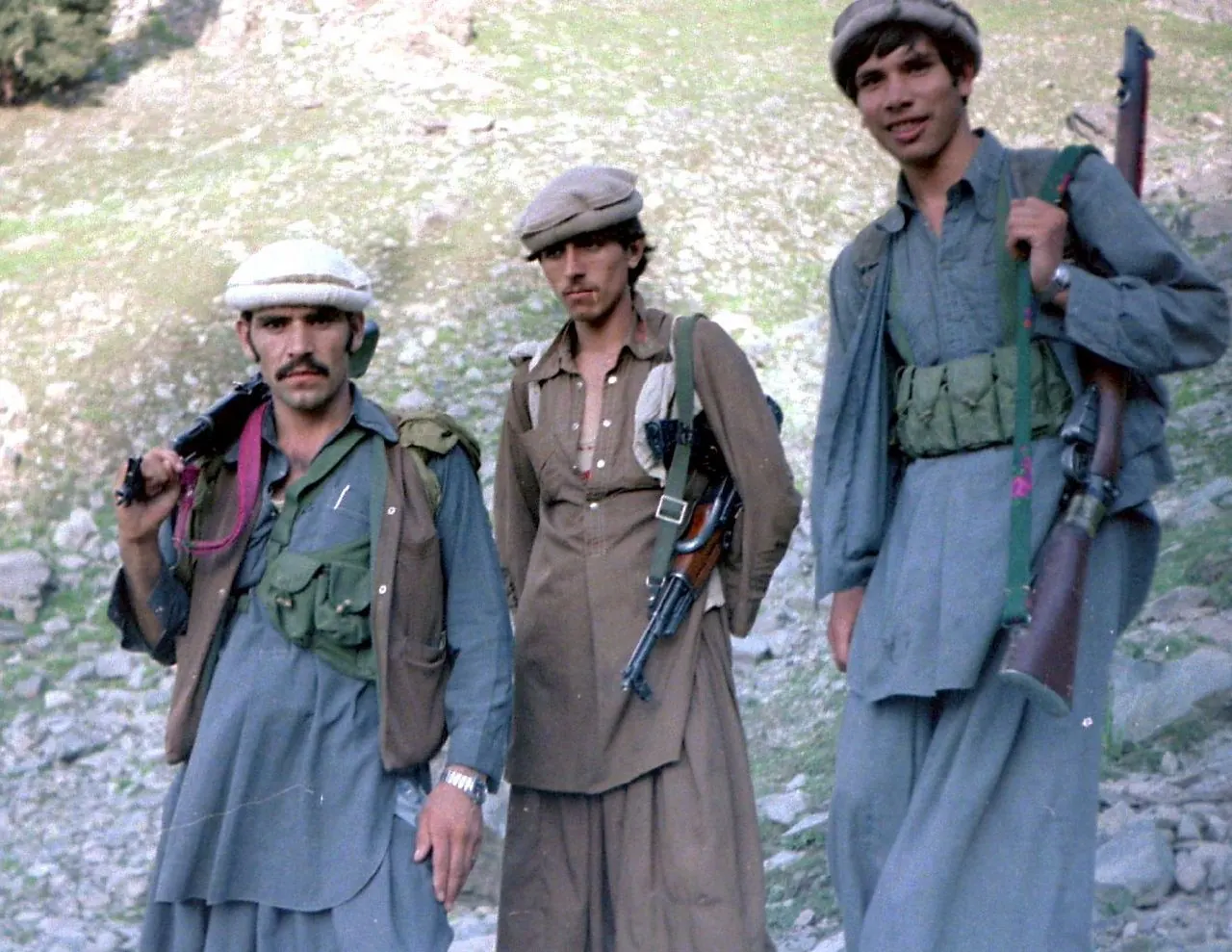
The 40th Army took the cities and the highways within weeks, just as the planners expected. Everything after that went wrong. Afghan mujahideen fighters controlled the countryside, the mountain passes, and most of the villages. They did not stand and fight in the open. They ambushed convoys, mined roads, attacked isolated outposts, and melted back into terrain that no foreign army has ever been able to hold.
The Soviet army tried to empty the countryside to cut off the guerrillas. It bombed villages, destroyed irrigation systems, and mined farmland. The strategy created the largest refugee crisis on Earth: roughly 6.2 million Afghans fled to Pakistan and Iran, nearly a third of the country's entire population. It did not break the resistance.
The mujahideen survived because they were not fighting alone. Pakistan's intelligence agency, the ISI, ran the supply lines. The CIA funded the resistance through a covert program called Operation Cyclone that started at under a million dollars in 1979 and grew to $630 million a year by 1987. Saudi Arabia roughly matched the American spending. In September 1986, the United States began supplying FIM-92 Stinger shoulder-fired anti-aircraft missiles. The Stingers did not win the war on their own, but they forced Soviet helicopters to fly at higher altitudes, where they were far less effective. A war that Moscow had expected to be quick and cheap became the most expensive Soviet military operation since World War II.
The bleeding wound
By the mid-1980s, the war had become a stalemate the Soviet economy could not sustain. In February 1986, Mikhail Gorbachev told the Communist Party Congress that Afghanistan had become a "bleeding wound." He signed the Geneva Accords in April 1988, and the withdrawal began. On February 15, 1989, General Boris Gromov walked across the Friendship Bridge from Afghanistan into Soviet Uzbekistan as the last Soviet soldier to leave.
The government Moscow had fought to protect lasted three more years before the mujahideen took Kabul in April 1992. The mujahideen then turned on each other in a civil war that destroyed much of the capital. Out of that civil war came the Taliban, a movement of religious students backed by Pakistan, which took Kabul in 1996. And among the thousands of Arab volunteers who had traveled to Afghanistan to fight the Soviets in the 1980s was a young Saudi named Osama bin Laden, who used the network the war created to build al-Qaeda.
The same country broke two superpowers
On September 11, 2001, twelve years after the last Soviet soldier crossed the Friendship Bridge, al-Qaeda attacked the United States. Washington invaded Afghanistan the following month, toppled the Taliban in weeks, and began an occupation that lasted twenty years. When the United States withdrew in August 2021, the Taliban returned to power in days. The American war cost over $2 trillion and followed the same arc the Soviet war did: quick victory, long stalemate, withdrawal, collapse.
The Soviet invasion was not irrational. It followed from the logic of the Brezhnev Doctrine, the fear of losing a client state, and the genuine belief that a quick military operation could fix a political problem. The mistake was the same one every power that has entered Afghanistan has made: confusing the ability to take a country with the ability to hold it. The Soviets lost 15,000 soldiers and spent billions of rubles to learn what the British had learned in the 1840s and the Americans would learn again after 2001. The war drained Soviet resources, humiliated the Soviet military, and gave Gorbachev one more crisis he could not solve. When the Soviet Union dissolved in December 1991, Afghanistan was one of the wounds it bled from.
Test what you learned
5 questions on this article. About two minutes, no signup.
Orbis has a full course on this
Russia: Empire to Superpower. 38 lessons, each ending with a quiz like this one.