
Why do wars keep starting the same way?
Most wars start with leaders who are confident about something they turn out to be wrong about. The same pattern runs from 1914 through the Falklands to Ukraine.
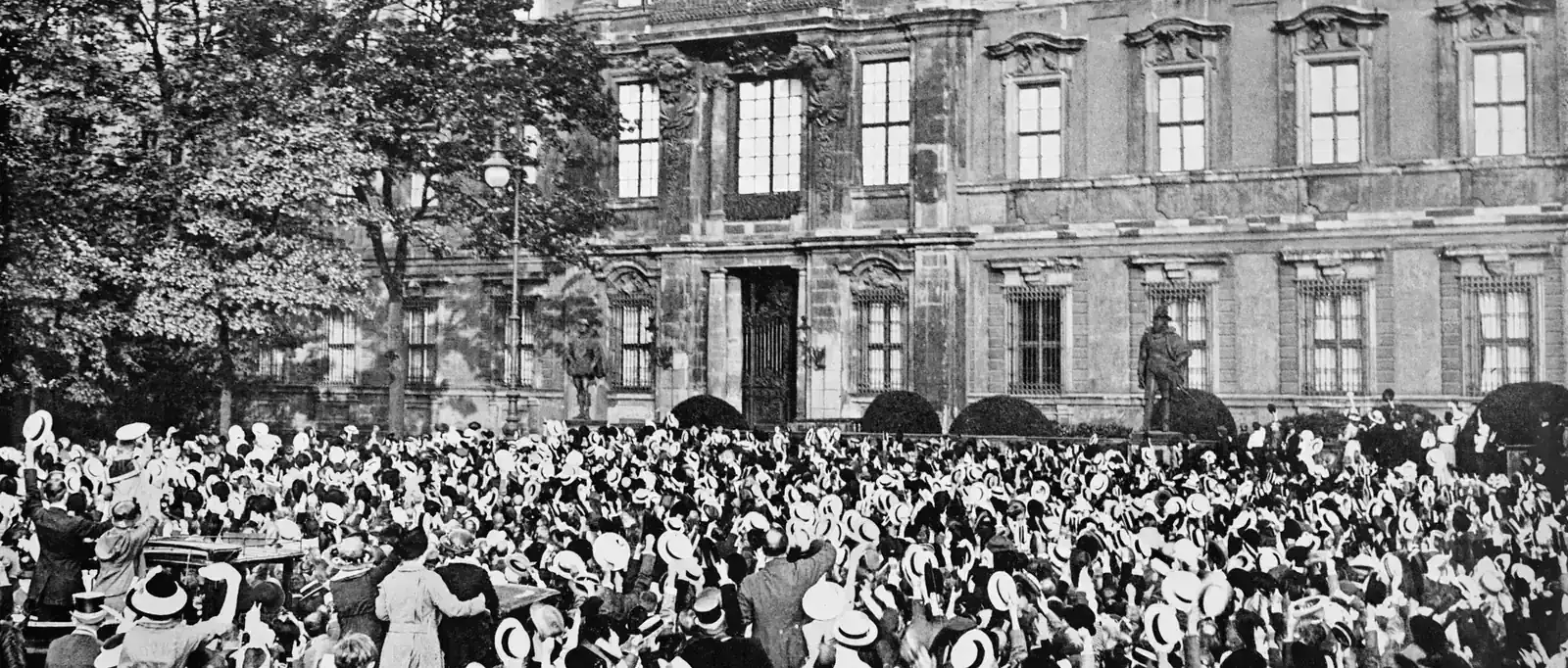
Wars do not start the way most people picture them. The assumption is that a leader decides to attack and sends in the army. It happens that way sometimes. But most wars begin with something less deliberate: a leader who expects a short war and gets a long one, a government that needs a foreign crisis to survive at home, or a country that believes the balance of power is shifting against it and decides to fight now rather than later. These patterns keep showing up across centuries, and they are worth learning by name.
Everyone thinks it will be quick
The single most common way wars start is miscalculation. A leader looks at the situation, decides the war will be short and successful, and turns out to be catastrophically wrong.
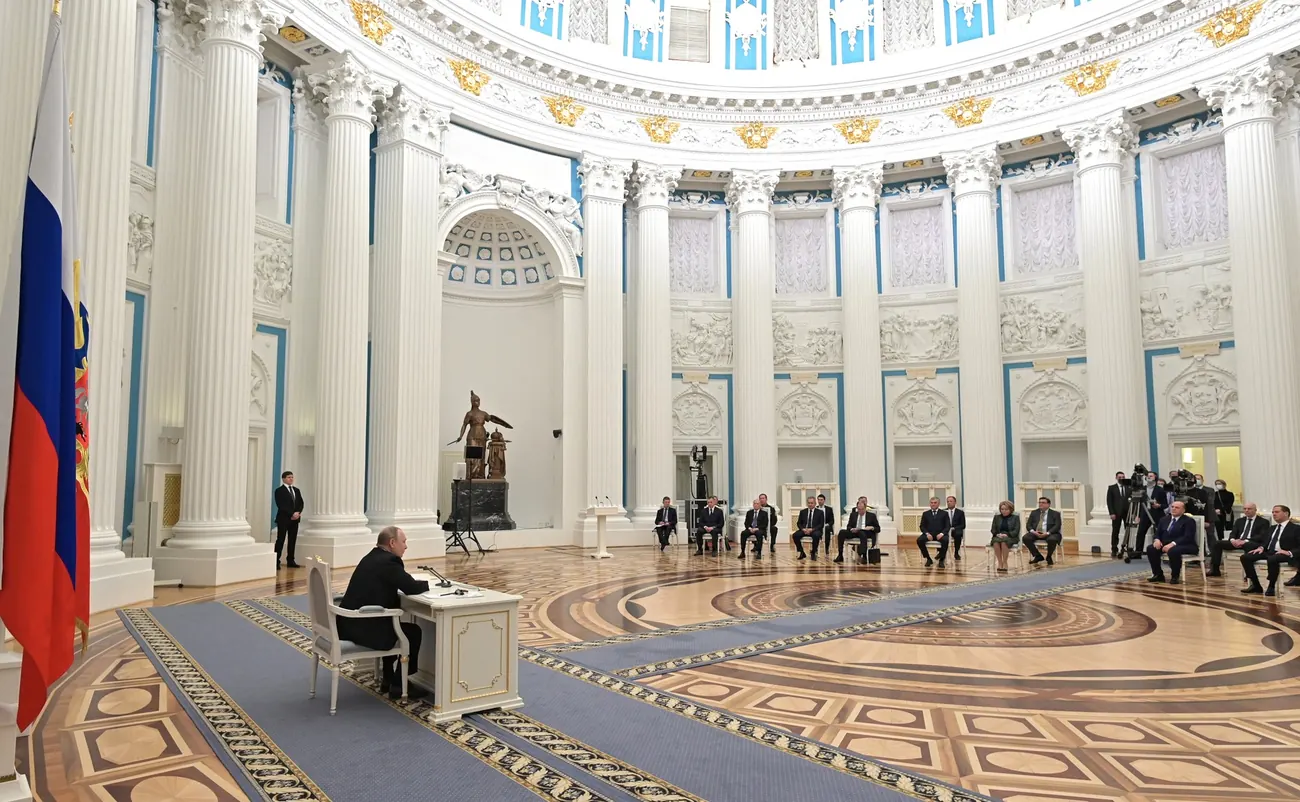
On February 21, 2022, three days before the invasion of Ukraine, Vladimir Putin convened his Security Council on live television. He put his foreign intelligence chief, Sergei Naryshkin, on the spot in front of the cameras. Naryshkin, visibly nervous, began suggesting that diplomacy should be given more time. Putin cut him off. The decision was already made. Russian military planners expected to reach Kyiv within 72 hours. The FSB had spent years telling Putin that Ukrainians would not resist and that President Volodymyr Zelensky would flee the country. The war is now in its fifth year.
The same pattern played out in August 1990, when Saddam Hussein invaded Kuwait. A week earlier, the American ambassador to Iraq, April Glaspie, had told Saddam that the United States had "no opinion on the Arab-Arab conflicts, like your border disagreement with Kuwait." Saddam read that as permission. He expected the world to accept the invasion as a regional dispute. Within six months, a 35-nation coalition of 700,000 troops assembled in Saudi Arabia and destroyed his army in a ground war that lasted 100 hours.
In 1914, every major power in Europe expected to win quickly. German generals planned to defeat France in six weeks under the Schlieffen Plan. French commanders expected their offensive spirit to carry the day. The Russian general staff told the Tsar that the army would be in Berlin by autumn. The war lasted four years, killed roughly 16 million people, and brought down four empires. Not one of the confident predictions came true.
The miscalculation follows the same pattern every time. Leaders overestimate their own forces, underestimate the enemy's willingness to fight, and assume the war will end before the costs pile up. Putin's FSB, Saddam's generals, and Kaiser Wilhelm's military staff all confirmed what their leaders already believed. Intelligence services telling leaders what they want to hear is one of the most reliable ingredients in the recipe for a war that was never supposed to last.
Strike now or lose the chance
Some wars start not because a country feels strong but because it believes it is getting weaker. If the balance of power is shifting against you, the logic says fight now, while you still can.
In 1914, Germany's chief of staff, Helmuth von Moltke, watched Russia building railways and factories at a pace that would, by his estimate, make Russia impossible to defeat by 1917. His conclusion was not that war was desirable. It was that waiting was worse. Germany gave Austria-Hungary what historians call a "blank check" to escalate the crisis with Serbia, knowing it could trigger a wider war. The calculation was straightforward: fight Russia now, while Germany still had the advantage, or face a stronger Russia later.
Japan made the same calculation in 1941. The United States had frozen Japanese assets and imposed an oil embargo in response to Japan's expansion in Southeast Asia. Japan imported roughly 80 percent of its oil from the United States. Without that supply, the Japanese navy would be unable to operate within two years. General Hideki Tojo, who had become prime minister in October 1941, concluded that the choice was between war now and a slow retreat from everything Japan had gained in China and the Pacific. He chose Pearl Harbor.
The closing-window logic appeared again beginning in 2025, when Israel launched large-scale strikes against Iran's nuclear enrichment facilities. Israeli leaders had warned for years that once Iran assembled a nuclear weapon, the military option would disappear. The window was narrowing. Israel struck before it shut.
The danger of this pattern is that it can be self-fulfilling. A country that believes war is inevitable tends to act in ways that make it so.
The war nobody chose
Not every war begins with a decision to attack. Some are the product of a spiral in which each country's defensive moves look threatening to the other, and the crisis runs past the point where anyone intended it to go.
This pattern is called the security dilemma. Country A builds up its military to feel safer. Country B sees the buildup and arms in response. Country A reads B's response as proof that B was hostile all along. Both countries end up more heavily armed and more afraid than when they started. Neither planned it that way.
The road to Russia's invasion of Ukraine had elements of this pattern. After the Cold War, NATO expanded eastward, adding Poland and the Baltic states, and eventually discussing membership for Ukraine and Georgia. Western governments described this as a defensive alliance welcoming new democracies. Moscow read it as a military alliance advancing toward Russia's borders. Russia's seizure of Crimea in 2014 was, in the Kremlin's telling, a defensive response to that advance. Western governments saw the seizure as proof that Russia was aggressive and accelerated military support to Ukraine. Each side's defensive logic reinforced the other's threat perception.
The Iran-Israel escalation of 2024 and 2025 followed a similar path. After the October 7, 2023 Hamas attack, Israel launched operations in Gaza and then against Hezbollah in Lebanon. Iran responded with direct missile strikes on Israel in April and October 2024, the first direct military strikes between the two countries. Israel struck back at Iranian military and nuclear sites. Each step looked defensive to the side taking it and offensive to the side receiving it. By 2025, the two countries were in a war that neither had set out to start when the crisis began in October 2023.
When leaders need a crisis
Sometimes a war starts because a government in trouble at home decides a foreign conflict will solve its domestic problems.
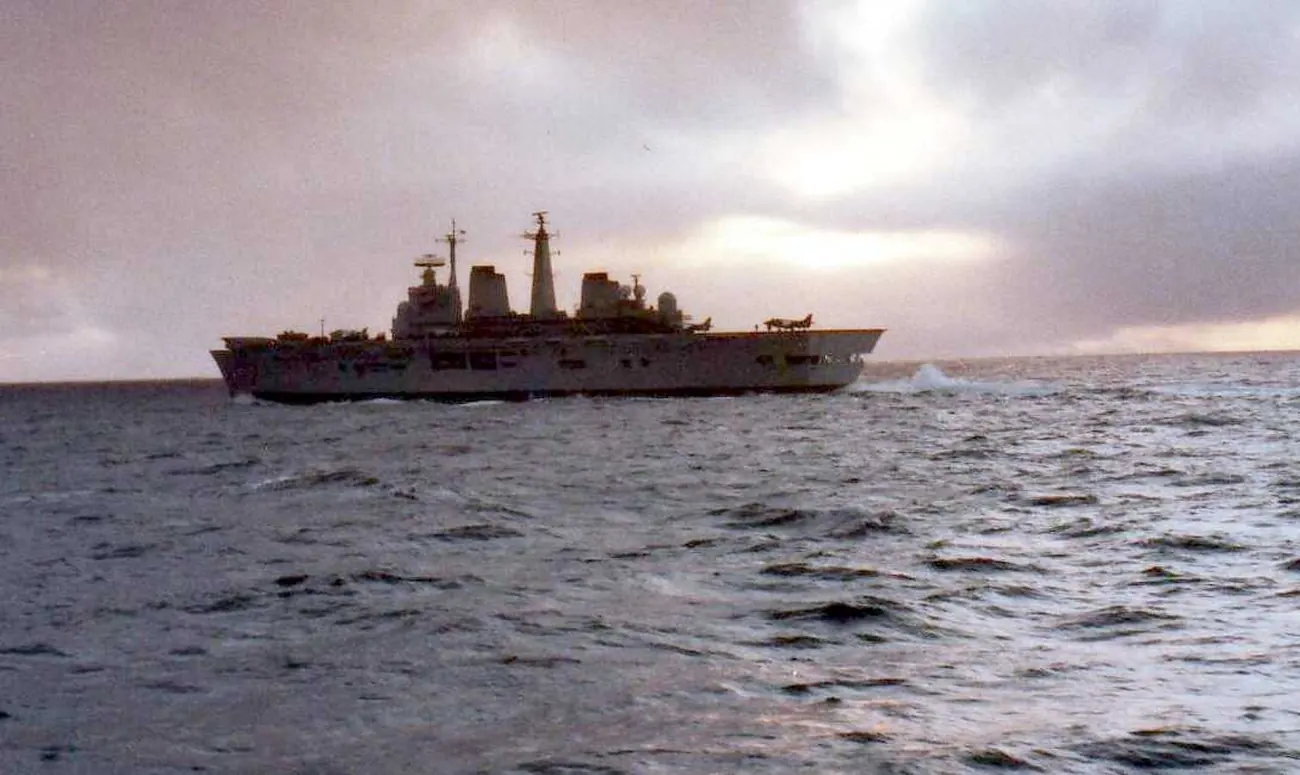
The textbook case is the Falklands War of 1982. Argentina's military junta had been in power since 1976, and by early 1982 the economy was in free fall. Inflation was running above 100 percent, real wages were dropping, and street protests were growing. General Leopoldo Galtieri, who had taken over as president barely four months earlier, ordered the invasion of the Falkland Islands, a British territory in the South Atlantic with about 1,800 residents. The junta expected Britain to protest and move on. Instead, Prime Minister Margaret Thatcher sent a naval task force of over 100 ships across 8,000 miles of ocean. Argentina surrendered 73 days later. Galtieri was forced out within three days of the surrender.
Saddam Hussein's invasion of Kuwait, covered above as a case of miscalculation, also had a domestic side. Iraq was roughly $80 billion in debt after an eight-year war with Iran, much of it owed to Kuwait. The economy was collapsing and the army was restless. Seizing Kuwait's oil fields would solve the debt problem overnight. The domestic pressure did not cause the invasion on its own, but it made a reckless gamble look worth taking to a leader running out of options.
Scholars call this pattern diversionary war. A government facing failure at home looks for a fight abroad to rally public support. It does not always mean an invasion. Leaders under domestic pressure may also escalate existing disputes or inflate foreign threats to shift attention away from problems at home.
Why these patterns matter now
These four patterns, miscalculation, the closing window, the security dilemma, and domestic pressure, are not history lessons. All four are active in at least one current flashpoint.
The Taiwan Strait carries all four at once. China's leadership faces a narrowing demographic and economic window as the population shrinks and growth slows. The military buildups on both sides of the strait feed a security dilemma. Beijing's confidence that Taiwan would fold quickly echoes the miscalculation that destroyed Russia's plans in Ukraine. And Xi Jinping faces a slowing economy and rising youth unemployment that make a nationalist cause politically useful.
Every war in this article was preceded by weeks or months when leaders still had choices other than fighting. They went to war because they were confident it would be quick, because they believed the alternative was worse, or because a crisis had built its own momentum. The clearest case of the opposite is the Cuban Missile Crisis of 1962. Kennedy had recently read Barbara Tuchman's The Guns of August, about how the leaders of 1914 stumbled into a war none of them wanted. It shaped his approach to the standoff with Khrushchev. Both leaders recognized they were in a spiral and chose to step back rather than let it run. The lesson is not that wars are inevitable. It is that they follow recognizable patterns, and the time to break the pattern is before the first shot.
Test what you learned
5 questions on this article. About two minutes, no signup.